Why Steel Tees Fail at High-Pressure Junction Points
The combination of stress concentrations, variable loads, and challenging operating circumstances creates a unique challenge for high-pressure junction point installations of steel tees. Failures are often caused by material faults, poor welding, insufficient heat treatment, or corrosion that weakens the material in areas of high stress. The geometric discontinuity of the crotch causes localized stress intensification, which may surpass the yield strength of the material when pressure spikes propagate through the branch connection, causing cracking or deformation. Understanding these modes of failure is important in the selection of correctly constructed butt-welded steel pipe tees that are manufactured to rigid dimensional and metallurgical specifications and that are expected to perform reliably in challenging industrial applications.
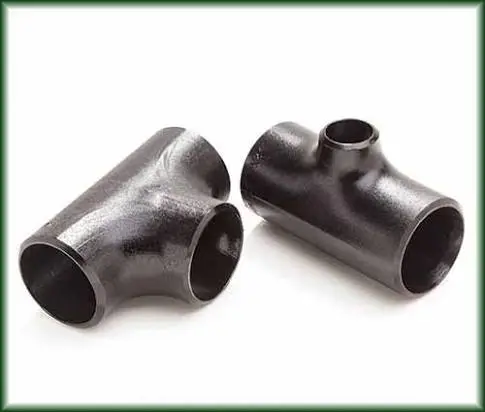
Understanding Steel Tees and Their Applications in High-Pressure Junctions
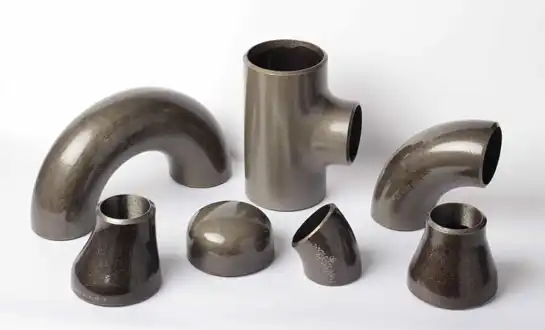
Butt-weld steel tees are an essential feature of piping applications where the flow has to be separated or combined at precise 90-degree angles. They differ from threaded or socket-weld fittings in that they feature machine-beveled ends for full-penetration butt welding. This guarantees the stability of the whole pipe network structure. This design eliminates potential leak pathways and allows the fitting to sustain pressures equal to straight pipe sections of the same wall thickness.
Material Grades and Performance Characteristics
The performance of a tee fitting under pressure is determined by the proper selection of material grades. Some varieties of steel, including ASTM A234 WPB carbon steel, have high tensile strength and are valuable in many industrial contexts. Other varieties, such as ASTM A234 WP11 and WP22 alloy steel, are particularly resistant to creep at high temperatures. Where chemicals are present, stainless steels (ASTM A403, WP304, and WP316) are superior at resisting rust. Normalizing is the controlled heat treatment used for carbon steel. The controlled heat treatment for stainless steel is solution annealing. This results in a homogeneous grain structure, which avoids stress corrosion cracking under cyclic loading circumstances.
Dimensional Standards and Pressure Ratings
Products conforming to ASME B16.9 specifications cover a wide range of sizes commonly used in industrial piping systems, with the applicable size range depending on the fitting type and specification edition. Engineers may alter pressure ratings to suit the requirements of each application by varying the wall thickness from Schedule 10 to Schedule XXS. The weakness of the branch opening is compensated by the geometric reinforcement at the crotch of the tee, allowing the fitting to achieve pressure performance suitable for the design requirements of the piping system. Of particular importance is the support design in high-pressure manifolds, where fast pressure fluctuations might otherwise induce isolated yielding.
Primary Application Environments
Duplex and super duplex steel tees are critical for preserving structural integrity on offshore oil and gas platforms, as they provide exceptional resistance to chloride-induced stress corrosion cracking in high-pressure marine environments.Seamless tees with smooth interior bores can help reduce turbulence-related deposits and minimize areas where corrosive sludge may accumulate. This can reduce the risk of localized pitting corrosion in chemical processing facilities. Power-generating steam systems make use of chrome-moly alloy tees. They are designed to last a few decades of cyclic thermal loading without excessive distortion or creep. Having this knowledge of severe service circumstances, purchasing teams may choose parts for the actual conditions.
Why Do Steel Tees Fail at High-Pressure Junction Points?
Failure analysis of steel tees shows patterns that can be linked to the choice of material, the quality of the manufacturing, and the way the parts were installed. Each failure mode has its own unique signs that point to specific root causes that need specific avoidance tactics.
Material Defects and Metallurgical Issues
When raw materials have laminations, flaws, or the wrong grain structure, they create weak areas where cracks start when pressure is applied and removed over and over again. If the heat treatment after cold-forming is not done properly or is not enough, the tees may still have stresses from the forming process. Compared with welded plate-formed options, hot-rolled seamless construction usually offers better grain flow and mechanical properties, especially for high-pressure applications that need to be very strong. Positive material identification using XRF analysis proves that the real chemical composition complies with the required standards mentioned on Material Test Certificates, as required by EN 10204 3.1.
Weld Quality and Heat-Affected Zone Concerns
The heat-affected zone next to butt welds in steel tees is an area with a different composition where changes in hardness can make crack-starting sites more likely. If the weld metal does not fully penetrate or contains defects such as porosity or lack of fusion, it weakens the joint and lets leakage occur when pressure changes, putting stress on the connection. Radiographic testing of welded-construction tees makes sure that the joint seams are strong before the parts are put to use. The right way to weld, including the proper amount of preheating and heat treatment after welding, ensures that the welded joint has the same mechanical properties as the base material.
Stress Concentration at Branch Intersections
When the branch joins the main run, the geometric change makes a natural stress concentration point. This is especially true when pressure bursts or water hammer events occur. Stress intensification factors are increased by sharp internal radii at the crotch, while loads are spread out more evenly by smooth radiused changes. When the branch diameter is different from the run diameter, reducing tees need a careful stress analysis to make sure that the intersection doesn't give way more than the rest of the pipe. During the design phase, finite element analysis finds these critical zones and tells us how to strengthen them.
Corrosion and Environmental Degradation
External rust wears away protection coatings and the base metal, making the walls thinner and thinner until they can't hold any more pressure. Aggressive process fluids cause internal corrosion that builds up in flow disturbance zones near the tee joint. This causes localized thinning that isn't picked up by regular checks. Austenitic stainless steel tees in coastal settings can crack from chloride stress corrosion, especially if they still have tensile stresses from when they were made.In highly corrosive environments, protective coatings, cathodic protection systems, and corrosion-resistant alloys significantly extend service life.
Comparative Analysis: Steel Tees vs. Alternative Structural Sections for High-Pressure Use
Comparing pipe fittings to other ways to connect pipes shows performance trade-offs that affect project costs and stability over time.
Strength and Load Distribution Capabilities
Butt-weld steel tees have full-penetration welds that create continuous load lines. This spreads stress more evenly than manufactured mitered joints or threaded connections. The controlled wall thickness and reinforced crotch geometry keep the pressure ratings the same all the way through the fitting. By comparing cold-formed and hot-rolled construction, we can see that hot extrusion can provide favorable grain flow patterns and improved mechanical consistency compared with some fabricated alternatives.This enhances the material's fatigue resistance under cyclic loading conditions. The absence of a longitudinal weld seam in seamless construction removes one potential discontinuity that may require additional evaluation in high-pressure systems.
Cost Considerations and Total Ownership Economics
Even though certified buttweld tees may cost more to buy at first than fabricated options, they have a lower total cost of ownership because they don't need as much upkeep or downtime because they don't leak. For large-diameter, low-pressure utility uses where seamless construction is too expensive, welded construction from shaped plates is a cheaper option. Galvanized finishes cost more up front, but they last a lot longer in corrosive conditions, which means they cost less to repair over time. When choosing parts for important systems, procurement teams have to weigh the cost of acquisition against the need for dependability and the costs that come with failure.
Installation Efficiency and Schedule Impacts
Buttweld connections need skilled welders and non-destructive testing, which makes the construction process take longer than with mechanical joints. The standard sizes and machine-beveled ends cut down on the time it takes to fit up and make sure that the quality of the weld is the same across all joints. Prefabricated spools with tees can speed up installation plans in the field while quality control work is done in a controlled shop setting. To finish a job on time, you need to make a reasonable schedule that includes the right way to weld and the required inspection hold points.
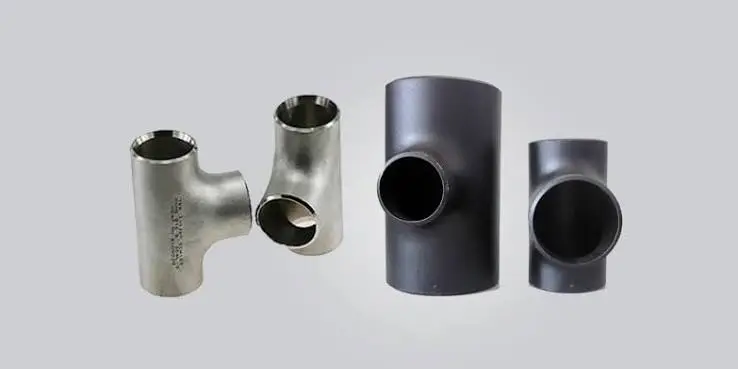
Manufacturing and Procurement Considerations to Minimize Failures
Decisions made in the supply chain have a direct effect on how reliable steel tees are in high-pressure junctions. Field failures can be avoided by choosing qualified suppliers and checking the quality of the manufacturing.
Critical Quality Control Checkpoints
Checking the sizes of steel tees shows that the limits set by ASME B16.9 are met for center-to-end measurements, consistent wall thickness, and branch angle correctness. Ultrasonic tests can find hidden layers or holes that can't be seen with the naked eye. A magnetic particle analysis shows tiny cracks on the surface at die lines or areas affected by heat. Charpy V-Notch impact testing proves that the material is tough at low temperatures for use in situations below room temperature. These inspection protocols are documented in inspection and test plans, providing clear evidence that the product meets the specified requirements.
Supplier Certification and Compliance Documentation
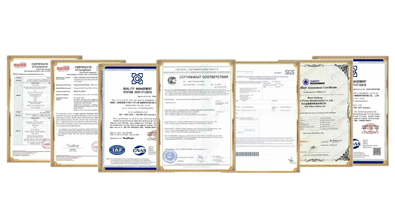
Manufacturers with a good reputation use ISO 9001:2015 quality control systems and have product certifications that show they follow international standards. Material Test Certificates that meet the requirements of EN 10204 3.1 make it possible to track finished goods by connecting them to chemical analyses and mechanical tests that were done at high temperatures. Third-party proof by organizations like SGS and GOST-R approval for Russian markets proves that export rules are followed and quality is consistent. These certificates should be required by procurement standards, and paperwork should be turned in before a shipment leaves.
Evaluating Lead Times and Customization Capabilities
Standard catalog items can be sent out quickly from the stock of distributors, but custom orders take weeks to months to make, based on the type of material and the size needs. Suppliers offering extensive customization capabilities can meet specific project requirements, though this generally incurs extended procurement lead times. Negotiating to buy in bulk can help you get volume discounts and keep the supply going for projects that have more than one phase. Finding the right balance between time limits and quality standards keeps you from making concessions that cause problems in the field.
Best Practices to Enhance Steel Tee Performance and Longevity at High-Pressure Junctions
When used in harsh conditions, steel tees last as long as possible if they are installed correctly and maintained regularly.
Installation Standards and Welding Procedures
For qualified welding processes, the required preheat temperatures, interpass temperatures, and post-weld heat treatment factors are all based on the type of material and the thickness of the wall. Proper fit-up ensures consistent root gaps and alignment tolerances, which lets the weld penetrate consistently. In serious situations, backing bands or replaceable plugs help the quality of the root pass. Welders who are certified to ASME Section IX or an equivalent standard show that they are skilled in the roles and methods that are needed. Keeping records of welding factors and welder skills makes people responsible and helps find the root cause of problems when they happen.
Corrosion Prevention and Protective Systems
In slightly corrosive settings, galvanized coatings guard against damage and offer sacrificial corrosion resistance, which makes the service life longer. Coating systems made of epoxy or polyurethane are better at resisting chemicals in harsher environments. In buried or submerged installations, cathodic protection systems stop galvanic corrosion. Internal linings keep flow rates high while protecting against acidic process fluids. If you choose corrosion-resistant alloys like duplex stainless steel, you won't have to worry about coating maintenance, and the metal will last for decades.
Inspection Protocols and Predictive Maintenance
Ultrasonic thickness surveys are done regularly to find wall loss before pressure containment is lost. Periodic radiography or phased array ultrasonic testing checks the stability of the weld and finds cracks before they start to form. A visual check records the state of the coating and shows which areas need to be fixed. Advanced tracking systems that use acoustic emission or fiber optic strain monitors can find problems in real time, so fixes can be made before they happen. These inspections, which are planned based on a risk assessment and the asset's history of use, keep it running longer and avoid unplanned shutdowns.
Conclusion
To keep steel tees from breaking at high-pressure junction points, you need to pay attention to the quality of the materials used, the quality of the making, and the way they are installed. Butt-weld steel tees that are made to meet ASME B16.9 standards have the precise measurements, good metal qualities, and strong construction that are needed for important uses. To keep project risks to a minimum, procurement teams must check that suppliers have the right certifications, require strict quality control, and make sure that the right steps are taken for installation. By understanding how things break, you can choose the right materials, construction methods, and safety systems for each service situation. Proactive tracking and repair plans find wear and tear before they happen, keeping people safe and keeping operations running smoothly.
FAQ
1. What steel tee types perform best in high-pressure applications?
Seamless construction eliminates longitudinal weld seams, circumventing the need for additional non-destructive inspections typical in critical applications.Hot-formed tees can also provide favorable grain flow patterns that improve resistance to fatigue damage. Wall thicknesses such as Schedule 80 to XXS may be selected for demanding services depending on pressure, temperature, and design calculations.
2. How does the manufacturing process affect steel tee durability?
Seamless tees made by hot extrusion or cold forming have better mechanical properties and a more uniform grain structure than welded plate-formed alternatives. Post-forming heat treatment, such as normalizing for carbon steel or solution annealing for stainless steel grades, reduces residual stresses and helps restore consistent mechanical properties. The right heat treatment stops weak behavior and the chance of stress corrosion cracks. Consistency from batch to batch is made possible by quality management systems that record controlled industrial processes.
3. Do galvanized steel tees prevent corrosion effectively?
When exposed to air and slightly corrosive conditions, galvanized coatings protect against rust well, making the service life longer than with bare carbon steel. When metals are hot-dip galvanized, they stick together better than when they are electroplated. The zinc coating protects the steel even when there is minor damage to the coating. In chemically harsh environments, corrosion-resistant alloys like stainless steel or duplex steel last longer than carbon-coated carbon steel.
Partner with RAYOUNG for Certified Steel Tees. Manufacturing Excellence
RAYOUNG makes certified butt-weld steel tees that are made to meet the strict needs of high-pressure junction applications in a wide range of industries. Our wide range of products includes elbows, reducers, and flanges that are made using ISO 9001:2015 quality systems and are certified for export by GOST-R and SGS. As a well-known company that supplies steel tees to EPC contractors, distributors, and industrial end users, you can trust us to give you accurate measurements, material traceability, and reliable mechanical performance. Email our technical team at info@hb-steel.com to talk about your project needs, get specific quotes, and find out how our bulk purchasing choices can lower your project costs and make sure it's delivered on time.
References
1. American Society of Mechanical Engineers. ASME B16.9-2018: Factory-Made Wrought Buttwelding Fittings. New York: ASME Press, 2018.
2. ASTM International. ASTM A234/A234M-21: Standard Specification for Piping Fittings of Wrought Carbon Steel and Alloy Steel for Moderate and High Temperature Service. West Conshohocken: ASTM International, 2021.
3. Boyer, Howard E. Atlas of Stress-Corrosion and Corrosion Fatigue Curves. Materials Park: ASM International, 1990.
4. Ellenberger, J. Paul. Piping and Pipeline Calculations Manual: Construction, Design, Fabrication, and Examination. Burlington: Elsevier Science, 2014.
5. Nayyar, Mohinder L. Piping Handbook, Eighth Edition. New York: McGraw-Hill Education, 2019.
6. Parrott, R. J., and H. M. Pitts. Chloride Stress Corrosion Cracking in Austenitic Stainless Steel. Research Report 316. London: Health and Safety Executive, 2011.

Need a quote? Want to see samples? Just say hello. We’re friendly. We’re fast. And we’re ready when you are.
Welcome to RAYOUNG – Strong Pipes, Stronger Promise