When to Choose Slip On Flange vs Weld Neck in Piping
Choosing between slip-on flange vs. weld neck options directly impacts your piping system's safety, reliability, and project budget. Slip-on flanges slide over pipe ends and offer straightforward installation, making them ideal for lower-pressure applications where cost control matters most. Weld neck flanges feature a tapered hub design that welds directly to the pipe, delivering superior strength for high-pressure, high-temperature environments. Understanding when each flange type serves your project best ensures compliance, minimizes downtime risk, and optimizes your total cost of ownership across the system's lifecycle.
Understanding Slip-On and Weld Neck Flanges: Definitions and Basics
The integrity of a piping system depends on choosing the right flange connections. The slip-on and weld neck designs are used for different things in industrial infrastructure. Knowing the basic differences between them helps you choose the right part for your needs.
What Are Slip-On Flanges?
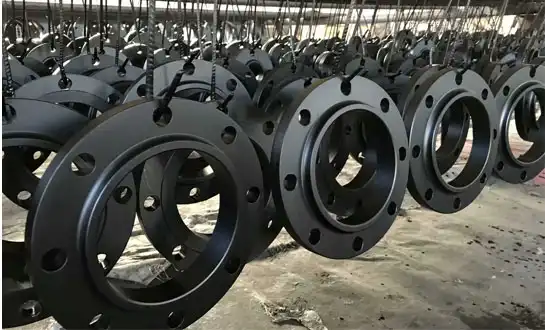
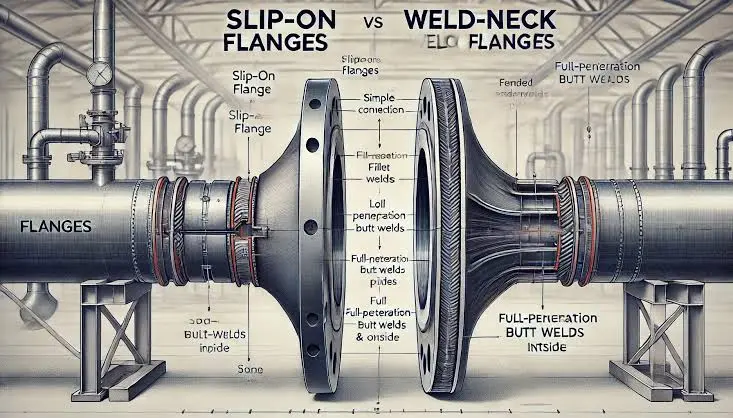
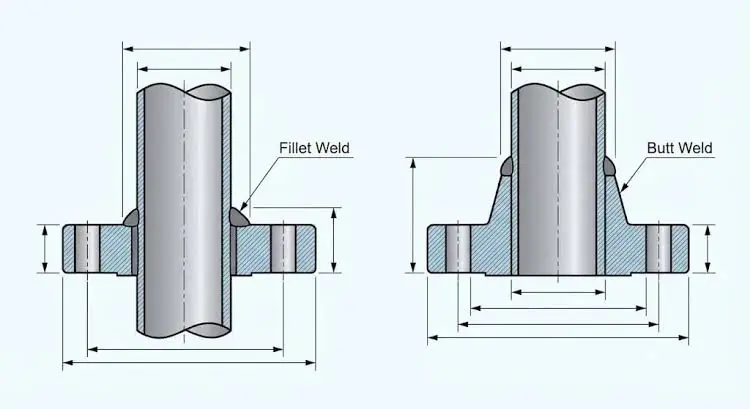
Slip-on flanges are made to fit over the outside diameter of the pipe before they are welded in place. This design makes it possible to connect pipes directly and securely without using any extra tools. The flange fits over the end of the pipe, and a fillet weld holds it in place on both the inside and the outside of the connection point. This double-welding method makes the joint strong enough for many industrial uses while keeping the installation process simple. RAYOUNG's slip-on flanges are made to meet ASME B16.5 standards and come in carbon steel, stainless steel, and alloys. They can withstand pressures from 150# to 2500#. The design works with moderate temperatures and pressures; its allowable pressure depends on the flange class, material grade, and operating temperature.
What Are Weld Neck Flanges?
Weld neck flanges are a stronger way to connect two pieces of metal. They have a long, curved hub that gets thinner as it gets closer to the pipe wall. This tapered design spreads stress evenly across the connection, which makes it much less likely that stress concentration points will fail when the connection is loaded and unloaded many times or when it expands and contracts due to temperature changes. The inside diameter of the connecting pipe aligns with the bore of the flange. This makes a smooth flow path that reduces turbulence and erosion-corrosion. This design is best for important service lines in oil and gas transfer, power generation steam systems, and chemical processing facilities because it only needs one butt weld to be installed and can be inspected completely with X-rays. Weld neck flanges are structurally strong enough for high-pressure services where the applicable pressure-temperature rating meets system requirements. They are especially suitable for demanding situations where system failure could result in serious safety and financial consequences.
Material Standards and Pressure Ratings
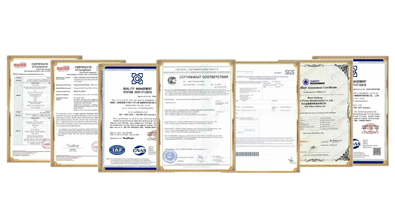
Both types of flanges are made to meet international standards like ASME, ANSI, DIN, and GOST. Choosing the right material depends on how it will be used. For example, carbon steel types like ASTM A105 are good for general uses, while stainless steel 304 or 316 is good for areas that are likely to rust. Different types of alloy steel can handle high temperatures and harsh chemicals. Pressure class numbers (Class 150, Class 300, Class 600, Class 900, Class 1500, and Class 2500) show the highest pressure that can be used at certain temperatures. This helps engineers come up with safe, legal specifications. We keep our ISO 9001:2015 certification up to date and offer GOST-R and SGS paperwork to prove that materials can be tracked and that quality standards are met for international markets.
Slip-On vs. Weld Neck Flanges: Key Differences and Use Cases
When choosing a flange for your piping job, knowing the technical and cost differences between these slip-on vs. weld neck designs will help you make a choice that meets your practical needs. The differences go beyond the way the structures are installed and include how well they work, how much they cost over time, and how often they need to be maintained.
Strength and Durability Comparison
The tapered hub form of weld neck flanges gives them more mechanical strength than slip-on options under the same loading conditions. This improves fatigue resistance and stress distribution compared with slip-on designs. The butt-weld connection spreads bending moments and thermal stresses more evenly. This makes it less likely that systems that are subject to changes in pressure, temperature, or mechanical vibration will fail before they should. This means that weld neck flanges are the standard for important uses in places like offshore platforms, industrial process lines, and high-pressure steam distribution, where a catastrophic failure would put people in danger and cause production to stop.
Even though slip-on flanges aren't as robust as weld neck designs, they are sufficiently strong for many general industrial applications.The two fillet welds make a strong connection that can handle normal temperatures and pressures without compromising system integrity. These flanges work well in steady-state situations with little thermal cycling or mechanical stress, like in HVAC systems, low-pressure gas lines, and water distribution systems.
Installation Complexity and Labor Costs
The ease of installation has a big effect on project timelines and worker costs. Slip-on flanges don't need as much exact pipe preparation because the pipe just slides into the flange hole. This lets you make small alignment changes before welding. Welders can make the connection pretty quickly using standard fillet welding techniques, which cuts down on the time and money needed for field labor. This benefit is especially useful for projects with short deadlines or when working with smaller engineering companies and local installers who put speed and cost-cutting first.
To get the right fit for butt welding, pipe cutting, and beveling, they must be done with more accuracy during weld neck installation. To keep things from distorting, welders have to keep a close eye on the factors and sequence of the welding process. In many important situations, radiographic testing is needed to make sure the weld is solid. Even though this raises the cost of installation at first, it pays off in the long run by making the system more reliable and reducing the need for repairs and unplanned downtime.
Lifecycle Cost Considerations
The total cost of ownership is much higher than the initial purchase price. Weld neck flanges usually cost 20–40% more up front than similar slip-on flanges because they require more material, are harder to make, and are harder to install. But their better resistance to fatigue and lower upkeep needs often make them more valuable over the system's 20–30-year service life. This is especially true in important applications where the cost of downtime is higher than the cost of the components.
Slip-on flanges are a good way to save money on projects that need to stick to a budget. They let procurement teams keep costs down without sacrificing safety in the right situations. Slip-on flanges are a smart choice when pressure ratings, temperature conditions, and mechanical stresses are within their design capabilities. This is because the lower material and fitting costs free up budget for other project goals.
When to Use Slip-On Flange or Weld Neck Flange: Decision-Making Guide?
By matching the type of flange to the needs of the application, you can make sure that your pipe system works reliably and saves money on the project. Slip-on flange or weld neck flange selections should take into account pressure levels, the operating environment, industry standards, and long-term maintenance plans.
Pressure and Temperature Guidelines
Slip-on flanges are commonly used in moderate-pressure and temperature applications, although the allowable limits depend on the pressure class, material, and service conditions; the exact ratings depend on the type of material and the class of the flange. In water distribution, building HVAC systems, and light industry processes where pressure and temperature stay mostly the same, these links work well in steady-state situations. The design is strong enough for these uses while making the costs of parts and installation reasonable.
When pressure, temperature, cyclic loading, or service conditions become more demanding, weld neck flanges are often preferred because of their improved stress distribution and fatigue performance. The tapered hub design can handle the mechanical stresses and thermal expansion that come with high-energy systems without affecting the integrity of the joint. Power companies use weld neck flanges for superheated steam lines that work at temperatures close to 1,000°F and pressures over 2,000 PSI. The link has to last for decades in these harsh conditions without breaking.
Environmental and Corrosion Factors
In corrosive settings, you need to be very careful about both the materials you choose and how you build the connections. Because they have a smooth bore transition and good stress distribution, weld neck flanges are better at stopping stress corrosion cracking. Offshore platforms and underwater pipes need weld neck connections that can handle being exposed to saltwater, being loaded and unloaded by waves, and being in places that are hard to get to and can't be maintained.
Slip-on flanges work well in slightly corrosive or non-corrosive settings as long as the right material types and coatings are used. They work well in controlled industrial settings, building systems that are enclosed, and other places where the environment is stable and predictable.
Industry-Specific Requirements
Specifications are set by different industries based on their operational priorities and government rules.For critical connections in oil and gas transmission systems, weld neck flanges are consistently preferred because they provide superior strength, fatigue resistance, and reliability in demanding environments. Weld neck flanges are also used on critical service lines that handle dangerous materials in chemical processing plants, while slip-on flanges are typically used for utility systems and connections that are not considered critical.
In bidding papers for government infrastructure projects and local sites, flanges are often chosen based on the pressure class and service conditions listed. Acceptable flange types are set by ASME, API, and local codes. Inspectors check the right material grades, pressure ratings, and installation quality.
Procurement Insights: Sourcing Quality Slip-On and Weld Neck Flanges
To keep projects on schedule without sacrificing safety or performance, good buying for slip-on and weld neck flanges strikes a balance between quality assurance, reasonable price, and dependable delivery. Building ties with certified manufacturers who know the needs of your business makes buying easier and lowers the risk in the supply chain.
Verifying Supplier Credentials and Quality
Certification of materials and manufacturing quality has a direct effect on how well flanges work and how well they meet regulations. Reliable suppliers give mill test reports (MTRs) for each production lot that show the chemical makeup, mechanical properties, and heat treatment history. These papers show that the material meets certain grades and standards, which helps with the need for traceability in businesses that are controlled.
Manufacturing certifications like ISO 9001:2015, API Q1, and PED compliance show that quality management and process control are done in a planned way. For important uses, third-party testing services from companies like SGS, TUV, and Bureau Veritas provide extra proof. We maintain extensive certification documentation and welcome third-party inspections to make sure that every part meets the needs of your project.
Pricing Variables and Lead Time Management
The price of flanges depends on the cost of raw materials, how hard they are to make, how many are needed, and the state of the market. Most of the time, carbon steel flanges are 30–50% less expensive than stainless steel ones. On the other hand, exotic alloys cost more because they are more expensive to manufacture and source. Weld neck flanges are more expensive than slip-on options because they need more material and to be machined.
Lead times range from 2 to 4 weeks for normal sizes in common materials to 8 to 12 weeks for special alloys or project-specific specifications. Project delays can be avoided by planning buying plans around these dates. Keeping in touch with distributors who stock standard items makes it easy to get the sizes that are needed most of the time, and working with manufacturers makes it possible to get custom specifications for specific projects.
Customization Options for Specific Applications
Standard sizes and pressure ratings work for most uses, but custom specifications can be made to fit the needs of a specific project. Extreme rust or temperature conditions call for special materials like duplex stainless steel, nickel metals, and titanium. Special facing types, non-standard bore sizes, and changes to the dimensions can be made to fit odd pipe plans or equipment hookups.
We offer a wide range of customization options, such as special types of materials, non-standard sizes, and mechanical properties that aren't found in other products. Our engineering team works with your design team to make sure that the custom flanges fit perfectly with your piping system and comply with applicable safety requirements and code requirements.
Conclusion
When deciding between slip-on flange vs. weld neck options, you need to weigh the technical performance, cost, and operational goals that are unique to your application. Slip-on flanges are a cheap way to deal with mild pressure and temperature conditions, where it's important to keep costs low and fitting easy. Weld neck flanges are stronger and more reliable, making them ideal for high-pressure, mission-critical service situations where long-term performance and safety are worth the extra cost. When you match the flange's features to your system's needs, taking into account things like operating environment, maintenance access, pressure ratings, and lifecycle costs, you can get the best performance and keep project risk to a minimum. The choice affects not only the immediate success of the project but also the long-term dependability of operations and the costs of maintenance over many years of service.
FAQ
1. Can slip-on flanges handle high-pressure applications safely?
Slip-on flanges can handle moderate pressures up to their rated class as long as they are installed and specified correctly. Standard ASME B16.5 slip-on flanges come in pressure classes up to 2500#. However, weld neck designs are usually used for applications above 600 PSI because they are better at spreading stress and resisting fatigue. The dual fillet weld connection is strong enough for many industrial processes, but systems that have to deal with changes in pressure, temperature, or mechanical shaking would be better off with weld neck construction.
2. What factors should influence my flange selection decision?
Operating pressure and temperature set the minimum standards. Above 600 PSI or 650°F, weld neck flanges are required. Safety criticality should be carefully thought through—dangerous materials, catastrophic failure effects, and rules often call for stronger connections. Initial costs are affected by the budget and timing for installation. Total ownership economics are affected by how easy it is to do upkeep and how long the product is expected to last. For some uses, industry guidelines and bid requirements may say what kind of flange to use.
3. How does welding quality affect flange performance?
The quality of the weld directly affects how strong and reliable the connection will be in the long run. Joints meet design requirements when they are welded using the right techniques, by trained welders, and after the welding process is completed. With weld neck flanges, you can use X-rays to check the quality on the inside, which meets important application needs. Slip-on flanges depend on fillet welds, which need to be properly penetrated and fused to reach their stated strength. For both designs, welding rules and processes that are specific to the type of material and the conditions of service must be followed.
Get Expert Guidance on Flange Selection from RAYOUNG
To choose the best flange specification for your piping project, understanding slip-on flange vs. weld neck performance differences can help you evaluate long-term performance expectations, technical requirements, and regulatory compliance. RAYOUNG keeps a large stock of slip-on and weld neck flanges in all pressure classes and material grades. They are certified by ISO 9001:2015 and have a lot of quality paperwork to back this up. Our engineering team gives you advice based on your unique needs to help you find the best mix between performance, safety, and cost. We give certified goods that meet your exact needs, whether you need standard parts right away or custom specs for special needs. For personalized advice on your flange needs, please email our technical team at info@hb-steel.com. To help you meet your procurement deadline, we provide you with thorough quotes, certifications of materials, and delivery plans.
References
1. American Society of Mechanical Engineers. (2020). ASME B16.5: Pipe Flanges and Flanged Fittings NPS 1/2 Through NPS 24 Metric/Inch Standard. New York: ASME Press.
2. Becht IV, C. (2018). Process Piping: The Complete Guide to ASME B31.3 (4th ed.). New York: ASME Press.
3. Ellenberger, J. P. (2019). Piping and Pipeline Calculations Manual: Construction, Design, Fabrication, and Examination (2nd ed.). Oxford: Butterworth-Heinemann.
4. Nayyar, M. L. (2017). Piping Handbook (8th ed.). New York: McGraw-Hill Education.
5. Smith, P. R., & Zappe, R. W. (2016). Valve Selection Handbook: Engineering Fundamentals for Selecting the Right Valve Design for Every Industrial Flow Application (5th ed.). Burlington: Gulf Professional Publishing.
6. Thielsch, H. (2015). Defects and Failures in Pressure Vessels and Piping. Malabar: Krieger Publishing Company.

Need a quote? Want to see samples? Just say hello. We’re friendly. We’re fast. And we’re ready when you are.
Welcome to RAYOUNG – Strong Pipes, Stronger Promise