What Are the Main Types of Steel Pipes for Heavy Industry?
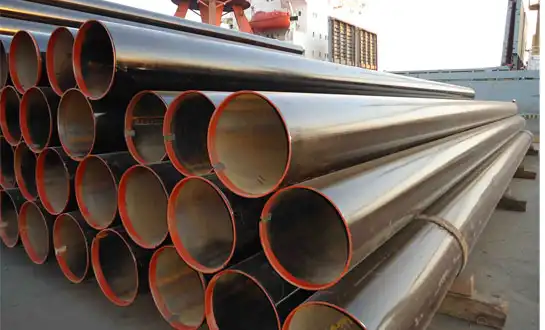
Heavy industry relies on several major categories of steel pipes, classified by manufacturing method, material, and surface protection, each suited to specific operational demands. Seamless steel pipes offer superior strength for high-pressure applications without weld seams. Welded pipes, including ERW (Electric Resistance Welded) varieties, provide cost-effective solutions for large-diameter projects. Carbon steel pipes dominate structural and fluid transport roles, while stainless steel pipes excel in corrosive environments. Galvanized pipes extend service life through protective zinc coatings. Understanding these types of steel pipes helps procurement professionals select materials that balance performance requirements with budget constraints, ensuring project success across oil and gas, power generation, and infrastructure sectors.
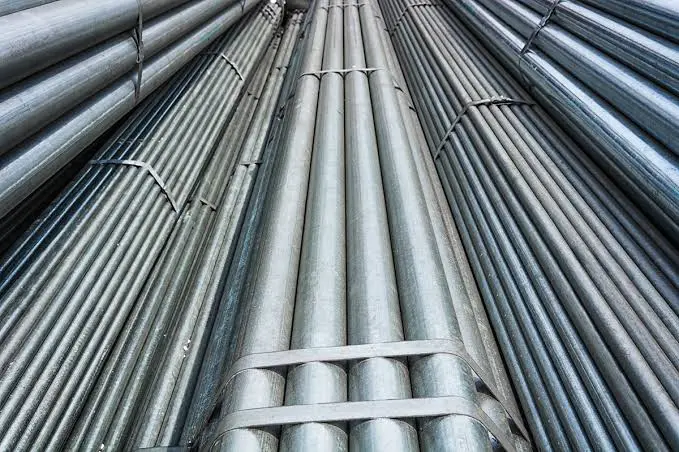
Steel pipes serve as the backbone of modern infrastructure, providing reliable transportation for fluids, gases, and structural support across various industries. Since 2006, we've built extensive experience in steel pipe export through strong partnerships with certified manufacturing facilities, ensuring consistent quality and reliable performance. The result is durable piping systems that maintain integrity under high pressure and extreme conditions, helping keep your projects running smoothly for years to come.
Overview of Main Types of Steel Pipes Used in Heavy Industry
Pipes that can handle high temperatures, pressures, and toxic substances are needed in heavy industry settings. As part of the decision process, you need to know how the methods used for production affect performance and fit for a given application.
Seamless Steel Pipes: The Strength Standard
To make seamless pipes, solid steel billets are pierced and rolled into cylindrical shapes without any longitudinal seams being made. This manufacturing process helps maintain consistent wall thickness and eliminates the longitudinal weld seam found in welded pipes.
A106 seamless pipes are designed to last in harsh settings with high temperatures and pressures. In thermal and nuclear power plants, these pipes carry superheated steam lines that connect boilers to turbines. They can handle thermal cycles that could cause welded pipes to crack from thermal fatigue. In petrochemical refineries, seamless pipes are used a lot to move high-temperature crude oil, refined products, and aggressive gases. When working with volatile fuels like benzene or sulfurous chemicals, the absence of a longitudinal weld eliminates a potential weld-related corrosion location.
The applicable ASTM chemical and mechanical requirements set the parameters for these properties. To make sure the steel is fully deoxidized, Grade B seamless pipe needs to have a carbon content of no more than 0.30%, manganese content of 0.29 to 1.06%, and silicon content of no less than 0.10%. The specified mechanical properties include a minimum tensile strength of 60,000 psi (415 MPa) and a minimum yield strength of 35,000 psi (240 MPa). These requirements help the pipe maintain the required mechanical properties under changing pressure and operating conditions, including applications such as compressor stations and offshore platforms.
Welded Steel Pipes: Versatility Meets Economy
Welded pipes are made by shaping flat steel plates or strips into tubes and then joining the ends together using different types of welding. This manufacturing method offers greater flexibility for producing large-diameter pipelines and custom sizes.
ERW pipe comes in a lot of different sizes and shapes. In both home and business settings, round pipe is often used to move gases and liquids. Square and rectangular ducts are used in building projects, as well as in furniture and home decor. When you use ERW manufacturing, you can also make custom-shaped tubes like U-bends.
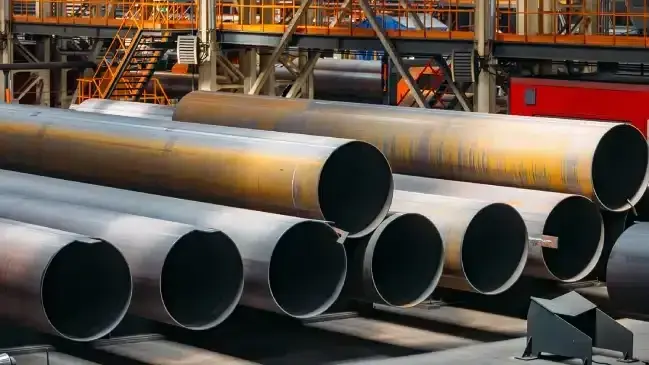
A long piece of steel is fed through a set of rollers that bend, shape, and flatten it before a welded joint is made along its length. This makes straight-seam electric resistance-welded pipe. This process makes pipes that don't leak and have great mechanical properties. It has even weld lines, smooth inside and outside surfaces, and walls that are all the same width. Pipes made of structural steel are often used for water pipes, oil and gas pipelines, and making cars.
To make spiral welded pipe, you form a flat steel strip into a spiral tube and join the edges together, typically using submerged arc welding. This method allows economical production of large-diameter pipes with the required strength and pressure capacity when the appropriate steel grade, wall thickness, and welding quality are specified. The spiral manufacturing process can produce pipes with diameters bigger than 600 mm for applications requiring large flow capacity. Large-scale oil and gas transmission projects, submarine pipelines, and steel structure supports are all examples of uses.
Carbon Steel Pipes: The Industrial Workhorse
Due to their high strength-to-cost ratio and wide availability, carbon steel pipes are used a lot in heavy industry. The main elements in these pipes are iron and carbon, with small amounts of manganese, silicon, and other alloying elements.
The mechanical properties of the material make it suitable for transporting oil, gas, water, and other industrial fluids. Industries that use carbon steel pipes include oil refineries, chemical plants, power plants, water treatment plants, mining activities, and building sites. The pipes are used in structural applications where load-bearing capacity is very important, in mechanical systems that need to be dimensionally stable, and in industrial processing conditions that are moderately corrosive.
Stainless Steel Pipes: Corrosion-Resistant Solutions
Stainless steel pipes contain at least 10.5% chromium and often nickel, which forms a passive oxide layer that stops corrosion. Among the different types of steel pipes, stainless steel pipes are particularly resistant to corrosion. When these pipes are exposed to water, chemicals, and temperature changes that would quickly break down carbon steel pipes, they keep their structural integrity.
Stainless steel piping systems are used in industries that handle corrosive or high-purity materials, including pharmaceutical manufacturing, food processing, chemical production, and marine applications. The material is clean, so it doesn't get contaminated in situations where product purity is very important. Even though they cost more at first than carbon steel choices, they often pay for themselves in corrosive conditions because they last longer and need less upkeep.
Galvanized Steel Pipes: Extended Service Protection
Hot-dip galvanization adds a protective zinc coating to pipes that are galvanized. The zinc layer acts as a sacrificial anode, corroding more quickly to protect the steel base below. This coating technology makes pipes last a lot longer in outdoor settings and moderately corrosive conditions.
Galvanization is useful for fire protection networks, water distribution systems, and building structures outside. The treatment prevents rust in a cost-effective way, without having to pay the high price of stainless steel. Damage to the zinc layer can speed up localized rusting, so regular inspections are needed to make sure the coating remains intact.
Comparison of Steel Pipe Types for Heavy Industry Needs
When choosing pipe materials, procurement professionals have to look at a number of factors. Performance needs, price limits, availability, and the cost of long-term upkeep are all things that affect how decisions are made.
Seamless vs. Welded Pipes: Strength and Cost Analysis
Because they do not have a longitudinal weld seam, seamless pipes provide a uniform structure that can be advantageous in demanding applications. They are commonly selected for high-pressure applications, important oil and gas transmission lines, and systems that are subject to significant thermal cycling or mechanical stress when required by the applicable design and product standards.
Welded pipes are cheaper for projects that need pipes with a big diameter and mild pressure needs. With modern welding technologies, high-quality welded joints can provide reliable performance in many applications when properly designed, manufactured, and inspected. In many cases, ERW pipes can be more economical than seamless pipes of the same size, although the actual price difference depends on the material grade, dimensions, order volume, and market conditions.
The selection decision depends on how important the application is. Ultra-high-pressure systems, offshore sites that are exposed to harsh marine environments, and uses where failure would have serious effects are all good reasons to pay more for seamless pipes. Welded pipe specifications give the best value for water distribution networks, structural applications, and moderate-pressure industrial systems.
Carbon vs. Stainless Steel: Balancing Performance and Investment
Carbon steel pipes are very useful in situations where they won't be exposed to a lot of corrosion. The material is strong enough to hold structural loads, doesn't wear down easily, and stays the same size across a range of temperatures. Carbon steel is easy to find and comes from well-established supply chains. This helps keep projects on schedule and within budget.
When corrosive chemicals, wetness, or contamination are a problem, stainless steel can be an appropriate choice depending on the service conditions. Passive corrosion resistance is important for chemical processing plants that work with acids or bases. Stainless steel is widely used in the food and pharmaceutical industries to maintain product hygiene and facilitate cleaning. Carbon steel quickly rusts in saltwater marine settings, so stainless steel options are a better choice, even though they cost more at first.
Maintenance schedules, repair processes, and the chance of downtime should all be taken into account when figuring out the total cost of ownership. Carbon steel systems that need to have their coatings renewed, fixed, or replaced often may end up costing more over their lifetime than properly designed stainless steel installs.
ERW vs. Other Welded Methods: Quality and Application Fit
Electric resistance heating and pressure are used in ERW technology to make high-quality longitudinal welds. The process makes welds that are always of good quality and have smooth internal surfaces that can help minimize pressure drop and flow turbulence. ERW pipes can handle pressures that are suitable for most industrial uses and stay cost-effective.
When it comes to large diameters above 600mm, spiral-welded pipes are stronger. When compared to straight longitudinal welds, the helical weld configuration provides suitable circumferential strength and is better able to handle pressure. Spirally welded construction is better for infrastructure projects that need large-diameter pipes for water, sewage, or low-pressure gas distribution.
For thick-wall applications requiring high strength, submerged arc welded (SAW) pipes are highly suitable for applications where ERW manufacturing is not appropriate. When the wall thickness is too great for ERW manufacturing, heavy industrial applications, high-pressure transmission lines, and major structural foundations utilize SAW pipes.
Understanding Steel Pipe Grade Standards and Specifications
International guidelines set the rules for making steel pipes, which makes sure that quality and performance are the same all over the world. Professionals in procurement need to know about key standards to make sure that they are met and that the product is suitable.
Critical Grade Standards: API, ASTM, and ISO
API 5L standards spell out what line pipe used in oil and gas transmission systems needs to meet. Grades go from API 5L Grade B (less strong but more flexible) to X42, X52, X60, and X70 (grades with progressively higher specified strength levels). Higher grades can allow thinner wall designs in some applications, which may lower material costs and installation weight while maintaining the required pressure capacity, subject to the applicable design code and other service conditions.
ASTM guidelines can be used for many things. ASTM A53 talks about standard pipes for use in mechanical and pressure situations. ASTM A106 says that seamless carbon steel pipe can be used in high-temperature situations. ASTM A312 sets the rules for using stainless steel pipe in high-temperature or corrosive environments. Each standard sets limits for chemical composition, mechanical property requirements, testing procedures, and how things should be marked.
International harmonization is made possible by ISO standards, which makes global buying easier. ISO 3183 is closely aligned with API 5L specifications for line pipe used in the petroleum and natural gas industries, and ISO 9329 is about pressure-resistant seamless steel tubes. A manufacturer's quality systems and product flexibility are shown by certification to more than one standard.
Wall Thickness and Schedule Classifications
Schedule numbers, such as SCH 10, SCH 40, SCH 80, and SCH 160, designate standardized wall thicknesses for specific nominal pipe sizes. Higher standard numbers mean that the walls are thicker, which increases the pressure capacity and mechanical strength while decreasing the area for flow inside the pipe. SCH 40 is commonly used for many general-purpose applications because it provides a balance between strength and material usage.
Choosing a schedule has a big effect on how well the method works. Walls that aren't strong enough pose a safety risk because they could break under sudden pressure changes or mechanical impacts. Specifications that are too big waste money on materials and make installation more difficult for no reason. The right schedule is chosen by doing accurate calculations of pressure, temperature, and safety factors.
Dimensional guidelines make sure that parts can work together. ANSI B36.10M tells us how to relate the outside sizes and wall thicknesses of carbon and alloy steel pipes. Following these standards makes it possible for manufacturers to work together and makes it easier to choose fittings when buying and installing them.
Measurement Techniques and Quality Verification
Ultrasonic testing finds differences in wall thickness, laminations, and mistakes in the way the product was made. This method checks the minimum wall thickness along the entire length of the pipe without damaging it, making sure that the specifications are met. Hydrostatic testing applies a specified internal test pressure to verify structural integrity and leak tightness in accordance with the applicable product standard.
Spectrometric analysis of the chemical composition shows that the alloy composition meets the grade standards. Tensile strength, yield strength, and elongation traits are all measured by mechanical tests. Impact testing checks how tough something is under dynamic loading, which is especially important for low-temperature uses where there is a chance of brittle fracture.
These test results are documented in mill test reports, which make quality records for each pipe lot easy to find. Contracts for buying things should require inspection certificates that meet EN 10204 3.1 or 3.2 requirements. These documents provide traceable material and inspection results, while EN 10204 3.2 can involve validation by an independent inspector or purchaser's representative.
Conclusion
Choose among different types of steel pipes depending on project costs and benefits. Seamless pipes meet design and product criteria for harsh environments, whereas welded pipes are cheaper for moderate needs. Carbon or stainless steel choice depends on lifetime cost and corrosion resistance. Grades guarantee quality, and protective coatings last. Bulk purchase, strategic supplier selection, and certification checks save costs and reduce risks. By considering these factors, procurement specialists may choose pipe systems that meet safety, performance, and budget criteria and work reliably in heavy industries.
FAQ
1. What determines the best steel pipe type for my project?
Application demands determine pipe selection. When needed by design and product requirements, seamless pipes may be used for high-pressure applications to ensure system strength and reliability. Corrosive situations need treated carbon steel or stainless steel. Welding depends on budget and diameter. Regulatory compliance, operational temperatures, and fluid properties further limit specifications. Sellers with expertise can assist you in choosing the appropriate materials for your technical demands.
2. How do steel pipe grades affect cost and performance?
Better materials are stronger; therefore, thinner walls can bear the same pressure. Some wall-thickness designs may benefit from API 5L X60's greater minimum yield strength than X52. Thus, large-diameter projects save material. Because they are lighter and simpler to handle, premium grades may be cheaper to install but 10–30% more costly. Grades should include material costs, fitting costs, and performance demands.
3. What steel pipe supplier certificates do I require?
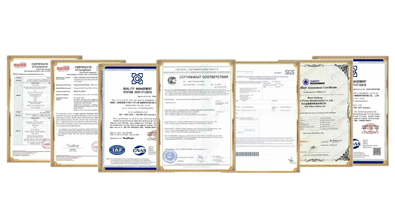
ISO 9001:2015 audits quality management. API certificates guarantee oil and gas compatibility. Mill test certificates that satisfy EN 10204 3.1 or 3.2 criteria document material compliance and inspection findings. NACE MR0175/ISO 15156, NSF/ANSI 61, and PED standards may assist in satisfying application-specific criteria. GOST-R and SGS certifications ensure export compliance and material quality. This ensures materials satisfy project and government standards.
Partner with RAYOUNG: Your Trusted Steel Pipe Manufacturer
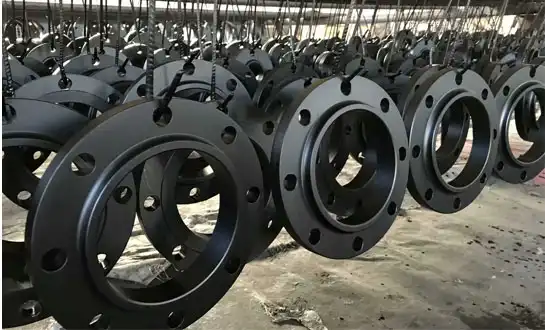
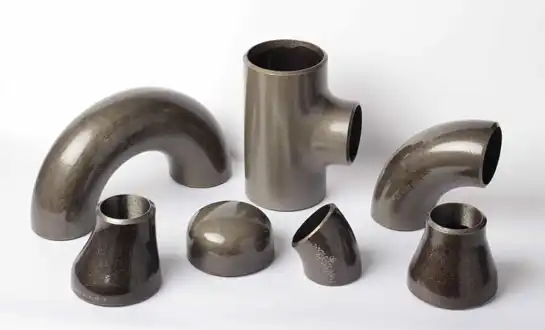
Choosing the right steel pipe provider has a direct effect on how well your project meets its goals and stays within its budget. Since 2006, RAYOUNG has been doing business in both local and international markets. They have built a name as a reliable seller of carbon steel pipes, which is supported by ISO 9001:2015 certification, GOST-R compliance, and SGS validation. Our wide range of products covers different types of steel pipes, including carbon steel pipes that are smooth or welded, pipes made of stainless steel, and a comprehensive range of industrial pipe fittings, including buttweld steel bends, reducers, and flanges, ensuring safe and reliable connections. We know that the most important things in procurement are reducing risk, ensuring compliance, meeting deadlines, and keeping costs low. Our relationships with manufacturers give us stable quality and allow us to make changes, such as offering precision cutting and thorough inspection services. Send an email to info@hb-steel.com to talk to our expert team about your needs and get thorough quotes that meet both your performance needs and your budget.
References
1. American Petroleum Institute. (2018). Specification for Line Pipe: API Specification 5L, Forty-Sixth Edition. Washington, DC: API Publishing Services.
2. ASTM International. (2020). ASTM A106/A106M-19a: Standard Specification for Seamless Carbon Steel Pipe for High-Temperature Service. West Conshohocken, PA: ASTM International.
3. Davis, J.R. (Ed.). (2006). Corrosion of Weldments. Materials Park, OH: ASM International.
4. Mohitpour, M., Golshan, H., & Murray, A. (2007). Pipeline Design & Construction: A Practical Approach, Third Edition. New York: ASME Press.
5. Revie, R.W., & Uhlig, H.H. (2008). Corrosion and Corrosion Control: An Introduction to Corrosion Science and Engineering, Fourth Edition. Hoboken, NJ: John Wiley & Sons.
6. Xie, M., & Tian, Z. (2018). "A Review on Pipeline Integrity Management Utilizing In-Line Inspection Data." Journal of Pressure Vessel Technology, 140(5), 050801-1 to 050801-12.

Need a quote? Want to see samples? Just say hello. We’re friendly. We’re fast. And we’re ready when you are.
Welcome to RAYOUNG – Strong Pipes, Stronger Promise