Understanding Pipe Flange Types: A Comprehensive Guide for Industrial Sourcing
When sourcing components for critical piping systems, understanding the specifications for pipe flanges can mean the difference between smooth operations and costly system failures. In industrial systems, a pipe flange is an important mechanical link that holds pipes, valves, pumps, and other parts together. Choosing the right flange type based on pressure ratings, material makeup, and application needs has a direct effect on project delays, safety compliance, and ongoing costs. This complete guide gives purchasing managers, project engineers, and industrial buyers the technical information they need to make smart choices about where to buy things that reduce risk and make the best use of budgets and systems.
What Are Pipe Flanges? A Complete Overview
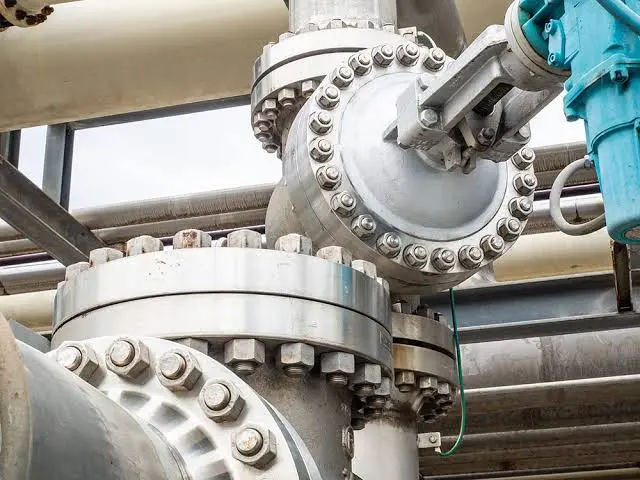
Pipe flanges are critical components of industrial piping systems because they allow pipes, valves, pumps, and other specialized equipment to be securely joined together. Their design makes it easy to put them together and take them apart, which is important for regular maintenance, equipment upgrades, and emergency fixes that don't need the whole system to be shut down. We've seen in many commercial setups that choosing the right flange cuts down on downtime and upkeep costs by a large amount.
Fundamental Functions in Piping Systems
For industrial pipe systems to work, they need solid ways to join that can handle changing temperatures, pressures, and chemicals. Flanges meet this need by making connection points easy to reach. This keeps the system's structure while letting parts be inspected and replaced. Unlike welded joints, which need to be cut and re-welded, flanged connections can be opened and closed many times over the course of their useful life. This makes them essential in places where maintenance or process modifications occur frequently.
Industry Standards Governing Flange Design
Several worldwide standards govern the production of flanges to make sure that they are safe and compatible across manufacturers and areas. For flanges up to 24 inches in diameter in the US, ASME B16.5 is the standard, and ASME B16.47 is for larger diameters. The DIN and EN 1092-1 standards are often used in European systems, while AWWA C207 is only used for water delivery. Knowing these standards helps people who buy things make sure that the parts they're buying meet the needs of the project and the rules in their area. This keeps expensive compatibility problems from happening during installation.
Pressure Ratings and Size Classifications
The flange pressure number tells you the highest pressure that a flange can safely hold at certain temperatures. Some common ASME pressure classes are 150, 300, 600, 900, 1500, and 2500. The higher the number, the more pressure it can hold. PN (Pressure Nominal) numbers are used in European standards. Common ratings include PN10, PN16, PN25, and PN40, each representing a different pressure rating. By matching the pressure class to the working conditions of the system, safety gaps are created that protect against pressure spikes and thermal expansion. These are important factors in keeping leaks and catastrophic failures from happening.
Different Types of Pipe Flanges and Their Industrial Uses
In the industrial market, there are many different types of flanges, each designed to meet specific fitting needs, pressure conditions, and upkeep concerns. To choose the right type, you need to know how differences in design affect the structure's strength, the difficulty of installation, and the product's long-term performance.
Weld Neck Flanges Versus Slip-On Flanges
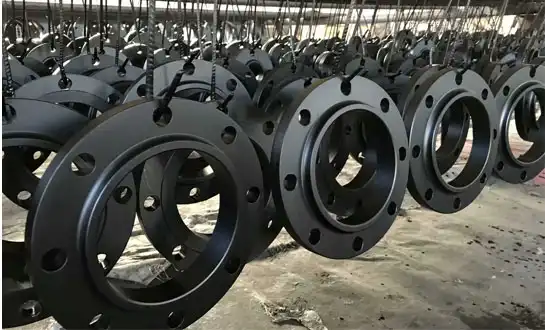
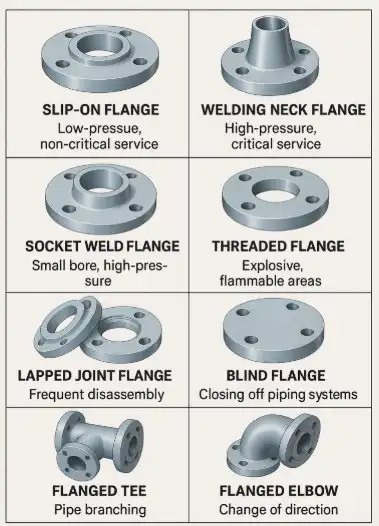
Weld neck flanges have a long, curved hub that gets thinner as it gets closer to the pipe wall. This makes the link stronger with a single full-penetration butt weld. Weld neck flanges are great for high-pressure situations, extreme temperatures, and situations with cycle loading or thermal expansion because this design spreads stress more evenly across the joint. Their higher strength comes at a higher cost and requires skilled welding techniques.
To make the link strong, slip-on flanges are typically installed with fillet welds on both the inside and outside of the pipe end. Their easier design cuts down on original costs and installation time, which is especially helpful for low-budget projects or uses that need lower pressure, like cooling water systems or compressed air lines. The requirement for a double weld, on the other hand, could lead to weak spots under high stress.
Blind Flanges for System Termination
Blind flanges are solid pipe flange discs that don't have center holes. They are used to cover the ends of pipes, block valve openings, or seal vessel nozzles while they are being maintained or while planning for future growth. These parts are very helpful when checking the system because they let different parts be pressurized separately to find leaks. We suggest blind flanges for situations that need either temporary or permanent closure points. This gives you more options for building projects that happen in stages or for isolating equipment while fixes are being done.
Threaded and Socket Weld Flanges for Small-Bore Applications
Threaded flanges have threads on the inside that screw straight onto pipe ends that have threads on the outside. This means that no welding is needed at all. This design works well for low-pressure, small-diameter jobs where welding might not be possible or isn't allowed because of the risk of fire. Socket weld flanges have a socket hole that fits the pipe end, so they only need one external fillet weld. Both types work well for connecting instruments, sample systems, and utility pipes, typically in smaller pipe sizes.
Lap Joint Flanges for Rotating Alignment
Lap joint flange systems have two parts: a backing flange that can turn easily and a stub end that is soldered to the pipe. This design lets you line up the bolt holes after installing the pipe, which makes field assembly easier when there are problems with alignment. The design works with systems that need to be taken apart often because the stub end stays connected and only the backing plate needs to be taken off. Industries that use corrosive fluids can benefit from stub ends made of expensive alloys and backing flanges made of cheaper carbon steel.
Face Type Variations: Raised Face and Flat Face
The shape of the face has a direct effect on how well it seals and which gasket to use. Raised face flanges have a raised surface around the hole where the gasket fits. This design concentrates the bolt load over a smaller area, significantly enhancing the sealing performance. This design is the most popular choice for oil and gas, chemical processes, and power generation. Flat face flanges have a smooth, flat closing surface across the whole face. They are often used for cast iron flanges, glass-lined equipment, or situations where even stress distribution keeps brittle materials from deforming or breaking the flange.
Materials and Manufacturing Types of Pipe Flanges
Choosing the right materials and production methods for a flange determines how well it will hold up against practical pressures, corrosion, and changes in size over its lifetime. These things have a direct effect on the total cost of ownership because they affect how long something lasts and how much upkeep it needs.
Carbon Steel Versus Stainless Steel Flanges
For general commercial uses, carbon steel flanges are the most cost-effective option because they offer great strength at a low price. The most common fluids are water, air, and non-corrosive ones. ASTM A105 (forged carbon steel) and ASTM A36 plate material are used for these. Because they are prone to rust, they need protective coats or cathodic protection in places where corrosion is common, which raises the cost of upkeep over their lifetime.
Stainless steel flanges cost more at first, but they last longer because they don't rust. They can be used in chemical processing, food and beverage, medicinal, and marine environments. Grade 304 stainless steel is good for most corrosive service applications, while 316 stainless steel is better at handling chlorides and acidic conditions. The passivation layer of the material fixes small surface damage on its own, which cuts down on upkeep needs and increases the material's useful life in tough environments.
Forged Versus Cast Manufacturing Methods
Forged flanges are mechanically deformed at high temperatures, which lines up the grain structure of the material with the stress lines in the part. This process makes parts with better mechanical qualities, tighter tolerances for size, and higher stability under cyclic loading conditions. Forged construction provides superior strength, toughness, and fatigue resistance, which is useful for high-pressure systems, vital services, and uses that change temperatures often.
When liquid metal is poured into molds, complex forms with large diameters or non-standard configurations can be made cheaply. Even though cast materials are usually fine for lower-pressure uses, their mechanical qualities are harder to predict because they might have holes, inclusions, or cooling problems. For pressure classes 300 and up, we usually suggest forged construction. Cast alternatives are generally considered only for low-pressure, large-diameter applications where they offer significant economic advantages.
Plate Flanges for Cost-Sensitive Applications
Plate pipe flanges are made by making bolt holes in rolled steel plate stock, cutting discs that are round, and then milling the bore and facing sides. For low-pressure, non-critical uses, this flat, hubless form is much cheaper than forged weld neck or slip-on flanges, but it doesn't have the strength of those options. Their simple geometry makes it easy to make unique parts that aren't in standard dimensional catalogs. This is especially helpful for AWWA C207-compliant water distribution systems or HVAC setups that don't need a lot of pressure. Because they don't have a hub, they need to be carefully welded with double fillet welds to make sure the joint is strong enough. Consequently, due to their structural limitations, they are restricted to lower-pressure systems and are rarely specified for high-pressure or critical applications.
Specialty Alloy Materials for Extreme Conditions
Alloy steel flanges have extra parts added to them, like chromium, molybdenum, or nickel, to make certain qualities better. Chrome-moly alloys can handle high temperatures in the oil and power industries, while nickel alloys can handle hydrogen damage in the fuel handling industry. Duplex stainless steels contain a mixed austenitic-ferritic microstructure. They offer high mechanical strength and excellent localized corrosion resistance, making them ideal for offshore platforms and subsea pipelines. Copper-based alloys may be used in certain seawater applications, but they aren't used as much as they used to be because stainless metals are stronger.
Installation and Measurement Guidelines for Pipe Flanges
The right way to put something together makes sure it doesn't leak and extends the life of the parts. Accurate measurements stop buying mistakes and costly changes in the field.
Accurate Dimension Measurement Techniques
To measure current flanges or check new parts, you need precise tools and a set of steps to follow. The bolt circle diameter is the centerline circle that goes through all of the bolt holes. It can be carefully measured with inside callipers or by using chord lengths to do the math. The outside diameter tells you how big the flange is overall, and the hole diameter needs to match the inside diameter of the pipe. The thickness is used to figure out the pressure class, and the bolt hole width is checked to make sure the fasteners will work together. Specification mistakes that slow down projects can be avoided by keeping track of these measurements.
Gasket Selection and Torque Specifications
The material used for gaskets has to be able to withstand the fluid being worked on while still being able to stretch when compressed and change temperatures. Compressed non-asbestos fiber is good for water and air services in general. Spirally wound metal gaskets with filler material can handle higher temperatures and pressures, and ring-type joint gaskets seal metal to metal in harsh circumstances. When bolt torque is just right, it evenly presses down on the gasket face. Too little torque lets leaks happen, while too much torque breaks gaskets or bends flanges. Even load distribution is achieved by using cross-pattern tightening steps and following the manufacturer's torque specs.
Alignment and Assembly Best Practices
To keep gaskets from getting crushed or gaps from forming that lead to leaks, flange sides must line up straight to within a certain tolerance. Misaligned flanges can be put back in place without putting too much stress on the pipe by using alignment pins or careful jack fixing. Lubricating bolt threads reduces friction, allowing the applied torque to translate effectively into uniform clamping force rather than being lost to thread friction. Instead of fully tightening each bolt one at a time, bolts should be tightened in several passes using star patterns, bringing all fasteners gradually to final force.
Common Installation Challenges and Solutions
Misalignment is frequently caused by differential thermal expansion, inadequate pipe supports, or equipment foundation settlement. By adding expansion joints or pipe guides, you can allow for movement while keeping the flanges aligned. A bad surface finish is often the cause of gasket failure. Surfaces that are too rough can tear soft gaskets, while surfaces that are too smooth make it harder for things to grip. Machining the sides of the flanges to a certain level of surface roughness (typically Ra 3.2–6.3 μm) improves seals. Once initial startup is complete, the bolts need to be retorqued after thermal cycling has stabilized. This is especially important in high-temperature applications where materials relax under stress.
Conclusion
To effectively source pipe flanges, you need to balance project budgets and deadlines with technical requirements, material qualities, production quality, and provider dependability. By knowing the differences between weld neck, slip-on, blind, threaded, and plate flanges, procurement experts can choose parts that meet the needs of specific uses in terms of safety, performance, and cost-effectiveness. When choosing a material from carbon steel, stainless steel, and speciality metals, it's not just the price that matters at the start. Corrosive environments, high temperatures, and the cost of ownership over time must also be taken into account. Checking the certifications of suppliers, following the right installation steps, and planning enough wait times all help lower project risks and make sure they meet industry standards. With this much information, industrial buyers can make choices with confidence that will support the long-term worth and efficient operation of the system.
FAQ
1. What distinguishes weld neck flanges from slip-on flanges in industrial applications?
Weld neck flanges have a tapered hub that strengthens the joint between the pipe and the flange with a single butt weld. This makes them perfect for high-pressure systems and situations where the temperature changes quickly. Slip-on flanges fit over the outside of the pipe and need two fillet welds. They are easier to install and cost less for low- to moderate-pressure situations, but they don't offer as much structural support in harsh circumstances.
2. How do I figure out what the right pressure number is for my pipes?
Pressure values must be higher than the maximum working pressure by an amount that allows for safety, taking into account how temperature affects the strength of the material. For the material of your flange and the temperature at which it will be used, the ASME B16.5 pressure-temperature rating charts can help you find the right pressure classes. In addition to steady-state working pressure, systems that experience pressure spikes or water hammer need extra safety factors.
3. When should plate flanges be specified instead of forged flanges?
Plate flanges work well in low-pressure systems below Class 150, like water distribution, HVAC systems, and utility uses, where they can save money by being easier to build. Forged flanges have better mechanical qualities and an aligned grain structure, which are needed for applications with high pressures, extreme temperatures, or important services.
Partner With RAYOUNG for Reliable Pipe Flange Solutions
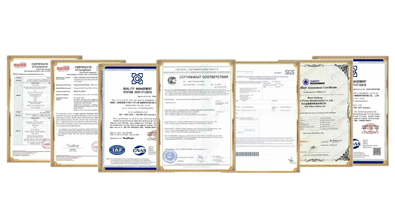
Precision-engineered parts that work consistently in tough situations are needed for industrial projects. RAYOUNG is a well-known company that makes pipe flanges. They have full ISO 9001:2015 certification as well as export-validated GOST-R and SGS qualifications. They offer carbon steel and stainless steel flanges that meet ASME, DIN, and AWWA standards for all pressure classes. We can make parts with weld neck, slip-on, blind, threaded, and plate flange designs out of materials like ASTM A105 carbon steel, 316 stainless steel, and speciality metals. We know that people who work in buying need providers who can keep project risk to a minimum by delivering on time, consistently high-quality work, and clear documentation. Our expert team helps you make sure that the material properties, size standards, and certification needs of your project are in line with your practical needs, whether you need standard catalogue parts or custom-engineered solutions. Email our experts at info@hb-steel.com to talk about your unique needs and get detailed quotes that will help you plan your budget and schedule the job. We give industrial projects the certified components and quick service they need to stay on track.
References
1. American Society of Mechanical Engineers. (2020). ASME B16.5: Pipe Flanges and Flanged Fittings NPS 1/2 Through NPS 24 Metric/Inch Standard. New York: ASME Press.
2. Becht, C. (2018). Process Piping: The Complete Guide to ASME B31.3. Fourth Edition. New York: ASME Press.
3. Parisher, R.A., & Rhea, R.A. (2021). Pipe Drafting and Design. Fourth Edition. Cambridge: Gulf Professional Publishing.
4. European Committee for Standardization. (2018). EN 1092-1: Flanges and Their Joints - Circular Flanges for Pipes, Valves, Fittings and Accessories. Brussels: CEN Publications.
5. Ellenberger, J.P. (2019). Piping and Pipeline Calculations Manual: Construction, Design Fabrication and Examination. Second Edition. Oxford: Butterworth-Heinemann.
6. American Water Works Association. (2017). AWWA C207: Steel Pipe Flanges for Waterworks Service - Sizes 4 In. Through 144 In.. Denver: AWWA Publications.

Need a quote? Want to see samples? Just say hello. We’re friendly. We’re fast. And we’re ready when you are.
Welcome to RAYOUNG – Strong Pipes, Stronger Promise