ASTM Steel Pipe Standards and Specifications Explained
ASTM steel pipe standards are a set of rules made by ASTM International to make sure that quality, safety, and interoperability are always the same in all industry areas where pipes are used. The chemical make-up, mechanical qualities, size tolerances, and testing standards are all specified in these specifications. When purchasing managers use standards like ASTM A53, A106, or A333, they're accessing decades of engineering knowledge that makes sure the piping they choose will work reliably under certain pressure, temperature, and environmental conditions, all while supporting compliance with many international engineering and regulatory frameworks.
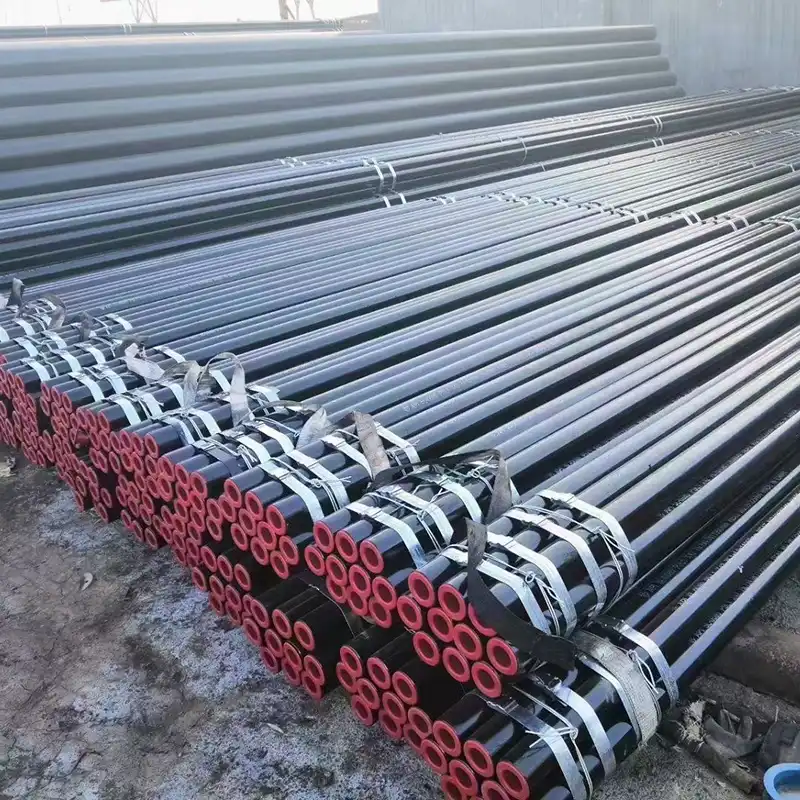
Understanding ASTM Steel Pipe Standards
What Makes ASTM Standards Critical for Industrial Procurement?
When it comes to the global ASTM steel pipe industry, ASTM standards are the common language that makers, suppliers, and end users all use. When the requirements for your project say that the carbon steel pipes must meet certain conditions, these standards improve clarity and reduce procurement risk. They solve basic problems that procurement managers face every day, like making sure that products from different sources are all the same, making sure that materials are real, and preventing project delays caused by materials that don't meet standards. These standards are made by ASTM International with input from industry experts, testing labs, and government agencies. They provide a solid base for buying choices that have a direct effect on safety, cost control, and the continuation of operations.
Key ASTM Specifications Every Buyer Should Know
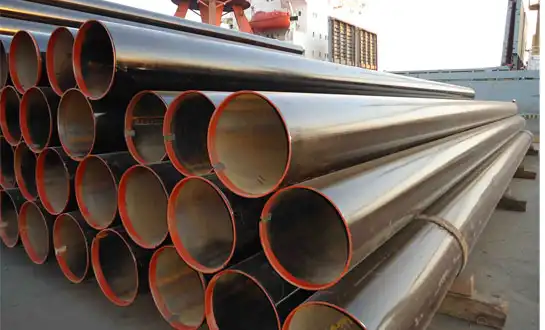
The ASTM A53 standard covers black and hot-dipped galvanized steel pipes from NPS 1/8 to NPS 26. It covers both seamless and welded pipes. For mechanical and pressure uses in steam, water, gas, and air systems where temperatures don't go above 750°F, this standard is commonly used. Different types, such as Type F (furnace-butt welded), Type E (electric-resistance welded), and Type S (seamless), let buyers choose the best making method for their needs and budget.
For high-temperature working settings, ASTM A106 is the standard to follow. A106 is made to be a seamless carbon steel pipe that can handle much higher temperatures than A53. This makes it necessary for boiler tubes, superheater lines, and high-pressure steam distribution systems in industrial plants and power plants. To make sure the structure stays strong in harsh working conditions, the standard calls for tighter controls over chemical makeup and required hydrostatic testing.
ASTM A333 covers low-temperature service uses, which are a specific but important need in LNG plants, cryogenic storage, and building projects in cold climates. Charpy V-Notch impact testing at low temperatures (commonly around -45°C or as specified by the standard) is required for Grade 6, which is the most frequent type, to make sure it is tough. The normalization heat treatment process makes a fine-grain ferritic structure that keeps the steel from breaking when the temperature drops. This is something that regular carbon steel can't do safely.
Manufacturing Methods and Quality Control Practices
To make seamless pipes, solid steel billets are pierced and rolled into hollow tubes that don't have any longitudinal gaps. This way is stronger than welding because it doesn't have the weaker point that joined methods do: the weld line itself. Electric resistance welding (ERW) joins made steel strips together using controlled heat and pressure. This makes a continuous weld that meets the needs of most general-purpose uses while also lowering the cost of production. When done right and examined, modern ERW technology produces weld seams that meet required mechanical property standards for most general-purpose applications.
Checking the raw materials for quality starts with a chemical analysis that makes sure the amounts of carbon, manganese, sulfur, and phosphorus are within the allowed ranges. Tensile strength, yield strength, and elongation traits are all measured by mechanical tests. Each length of pipe is pressurized during hydrostatic testing to make sure it doesn't break. Ultrasonic testing and eddy current testing are two non-destructive methods used to find problems inside things that can't be seen with the naked eye. Mill Test Certificates (MTC) show these results and give procurement workers the traceability they need to pass project audits and meet regulatory compliance standards.
Comparing ASTM Steel Pipe Types for Informed Procurement
ASTM A53 vs. A106: Understanding the Application Divide
The actual difference between these ASTM steel pipe specifications focuses on temperature capability and manufacturing needs. A53 can be made in either a welded or a seamless way, which gives you more options for where to get it and usually lower unit costs for projects that don't go above 750°F. A106 requires seamless construction and is commonly used in high-temperature service, where allowable operating temperatures are determined by ASME design codes and material stress limits, which justifies the higher price by making the product more reliable in harsh thermal conditions. When you look at your project's needs, temperature exposure tells you which standard will protect your investment the best without costing too much on over-specification.
Seamless vs. Welded: Finding the Best Performance and Cost
Seamless pipes don't have any failure modes tied to welds, so their mechanical features are the same all the way around. In applications involving cyclic pressure, hazardous fluids, or critical systems where failure is catastrophic, this uniform integrity becomes paramount. Welded pipes made according to current quality standards work well in steady-state pressure applications and structural uses where cost savings can be made without lowering safety standards. Your procurement plan should take into account the prices of the original purchase, the performance needs over time, and the risks of replacement that are unique to your business.
How Pipe Schedule Impacts Your Project Success?
Pressure ratings, longevity, and installation costs are all directly affected by wall thickness, which is shown by schedule numbers. Schedule 40 is a normal weight that can be used in most business settings because it strikes a good balance between strength and cost. Schedule 80 walls are extra-heavy for high-pressure systems, service that is acidic, or cases that need better resistance to impact. Knowing the connection between internal pressure, pipe diameter, allowed stress, and needed wall thickness stops both dangerous under-specification and wasteful over-engineering that makes project costs go up for no reason.
Procurement Guide: Buying ASTM Steel Pipes Smarter
Vetting Suppliers: What Certifications Actually Matter?
For ASTM compliance to be real, third-party proof is needed in addition to what the seller says. The ISO 9001:2015 approval shows that quality management is organized, but it doesn't prove that the product meets ASTM standards. Extra layers of trust are added by API monogram programs and pressure equipment directives (PED). Before placing a big order, ask for samples of the MTCs to make sure that the chemical analysis, mechanical testing, and measurements match the standards in the specification. RAYOUNG keeps a full collection of certifications, such as GOST-R and SGS validation, which gives you proof that you're following the rules and lowers the chance of buying something.
In addition to certifications, you should also look at the company's output ability, inventory depth, and how close it is to your project site. Suppliers who have worked with EPC companies and industry end-users for a long time tend to have stricter quality standards than suppliers who only trade commodities. Customer references from related applications can tell you a lot about how reliable delivery is, how quickly technical help responds, and how well the product can solve problems that specs alone can't.
Pricing Dynamics and Negotiation Strategies
Minimum order quantities (MOQ) of ASTM steel pipe have a big effect on unit prices. Buying in bulk often results in cost savings of 15–25% compared to buying in small lots. Keeping track of inventory prices and bulk discounts, on the other hand, needs careful math. Ask for quotes that break down the prices of the basic materials and any services that add value, such as cutting, threading, coating, or special packing. Knowing the latest trends in steel commodities can help you figure out if a supplier's prices are in line with the market or if they are charging too much.
Lead times vary a lot depending on how complicated the specifications are, how much testing goes beyond normal procedures, and how full the production capacity is. Standard specifications, such as A53 Schedule 40 in popular sizes, usually ship within two to four weeks from reputable sources who keep stock on hand. However, custom specifications, special testing requirements, or supplementary examinations will significantly extend lead times. Adding extra buffer time for procurement to project plans keeps you from having to pay expensive fees to speed things up and makes you less vulnerable to problems in the supply chain.
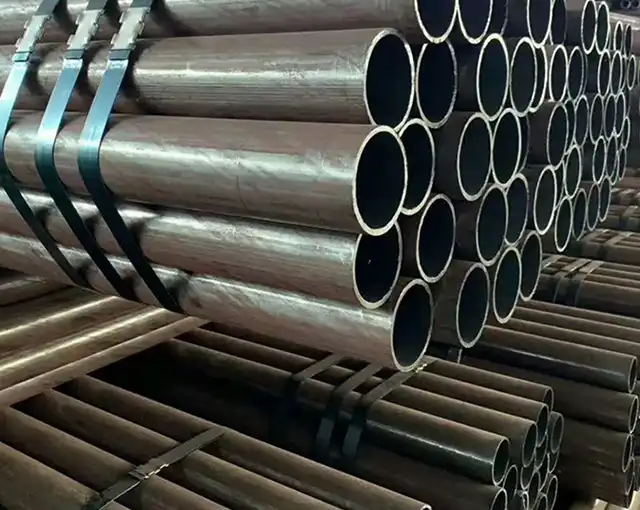
ASTM Steel Pipe Applications and Benefits in Industrial Sectors
Oil and Gas Infrastructure
For gathering lines, transmission systems, and refining process pipes, midstream and downstream oil plants depend on carbon steel pipes that meet ASTM standards. Pipes of type E A53 are used in low-pressure utility lines to move water, instrument air, and gases that don't corrode. A106 Grade B is used in high-temperature networks for making and distributing steam, where changes in temperature put stress on the parts. ASTM A333 Grade 6 is mandated for LNG regasification and cryogenic processing tasks, where regular carbon steel would otherwise fail catastrophically due to low-temperature brittle fracture.
Industrial Construction and Structural Applications
Aside from moving fluids, ASTM pipes are used in heavy industrial buildings as structural columns, safety bollards, pilings, and base elements. Structural engineers can be sure that their calculations for load-bearing capacities are correct because the A53 standards set uniform mechanical qualities. Hot-dip galvanized versions last longer in places that are prone to corrosion, like chemical processing plants and facilities near the coast. ASTM standards list weldability qualities that make sure links stay strong even when they are loaded and unloaded.
HVAC and Fire Protection Systems
If you want to heat or cool commercial buildings with closed-loop hydronic systems, you need Schedule 40 black steel pipe. For fire sprinkler mains and branch lines, galvanized A53 pipe remains the standard choice because it prevents internal scaling and corrosion, justifying the additional coating cost. For these uses, ASTM standards are important because they ensure that dimensions will stay the same. This makes sure that threaded connections seal properly and prefabricated parts fit correctly when they are installed. When properly specified and fitted, quality materials can last for decades, which is something that maintenance teams really value.
Customization Options for Project-Specific Requirements
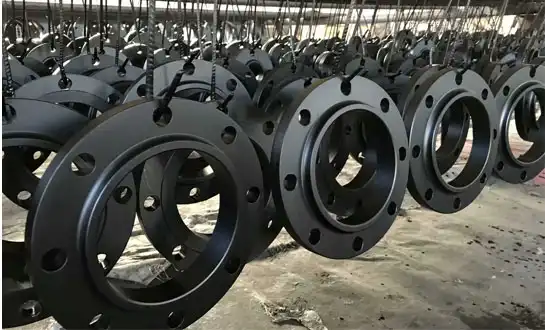
Modern carbon steel pipe sellers (ASTM steel pipe) let you make a lot of changes to their products that aren't available in their catalogs. RAYOUNG offers standard ANSI/DIN/JIS flanges with RF, FF, and RTJ facings that are machined to exact specifications for high-pressure uses that need to close without leaks. CNC-machined sealing areas make sure that the compression of the gasket is constant in a way that hand-finished parts can't. Full MTC traceability keeps track of the whole production process, from where the raw materials come from to the final review. Options for hot-dip galvanizing make things last longer in corrosive settings while keeping the mechanical qualities of the base material. With these features, procurement teams can get whole piping systems from a single supplier, which makes planning easier and lowers the risks that come with using more than one seller.
Conclusion
To understand how to use ASTM steel pipe specs, you need to know how standards affect performance, cost, and risk in the real world. The changes between A53, A106, and A333 specifications have a direct effect on whether your piping system works safely for the entire time it's supposed to or causes costly downtime and safety issues. When people make smart procurement choices, they weigh the initial costs of buying something against its value over its entire life. They also know that documenting specification compliance through official MTCs saves project partners from liability and guarantees operating reliability. To keep project costs low and danger to a minimum, it's best to work with well-known providers who have all the necessary certifications and can show consistent quality through verifiable customer references.
FAQ
1. What distinguishes ASTM A53 from ASTM A106 in practical terms?
A53 can be used for a wide range of mechanical and pressure tasks up to 750°F, and it comes in both welded and seamless forms. A106 only makes seamless pipe for high-temperature applications that get close to 1000°F, like making steam and handling petrochemicals. The standards for making and testing A106 make it more expensive, but it is needed when temperatures are too high for A53 to handle.
2. Can ASTM A333 pipe be welded safely in field installations?
It is possible, but post-weld heat treatment (PWHT) is usually suggested, especially for wall parts that are larger. To keep the low-temperature toughness that normalization gives, the heat-affected zone needs to be relieved of stress. To keep weld joints from breaking, ASME B31.3 and other related codes spell out the PWHT standards based on the thickness of the material and its working conditions.
3. How can I verify that supplied pipe actually meets ASTM specifications?
Ask for mill test certificates that show the results of chemistry tests, mechanical tests, and measures of the product's size. Real MTCs have heat numbers that can be used to find production records. Before a package leaves the country, independent verification tests can be done by third-party inspection companies. As required by ASTM standards, a visual check should ensure that the product is properly marked with the specification number, grade, and maker information.
Partner with RAYOUNG for Certified ASTM Steel Pipe Solutions
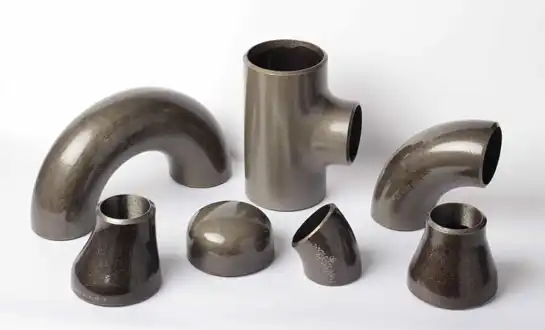
RAYOUNG is a reliable carbon steel pipe and ASTM steel pipe supplier that has worked with EPC contractors, industry end-users, and infrastructure producers all over the world. Our large collection includes parts that meet ASTM A53, A106, and A333 standards in both seamless and welded forms. It comes with full MTC traceability and widely recognized certifications like ISO 9001:2015, GOST-R, and SGS validation. Precision-engineered pipe fittings, buttweld elbows, reducers, and ANSI/DIN/JIS standard flanges with CNC-machined closing surfaces that keep high-pressure systems from leaking are what we make. Whether your project needs standard sizes or custom solutions with hot-dip galvanizing, our expert team is available to help from the time we study the specifications to the time we coordinate delivery. Get in touch with our purchasing experts at info@hb-steel.com to talk about your ASTM steel pipe needs and get competitive quotes from a reputable company that values quality, safety, and on-time delivery.
References
1. ASTM International. "ASTM A53/A53M: Standard Specification for Pipe, Steel, Black and Hot-Dipped, Zinc-Coated, Welded and Seamless." Annual Book of ASTM Standards, Vol. 01.01, 2023.
2. ASTM International. "ASTM A106/A106M: Standard Specification for Seamless Carbon Steel Pipe for High-Temperature Service." Annual Book of ASTM Standards, Vol. 01.01, 2023.
3. ASTM International. "ASTM A333/A333M: Standard Specification for Seamless and Welded Steel Pipe for Low-Temperature Service." Annual Book of ASTM Standards, Vol. 01.01, 2023.
4. American Society of Mechanical Engineers. "ASME B31.3: Process Piping - Design, Materials, Fabrication, Inspection, Testing, and Examination Requirements." ASME Code for Pressure Piping, 2022 Edition.
5. Becht Engineering. "Material Selection for Low Temperature Service: Understanding Impact Testing Requirements and ASTM A333 Applications." Technical Paper Series on Piping Engineering, 2021.
6. Piping Technology and Products, Inc. "Carbon Steel Pipe Specifications: A Comparative Analysis of ASTM Standards for Industrial Procurement." Engineering Reference Guide for Process Industries, 2022.

Need a quote? Want to see samples? Just say hello. We’re friendly. We’re fast. And we’re ready when you are.
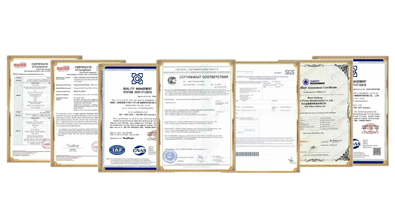
Welcome to RAYOUNG – Strong Pipes, Stronger Promise