ASME B16.5 vs. ASME B16.47 Flanges: A Procurement Guide for Large-Diameter Piping
Choosing the right steel flange standard for large-diameter piping can dramatically impact project success. ASME B16.5 covers flanges from NPS 1/2 to NPS 24, making it suitable for most conventional applications, while ASME B16.47 addresses large-diameter requirements from NPS 26 to NPS 60. Understanding these distinctions allows procurement managers, EPC contractors, and facility engineers to minimize project risk, control costs, and ensure compliance. This guide helps you navigate the technical differences, dimensional specifications, and procurement considerations that determine which standard best serves your operational demands and long-term reliability goals.
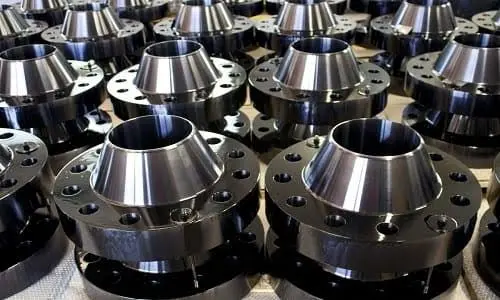
Understanding ASME B16.5 and ASME B16.47 Flanges
Scope and Size Ranges
For pipe sizes up to 24 inches, ASME B16.5 spells out pipe flanges and flanged fittings. For typical pipe systems in factories, chemical plants, and water treatment plants, this standard has become the gold standard. There are different pressure classes, from 150 to 2500, so they can be used in a variety of situations. Forging from carbon steel grades like ASTM A105 or stainless steel grades like ASTM A182 F304/F316 is usually used in the production process.
The ASME B16.47 standard now covers large-diameter flanges from NPS 26 up to NPS 60. There are two series in this standard: Series A, which aligns with MSS SP-44 dimensions, and Series B, which is historically based on API 605 but is now fully incorporated into the ASME B16.47 standard. Offshore platforms, power plants, and local water distribution networks are all examples of large infrastructure projects that depend on B16.47 flanges to handle large amounts of flow while keeping the structure strong.
Material and Manufacturing Methods
Carbon steel, alloy steel, and stainless steel can all be used for manufacturing under both categories. Carbon steel flanges, such as those that meet ASTM A105 standards, are still popular because they are cheap and work well in milder conditions. For high-temperature applications, alloy steels like ASTM A182 F11 and F22 offer better resistance to creep.
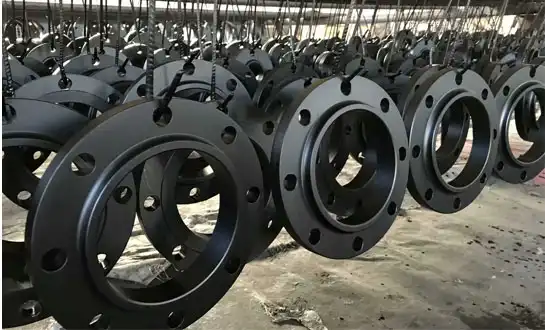
Different manufacturing methods are used for different sizes and uses. For sizes where grain flow direction improves mechanical qualities, forging is the most common way to make them. For bigger sizes or more complicated shapes, casting becomes a cost-effective option. CNC-machined sealing surfaces make sure that the precise standards needed for leak-tight joints are met, especially when RF (Raised Face), FF (Flat Face), or RTJ (Ring Type Joint) configurations are used.
Design Distinctions and Pressure Ratings
Between B16.5 and B16.47, the bolt hole shapes, flange thickness, and hub sizes are very different. These changes in size affect the choice of gaskets, the calculations used to load bolts, and the total strength of the joint. Pressure grades and temperature limits are directly related, so they need to be carefully thought out when they are being specified. Class 150 flanges are good for low-pressure uses up to 285 psi at room temperature, and Class 2500 flanges are designed for very high-pressure service, with allowable pressures depending on material grade and temperature and possibly exceeding 6000 psi under certain conditions.
Dimensional and Performance Comparison of B16.5 vs. B16.47 Flanges
Critical Dimensional Factors
Knowing the measurements stops expensive changes in the field and delays in installation. The bolt circle diameter, number of bolts, flange diameter, and bolt hole sizes must all match up correctly with the parts that fit together. B16.5 flanges have standard sizes that make them easy to exchange around the world. When buying B16.47 flanges, you need to pay attention to the series number because Series A and Series B are not interchangeable, even though they cover the same size ranges.
Changes in thickness affect the weight and structural strength of a structure. Heavier steel flanges provide greater structural rigidity and higher pressure containment, but they are more difficult to install and incur higher shipping costs.When procurement teams are trying to balance performance needs with limited budgets, they often look at load estimation data to make sure they don't specify too much.
Comparative Overview:
- B16.5 Standard: It includes NPS 1/2 through NPS 24 and pressure classes from 150 to 2500. It uses standard bolt patterns and is usually lighter for the same pressure class. It's easy to find and has shorter lead times.
- B16.47 Standard: Covers NPS 26 through NPS 60 with pressure classes from 75 to 900; has two separate sets with different sizes; requires heavy lifting and handling equipment; takes longer to make because of specific needs.
These traits have a direct effect on planning tasks and project timelines. By picking the right standard early on in the planning process, changes that cost a lot of money can be avoided during building.
Pressure and Temperature Performance
Material choice and pressure class requirements are based on the operating conditions. For high-temperature oil services, alloy steel formulas that don't creep are needed. For cryogenic uses, materials need to be checked for their low-temperature toughness to make sure they don't break easily. Full Material Test Certificate (MTC) traceability gives proof of chemical makeup and mechanical features, which is necessary for quality control and following the rules.
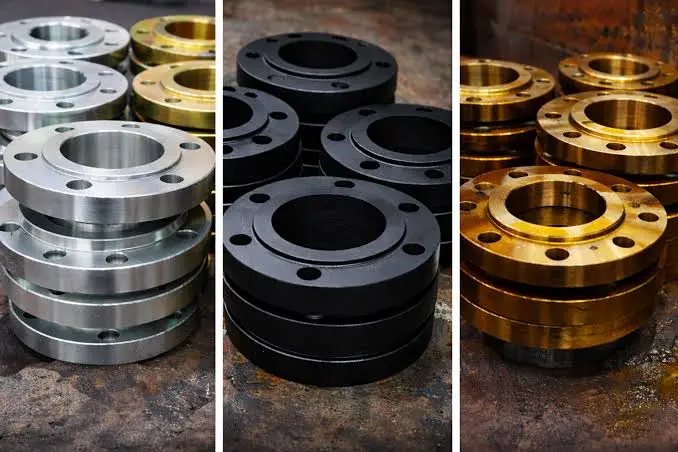
Sealing the surface finish is an important part of how well the joint works. For RF flanges, the surface roughness is typically maintained between 125 and 250 microinches AARRH. To fit metallic ring gaskets, RTJ flanges need groove measurements that are cut to very close tolerances. Hot-dip galvanizing choices make things last longer in corrosive settings, but the thickness of the coating shouldn't affect the limits for size.
Material Strength and Corrosion Resistance
For non-corrosive uses, carbon steel flange options have a great strength-to-cost ratio. Grades of stainless steel are more resistant to rust, but they cost more. Duplex and super duplex metals are very strong and have excellent resistance to chloride stress corrosion cracking, which makes them perfect for use in coastal and offshore environments.
Welding methods must take into account the type of material and how it needs to be heated. Alloy steels resist cracking when preheat and interpass temperatures are strictly controlled. Post-weld heat treatment gets rid of any remaining stresses and fixes any qualities of the material that were changed by the welding process. Best practices for installation include making sure the faces of the flanges are aligned, using the right bolt pressure sequences, and making sure the gaskets are compressed to stop leaks.
Procurement Considerations for Selecting Between ASME B16.5 and ASME B16.47
Aligning with Project Requirements
Detailed specification creation is the first step to a successful purchase. Teams of engineers look at things like pipe size, working pressure, temperature range, fluid properties, and the surroundings. Integration problems that slow down project execution can be avoided by making new systems compatible with old ones. Using the same pressure classes and supplies for all jobs makes inventory less complicated and upkeep easier.
Materials are often chosen based on how much money is available. While stainless steel flange components are better at resisting rust over time, carbon steel with the right coatings works just as well for a lower starting cost. Life-cycle cost analysis shouldn't just look at the price of purchase; it should also look at how often upkeep is needed, how often replacements are needed, and how much it costs to have to shut down operations.
Cost Factors and Lead Times
For large diameter flanges, large amounts of raw materials are needed, and the production process takes longer. Forging processes for NPS 26 and above need special tools that can handle large ingots. Heat treatment ovens have to be able to hold parts with large diameters while keeping the temperature even throughout the room. Lead times from placing an order to delivery are longer because of these things. For non-standard setups, they can reach 12 to 16 weeks.
Availability problems happen when projects need a lot of something or standards that aren't common. Distributors and dealers keep standard steel flange materials in stock in popular B16.5 sizes so that orders can be filled quickly. For custom B16.47 flanges, you usually need to work directly with the maker. Through volume savings and priority scheduling of production, bulk buying deals save money.
Certification and Quality Assurance
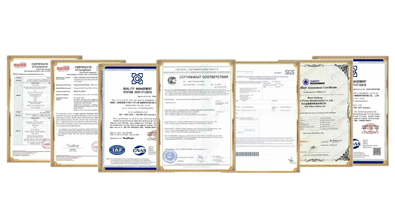
Buying from makers with reliable approvals keeps you from getting low-quality goods. Getting ISO 9001:2015 approval shows that you care about quality management systems. Other approvals, like GOST-R certification (or applicable EAC compliance) and third-party inspection by organizations such as SGS, make sure that export rules are followed and that the materials are correct. Third-party testing services can prove the accuracy of measurements, the properties of the material, and the quality of the surface finish.
OEM (Original Equipment Manufacturer) services help with technology issues all the way through the buying process. Help from engineers with writing specifications, choosing materials, and making changes that are specific to an application improves the performance of flanges. Long-term operating reliability is maintained by after-sales help, such as guarantee coverage, availability of replacement parts, and expert troubleshooting. Building relationships with reliable suppliers lowers the risks of buying things and makes sure that the standard of all tasks is the same.
Case Studies and Industry Applications
Oil and Gas Pipeline Installation
For a major offshore platform expansion, NPS 36 flanges capable of handling sour gas were required.The technical team chose ASME B16.47 Series B flanges made from ASTM A350 LF2 low-temperature carbon steel for impact toughness applications so that they could withstand the weather in the North Sea. Material mix-ups that could have put people in danger were stopped by strict quality control measures like ultrasound testing and PMI (Positive Material Identification) proof.
It was hard for installation teams to line up heavy flanges in tight areas where cranes couldn't reach them. Precision measuring tools were used for pre-assembly checking to make sure that the bolt holes were lined up correctly before the final welding. During hydraulic testing and pressure testing, the project had no leaks, which proved that the way it was bought and put together was correct.
Petrochemical Plant Expansion
As part of a plan to update the plant, old pipe systems were replaced with ones with bigger diameters to increase the amount of work that could be done. When switching from NPS 24 to NPS 30 pipe, flange standards had to be carefully thought through. Engineers selected ASME B16.47 Series A flanges to maintain dimensional compatibility with the existing MSS SP-44 components in adjacent process units.
ASTM A182 F316 stainless steel was chosen as the best material because it can handle acidic catalysts and high-temperature process streams. With octagonal ring seals, CNC-machined RTJ groove shapes ensured a good seal. As part of the procurement strategy, orders were split between two approved providers to lower the risk in the supply chain and keep up with tight building schedules. The job was finished on time, and it was shown that open bidding saved money while keeping quality standards high.
Municipal Water Treatment Facility
Large-diameter pipes were needed for the raw water receiving systems at a water treatment plant that serves a growing city. NPS 48 flanges that meet the requirements of ASME B16.47 joined parts of steel pipes lined with concrete that were working at low pressures. Hot-dip galvanizing on carbon steel flanges kept them from rusting even when they were constantly exposed to water.
To meet the standards of the city tender, procurement teams gave priority to suppliers who could fully trace MTC. Bulk purchasing deals that covered more than one stage of building got better prices and ensured the availability of materials. Implementing preventative maintenance protocols during commissioning significantly extended the expected service life, lowering the total cost of ownership and validating the initial procurement specifications.
Conclusion
To choose between the ASME B16.5 and B16.47 standards, you need to carefully look at their technical details, practical needs, and cost limitations. B16.5 works well for regular tasks up to NPS 24 and has been shown to be reliable. It is also widely available. B16.47 covers large-diameter needs from NPS 26 to NPS 60, which requires custom production and longer wait times. When buying something, it's important to weigh the original costs against how well it will last over time, give preference to approved sources with quality control systems, and plan for upkeep from the start of the project. Knowing about differences in sizes, pressure ratings, and materials lets you make smart choices that lower project risks and guarantee long-term dependability in your steel flange procurement across a wide range of industrial settings.
FAQ
1. Can ASME B16.5 flanges be used beyond 24 inches?
ASME B16.5 strictly covers sizes up to NPS 24. There are some companies that make bigger sizes using B16.5 dimensional models, but these are not covered by the standard and are not officially certified. For projects needing NPS 26 or more, ASME B16.47 should be specified to make sure of the right mechanical foundation, legal compliance, and supplier responsibility.
2. Which materials offer the best corrosion resistance?
Grades of stainless steel like ASTM A182 F316 are very good at resisting rust in general. Duplex stainless steels, like F51, are better at stopping stress corrosion cracks caused by salt. The super duplex F53 can handle the roughest conditions. The choice of material is based on the corrosive agents, temperature, and concentration amounts that will be used.
3. How do I verify supplier compliance with ASME standards?
Ask for full material test reports that show the chemical make-up and mechanical qualities. Use the ASME Certificate Holder Search database to make sure the company has ASME approval. Ask for a third-party review that includes measuring the surface finish, checking the dimensions, and doing non-destructive tests. Suppliers with a good reputation like quality proof because it shows they are committed to meeting standards.
Partner with RAYOUNG for Your Steel Flange Requirements
RAYOUNG offers complete flange options that meet ASME B16.5 and B16.47 standards, along with full approval paperwork and the ability to track down materials. We manufacture flanges to ANSI, DIN, and JIS standards, featuring precision CNC-machined sealing surfaces with RF, FF, and RTJ facings designed for demanding high-pressure applications. Our operations are certified under ISO 9001:2015, along with GOST-R and SGS approvals, ensuring export compliance and consistent product quality. Options for hot-dip galvanizing increase service life in harsh settings, and the ability to place huge orders supports big projects with reasonable prices and on-time delivery.
Working with a well-known steel flange provider makes the buying process easier and lowers the risks of the project. Our expert team helps with specification, material choice, and custom production services that are made to fit the needs of each application. Whether you need standard parts quickly delivered or unique solutions that require engineers to work together, RAYOUNG has the production skills and customer service to meet your needs. Get in touch with our experts at info@hb-steel.com to talk about your project needs and get specific quotes backed by our dedication to quality and dependability.
References
1. American Society of Mechanical Engineers. (2021). ASME B16.5: Pipe Flanges and Flanged Fittings NPS 1/2 through NPS 24 Metric/Inch Standard. New York: ASME Press.
2. American Society of Mechanical Engineers. (2020). ASME B16.47: Large Diameter Steel Flanges NPS 26 Through NPS 60 Metric/Inch Standard. New York: ASME Press.
3. ASTM International. (2019). ASTM A105/A105M: Standard Specification for Carbon Steel Forgings for Piping Applications. West Conshohocken: ASTM International.
4. Becht Engineering Company. (2018). Flange Joint Assembly: Practical Guidelines for Optimum Performance. Houston: Technical Publications Division.
5. Pressure Vessel Handbook. (2017). Flanged Joints: Design, Assembly, and Maintenance Practices for Industrial Piping Systems. Tulsa: Pressure Vessel Publishing Inc.
6. National Board of Boiler and Pressure Vessel Inspectors. (2019). Flange Selection and Installation Best Practices for High-Pressure Systems. Columbus: National Board Technical Committee.

Need a quote? Want to see samples? Just say hello. We’re friendly. We’re fast. And we’re ready when you are.
Welcome to RAYOUNG – Strong Pipes, Stronger Promise