Ultrasonic Testing for Seamless Steel Pipes
Ultrasonic testing for seamless steel pipes is a non-destructive testing method that uses high-frequency sound waves to find internal flaws inside the pipe and variations in wall thickness without cutting or hurting it. I think it's one of the most useful quality tools for people who need reliable seamless steel pipes for high-pressure or life-or-death situations. These lines are used in power plants, chemical plants, infrastructure, mechanical systems, and oil and gas. This means that even small flaws that aren't obvious can cause big problems for the project. That's why ultrasonic testing, which is also known as ultrasonic testing (UT), is so important for buying things, ensuring compliance, and making sure they work well in the long run.
Understanding Ultrasonic Testing for Seamless Steel Pipes
It's clear that people who are looking for this information want to know what UT is, what problems it finds, and why it's important before they buy. The short answer is easy: UT sends sound waves into the pipe and reads the signals that come back to find internal breaks and figure out the shape.
What does ultrasonic testing actually check?
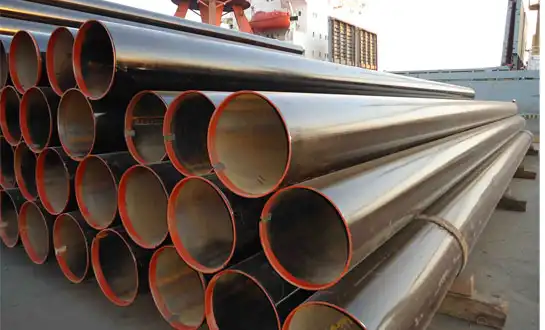
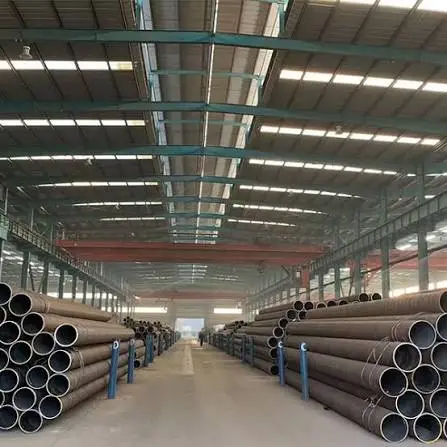
Seamless steel pipe earns its name because it is manufactured entirely without longitudinal weld seams or soldered joints. It is produced by piercing a solid, heated steel billet to create a hollow shell, which is subsequently hot-rolled or cold-drawn into its final precise dimensions. This monolithic construction imparts exceptional structural strength and burst resistance, making seamless pipes the premier choice for extreme high-pressure applications and severe service environments.
Even with these strengths, checking is still the best way to make sure of quality. UT can help find:
- Internal cracks, laminations, inclusions, and voids: There may not be any cracks, laminations, inclusions, or gaps that can be seen on the outside. These hidden flaws are most important in high-pressure pipes, boiler tubes, and process lines, where safety, service life, and compliance are directly affected by the quality of the material. UT reports are often used as a useful filter when comparing suppliers by buyers who need to know how well a provider will do in the field.
- Wall-thickness variation, eccentricity, and certain dimensional irregularities: Changes in wall thickness, eccentricity, and some physical flaws can impact flow, fit-up, and the ability to handle pressure. This is helpful for project work because a pipe that looks fine may still cause problems later on when it is being built, installed, or tested for hydraulic pressure. Before the pipe gets to the job site, UT gives people more trust.
Main UT methods used on pipes
Pulsed-echo, through-transmission, and phased array ultrasonic testing are the most popular UT methods used to check seamless pipes. A lot of people use pulse-echo to find internal reflections from one side. Through-transmission is a good way to find problems that block the sound path. A phased array gives you more scanning options and clearer pictures, which can be helpful for complicated tasks or more dangerous situations.
Key Quality Challenges in Seamless Steel Pipes and How UT Addresses Them?
For procurement managers, the concern extends far beyond the physical pipe itself. The primary focuses are optimizing project costs, ensuring uncompromising safety, mitigating delivery risks, and preventing massive future liabilities. This is precisely why rigorous defect detection through UT is absolutely paramount.
Typical defects in seamless pipe production
Preparing the billet, drilling, rolling, and shaping are all steps in the process of making uniform goods. After these steps, finishing steps like heat treatment, straightening, and cutting are done. During these steps, problems with the raw materials, heat stress, rolling conditions, or handling can lead to flaws. Problems that people often worry about are non-metallic inclusions, transverse cracks, scabs, laps, and internal gaps.
Because it isn't bonded, a seamless steel pipe doesn't have a weld line that could be weak. That makes it stronger and better able to handle pressure. However, buyers still need to see proof that the pipe body is sound all the way through.
Why is UT effective for procurement risk control?
UT backs quality assurance in a way that buying teams can understand:
- It gives quick, real-time inspection feedback that helps makers keep an eye on the quality of the process while it's still going on. This makes it less likely that nonconforming material will be shipped, which saves money on rejection, repairs, and delivery delays. That means fewer shocks for EPC contractors and distributors when they get there and better alignment with project plans.
- It fits well with accepted standards and factors used in international trade, such as inspection systems related to API, ASTM, and ISO. Buyers can be more confident in the quality of a product when inspection records are clear, easy to find, and linked to mill paperwork. This also makes it easier for technical approval during bids, audits, and end-user reviews.
Ultrasonic Testing Process in Seamless Steel Pipe Manufacturing
When I look at the best quality processes, I see that UT is not just the last step. It's part of the way they make things.
Where does UT fit in the manufacturing line?
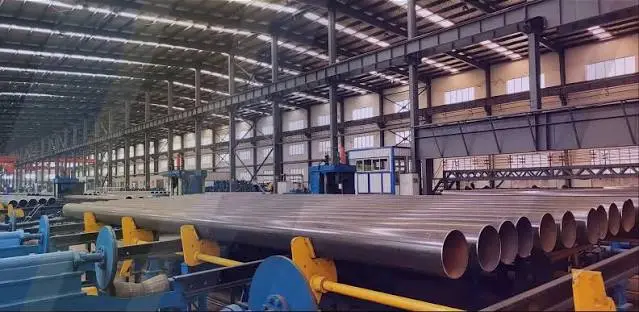
A solid billet is heated to a high temperature as the first step in the process of making seamless steel pipes. A mandrel is used to make holes in the billet, which makes a hollow shell. That shell has been rolled and cut to the right diameter and wall thickness. As part of finishing, things may be heated, straightened, cut, and marked, and the ends may be prepared.
UT can be used in more than one way for seamless steel pipes. Early checks on the materials help find problems with the main materials. After rolling or heat treating, in-process testing helps make sure that the dimensions are consistent and that the quality inside is good. Before they are packed up and sent out, finished pipes go through a final ultrasonic inspection as part of non-destructive testing to make sure they meet the customer's needs.
Why does this matter to project outcomes?
When UT is used throughout the whole manufacturing process, problems with quality are found sooner. That increases yield, lowers waste, and helps keep lead times steady. It is important for government projects, local workers, and industry end users to know this because delays cost more than the material itself. Traceability is also helped by better inspection practices, which is very important when lines go into controlled or safety-critical systems.
How to Choose the Right Ultrasonic Testing Service for Your Seamless Steel Pipes?
There isn't one best way to set up an inspection. Buyers should make sure that UT's skills meet the technical and financial risk of the project.
What would I evaluate in a UT partner?
I would look at the qualifications of the operator, the ability of the equipment, the discipline of testing, the quality of the reports, and the operator's experience with the needed product standard. If there are important uses in the order, like ASTM A106 high-temperature service or API line pipe service, the inspection provider should know the acceptance standards, documentation needs, and production facts.
A good UT service partner should also be able to handle growing numbers, consistent turn-around times, and useful information for procurement teams. Clear flaw tracking, being able to track by heat and lot, and being able to read inspection records all help to speed up the approval process for seamless steel pipes.
When is UT the better choice than other NDT methods?
There are times when x-ray testing is very helpful, but for pipe checking, UT is often preferred because it is faster and more cost-effective for large-scale pipe inspection, while radiographic testing is used when imaging-based evaluation is required. Magnetic particle testing looks for flaws on the surface or close to the surface. For some materials and smaller parts, eddy current testing is a good way to go. UT sticks out when the goal is to find flaws inside seamless pipe bodies quickly and on a large scale.
Applications and Compliance: Ensuring Your Pipes Meet Industry Standards
In the U.S. market, buyers often look with the goal of following the rules. They want to know if the material can meet the requirements of the code, the standard, and the end use.
Industry uses where UT-tested pipe matters most
Seamless steel pipes are used a lot in building, mechanical engineering, petrochemical systems, oil and gas transportation, and power generation. People like them because they don't have any welds, can handle high pressure, don't break easily, and work well in high-temperature or acidic environments. Because of this, they are often used for chemical service lines, heating tubes, heat exchanges, hydraulic systems, and structural uses.
Quality control backed by UT helps with both the safety and service life of seamless steel pipes in these areas. Even if a pipe looks fine from the outside, it may still be dangerous inside. Inspection helps make sure that the grade is correct and ready to be used.
Standards and supplier credibility
UT usually helps with following standards like API 5L, ASTM A106, and related EN requirements, but it depends on the product and use case. Buyers should not only check general claims but also the exact review coverage against the project specs.
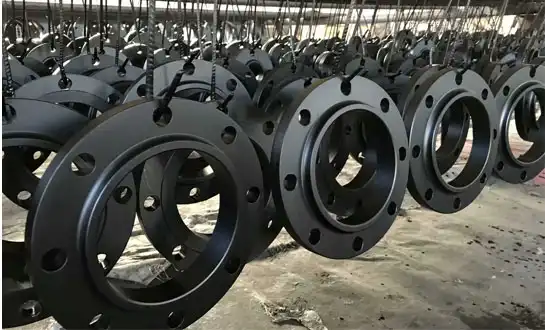
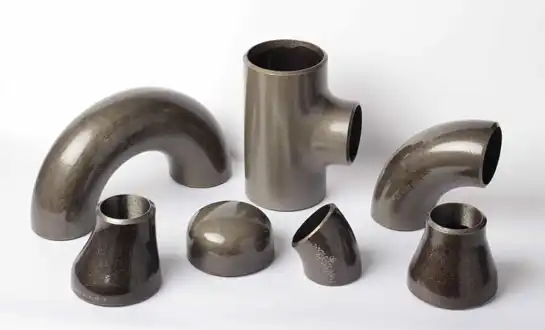
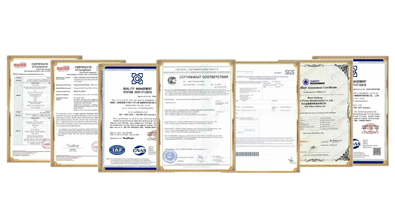
At RAYOUNG, we deeply understand that our clients require absolute certainty in quality compliance. Beyond offering a comprehensive range of seamless steel pipes and precision industrial pipe fittings (including buttweld elbows, reducers, and flanges), we implement rigorous UT inspections across our manufacturing processes. As a premier global supplier, our strict adherence to ISO 9001:2015 quality management, backed by GOST-R certification and SGS inspection validation, guarantees that every component we deliver is flawlessly safe, export-compliant, and built for long-term endurance.
Conclusion
Ultrasonic testing is a useful way for buyers to make sure that seamless steel pipes are good on the inside before putting them into important service. I see UT as more than just a way to check things. As a risk-control tool, it helps with long-term performance, provider trust, project plans, and compliance. When seamless pipe is going to carry pressure, heat, or toxic media, buying choices can be made more quickly and safely if inspection records are checked. Picking a seller with product knowledge, good UT paperwork, and steady delivery can lower project costs and boost trust throughout the whole process.
FAQ
1. What flaws in seamless steel pipes can ultrasonic testing find?
UT can reliably detect internal cracks, non-metallic inclusions, laminations, voids, and specific dimensional anomalies such as wall-thickness variations. The exact detection sensitivity depends heavily on the pipe's wall thickness, material condition, specific UT methodology, equipment calibration, and the stringent acceptance standards mandated by the project specifications.
2. How long does it usually take for UT to inspect?
Inspection time depends on how many pipes are being tested, their sizes, the scope of the check, and whether the testing is done by hand or by a machine. Inspections can be done quickly on production lines that make a lot of things, but it may take longer for custom orders that need thorough reports. Buyers should check the wait time for inspections during the quote process.
3. Are UT inspection records accepted all over the world?
Many foreign projects accept UT reports as long as they follow the standard, tracking rules, and customer requirements. Acceptance still depends on what the end user, the project code, and any third-party paperwork needs.
4. If UT checks the quality of the pipe, is that enough?
While UT is a big part of quality control, it's not always the only thing that needs to be done. An inspection of the project's dimensions, hydrostatic testing, chemical and mechanical test results, eye checks, and a review of the paperwork may also be needed.
RAYOUNG – Trusted Source for UT-Verified Seamless Steel Pipes
Need a dependable source for seamless steel pipes with a history of quality that can be backed up by UT? RAYOUNG can help you with your project by giving you custom quotes, inspection information, and solutions for parts that match. Contact us at info@hb-steel.com if you need to buy seamless steel pipes or find a reliable company that makes them. Our team will help you choose wisely and without risk.
References
1. ASTM International, ASTM A106/A106M Standard Specification for Seamless Carbon Steel Pipe for High-Temperature Service
2. American Petroleum Institute, API Specification 5L Line Pipe
3. ASNT, Ultrasonic Testing Handbook
4. ISO 10893, Non-destructive testing of steel tubes
5. EN 10216, Seamless steel tubes for pressure purposes
6. ASM International, Metals Handbook, Nondestructive Evaluation and Quality Control

Need a quote? Want to see samples? Just say hello. We’re friendly. We’re fast. And we’re ready when you are.
Welcome to RAYOUNG – Strong Pipes, Stronger Promise