Threaded Flange vs. Slip-On Flange: Key Differences for Piping Engineers
When building industrial piping systems, picking between a threaded flange vs slip-on flange can make or break the job and cost a lot of money. These threaded flanges can be installed without welding because they have NPT threads on the inside. This makes them perfect for dangerous areas where hot work permits are limited. Slip-on flanges provide reliable performance under proper installation and maintenance. They offer better resistance to wear and alignment freedom. Knowing these differences helps engineers and buying teams keep project risks to a minimum, keep budgets in check, and make sure that systems will work reliably for a long time in tough industrial settings.
Introduction
Flanges are essential components of piping systems because they connect pipes, valves, pumps, and other machinery in places like chemical plants, refineries, water treatment plants, and factories. The type of flange you choose has a direct effect on the stability of the system, the frequency of upkeep, and the total cost of ownership. Leaks, unplanned downtime, safety issues, and price overruns are all risks that no project manager wants to face.
This guide gives pipe engineers and procurement workers a useful way to compare a threaded flange vs. a slip-on flange. We look at the technical details, how to place them, the pressure levels, the costs, and possible uses. Whether you're in charge of an EPC project, looking for parts to distribute, or selecting flanges for government infrastructure, this study gives you useful information that you can use to improve your flange procurement strategy and make sure it meets ASME B16.5 standards.
Understanding Threaded and Slip-On Flanges
What Defines a Threaded Flange?
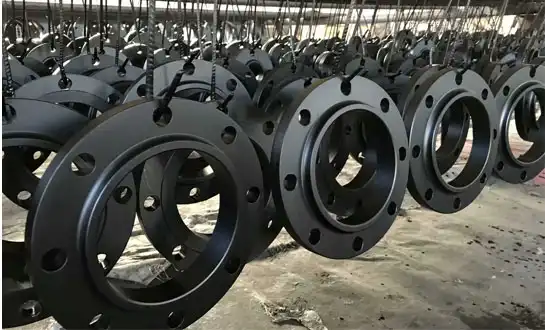
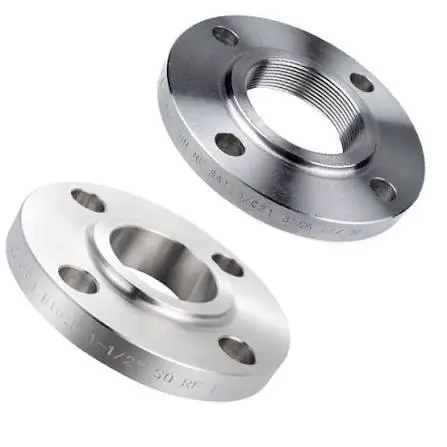
A threaded flange, also known as a screwed flange, has tapered threads on the inside that meet the ASME B1.20.1 (NPT standard) standard and connect physically with pipe ends that have threads on the outside. This design eliminates the need for welding, which is a significant advantage in hazardous areas where open flames pose explosion risks. Threaded flanges are often used for instrumentation links and utility lines in Class 1 Division 1 hazardous zones at refineries, fuel depots, and grain bunkers.
When threads rub against each other mechanically, they form a cushion that keeps out pressure. This is commonly used in small-bore applications (typically NPS 2 and below, depending on design codes and project specifications). When joining galvanized pipes, a threaded flange vs. slip-on flange analysis confirms that threaded options work better than welding because welding would remove the protective zinc layer and cause corrosion right away. Maintenance teams like that can take them apart without damaging anything, which means that valve replacements or system reconfigurations can be done without cutting tools or qualified welding personnel.
How Do Slip-On Flanges Function?
A slip-on flange has a hole that is just a bit bigger than the pipe's outside diameter. This lets the pipe slide through the flange body and is held in place by two fillet welds, one at the pipe end and one on the backside of the flange. This way of building, which is outlined in ASME B16.5 and ASME B16.47, is easier to make than weld neck flanges, which need to be precisely beveled and butt-welded.
Slip-on flanges establish secure connections capable of withstanding high temperatures and pressures without leakage or mechanical failure. The dual-weld design successfully spreads stress, but it is not as resistant to wear as weld-neck designs. Slip-on flanges are popular with engineers because they are easy to install and don't require exact-length cuts on the pipes. Alignment changes happen easily during assembly. Slip-on flanges are popular in water systems, HVAC systems, and moderate-pressure industrial processes because they are flexible. This speeds up project timelines and lowers labor costs.
Positioning Within Flange Categories
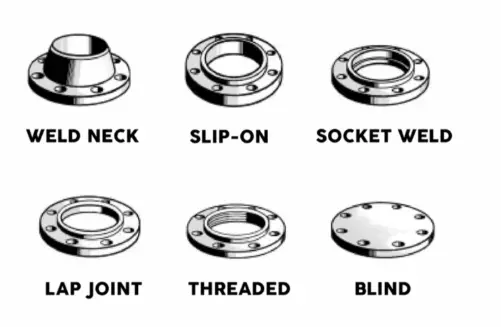
In the order of flanges, threaded flange vs slip-on flange, threaded flanges and slip-on flanges are both in the middle. Weld neck flanges are the strongest option for high-stress, important jobs, but they need to be welded by skilled professionals and radiographed to make sure they are safe. Blind flanges keep pipe ends from leaking, and lap joint flanges make it easier to take things apart. In some situations, welding isn't allowed, so threaded flanges are used instead. Slip-on flanges, on the other hand, are a good compromise between cost, ease of installation, and structural performance for most pipe systems.
Key Technical Differences Between Threaded and Slip-On Flanges
Dimensional Standards and Thread Specifications
Threaded flanges follow ASME B16.5 for their size and ASME B1.20.1 for their thread shape. The internal taper (1 in 16 for NPT threads) makes it hard to engage, but BSPT (British Standard Pipe Taper) standards may come up in foreign projects. If you combine NPT and BSPT threads, the seal will fail, leading to immediate leakage. Before placing an order for a threaded flange vs. slip-on flange, buying teams must check the thread standards.
For bigger sizes, slip-on flanges must follow ASME B16.5 or ASME B16.47 Series A/B. The bore width is about 1/8 inch bigger than the pipe OD, which gives room for entry. Different pressure classes have different hub thicknesses and flange facing sizes. There are also different types of joints, such as raised face (RF), flat face (FF), and ring-type joint (RTJ), to meet the needs of the seal and the service conditions.
Pressure Ratings and Size Limitations
Threaded flanges are made to withstand pressures from Class 150 to Class 2500, but they are usually not used above Class 600 and NPS 4 because they could leak when loaded and unloaded repeatedly. Because the threaded link relies on mechanical interference instead of metallurgical bonding, it is not very reliable in places with a lot of stress or temperature changes. Seal welding is often needed on threaded flanges in high-pressure steam systems. This is a fillet weld that goes around the thread contact area and negates the benefit of not having to join.
The pressure classes for slip-on flanges are the same, but they work better at higher grades and bigger sizes. The dual fillet welds make better connections than threaded contact, and the loads are spread out more evenly around the edge. When engineers request slip-on flanges up to NPS 24 and Class 900, they can be sure that they will work in harsh temperature ranges from freezing to 1000°F as long as the right materials are used and the right welding techniques are used.
Material Selection and Corrosion Resistance
For standard applications, forged carbon steel ASTM A105 is the most widely used material because of its cost-effectiveness and excellent weldability. ASTM A182 F304 and F316 types of stainless steel can handle corrosive media in chemical processes and on offshore bases. Alloy steels like ASTM A182 F5, F9, and F11 can be used in high-temperature situations. However, threaded flanges need to be handled with care when using alloy materials because the pipe threads and flange threads expand and contract at different rates.
Because welding provides mechanical continuity, slip-on flanges can hold a wider range of materials. Threaded flanges are the only way to connect galvanized carbon steel pipes because welding removes the zinc coats, leaving bare metal areas that are more likely to rust. This material limitation affects buying choices in fire safety systems, public water networks, and business buildings, all of which use galvanized pipe because it lasts longer.
Installation Complexity and Labor Requirements
When compared to welded options, threaded flanges cut installation time by 40 to 60 percent because there are no weld preparation, execution, cooling, or checking steps. Workers use strap wrenches to hand-tighten flanges onto pipe threads. They then fill tiny holes with PTFE tape or thread sealant and bolt the flanges together. There is no need for hot work permits, X-ray checks, or qualified welders. This is a big plus for plants that are still running, since welding usually needs to be stopped or follows a lot of safety rules.
For slip-on flanges to work, they need trained welders who can do good fillet welds on both the inside and outside. Welding methods must follow the guidelines in ASME Section IX, and an eye check must be done to make sure there is proper penetration and no undercutting or porosity. Although it requires more labor than installing threaded flanges, slip-on flange installation is still easier than weld-neck options, which need precise pipe beveling and root pass inspection processes.
Strength, Fatigue Resistance, and Leak Potential
Slip-on flange fillet welds provide a stronger metallic connection than threaded mechanical interference, but they are generally less resistant to fatigue than weld neck flanges. Pressure changes and cycles of temperature expansion and contraction slowly loosen threaded connections, making leak paths that need to be fixed on a regular basis. Vibration from rotating pumps or turbulent flow speeds up thread loss, which means that dynamic systems can't use threaded flanges.
Slip-on flanges (threaded flange vs slip-on flange) are more reliable at withstanding shaking and pressure cycles, but they are not as strong as weld-neck flanges. The shape of the fillet weld creates stress accumulation zones that can break when there are large bending moments or sudden changes in temperature. When engineers define slip-on flanges for vital services, they use finite element analysis (FEA) to look at how stress is distributed and make sure that safety margins are big enough to handle operating extremes.
Selection Criteria for Piping Engineers and Procurement Teams
Application Scenario Analysis
Assessing the operating surroundings is the first step in choosing between a threaded flange vs. a slip-on flange. Places that are dangerous or have powerful atmospheres need threaded ends so that welding doesn't create spark sources. When refineries put pressure gauges, temperature monitors, or sample points on working units, they only allow threaded connections. Threaded flanges are easy to install and work well for small-bore utility lines that carry steam, compressed air, or hydraulic fluids under 600 lb. pressure.
Slip-on flanges are most common in general-purpose water systems, HVAC distribution, and low- to moderate-pressure industrial plumbing, where saving money and being able to place the pipe in different ways are more important than needing the strongest possible connection. Slip-on flange configurations are preferred by contractors who are building local water treatment plants, business building mechanical systems, or food processing plants. Their flexible alignment limits help building teams deal with the inevitable differences in pipe length and angular misalignments that happen on the job site.
Cost Analysis and Budget Optimization
Because of the need for precise thread cutting, threaded flanges usually have higher unit costs than slip-on flanges of the same type. This premium goes down when you add up all the costs of installation. For small-bore uses, threaded flanges are often cheaper because they don't require as much welding labor, consumables (like electrodes and shielding gas), tools (like welding machines and X-ray units), or inspection costs.
When making bulk orders, procurement teams should ask for volume prices and look at how much it will cost to maintain the goods over their entire life. Because threaded flanges need to be retightened on a regular basis, they require more upkeep work. Slip-on flanges, on the other hand, are permanently soldered, so they don't need as much service over time. Lead times depend on the type of material and the pressure class. For example, normal carbon steel Class 150/300 flanges ship within two to three weeks, while it takes six to eight weeks for unusual alloys or higher pressure rates.
Quality Assurance and Supplier Certification
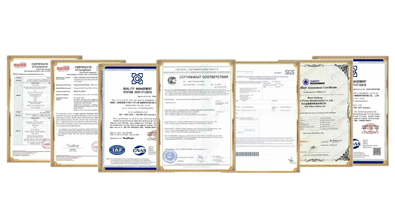
Suppliers you can trust give you material test records (MTRs) that list the chemical makeup and mechanical qualities of their products according to ASTM standards. The ISO 9001:2015 certification shows that the quality management system is mature, and the GOST-R and SGS certifications show that the export rules for foreign sales are followed. For alloy steel flanges, people who work in procurement should check the paperwork for hydrostatic tests, dimensional inspection records, and heat treatment certificates.
Global supply chains occasionally encounter substandard flanges made of low-grade materials that can lead to catastrophic failures under operational stress. According to ASME B16.5 standards, reputable makers stamp flanges with lines that show the pressure class, material grade, and company identity. Pre-shipment verification by third-party inspection services makes sure that the flanges are real before the crates leave the factory. This is an investment that is worth making for important uses.
Conclusion
When deciding between a threaded flange vs. a slip-on flange, you have to think about fitting restrictions, pressure needs, budget limits, and operating settings. Threaded flanges get rid of the need to join dangerous areas and galvanized systems. This makes fitting faster in small-bore applications, even though they need to be maintained on a regular basis. Slip-on flanges are very flexible and don't wear out easily. They can handle bigger sizes and mild pressures in a wide range of industrial applications. While buying teams look at things like total cost of ownership, supplier certifications, and transportation, engineers should look at the needs of particular applications. Choose the right flanges for your system to make sure it works well, meets safety standards, and makes money for your project. These are important choices that should be carefully thought through and backed by reliable manufacturing partners.
FAQ
1. What represents the primary distinction between threaded and slip-on flanges?
Threaded flanges have NPT threads on the inside that connect mechanically with pipe threads. They don't need to be welded, but they can't be used for large or high-pressure uses. Slip-on flanges fit over pipes and are held in place by two fillet welds, one on the inside and one on the outside. They offer better wear resistance and a wider range of sizes. The threaded choice works best in dangerous places where hot work isn't allowed, while slip-on setups are a good compromise between price and performance for most industrial pipes.
2. Can threaded flanges handle high-pressure gas pipeline services?
Threaded flanges work well in gas systems up to Class 600 and NPS 2 as long as the right thread sealant is used and the flanges are retightened on a regular basis. If you go over these limits, threaded joints could leak when the temperature or load changes. For moving high-pressure gases, you usually need weld neck or slip-on flanges with strong metal bonds that can handle long-term vibration and pressure without coming free.
3. Do installation time and cost differences significantly impact project budgets?
The difference in installation time for a threaded flange vs. a slip-on flange is big—threaded options are 40–60% faster to install because they don't need to be prepared, welded, inspected, or given hot-work permission. In small-bore uses, the lower cost of labor often makes up for the higher unit price of threaded flanges. Slip-on flanges need welding labor and supplies, but they're cheaper per unit, which makes them a good choice for bigger jobs where welding equipment is already in place and buying in bulk lowers the price per unit.
4. Are customized flanges with material certifications readily available?
Reliable makers make custom flanges that meet particular standards for size, material, and approval. Custom orders can include non-standard hole sizes, special alloy mixes (like duplex stainless steel or nickel alloys), different facing types (like RTJ or tongue-and-groove), and pressure values that are specific to the project. Certified flanges come with material test records (MTRs) that show they meet ASTM standards. Lead times are usually 6–10 weeks for exotic materials and 2–4 weeks for standard carbon steel setups.
Partner with a Trusted Slip-On Flange Supplier
Comprehensive production support and certified quality assurance make navigating the threaded flange vs slip on flange choice simple. RAYOUNG manufactures complete flange systems certified by ISO 9001:2015, GOST-R, and SGS to ensure compliance with international standards. Our range of products includes Slip-On Flanges for safe line connections that can handle high temperatures and pressures without leaking, as well as threaded options for uses that don't need welding. There are times when your project needs custom sizes, certain grades of materials, or buying in large quantities. Our engineering team can help you match flange specs to working needs. You can email RAYOUNG at info@hb-steel.com to get full catalogues, talk about problems with your piping system, and get personalised prices from a dependable flange manufacturer that wants to reduce the risk of your project while increasing performance and value.
References
1. American Society of Mechanical Engineers. (2021). ASME B16.5: Pipe Flanges and Flanged Fittings – NPS 1/2 through NPS 24 Metric/Inch Standard. New York: ASME Press.
2. Becht Engineering. (2019). "Flange Selection and Design Considerations for Industrial Piping Systems." Journal of Pressure Vessel Technology, 141(4), 044501-1 to 044501-9.
3. Nayyar, M. L. (2020). Piping Handbook (8th ed.). New York: McGraw-Hill Education.
4. Smith, P. R., & Zappe, R. W. (2018). Valve Selection Handbook: Engineering Fundamentals for Selecting the Right Valve Design for Every Industrial Flow Application (6th ed.). Oxford: Gulf Professional Publishing.
5. Ellenberger, J. P. (2017). Piping and Pipeline Calculations Manual: Construction, Design Fabrication and Examination (2nd ed.). Oxford: Butterworth-Heinemann.
6. Mohitpour, M., Golshan, H., & Murray, A. (2019). Pipeline Design and Construction: A Practical Approach (4th ed.). New York: American Society of Civil Engineers Press.

Need a quote? Want to see samples? Just say hello. We’re friendly. We’re fast. And we’re ready when you are.
Welcome to RAYOUNG – Strong Pipes, Stronger Promise