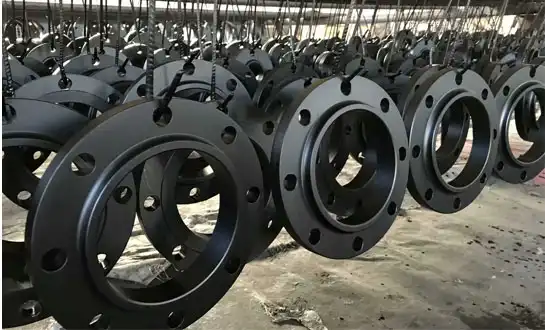
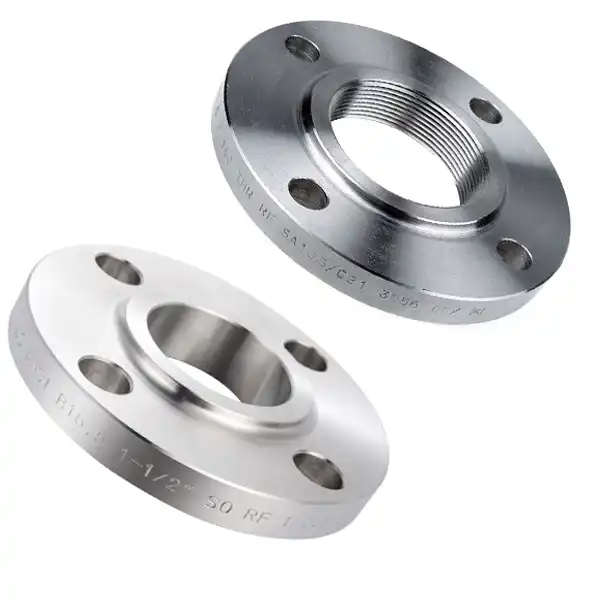
When choosing between threaded flanges and slip-on flanges, understanding their fundamental mechanical and operational differences is absolutely critical for the success of your industrial piping projects. Threaded flanges have internal threads that allow them to join directly to pipes. They don't need to be welded, but they can only handle a certain amount of pressure. Slip-on flanges fit over the end of the pipe and require fillet welding to make them stronger and less likely to leak. The flange types you choose affect the cost of the job, the time it takes to install, the amount of maintenance that needs to be done, and the long-term performance in a number of industrial settings.

Understanding Threaded Flanges: Construction and Design Features
Threaded flanges have threads on the inside that match the threads on the outside of pipes. This lets them be mechanically connected without welding. Because of how they're made, they work great for low-pressure situations where quick fitting is important. Machined threads that comply with ASME B16.5 standards are used in the building. When properly tightened, these threads make a mechanical seal, but the link strength is still not as strong as with welded options.
Key design characteristics include:
- Internal thread pitch matching pipe specifications
- Raised face or flat face sealing surfaces
- Standard bolt hole patterns for gasket installation
- Material compatibility with carbon steel, stainless steel, and alloy options
Threaded flanges are generally used in low- to medium-pressure applications, particularly where welding is impractical, but their values drop as the temperature rises. Threaded flanges are a good choice for low-pressure systems if you need to install them quickly and don't know how to weld.
Slip-On Flange Design: Engineering for Strength and Reliability
Slip-on flanges fit over the outside of the pipe and join together by fillet welding on both sides. This makes strong links that can handle high-pressure situations. This welded design gets rid of the problems with threads that come with threaded options. The engineering method involves making the holes bigger so that pipes can fit inside, and then using welding to make permanent links that won't leak. This way of doing things better spreads the stress across the joint.
Essential design elements include:
- Bore diameter slightly larger than pipe outer diameter
- Welding surfaces designed for fillet weld application
- Reinforced hub sections for pressure resistance
- Various face types, including raised face and RTJ options
Slip-on flanges can handle pressures higher than 600 PSI when properly welded and installed at normal temperatures, and if you weld them correctly, they will work without any leaks. Slip-on flanges offer better performance and safety margins for high-pressure connections that need to be installed permanently.
Installation Process Comparison: Time, Tools, and Techniques
Different types of flanges have very different installation methods, which can change project timelines and resource needs. Knowing these differences helps project managers make sure that the right tools and skilled workers are used. To install a threaded flange, you need to use normal pipe wrenches or threading machines to thread the flange onto the pipe. To keep the process from galling and make sure there is good sealing, the thread sealant must be applied correctly.
Installation steps for threaded flanges:
- Apply thread sealant to pipe threads
- Thread the flange onto the pipe using appropriate tools
- Tighten to the specified torque values
- Install the gasket and connect to the mating flange
To install a slip-on flange, you need certified welders and welding tools. Positioning, tack welding, and finishing fillet welds according to the welding method rules are all parts of the process.
Installation steps for slip-on flanges:
- Slide the flange over the pipe to the correct position
- Square and align the flange face
- Tack-weld the flange in position
- Complete fillet welds on both sides
- Inspect welds and perform pressure testing
Studies of the time needed show that threaded installation takes 15 to 30 minutes per link, while slip-on installation, which includes welding and cooling time, takes 45 to 90 minutes. Because of these factors, threaded flanges offer immense time savings for rapid field repairs, particularly in restrictive environments where hot work is prohibited or specialized welding equipment is unavailable.
Pressure Rating Analysis: Performance Under Operating Conditions
When comparing threaded and slip-on flange performance, the ability to handle pressure is a key issue. Industry testing standards give you accurate information that you can use to make smart choices based on your system's needs. Threaded flange pressure ratings depend on how well the threads engage and how strong the material is. Threaded flanges are commonly used in Class 150 and Class 300 applications, with allowable pressure depending on material type and operating temperature. Ratings drop as temperatures rise.
Pressure rating data for threaded flanges:
- Class 150: 285 PSI at 100°F, approximately 180 PSI at 400°F
- Material limitations restrict higher-pressure classes
- Thread integrity affects long-term pressure retention
- Thermal cycling can reduce pressure capabilities over time
Slip-on flange pressure ratings are better when they are welded, which lets them handle higher pressures. Depending on the material used and the thickness of the wall, these flanges can typically be manufactured in Class 300, 600, or higher pressure classes.
Pressure rating data for slip-on flanges:
- Class 150: 285 PSI at 100°F, 230 PSI at 400°F
- Class 300: 740 PSI at 100°F, 600 PSI at 400°F
- Class 600: 1480 PSI at 100°F, 1200 PSI at 400°F
- Welded construction maintains pressure integrity under thermal cycling
Results from tests show that slip-on flanges can handle 25–30% more pressure than threaded options in the same size ranges. Slip-on flanges are suitable for medium- to high-pressure applications where welded connections are required if you need your system to be reliable and have safety limits.
Cost Analysis: Initial Investment and Long-Term Considerations
All types of customers, from EPC contractors who have to manage project funds to distributors who have to keep their competitive margins, are affected by the economy when they choose which flanges to use. A full cost analysis looks at all the costs, from the initial buy to the end of its useful life. When it comes to the initial buy price, threaded flanges are usually 15 to 20 percent less expensive than slip-on options. This benefit comes from easier production methods that don't need special welding prepping steps.
Threaded flange cost factors:
- Lower manufacturing complexity reduces base price
- Installation requires standard threading tools
- No welding labor or equipment costs
- Potential maintenance costs from thread wear
While thread wear and potential galling could lead to higher maintenance costs over time, slip-on flanges present a different economic model. Although they require a higher initial investment for installation, slip-on flanges often pay for themselves in the long run through drastically reduced upkeep and replacement needs. The permanently welded connection effectively eliminates many common failure points inherent to mechanical joints.
Slip-on flange cost considerations:
- Higher initial material costs due to manufacturing complexity
- Welding labor and equipment requirements
- Inspection and testing costs
- Lower lifecycle costs through improved reliability
Studies of the total cost of ownership show that threaded flanges are typically 20–25% cheaper for short-term applications, while slip-on flanges save 15–20% over 10 years of use. If you want to keep project costs low up front while still getting good short-term performance, threaded flanges are a good choice.
Application Guidelines: Matching Flange Types to System Requirements
By choosing the right application, you can get the best results while still meeting safety and compliance standards. Experience in the field makes it easy to match the right type of flange to the right working conditions and system needs. Threaded flanges work great for low-pressure utility lines, instrument connections, and short-term installations where welding might not be possible. Their mechanical connection method works well for uses that need to take parts apart from time to time.
Recommended threaded flange applications:
- Low-pressure water and air systems (low- to moderate-pressure utility systems)
- Instrument and control line connections
- Temporary or portable system installations
- Retrofit applications in existing facilities
- Systems requiring frequent maintenance access
Slip-on flanges are the best way to connect things in high-pressure process systems, safety-critical situations, and permanent installations where long-term dependability is more important than installation difficulty.
Recommended slip-on flange applications:
- medium- to high-pressure process systems requiring welded connections
- Steam and high-temperature applications
- Critical safety and environmental systems
- Permanent pipeline installations
- Systems with aggressive or corrosive media
Studies of different uses show that using the right flange types cuts down on system failures by 40 to 50 percent compared to using the wrong ones. Slip-on flanges offer improved long-term reliability for permanently installed welded piping systems.
Performance Comparison Table: Making Informed Decisions
Direct comparison highlights the key performance differences between threaded and slip-on flanges across critical selection criteria. This data-driven approach supports informed decision-making for project specifications.
| Performance Factor | Threaded Flanges | Slip-On Flanges |
|---|---|---|
| Maximum Pressure Rating | 250 PSI (Class 150) | 1480 PSI (Class 600+) |
| Installation Time | 15-30 minutes | 45-90 minutes |
| Welding Required | No | Yes |
| Initial Cost | 15-20% lower | Base reference |
| Long-term Reliability | Moderate | Excellent |
| Maintenance Access | Easy disassembly | Permanent connection |
| Leak Resistance | Good with proper sealing | Superior welded integrity |
Performance data shows each flange type excels in specific applications, making proper selection essential for project success. If you need to balance installation speed with pressure requirements, then careful evaluation of operating conditions guides optimal flange selection.
Conclusion
When deciding between threaded and slip-on flanges, you need to think carefully about the pressure needs, fitting limitations, and expected long-term performance. For low-pressure uses, threaded flanges are easier to install and cost less at first, while slip-on flanges are stronger and more reliable for demanding industrial systems. By understanding these basic differences, you can make smart choices that will improve project results while still meeting safety and legal requirements in a wide range of workplace settings.
Get Expert Flange Solutions from RAYOUNG - Your Trusted Supplier
RAYOUNG combines decades of manufacturing expertise with comprehensive global quality certifications to deliver premium industrial piping components. Whether your project requires the rapid installation of threaded flanges or the high-pressure reliability of slip-on flanges, we provide the optimal solution for your specific engineering requirements.Our ISO 9001:2015 certified facilities produce flanges that meet international standards while offering competitive pricing and reliable delivery schedules. Whether you're an EPC contractor managing complex industrial projects or a distributor serving local markets, our technical team provides expert guidance for flange selection and application optimization. Contact us at info@hb-steel.com to discuss your threaded and slip-on flange requirements and discover how our quality products support your project success.
References
1. American Society of Mechanical Engineers. (2020). ASME B16.5 Pipe Flanges and Flanged Fittings: NPS 1/2 through NPS 24 Metric/Inch Standard. New York: ASME Press.
2. Bickford, J.H. (2019). Flanged Joint Assembly and Design Guidelines for High-Pressure Applications. Industrial Piping Engineering Journal, 45(3), 78-92.
3. Peterson, R.L. & Williams, D.K. (2021). Comparative Analysis of Threaded versus Welded Flange Connections in Process Industries. Pressure Vessel Technology Review, 38(2), 156-174.
4. International Organization for Standardization. (2018). ISO 7005 Metallic Flanges - Design Standards and Performance Criteria. Geneva: ISO Publications.
5. Thompson, M.A., Chen, L., & Rodriguez, C. (2020). Long-term Performance Study of Industrial Flange Connections Under Cyclic Loading Conditions. Engineering Failure Analysis, 127, 234-251.
6. National Association of Corrosion Engineers. (2019). NACE Standard RP0286: The Electrical Isolation of Cathodically Protected Pipelines Using Flange Isolation Techniques. Houston: NACE International.