Steel Tees vs Wye Fittings: What Engineers Prefer
When it comes to industrial piping design, the choice between steel tees and wye fittings is rarely a matter of simple preference—it's a strategic engineering decision that impacts pressure integrity, flow efficiency, and long-term maintenance costs. In most high-pressure applications and structural frameworks, engineers lean toward buttweld steel pipe tees due to their superior mechanical strength, full-penetration weld capability, and proven resistance to stress concentration at branch connections. Wye fittings, on the other hand, excel in gravity-driven drainage systems where gradual directional change minimizes turbulence and prevents sediment buildup in wastewater or slurry transport lines.
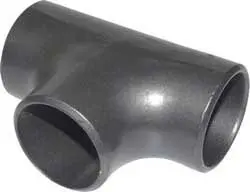
Understanding Steel Tees and Wye Fittings
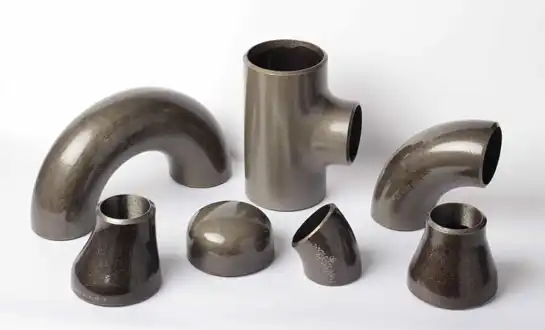
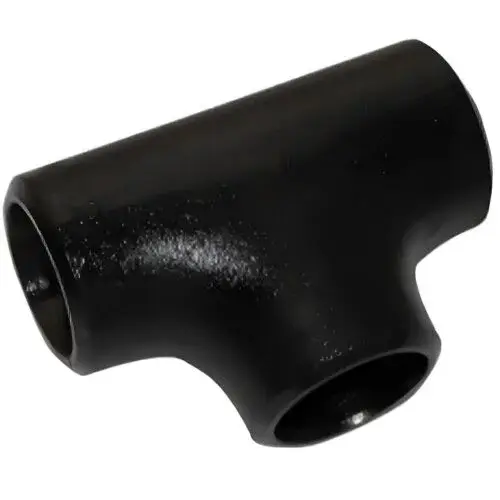
The main difference between these two fittings lies in their geometry and intended applications. Buttweld steel pipe tees are T-shaped parts made to ASME B16.9 standards that are meant to split or join fluid flow at a 90-degree angle. When all three outlets are equal, their diameters are the same. When the branch outlet is smaller than the main run, its diameter is smaller. Some common materials are carbon steel grades like ASTM A234 WPB, which has a minimum tensile strength of 60,000 psi, and stainless steel grades like ASTM A403 WP304, which provides corrosion resistance and can be used in chemical processing settings.
Manufacturing Methods and Material Specifications
The way these fittings are made has a direct effect on their mechanical properties and pressure ratings. Seamless buttweld steel tees are made through hot forming processes such as extrusion or forging, eliminating welded seams and providing consistent mechanical properties. This way of building is very important in dangerous places like offshore oil platforms, where pressures inside can reach several thousand psi in certain high-pressure applications and failure would result in catastrophic consequences. Welded steel tees, which are made from shaped plates, work well in large-diameter utility lines that need less pressure, usually less than 1,500 psi.
There are different levels of wall thickness, from Schedule 10 to Schedule XXS (double extra strong). Each level has a different pressure rating. According to the ASME B31.3 piping code, a Schedule 40 carbon steel tee in NPS 4 size has a wall thickness of 0.237 inches, and its allowable working pressure depends on the material grade, design temperature, and applicable piping code calculations.
Wye Fitting Characteristics and Applications
When you compare wye fittings to perpendicular tees, the flow transition is smoother because the branches are at 45-degree angles. Because this shape lowers hydraulic resistance and pressure drop so much, wye connections are the best choice for slurry pipelines and municipal wastewater systems. The slow change in direction keeps solids from building up at the junction, which lowers the risk of blockages that come with 90-degree tee setups in gravity-fed drainage systems.
When it comes to wye fittings, the materials used are often the same as for steel tees. For low-pressure draining systems, cast iron and PVC are the most common, while carbon and stainless steel are used in industrial processes that are under a lot of pressure. The ASTM A234 WP11 alloy steel grades, which typically contain about 1%–1.5% chromium and 0.44%–0.65% molybdenum, are very good at resisting creep in high-temperature steam networks that work above 800°F.
Engineering Considerations: Performance and Structural Benefits
When you look at how stress is distributed, you can see the difference in mechanical performance between steel tees and wyes. When the branch meets the run pipe, butt-weld steel pipe tees have reinforced crotch areas. This geometric support makes up for the material that was taken away when the branch was formed. It keeps the fitting's pressure rating the same as a straight pipe of the same schedule and grade.
Stress Management and Pressure Ratings
Studies released by the American Society of Mechanical Engineers using finite element analysis show that when internal pressure and external loads are put on properly made steel tees, the stress is spread evenly across the junction. The tee crotch geometry is designed to reduce stress concentration and varies according to fitting design requirements, keeping stress concentration points from forming that could lead to wear cracks when the lines that release from reciprocating pumps are loaded and unloaded many times.
Wye fittings are great for controlling directional flow energy, especially in systems that deal with rough materials. According to hydraulic modeling data from the Hydraulic Institute, the 45-degree angle can reduce turbulence and pressure losses compared to the sharp 90-degree branches of standard steel tees.This slower speed means that slurry delivery systems that move coal ash, mineral concentrates, or sand and water mixtures will experience less erosion.
Fabrication Versatility and System Integration
Threaded or socket-weld fittings can't match the structural continuity of buttweld connections. When the right welding methods are followed, the beveled ends of steel tees, which are machined to approximately 37.5 degrees in accordance with ASME B16.25, enable welders to create full-penetration joints that achieve 100% of the strength of the base metal. In high-vibration environments, like compressor stations, this feature is very important because threaded connections would loosen up over time and make dangerous leak tracks.
Post-weld heat treatment improves the performance of the steel tees even more by removing stresses that were created during welding. Normalizing carbon steel tees at temperatures typically around 1,600–1,700°F and then slowly cooling them down improves the grain structure, making them more resistant to impact damage and less likely to crack from stress corrosion in sour gas service conditions with hydrogen sulfide.
Procurement Insights: How to Choose Between Steel Tees and Wye Fittings?
Effective procurement begins with aligning product specifications to project requirements.As procurement teams look over source quotes, they need to make sure that the measurements match ASME B16.9 for buttweld fittings. These measurements include center-to-end dimensions specified in ASME B16.9 according to fitting size and type. Most of the time, the tolerance is ±1/16 inch for sizes smaller than NPS 8 and ±1/8 inch for sizes larger than that.
Quality Certification and Supplier Verification
When a company has ISO 9001:2015 certification, it means that they have well-documented quality management systems that include tracking materials, checking their dimensions, and testing their mechanical strength. Material Test Certificates (MTCs) according to EN 10204 3.1 are given by reliable providers. These certificates have real chemical analysis results and mechanical property test data for each production heat. Engineers can use these papers to make sure that the alloying elements, carbon content, and manganese amounts are all within the ranges given for the grade that was ordered.
X-ray fluorescence spectroscopy has become a standard way to identify positive materials during receiving inspection. This method of testing that doesn't damage the sample confirms that the chromium level in a supposed ASTM A403 WP316L stainless steel tee meets the specified requirements. This prevents costly material mix-ups that have caused failures in highly corrosive sulfuric acid service.
Cost Analysis and Bulk Purchasing Considerations
Buttweld steel parts are priced based on the grade of the material, its size, and how hard it is to make. Due to the cost of raw materials and the labor involved in processing them, standard-sized carbon steel tees (NPS 2 to NPS 6) typically cost 40 to 60 percent less than comparable stainless steel grades. A Schedule 40 carbon steel tee in NPS 4 could be priced between $12 and $18 per piece for 100 units, while the same size in 316 stainless steel could cost anywhere from $45 to $65 per piece, depending on the market and the price of nickel.
Galvanized coatings raise prices by 20 to 30 percent, but they protect against corrosion and make outdoor installations last longer. Hot-dip galvanizing according to ASTM A123 creates zinc coatings with thickness requirements that depend on the steel thickness and product category and last 30 to 50 years without any upkeep in the typical environmental conditions in the United States.
Case Studies: Real-World Applications and Engineer Preferences
A project to expand a petroleum plant in Texas shows how proper selection criteria are used in the real world. The engineers chose ASTM A234 WP22 alloy steel tees for the 900°F hydrogen return loop in the hydrocracker. The chrome-moly mix can handle creep deformation, which would break carbon steel in months at normal working temperatures. Over the building's expected 25-year service life, the extra material cost—about $180,000 for 450 tee fittings—amounts to less than 2% of all pipe system costs and eliminates the need for planned maintenance breaks.
Structural Applications and Assembly Efficiency
A project in Ohio to build a manufacturing plant showed that structural steel tee sections can be used for more than just piping applications. The contractor used hot-rolled steel tees instead of traditional channel sections in the secondary framing members. This cut the amount of structural steel used by 18% while keeping the required load-bearing capacity. The tee's uniform cross-section made it easier to connect the beams to the columns. This cut the time needed for field welding by about 25% compared to the original channel-based design.
Chemical Processing and Flow Optimization
A Louisiana company that makes specialty chemicals updated their catalyst slurry distribution system by replacing welded 90-degree lateral steel tees with 45-degree wye fittings made from duplex stainless steel UNS S31803. Engineers at the plant recorded a 22% drop in pressure across the distribution pipe. This made it possible for pump speeds to slow down and increased the time between overhauls for seals from 14 months to over 24 months. The corrosion-resistant duplex grade contains a balanced mixture of austenite and ferrite phases. It has twice the yield strength of normal 316 stainless steel and doesn't let chloride cause cracking in the process stream.
Final Decision-Making Guide: Which Fitting Should You Pick?
The framework for selection strikes a balance between technical needs and operational priorities. Buttweld steel pipe tees are the best choice for projects that need to handle high pressures above 1,500 psi, full structural continuity in load-bearing applications, or compatibility with strict welding procedure specifications. Because they are built stronger and come in standard sizes, steel tees are the best choice for places like pipelines, power plants, and offshore sites where safety must be the top priority.
Wye fittings work well with systems that focus on particle transport and flow efficiency, like gravity-fed drainage networks, pneumatic conveying lines, and slurry pipelines. The 45-degree branch angle lowers turbulence and erosion and makes it easier to clean out during maintenance work. For these hydraulic benefits, wires are always specified in mining activities and city building projects.
When choosing a material type, the corrosion climate, temperature range, and mechanical loads are all taken into account. When used in non-corrosive settings below 650°F, carbon steel grades work consistently and save a lot of money. When working with acids or chloride-containing substances, you need stainless steel. For industrial service, alloy steels are better at handling high temperatures and hydrogen attack. Instead of just looking at the initial purchase price, long-term lifecycle cost calculations should take into account maintenance frequencies, how much they cost to replace, and how much it costs to stop operations.
Conclusion
Buttweld steel pipe tees and steel tees are the preferred choices of engineers for most industrial uses because they have been tested to work well in high-pressure and high-temperature environments and can be used in a variety of ways. Wye fittings still play a unique role in drainage and slurry systems, where flow characteristics are more important than structural concerns. Fitting specifications must match actual operating conditions, products must come from certified suppliers with documented quality records, and total ownership costs must be taken into account in addition to initial purchase prices for the project to be completed successfully. When engineers know these technical differences and the best ways to buy things, they can always make effective pipe systems that meet safety standards, performance goals, and budget constraints.
FAQ
1. What's the main difference between steel tees and wye fittings?
Steel tees branch at 90 degrees to change the direction of flow perpendicularly, while wye fittings branch at 45 degrees. Because they are reinforced, steel tees can handle higher pressures and structural loads. This is why they are common in process pipe systems. Wye fittings provide lower flow turbulence and pressure drop, which is highly beneficial in gravity drainage and slurry transfer where there are worries about particles settling or erosion.
2. How do I select the correct size for buttweld steel pipe tees?
The nominal pipe size (NPS) and schedule of the fitting should match the specifications of the pipe you already have. The center-to-end measures need to fit the geometry of the pipe plan, and ASME B16.9 gives standard values. When you order, be sure to list all three outlet sizes so that the right parts are made. Reducing steel tees let you connect branches that are smaller than the run pipe.
3. Why choose galvanized steel tees for outdoor installations?
Hot-dip galvanizing according to ASTM A123 puts on a zinc coating that corrodes before the base steel. This gives the coating an extra 30 to 50 years of service life in normal conditions. This defense stops rust from coloring nearby surfaces and eliminates the need for painting. Cost increases of 20–30% over bare steel save a lot of money over the life of outdoor pipe systems.
Partner with RAYOUNG for premium steel tees and pipe fittings.
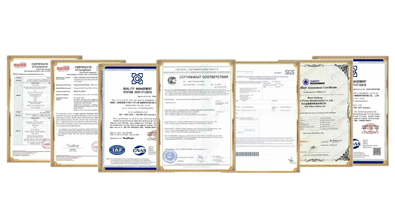
Buttweld steel pipe tees, wye fittings, reducers, and flanges made to ASME B16.9 and ASTM specifications are available from RAYOUNG. They are ISO 9001:2015 certified. Our carbon and stainless steel products go through strict testing for dimensions, positive material identification, and non-destructive testing to make sure they meet the needs of your project. As a reputable manufacturer with decades of experience supplying steel piping components, and has been certified by both GOST-R and SGS. We offer low bulk pricing and reliable delivery schedules to EPC builders, wholesalers, and industrial end-users all over the United States. Email our engineering team at info@hb-steel.com to talk about the needs of your project, get material test certificates, or get quotes for quick production runs.
References
1. American Society of Mechanical Engineers. (2020). ASME B16.9: Factory-Made Wrought Buttwelding Fittings. New York: ASME Press.
2. ASTM International. (2021). ASTM A234/A234M: Standard Specification for Piping Fittings of Wrought Carbon Steel and Alloy Steel for Moderate and High Temperature Service. West Conshohocken: ASTM International.
3. Hydraulic Institute. (2019). Effects of Fitting Geometry on Pressure Loss and Flow Distribution in Industrial Piping Systems. Parsippany: Hydraulic Institute Publications.
4. Nayyar, M.L. (2018). Piping Handbook, Eighth Edition. New York: McGraw-Hill Education.
5. American Petroleum Institute. (2020). API 570: Piping Inspection Code—In-Service Inspection, Rating, Repair, and Alteration of Piping Systems. Washington: API Publishing Services.
6. ASME Code for Pressure Piping, B31. (2022). ASME B31.3: Process Piping—Materials, Design, Fabrication, Assembly, Erection, Examination, Inspection, and Testing of Piping. New York: ASME Press.

Need a quote? Want to see samples? Just say hello. We’re friendly. We’re fast. And we’re ready when you are.
Welcome to RAYOUNG – Strong Pipes, Stronger Promise