How to Match Flanges and Fittings by Pressure Class?
Matching flanges and fittings by pressure class requires aligning the pressure rating stamped on each component with your system's maximum operating pressure while ensuring dimensional compatibility and material specifications meet relevant standards such as ASME B16.5 or EN 1092. The pressure class—expressed as Class 150, 300, PN16, PN40, or similar—defines the maximum allowable working pressure at specific temperatures. Proper matching prevents catastrophic leaks, maintains compliance with safety regulations, and optimizes total cost of ownership by avoiding premature failures or expensive retrofits in industrial piping networks.
Introduction
The reliability of pipelines is essential for the smooth running of projects that move oil and gas, process chemicals, generate power, and build water infrastructure. Two types of parts are very important in these complicated systems: pipe connection components and flow-direction components. Correct pressure class alignment between these elements has a direct effect on safety compliance, project timelines, and lifecycle costs. These are big issues that EPC contractors have to deal with when managing multimillion-dollar installations, distributors have to keep their stock consistent, and plant engineers have to keep unplanned downtime to a minimum.
This guide explains in detail the methodical way that purchasing managers, procurement specialists, and technical decision-makers can safely choose compatible parts. We take international standards and turn them into selection criteria that can be used. We also look at how material and size affect pressure capacity and offer buying strategies that balance keeping costs low while maintaining quality. Understanding pressure class matching can give you a competitive edge whether you're looking for supplies for a pipeline repair job or to build long-term relationships with suppliers.
Understanding Flanges and Fittings: Key Concepts and Definitions
Defining Core Components and Their Distinct Roles
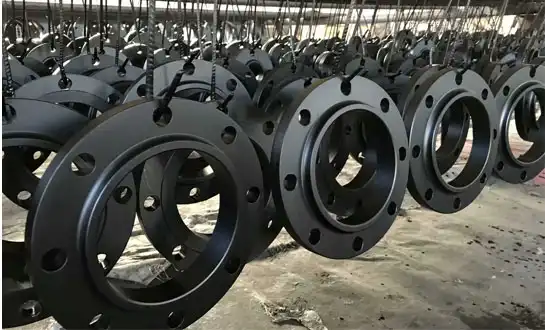
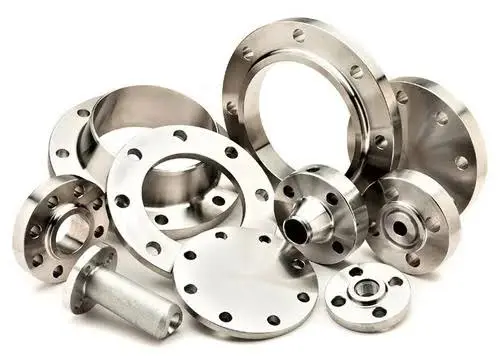
Flanges are mechanical parts that are bolted together and provide detachable connections between pipe sections, valves, pumps, and other equipment. These round disks with bolt holes all around them make it easy to do repairs while keeping the system's stability when it's under a lot of stress. Weld neck configurations are better at distributing stress in high-pressure situations, while slip-on designs give you more fitting options in low-demand situations. Blind variants cover pipeline ends while they are being tested or while plans are being made for future growth.
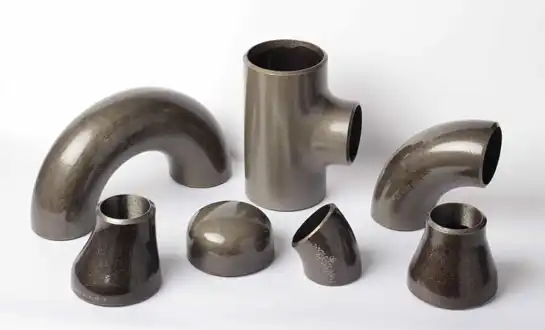
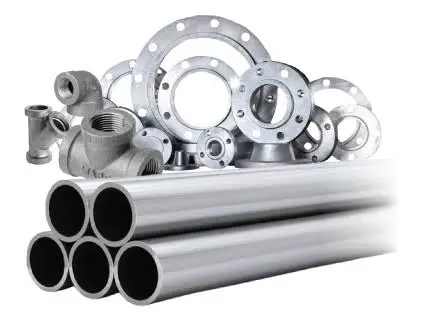
Changing the direction of flow, changing the pipe size, and splitting are all possible with pipe joints in networks of continuous pipes. Carbon steel bends change the flow direction at 45-degree or 90-degree curves without changing the speed profiles. Reducers connect pipes with different diameters. For horizontal runs, there are concentric reducers, and for drainage, there are eccentric reducers. Tees join branches, and caps close off end points. In contrast to their detachable peers, these parts stay forever welded into the system in line with ASME B16.9.
Pressure Class Systems and International Standards Framework
With this method, the highest working pressure that a part can safely handle at a certain temperature is measured. ASME B16.5 sets the class numbers—150, 300, 600, 900, 1500, and 2500—and the values go down as the temperature rises. The PN (nominal pressure) numbers used by European standards are PN10, PN16, PN25, and PN40. These values are similar to, but not exactly the same as, ASME classes. Similar PN ratings are set by Russian GOST standards, while Japanese JIS standards add another layer of regional variation.
If you know about these classification systems, you won't make the dangerous assumption that a Class 150 component can be used in all low-pressure uses around the world. When selecting flanges and fittings, it is essential to consider the specific pressure and temperature ratings, as temperature derating charts in ASME B16.5 and related pressure-temperature standards show that parts made of Class 150 carbon steel that are rated for 285 psi at room temperature may have significantly reduced allowable pressure at elevated temperatures, depending on the material group and ASME pressure-temperature tables. This connection between pressure capacity and temperature makes it important to specify exact requirements during procurement, especially in applications like high-temperature petrochemical processes or steam systems where working conditions change during startup and operation cycles.
Step-by-Step Approach to Matching Flanges and Fittings by Pressure Class
Establishing System Operating Parameters
Start by documenting the maximum design pressure in your piping system. This should take into account pressure surges that happen when the pump starts up or a valve closes, which can temporarily go above steady-state design pressures by 30 to 50 percent. Look over the process and instrumentation diagrams (P&IDs) to find the parts that are under different pressure regimes. This is because one project may need more than one pressure class in different zones. Keep track of both the lowest and highest working temperatures at the same time, as thermal expansion affects both the pressure capacity and dimensional stability of components that are mated.
When a water supply project needs to figure out hydraulic shock, it's especially important because pressure waves are made when valves close quickly. Because of these changing conditions, it's often necessary to go up to the next higher pressure class than what static calculations would suggest. This is done to protect against fatigue failure at connection points where improperly matched components can cause stress concentrations.
Aligning Material Specifications with Pressure Requirements
The choice of material has a direct effect on the success of the pressure class. ASTM A105 carbon steel is cost-effective in non-corrosive settings and is commonly used for moderate-temperature pressure applications within applicable code limits. For long-distance transfer systems, high-yield materials such as ASTM A694 F52 or F60 are commonly selected for high-pressure pipeline flanges and fittings. The yield strength of the component must fit the body specs of the pipeline so that joint failure doesn't become the weakest link. ASTM A182 F304, F316, and F321 stainless steel grades can handle corrosive media, with F321 mainly selected for elevated-temperature applications requiring resistance to sensitization, but they need to be carefully rated for pressure and temperature because their mechanical properties change a lot at high temperatures compared to carbon steel.
Alloy steels like ASTM A182 F11 or F22 can be used in higher temperature ranges that are common in power plant steam systems. As shown in the ASME B16.34 appendices, each material has its own unique pressure-temperature charts. It is important for procurement teams to make sure that the materials used for the connection interface and the body of the fitting match the published ratings. For example, mixing a Class 300 carbon steel weld neck with a Class 300 stainless steel elbow may seem like it would work based on the class designation alone, but galvanic corrosion and differential thermal expansion can cause failures that go beyond simple pressure capacity.
Dimensional Verification and Standard Compliance
Pressure class tells us more about dimensions than just matching the diameter. Different classes have different bolt circle diameters, numbers and sizes of bolt holes, hub thicknesses, and seal fitting surfaces. A Class 150 weld neck flange has specific outside diameter, bolt circle diameter, and bolt hole dimensions depending on the nominal pipe size. A Class 300 weld neck has a bolt circle of 8.5 inches with twelve 0.875-inch holes. Trying to mate classes that aren't compatible makes it impossible to align the bolts and weakens the compression of the gasket, which guarantees leaks no matter how well the pressure grade is met.
ASME B16.9 sets dimensional requirements for butt-welding fittings, while wall thickness selection is coordinated with the connected pipe schedule and applicable design requirements. Schedule 40, Schedule 80, and heavier schedules can handle more pressure while keeping the same nominal diameter. Matching schedule names between pipes, fittings, and connecting parts makes sure that stress is spread evenly and that the welding conditions are compatible. European equivalents are found in EN 10253; specifications for the Commonwealth of Independent States are set by GOST. To keep systems that don't work with each other from experiencing compatibility issues during fabrication and installation, procurement documentation must clearly list the standards and testing criteria that apply.
Learning from Industry Case Studies
In 2019, a midstream pipeline accident showed how matching failures can happen with flanges and fittings: contractors put Class 150 blind flanges on Class 300 pipes during a maintenance shutdown because they thought temporary separation during tests didn't need full rating compliance. During a hydrotest at 1500 psi—well within Class 300 capacity but above Class 150 limits—a gasket blew out. This caused three weeks of delays in commissioning and cost $340,000 in direct costs and damage to the company's reputation. After the event, an analysis showed that the purchase documents were unclear and the receiving inspection procedures were not good enough.
In contrast, a chemical plant on the Gulf Coast used color-coding to show pressure classes during a turnaround. Class 150 components were marked with yellow tags, Class 300 components were marked with blue tags, and parts from Class 600 were marked with red tags all over the warehouse and laydown yard. This simple visual management cut down on installation mistakes by 87% compared to past outages. This shows that process controls work with technical knowledge to make zero-defect assembly possible.
Material and Dimension Considerations When Matching Flanges and Fittings
How Material Chemistry Affects Pressure Capacity and Longevity?
The amount of carbon in steel directly affects its hardness and tensile strength. In ASTM A105, the carbon content should be between 0.25% and 0.35% for the best balance between weldability and mechanical properties. Adding manganese makes the metal tougher and easier to work with. This is especially important when cold-forming large-diameter elbows and reducers. As per NACE MR0175, producing killed and properly deoxidized steel helps improve material consistency and reduce manufacturing defects. Material selection for hydrogen sulfide service must comply with NACE MR0175 requirements.
Surface treatments extend component lifespan in corrosive or abrasive environments. Sandblasting gets rid of mill scale and other impurities, leaving behind perfect anchor shapes for the next finish. Water-based eco-friendly paint systems meet strict VOC rules and protect against damage while being stored and installed. Epoxy coatings are better at resisting chemicals in sour gas or acidic environments, but the surface still needs to be properly prepared for the coating to stick and work well. Although these treatments don't change the basic pressure rates, they have a huge impact on the service life and servicing times.
Different types of stainless steel add to the complexity. Austenitic types, like 316L, are very resistant to corrosion but have lower yield strength than carbon steel at room temperature. Duplex grades have higher pressure capacities in aggressive media because they combine austenitic corrosion resistance with ferritic strength. Material certificates need to include certified mill test reports (MTRs) to show both the chemical make-up and the mechanical qualities of the material. This is because fake materials are always a risk in global supply chains.
Dimensional Accuracy and Measurement Protocols
Accurate measurements stop problems with assembly that show up as leaks or alignment issues during installation. As per ASME B16.5, the bolt circle diameter error is usually ±0.031 inches, and the gasket mounting surface flatness must not be more than 0.004 inches per inch of diameter. Because of these small differences, measuring tools must be properly adjusted and inspected by trained staff during receiving quality control. Calipers, micrometers, and coordinate measuring tools are used to check the manufactured components, and records are kept for businesses that need to be able to show where the goods came from.
Ultrasonic testing of the wall thickness shows that the fittings meet the minimum schedule standards for the whole body, especially in the reducing parts where the manufacturing process may cause the walls to thin. The bend radius in elbows changes both the pressure drop calculations and the structural integrity. Short-radius (1D) versions fit into smaller spaces but create more turbulent flow than long-radius (1.5D) versions. Custom fabrication can accommodate non-standard combinations, like reducing tees that mix branch connections with diameter changes, getting rid of the need for extra welds and possible leak routes.
Navigating Multi-Standard Compliance Environments
Mixed standard requirements are common in global projects. For example, ASME-sized pipes may need to connect to European-specified equipment, or GOST parts may need to fit into facilities that mostly use Western standards. These compatibility gaps are addressed by adapter flanges, which have ASME drilling on one side and DIN or GOST forms on the other. Standardization groups post conversion charts that show rough equivalents. For example, PN40 may have a similar pressure range to some Class 300 applications, but the two systems are not directly interchangeable without engineering verification. However, straight substitution without engineering review runs the risk of not meeting project requirements and warranty terms.
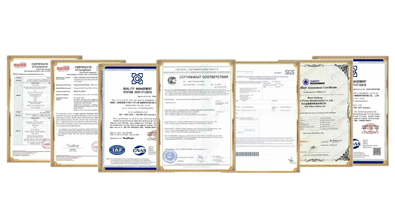
Quality proof that can be defended includes full certification packages that include material certificates, measurement inspection reports, heat treatment paperwork, and third-party verification from companies like TÜV, Lloyd's Register, or Bureau Veritas. European rules must be followed, as shown by the CE marking, which may be required under the PED 2014/68/EU requirements depending on the equipment category, pressure level, and application. GOST-R approval, on the other hand, ensures entry to the Russian market. Projects for big end-users like NIOC, ADNOC, or PETROBRAS often need to be pre-qualified through approved vendor lists. This is where component makers show they can do the job by auditing their facilities and showing their track record of performance.
Conclusion
Matching flanges and fittings by pressure class keeps workers safe, makes sure that rules are followed, and lowers the overall cost of ownership for industrial pipe systems. Starting with correct recording of working parameters, moving on to material and dimension verification, and ending with seller approval, this step-by-step process turns technical complexity into procurement trust. Knowing how pressure ratings affect temperature ratings, material properties, and standard differences helps make specifications more accurate, which stops mistakes that cost a lot of money during manufacturing and installation. A good procurement process strikes a balance between strict technical requirements and practical issues like availability, lead times, and the total cost of ownership. It also builds partnerships with strong suppliers who not only provide parts but also offer engineering support and quality assurance as the project is carried out.
FAQ
1. How do I determine the correct pressure class for my piping system?
Find the maximum operating pressure that includes short-term surges. Then, use the ASME B16.34 pressure-temperature tables to find the maximum operating temperature and material grade. Choose the pressure class whose ratings are higher than the values you calculated for the given temperature. Make sure to include safety margins as required by design codes such as ASME B31.3 for process piping or B31.1 for power piping.
2. Can I mix different pressure classes in the same pipeline?
When pressure classes are mixed within the same pressure limit, safety rules are broken, and risks are created. At working temperatures, all parts—pipe, fittings, connections, and valves—must meet or go beyond the system's design pressure. Moving from one pressure zone to another needs to be properly isolated with rated valves or blinds, and the boundaries must be clearly marked in paperwork and the field.
3. What materials offer the best corrosion resistance for chemical plant applications?
Stainless steel types 316 or 316L are generally resistant to corrosion by acids, chlorides, and organic compounds. However, for certain media, compatibility must be confirmed using corrosion charts. Duplex stainless steels are stronger and less likely to pit than other types of stainless steel. When combined with the right corrosion allowance and protective coatings, carbon steel is a cost-effective choice for non-aggressive media. On the other hand, exotic alloys like Hastelloy are used in highly corrosive environments where regular materials break down quickly.
Partner with RAYOUNG for Precision-Matched Flanges and Fittings
To match components reliably, you need more than just technical know-how. You also need a business partner that is dedicated to quality, compliance, and quick support. RAYOUNG offers engineered solutions made from carbon steel, alloy steel, and stainless steel. Their products are made to meet ASME B16.9, EN 10253, and GOST standards and come with all the necessary certification paperwork. Our custom fabrication services can handle unique pressure classes and configurations that aren't available in standard catalogs. We have been manufacturing premium flanges and fittings for decades and have won approvals from NIOC, ADNOC, and PETROBRAS by always delivering high-quality products and being technically skilled. Get in touch with our engineering team at info@hb-steel.com to talk about your specific pressure class needs and find out how our wide range of products, streamlined ordering processes, and technical support can help you turn procurement problems into competitive advantages for your next project.
References
1. American Society of Mechanical Engineers. (2021). ASME B16.5: Pipe Flanges and Flanged Fittings NPS 1/2 Through NPS 24 Metric/Inch Standard. New York: ASME Press.
2. American Society of Mechanical Engineers. (2020). ASME B16.9: Factory-Made Wrought Buttwelding Fittings. New York: ASME Press.
3. European Committee for Standardization. (2018). EN 10253-2: Butt-welding Pipe Fittings - Part 2: Non-alloy and Ferritic Alloy Steels with Specific Inspection Requirements. Brussels: CEN.
4. American Society of Mechanical Engineers. (2019). ASME B16.34: Valves—Flanged, Threaded, and Welding End. New York: ASME Press.
5. American Society of Mechanical Engineers. (2018). ASME B31.3: Process Piping - Design, Materials, Fabrication, Erection, Inspection, and Testing. New York: ASME Press.
6. Nayyar, M. L. (2016). Piping Handbook, Eighth Edition. New York: McGraw-Hill Education.

Need a quote? Want to see samples? Just say hello. We’re friendly. We’re fast. And we’re ready when you are.
Welcome to RAYOUNG – Strong Pipes, Stronger Promise