Steel flange Standards and Material Specifications Guide
Choosing the right steel flange for a large-scale industrial piping installation isn’t as easy as matching up bolt holes. Designing a flange to the relevant standards and using the right materials will immediately reduce the danger of leaks, save costly reworking, and ensure compliance with laws. Whether you’re directing the construction of an offshore platform or buying parts for a municipal water treatment plant, a firm grasp of flange standards and material grades enables you to make purchase decisions that protect timelines and budgets.
Understanding Steel Flange Standards
Standardization of steel flanges specifies identical norms for diameters, pressure values, and material requirements in many different sectors. Standards for the safety and compatibility of piping systems across the world are published by the American Society of Mechanical Engineers (ASME), the American National Standards Institute (ANSI), the Deutsches Institut für Normung (DIN), the Japanese Industrial Standards (JIS), and the European Norms (EN).
Key Standards Organizations and Their Roles
ASME B16.5 is still the most used standard in North America. It includes flanges from NPS ½ to NPS 24, with ASME B16.47 covering large-diameter flanges from NPS 26 to NPS 60. ANSI and ASME standards often overlap in practice. This means that measurements may be swapped around, making it easy to acquire from more than one supplier. Many EU member states use the European EN 1092-1 standard, which defines flange dimensions, pressure ratings, and material requirements. Although DIN standards are increasingly being replaced by EN standards, they are still utilized on many older sites in Germany and Central Europe. JIS B2220 is widely used for Japanese industrial piping applications. It is particularly important for high-precision manufacturing and power generation.
Understanding these models assists purchasing teams in choosing flanges that are compatible with existing equipment. When such standard equivalencies are sourced from other regions, it eliminates issues like uneven bolt patterns, inappropriate bore diameters, and improper gasket seating surfaces that frequently result in projects going beyond their anticipated schedules and budgets.
Common Flange Types and Standard Designations
Weld Neck (WN) flanges are most suitable for high-pressure applications since they disperse stress better. Slip-on (SO) flanges are simpler to install, but only at lower pressures. Blind flanges are used to close the ends of pipes, whereas lap joint flanges enable simple disassembly. Each kind has its own set of dimensional codes based on ASME or DIN standards. This standardization streamlines the procurement and specification process.
Material Specifications for Steel Flanges
The choice of the material directly affects the performance of the flange at various temperatures, pressures, and chemical conditions. There are three primary types of steel: carbon steel, alloy steel, and stainless steel. Each has distinct advantages depending on the application.
Carbon Steel Flanges: Economical Strength
ASTM A105 carbon steel flanges are commonly used for general services within the allowable temperature and pressure limits specified by applicable design codes. They are inexpensive and have strong mechanical properties; therefore, they may be utilized for water supply, HVAC systems, and general industrial pipes. Grade 20# carbon steel is also extensively used in Asian markets and has a comparable performance but a slightly different carbon content. Carbon steel flanges operate well in non-corrosive environments but need protective coatings such as hot-dip galvanizing when exposed to water or chemical vapors.
Alloy Steel Flanges: High-Temperature Resilience
With good creep resistance and structural stability, ASTM A182 F11 (1.25Cr-0.5Mo) and F22 (2.25Cr-1Mo) alloy steel flanges are commonly used for elevated-temperature services. These chrome-molybdenum alloys are prevented from graphitization so that bolt loads remain robust in supercritical steam lines and petrochemical processing units. Alloy flanges are a suitable choice for thermal power generation and hydrocarbon services in refineries because they provide a strong combination of thermal performance and mild corrosion protection.
Stainless Steel Flanges: Corrosion Defense
ASTM A182 F304 and F316 stainless steel flanges are resistant to stress corrosion cracking and pitting in severe chemical environments. F316 flanges with 2 to 3 percent molybdenum offer greater resistance than F304 in chloride-containing and many marine environments. Stainless steel is utilized by the pharmaceutical, food processing, and offshore oil and gas sectors because it is clean and long-lasting. While more expensive upfront than carbon steel, cheaper maintenance costs and longer service life often make up for the initial investment.
Selecting the optimal material requires evaluating the fluid medium, pressure fluctuations, environmental conditions, and total lifecycle costs. Carbon steel is ideal for general-purpose usage when rust is not an issue. Alloy steel can cope with the demands of stability at high temperatures. Stainless steel is utilized when corrosion is an issue, and cleanliness is vital.
Dimensional Standards and How to Measure Steel Flanges?
Correct measurements will assure a leak-free assembly and avoid costly field adjustments. The face may be thin or thick, and the bolt circle may be wider or narrower. This results in a poor gasket fit and a less dependable system.
Critical Dimensional Parameters
The bolt circle diameter (BCD), outer diameter (OD), flange thickness, number of bolt holes, and bore size must match the exact values shown in the published standard tables. ASME B16.5 defines these dimensions for pressure classes, including 150, 300, 400, 600, 900, 1500, and 2500. Each class has its OD number and BCD number. The same PN (pressure nominal) values, like PN10, PN16, PN25, and PN40 in EN 1092-1, are utilized with equivalent metric sizes.
Practical Measurement Techniques
Accurate measurements start with calibrated tools. Size and thickness are measured using digital calipers. Outside diameters are measured with steel tape measures. Bolt hole spacing is measured with vernier calipers. This measurement should be taken from the center of one bolt hole to the center of the diametrically opposite bolt hole, rather than from the hole edges.Check flange thickness at numerous points around the diameter to detect faults in manufacturing or machining. Some of the errors individuals make when measuring include utilizing old or rusty edges, not taking into consideration the height of the raised face, and mixing up the advertised pipe size with the actual bore diameter. Dimension compliance checks must be done during the receiving review and not during installation to avoid severe delays and complications during installation.
Importance of Dimension Compliance
If the two flanges are not the same size, the bolt loads are not even, the gasket might be crushed, and there are probable leakage channels. Standardized dimensions provide more flexibility in the global supply chain by allowing parts from various manufacturers to reliably operate together without the need for machining to fit. For instance, the procurement team should use exact standard names such as “ASME B16.5 Class 300 RF WN 6-inch” to avoid any misunderstanding and to ensure the right specifications are fulfilled.
Steel Flange Pressure Ratings and Performance Specifications
Pressure ratings are the maximum operating pressure a flange can safely sustain at certain temperatures. Wrong ratings may endanger people’s safety and jeopardize the reliability of the equipment.
Understanding Pressure Classes
The following are the pound ratings for ASME pressure classes: For ASTM A105 carbon steel at ambient temperature, Class 150 is rated at approximately 285 psi and Class 300 at approximately 740 psi. The published pressure-temperature charts illustrate that the permissible pressures decrease as the working temperature increases. For high-pressure applications, refineries typically utilize Class 600, 900, 1500, and 2500 flanges in catalytic crackers, subsea wellheads, and supercritical boilers.
Flange-Facing Types and Their Applications
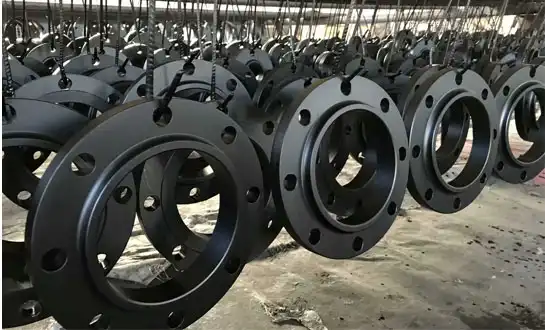
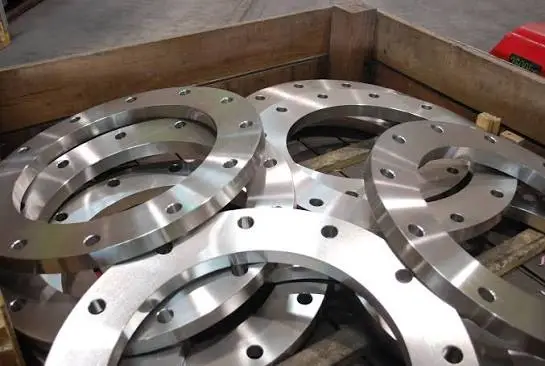
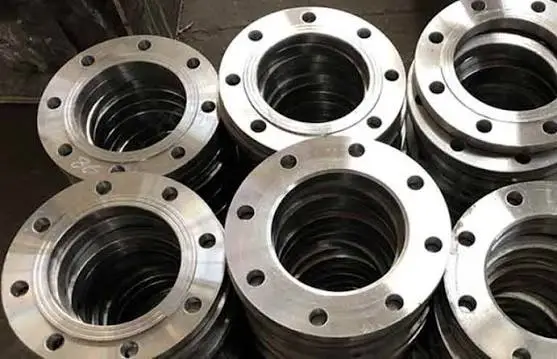
Raised Face (RF) flanges feature a slightly raised sealing surface that enables the gasket to be compressed more easily, which improves the sealing performance. The load is equally distributed on the FF (Flat Face) flanges, eliminating the stress on fragile connecting elements such as cast iron valve bodies. RTJ flanges are commonly used for high-pressure and high-temperature applications, especially where reliable metal-to-metal sealing is required. RTJ flanges feature metal ring gaskets that are inserted into precision-drilled holes for gas-tight sealing. RAYOUNG flanges are manufactured with CNC-machined sealing surfaces to precise surface polish requirements, typically 125 to 250 microinches Ra (arithmetic average roughness). This ensures that the gaskets are correctly sealed and that there are no leaks. This precision cutting eliminates surface imperfections that lead to early gasket failure.
Corrosion Resistance and Coating Options
Uncoated carbon steel flanges will corrode rapidly in moist or chemically aggressive environments. Hot-dip galvanizing is the process of applying a zinc coating. This coating corrodes before the base metal, hence increasing the longevity of the flange in outdoor applications and wastewater systems. Epoxy and polyurethane coatings provide chemical protection for processing industries using acids or alkalis.
Case Study: High-Pressure Flange Selection
One EPC builder designed a natural gas transfer station at 600 psi for which he selected ASME B16.5 Class 600 RTJ flanges of ASTM A105 carbon steel material with corrosion protection measures suitable for coastal conditions. The RTJ design sealed more tightly against natural gas leaks,while hot-dip galvanizing prevented atmospheric corrosion in the coastal environment. Chemical composition and mechanical properties are traced to the source using Full Material Test Certificates (MTC). This addresses the requirements of governmental compliance and insurance underwriting.
Procurement Considerations and Supplier Selection Guide
The methodical approach to purchasing flanges is to find a compromise between quality control, affordable prices, lead times, and the reliability of the vendor. Working with recognized manufacturers makes it easy to place orders and reduces supply chain risks.
Evaluating Supplier Credentials
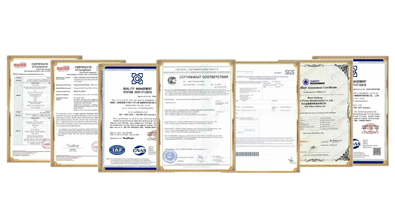
Well-reputed flange suppliers will have quality management systems in place according to ISO 9001:2015 and pressure equipment certifications such as ASME U-stamp or PED (Pressure Equipment Directive) compliance. Demand complete MTC documentation from vendors, including heat data, chemical analysis, tensile strength, hardness, and impact testing reports. RAYOUNG has received approvals from GOST-R and SGS, showing that it meets international quality requirements. This offers peace of mind to export projects.
Ordering Process Essentials
The minimum order quantities (MOQs) vary from supplier to supplier and from product to product. Standard-size flanges tend to have cheaper MOQs, whereas special requirements need larger commitments to offset the expense of the tools. Stock products have a two-week lead time. For cast metal or big-diameter flanges, it is 8 to 12 weeks. Talk about customized alternatives like non-standard bolt hole designs, unique coatings, or material improvements as early as possible in the purchase process to minimize delays.
Pricing Factors and Value Assessment
The price of flanges varies according to their manufacturing material, size, pressure class, and method of production. Forged flanges are costlier than the cast or plate-cut flanges because of greater mechanical properties and grain structure. Alloy and stainless steel are much more expensive than carbon steel, but their extended service life and reduced maintenance expenses frequently result in a lower total cost of ownership. Compare supplier offers with identical technical specifications and negotiate costs transparently. Buy in bulk, form long-term agreements, and bundle your shipment; you may save a lot and receive a more dependable delivery.
Global Logistics and Export Considerations
Proper packaging prevents transit damage. Flanges should be shipped in sturdy wooden crates, utilizing plastic end-caps on the sealing faces and moisture shields to protect against corrosion and mechanical impact. For large volumes, sea freight is the best; for urgent demands for shipment, air freight is the best. Make sure your suppliers provide you with all the export papers you need, such as commercial invoices, packing lists, certificates of origin, and material clearances. This will help the project’s customs clearance and site inspection.
Conclusion
Selecting the right steel flange requires navigating complex standard specifications, material properties, size requirements, and pressure ratings. Following the rules set by ASME, ANSI, DIN, JIS, and EN makes sure that all pipe systems around the world are safe and compatible. The type of material you choose—carbon steel for general service, alloy steel for high temperatures, or stainless steel to prevent corrosion—has a direct effect on how well it works and how much it costs over its whole life. Accurate measurements and the right pressure ratings stop leaks and structural failures, and strategic partnerships with suppliers make buying easier and lower project risks. Now that procurement professionals know this, they can safely choose flanges that meet business needs, legal requirements, and budgetary limits.
FAQ
1. What distinguishes ASME flanges from ANSI flanges?
The ASME and ANSI standards are very similar. For example, ANSI standards often use ASME B16.5 measurements. ASME is in charge of technical design and pressure vessel codes, while ANSI is in charge of ensuring broad industry consensus on standards. In practice, flanges that meet ASME B16.5 standards also meet ANSI standards. This means that they can be used interchangeably in North American pipe systems.
2. How do I verify flange quality against international standards?
Ask providers for full Material Test Certificates (MTC) that list the chemical make-up, mechanical qualities, and heat treatment history. Look for certification marks from a third party, like ASME, PED, or ISO stamps. Verify dimensional tolerances using standard reference charts, and test important parts without damaging them by ultrasound or magnetic particle inspection to find flaws inside or cracks on the outside.
3. Which material is best for corrosive conditions?
Because molybdenum makes steel less likely to pit, types like ASTM A182 F316 do well in chloride- and acidic conditions. The rust protection of duplex and super duplex stainless steels (F51, F53) is even better for use in harsh environments like offshore and sour service. Look at the different types of corrosion, such as uniform attack, pitting, and crevice corrosion, and use material selection guides to make sure that the metal makeup is right for the chemicals that will be present.
Partner with RAYOUNG for Certified Steel Flange Solutions.
RAYOUNG makes steel flanges that are precisely engineered to meet ANSI, DIN, and JIS standards. These flanges come with RF, FF, and RTJ facings that are designed for high-pressure uses. Our CNC-machined sealing surfaces make sure that there are no leaks, and full MTC tracking checks the quality of the material from the casting to the installation site. Options for hot-dip galvanizing make things last longer in tough conditions. We are an ISO 9001:2015-qualified steel flange maker that helps EPC contractors, distributors, and industry end-users by offering low prices, flexible minimum order quantities, and dependable shipping around the world. To get a price, email info@hb-steel.com. We look forward to building a relationship with you based on quality and honesty.
References
1. American Society of Mechanical Engineers. ASME B16.5-2020: Pipe Flanges and Flanged Fittings. ASME International, 2020.
2. ASTM International. ASTM A105/A105M-21: Standard Specification for Carbon Steel Forgings for Piping Applications. ASTM International, 2021.
3. European Committee for Standardization. EN 1092-1:2018 Flanges and Their Joints – Circular Flanges for Pipes, Valves, Fittings, and Accessories. CEN, 2018.
4. Japanese Standards Association. JIS B2220:2004 Steel Pipe Flanges. Japanese Standards Association, 2004.
5. Deutsches Institut für Normung. DIN 2633:1984-08 Flanges for General Purposes. DIN Standards, 1984.
6. Becht Engineering. Pressure-Temperature Ratings for Flanges Per ASME B16.5. Technical Bulletin Series, 2019.

Need a quote? Want to see samples? Just say hello. We’re friendly. We’re fast. And we’re ready when you are.
Welcome to RAYOUNG – Strong Pipes, Stronger Promise