Spectrometer Analysis for Flange Material Verification
One of the fastest and most reliable ways to make sure that the steel flanges you bought match the grade, chemistry, and project requirements is to use a spectrometer to check the material. I talk about this subject to answer a common question from buyers: how can they make sure they don't get the wrong material for important pipe systems? Procurement teams can check the metal content, lower supply risk, and help with traceability before installation by using tools like X-Ray Fluorescence (XRF) and Optical Emission Spectrometry (OES). This step helps protect project budgets, schedules, and safety in high-pressure, corrosion-sensitive, and compliance-driven projects.
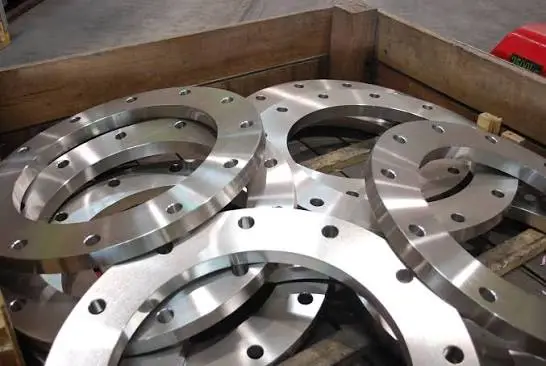
Understanding Steel Flanges and Their Material Requirements
Procuring industrial flanges is never just a matter of matching dimensions and negotiating prices. In mission-critical industrial projects, the precise metallurgical quality and chemical composition of the material are absolutely paramount.Even if the flange dimensions fit the bolt pattern and looks right, it may still fail your service conditions because the chemistry is off.
Common flange types and where they are used
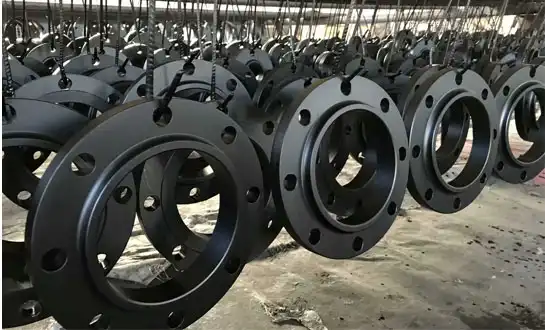
Standard steel flanges come in a number of shapes and sizes, such as weld neck, slip-on, blind, threaded, and lap joint. In systems with a lot of pressure and heat, weld neck flanges are often used because their curved hub helps spread stress. It's easy to line up slip-on flanges, and they usually work better for lighter loads. Blind flanges close off the ends of a line, and threaded flanges support systems in places where welding isn't possible.
For B2B buyers, the type must match the process, the length of time it needs to be maintained, and the pressure class. This is the main reason why ANSI, DIN, and JIS standards are still important in design work.
Why material grade matters in procurement
Carbon steel, alloy steel, or stainless steel are the main metals used to make flanges. Each type of material is used in a different setting. Carbon steel is often used to keep costs down and make things stronger. When used in heat and pressure service, alloy steel can work better. In chemical, water, and sanitary applications, stainless steel provides improved corrosion resistance.
Material mismatch is always near the top of my list of procurement risks because it can lead to:
- Corrosion problems in harsh media, loss of pressure over time, and shorter service life, even when the measurements match the plan. This is very important for projects like petrochemicals, power plants, water treatment systems, and facilities that are hard to get to for upkeep or that cost a lot to shut down.
- Non-compliance with ASTM, ASME, or EN standards can lead to rejection during inspection, delays in starting, and a loss of trust between the buyer and the seller. In projects that are based on bids or EPC packages, one failed material verification can slow down the flow of paperwork, make it take longer for customers to approve, and push back the date of handover.
Spectrometer Analysis: Principles and Application in Flange Material Verification
Most buyers researching this topic generally have one clear goal: they want to know what spectrometer analysis is, how accurate it is, and whether it can check steel flanges before accepting them. So the featured-snippet answer is easy: spectrometer analysis finds out what elements are in a flange so buyers can quickly and consistently be sure they are getting the right material grade.
How XRF and OES work
XRF measures the characteristic X-rays emitted by a material after excitation. It works quickly, is easy to carry, and can be used to positively identify materials in a wide range of steel and metal situations. An electrical spark is used by OES to excite the atoms on the metal surface, and the light spectrum that is released is read. OES is very useful when chemistry needs to be verified with greater accuracy because it can accurately measure light elements such as carbon that are difficult for XRF to detect.
What spectrometer analysis checks in flanges
The goal of flange verification for me is to make sure that the chemical composition matches the specified grade that is written on the MTC and purchase order. Chromium, nickel, molybdenum, manganese, silicon, sulfur, phosphorus, and, with the right equipment, carbon can all be checked with a spectrometer. Small differences in chemistry can have a big effect on how well something resists rust, how well it welds, how well it works under pressure, and how long it lasts.
This helps reach important buying goals:
- Material verification before shipping, when they arrive at the warehouse, or during a check at the site. That provides greater confidence when they're buying in bulk across global supply chains and helps prevent costly mistakes when different kinds of steel look the same.
- Traceability and being ready for an audit. People who buy things can make a better compliance package for end users, third-party testers, and project owners when test results match up with full MTC traceability, heat numbers, and inspection records.
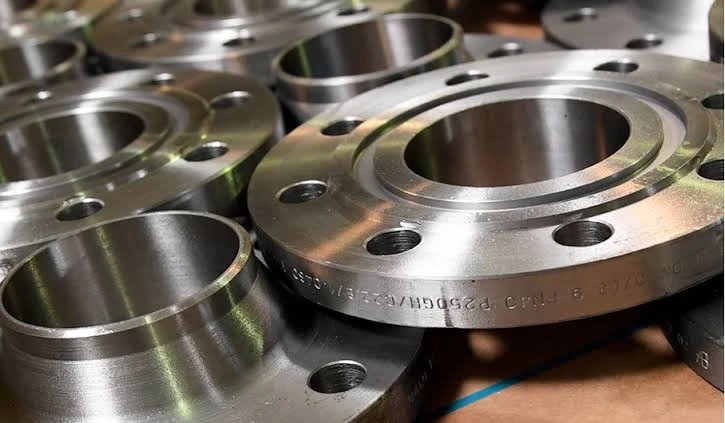
Comparing Spectrometer Analysis Solutions for Steel Flanges
Different projects need different ways to check steel flanges. A lot of buyers ask me if pocket testing is enough or if they need to do laboratory testing as well. It depends on the level of risk, the type of material, and how strict the requirements are.
XRF for fast screening
XRF is famous because it is easy to move around and use, and it works well for quickly sorting things. As a practical matter, it works well for source audits, inbound inspections, and inventory inspections. When I need to quickly check a lot of pieces of stainless steel or metal, XRF really helps. Its limits are important; when it comes to light elements, XRF is not as good as OES.
OES for deeper elemental analysis
When exact chemistry is needed, OES is the better choice. This is often the case for alloy steels, pressure-containing components, or projects where standards and customer specs need more detailed proof in flange verification. Most of the time, OES needs a better test area and a more controlled process, but the extra work can be worth it for the extra accuracy.
Best Practices for Steel Flange Material Verification in Procurement
Verification of materials works best when it is part of the buying process and not something that is added at the end. I think you should think of it as part of qualifying the provider and keeping an eye on the order.
Build verification into supplier evaluation
Find out from your providers how they handle tracking raw materials, managing heat numbers, and keeping test records. Check to see if they use in-house PMI, inspection by a third party, or approved lab help. Suppliers you can trust should be able to clearly explain how they do things. At RAYOUNG, we support buyers with high-pressure needs by offering ANSI/DIN/JIS standard steel flanges with RF, FF, and RTJ facings.
Document results for compliance and confidence
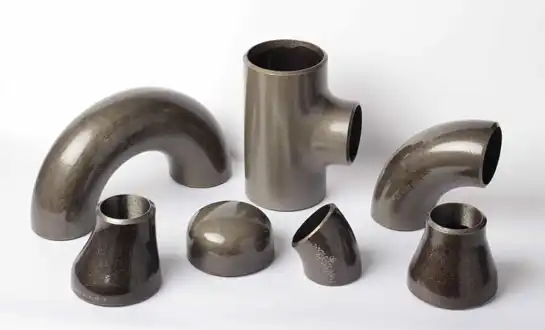
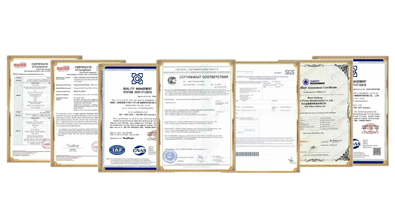
We highly recommend meticulously archiving all inspection records, MTCs, purchase orders, shipping data, and verified PMI/OES results. This exhaustive documentation streamlines compliance audits, smooths customer reviews, and provides bulletproof evidence for any future liability claims. As a premier manufacturer of industrial pipe fittings—including buttweld steel elbows, reducers, and precision flanges—RAYOUNG ensures every component is fully traceable. Our comprehensive product range is strictly backed by ISO 9001:2015 certification and globally recognized third-party inspection services, such as SGS.
Addressing Common Questions and Challenges in Material Verification
Global buying makes every important choice more difficult. Buyers need producers, inspectors, and end users to be able to talk to each other quickly, correctly, and clearly.
Can a spectrometer analysis detect counterfeit or substandard flanges?
Yes, it can help identify materials whose chemical composition does not match the specified grade. In order to find fake, mixed, or low-quality steel flanges, this is one of the most widely used screening tools. It should be a part of a bigger quality program that also checks the sizes, markings, MTCs, and any technical standards that apply.
What about cost and lead time?
When you think about how much rejection, stop, or failure costs, testing usually doesn't take long. In many cases, portable PMI can support rapid decision-making, while confirmation in a lab may take longer, depending on the scale and the practicalities. For most business-to-business buyers, the risk of the job is greater than the cost of proof.
How do I manage testing across international supply chains?
Make sure there are clear instructions, accepted inspection spots, and certified labs or other qualified third-party agencies close to the source. When samples are shipped, time zones don't match up, or requirements are misread, local expert communication helps keep things on schedule. It is much easier to obtain approval when I plan ahead this far.
Conclusion
Spectrometer analysis is an indispensable tool for procurement teams to verify the exact material composition of steel flanges before incorrect grades can cause catastrophic issues with cost, safety, or regulatory compliance.XRF is good for quick screening, but OES is better for more precise chemical analysis. The real value for people who buy and manage pressure-rated pipe systems is not just the test itself. From the purchase order to the installation, there is more trust, better supplier control, and better tracking. Projects are less likely to fail when the chemistry aligns with the standards and documents.
FAQ
1. How accurate is spectrometer analysis for flange verification?
When done with the right tools, measurements, and surface preparation, it is very exact. There are a lot of alloys that can be checked with XRF, but OES is better when checking for light elements and tighter chemistry.
2. Is XRF enough for all steel flange inspections?
No, XRF is great for quickly checking PMI and alloys, but OES is usually better when carbon content or more in-depth chemical analysis is needed to make sure the grade is correct.
3. When should I request flange material verification?
I suggest asking for it when the seller is being qualified, when the goods are being inspected before they are shipped, when they are being received, or whenever the project has strict tracking or compliance requirements.
4. What documents should accompany verified flanges?
You should ask for MTCs, inspection reports, records of compliance with applicable standards, and any third-party verification reports that were used during the order process.
RAYOUNG Reliable Steel Flange Supply for Industrial Project Success
Need a highly dependable manufacturing partner for premium steel flanges—one that guarantees absolute traceability and provides expert project-focused support? RAYOUNG helps EPC contractors and distributors rigorously verify product quality, dramatically lower procurement risks, and ensure a rock-solid supply chain for critical industrial piping systems. You can email us at info@hb-steel.com to talk about your flange testing needs or to get a price on approved quality steel flanges that are for sale.
References
1. ASTM International, ASTM A105/A105M Standard Specification for Carbon Steel Forgings for Piping Applications
2. ASTM International, ASTM A182/A182M Standard Specification for Forged or Rolled Alloy and Stainless Steel Pipe Flanges
3. ASME, ASME B16.5 Pipe Flanges and Flanged Fittings
4. ASTM International, E415 Standard Test Method for Analysis of Carbon and Low-Alloy Steel by Spark Atomic Emission Spectrometry
5. ASTM International, E1086 Standard Test Method for Analysis of Austenitic Stainless Steel by Spark Atomic Emission Spectrometry
6. ASM International, ASM Handbook, Volume 17: Nondestructive Evaluation of Materials

Need a quote? Want to see samples? Just say hello. We’re friendly. We’re fast. And we’re ready when you are.
Welcome to RAYOUNG – Strong Pipes, Stronger Promise