Sourcing Forged Flanges for Sour Service: NACE MR0175 Compliance and Testing Protocols
NACE MR0175 compliance is not a choice when looking for forged flanges for sour service uses; it's a must. Hydrogen sulphide environments need connections that are made to fight sulphide stress cracking (SSC) and corrosive deterioration. By choosing parts that are made to exact metallurgical standards and have been tested to the highest standards, you can keep your activities safe and avoid catastrophic breakdowns. This guide tells buying workers how to find reliable, compliant pipe connections that work in harsh conditions by going over material requirements, testing procedures, and ways to evaluate suppliers.

Understanding Forged Flanges for Sour Service Applications
What Makes Forged Flanges Essential in Corrosive Environments?
Forged flanges are high-strength metal pipe fittings made by pressing down hard on heated steel billets. This process makes a refined and dense grain structure that is better than cast parts because it gets rid of the internal gaps that weaken structures. In sour service, where high levels of hydrogen sulphide threaten the safety of the material, these connections give you the mechanical strength and corrosion protection you need for safe, leak-free operation.
Forging refines the metal while it is solid, making it stronger against wear and pressure. Cast flanges are made by pouring metal into moulds. This manufacturing method is especially useful for industries like oil and gas production, petrochemical processing, and plant work, where pipeline breakdowns can cost a lot of money and put people in danger.
Material Selection for Hydrogen Sulphide Resistance
The choice of material has a direct effect on how well the forged flanges work in harsh sour service conditions. We've seen that three main types of steel are most often used in industrial applications:
- Carbon Steel Options: ASTM A105 and A350 LF2 serve as practical solutions for moderately sour service conditions. When properly heat-treated with controlled hardness and refined microstructure, these carbon steel grades achieve acceptable SSC resistance. This means that EPC workers can use them even though they are on a tight budget without compromising safety.
- Stainless Steel Grades: ASTM A182 standards for 304/304L and 316/316L offer improved corrosion resistance in many corrosive environments, including some chloride-containing sour service conditions. The molybdenum content inherently present in 316-grade stainless steel enhances resistance to pitting and stress corrosion cracking in chloride-bearing sour media.This makes it last longer in offshore and deepwater uses.
- Alloy Steel Variants: A182 F11 and F22 chromium-molybdenum metals can withstand high temperatures and still prevent SSC. These materials are used in places like power plants and high-temperature processing units where they are exposed to both heat cycles and corrosive conditions.
The chemical make-up, mechanical qualities, and heat treatment records must all be written on material papers. Distributors who keep detailed records make it easier to approve projects and make sure they follow the rules.
Common Flange Configurations for Sour Service
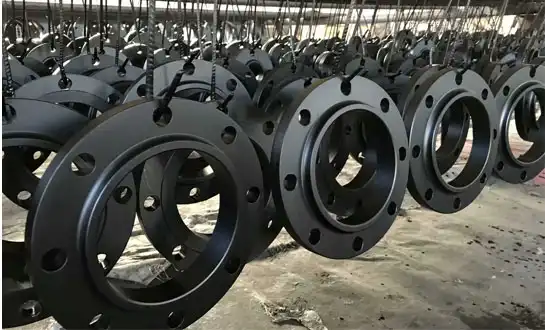
There are different types of connections that meet different construction needs and pressure rates. Weld neck flanges have long, tapered hubs that butt-weld to pipes. They make smooth flow changes that reduce stress concentration points and turbulence. When mechanical stability can't be compromised, these designs work great for sending sour gas under high pressure.
Slip-on flanges are cheaper and more flexible than fillet welding because they can be slid over the ends of pipes before they are welded. Even though they are good for moderate-pressure uses, procurement teams should make sure that the pressure class grades fit the needs of the system. Blind flanges block off the ends of pipelines or the openings of vessels. This makes it easier for repair workers to get to the area and keeps the pressure inside.
Socket weld flanges and threaded designs are useful for high-pressure systems with smaller diameters where welding access is limited by limited installation space. Each type has different checking standards and labour costs that affect the overall project budget.
NACE MR0175 Compliance and Testing Protocols for Forged Flanges
Chemical Composition and Mechanical Property Requirements
To keep SSC from breaking, NACE MR0175 (now ISO 15156) sets strict limits on alloying elements and mechanical properties. Limits on the carbon level stop overhardening, which makes it easier for cracks to form. To keep the right ratios of strength to flexibility, the amounts of manganese, silicon, and minor elements are carefully controlled.
Critical compliance levels are defined by material hardness limits. The NACE MR0175 / ISO 15156 standard specifies maximum allowable hardness thresholds based on alloy composition, heat treatment, and environmental severity; for many carbon and low-alloy steels used in sour service, limits are commonly set at 22 HRC. Suppliers must give approved mill test records (MTRs) that show compliance with all the necessary factors.
Normalising, quenching, and tempering are heat treatment steps that change microstructures to get certain qualities. People who work in procurement should make sure that sellers keep written records of their heat treatment processes, including records of time and temperature that can be linked to specific production lots.
Mandatory Testing Procedures and Documentation
Verification of compliance includes more than just material certificates. It also includes full testing schedules. Hardness tests are done on flange body parts and weld zones to make sure that the traits are the same all the way through the part. Ultrasonic testing finds internal cracks that can't be seen with the naked eye. This protects against subsurface flaws that spread when the structure is loaded and unloaded repeatedly.
In sulphide stress-cracking tests, samples of materials are put through sour conditions while they are under tensile stress. These quick tests confirm that the materials are resistant to hydrogen embrittlement processes that lead to failures later on. Before fitting, surface-breaking flaws are found with liquid penetrant or magnetic particle screening.
Documentation needs include being able to track materials from the steel mill to the production site. The body of each forged flange should have heat numbers laser-etched or low-stress stamped on it. This will connect the actual parts to the test reports. Teams in charge of buying things for the government, like those working on building projects or bid-driven purchases, need full paperwork packages to pass compliance checks and protect themselves from liability.
Quality Assurance and Supplier Certification Standards
Suppliers you can trust use ISO 9001:2015 quality management systems that have rules just for sour service goods. Compliance with API 6A indicates conformity with wellhead and high-pressure equipment requirements, and PED (Pressure Equipment Directive) compliance lets you sell your products in Europe. Preference should be given to suppliers who have third-party certifications that show that their quality systems have been checked by outside auditors.
During supplier audits, material receiving inspection processes, heat treatment furnace calibration records, and repair logs for testing equipment should all be looked at. Facilities that have their own testing tools, like spectrometers, hardness testers, and ultrasound equipment, show that they are committed to quality control rather than relying on outside services that add risks to the supply chain.

Comparing Forged Flanges with Alternative Flange Types for Sour Service
Performance Advantages of Forged Construction
Due to basic metallurgical differences, forged flanges beat cast options in sour service. Some casting methods can trap gas pockets and make holes in the material, which can lead to rust pitting and crack spreading. The compression forging process gets rid of these weaknesses and makes the grain boundaries stronger so hydrogen can't get in.
Increasing the density of a material directly affects its ability to hold pressure. Forged flanges stay the same size even when pressure changes, which makes cast edges creep or shrink over time. This dependability is especially useful on offshore sites that aren't manned or on pipeline installations that are far away and require expensive repair access.
Forged Flanges regularly show better impact toughness at low temperatures, which is very important for activities that take place in cold climates or cryogenic service. The finely tuned nanoscale structure can take in energy without breaking easily, so it doesn't leak even when things go wrong, and weaker parts might break.
Cost and Lead Time Considerations
Forged flanges are more expensive because they are harder to make and made of better materials. Costs per unit should be 15–30% higher than cast options in procurement budgets. The exact prices depend on the size, pressure class, and material grade. However, lifecycle cost analysis consistently favors forged components due to their significantly longer service life, superior mechanical integrity, and lower risk of premature failure.
Lead times for standard ASME B16.5 measurements are usually between 4 and 8 weeks for carbon steel grades and between 8 and 12 weeks for alloy and stainless steels. Custom orders that need special heat processes or measurements that aren't normal may take 12 to 16 weeks. By planning buying plans around these dates, you can avoid project delays and choose suppliers based on quality rather than just availability.
Bulk-order negotiations can secure volume discounts of 10 to 20 per cent for amounts greater than 100 pieces per order. Distributors who keep popular sizes in stock in their local areas can provide instant availability at slightly higher prices. This is a good choice for jobs that need to be done quickly or during maintenance shutdowns where time is limited.
Procurement Best Practices for NACE MR0175 Compliant Forged Flanges
Supplier Evaluation and Qualification Criteria
Sourcing that works starts with a thorough evaluation of the provider in a number of areas. Evaluation of manufacturing capacity should make sure that the amount of work that can be done matches the size of the project without using up too many shop resources and lowering the quality of the work. Facilities that make 500 to 2000 forged flanges a month have well-established processes and stable, trained staff.
Location affects both the cost of logistics and the speed of conversion. For high-volume procurement, international sourcing may offer unit cost advantages, whereas domestic suppliers typically provide shorter lead times and simplified compliance verification. For critical-path items that need to be delivered quickly, balanced procurement plans often use both domestic and international providers. For bulk standard components that can be planned for over a longer period of time, foreign sources are used.
In particular, ask for written proof of past successful service projects that have been done in your business. Suppliers who work with oil and gas companies know how to meet the unique needs of this industry, which are not the same as those of other industries. You can be sure that they can meet your expert and business needs by verifying references from similar projects.
Documentation and Traceability Requirements
Material tracking systems need to use written factory records to connect finished forged flanges to certifications of raw materials. For each part, you should use heat numbers from the steel makers, records of the heat treatment batch, and your own test results. Traceability documents should be sent with packages instead of only when asked for, as stated in the procurement requirements.
Third-party inspection services are helpful for high-stakes projects or when working with sources you don't know well because they provide independent confirmation of compliance. Inspection organisations watch tests, make sure that paperwork is correct, and give certified reports that shift compliance responsibility. Spend two to five per cent of the value of the part on full inspection services that greatly lower the risk of acceptance.
Negotiation Strategies for Optimal Value
Price talks should include more than just unit cost; they should also include aspects of total worth. Terms of payment affect cash flow. For example, 45–60-day terms versus prepayment requirements have a big effect on how the money is managed for a job. Latent flaws found during installation are covered by warranty terms that cover material defects and workmanship for 12 to 18 months.
Superior sellers are different from commodity vendors because they offer technical help. Having access to metallurgical experts for help choosing materials, installing them, and figuring out what went wrong adds value throughout the lifetime of a project. We have found that providers with a lot of technical tools can often avoid expensive specification mistakes that less expensive options can't fix.
Forged flanges' inventory holding costs are affected by minimum order amounts and the types of packing that can be used. When suppliers offer piece-level packaging instead of bulk crating, damage from handling is lessened, and shipping plans can be broken up to match the progress of building.
Conclusion
Finding forged flanges that are NACE MR0175 compliant requires technical know-how, careful source screening, and careful paperwork. In sour service uses, the choice of materials, proof of tests, and qualifications of suppliers all have a direct effect on operating safety and project success. These buying strategies, which cover everything from metallurgical specs to plans for upkeep over the course of a product's life, let you make smart choices about where to buy things that meet both cost and reliability standards. Spending time on properly evaluating suppliers and checking their compliance saves a lot of money in the long run. With these insights, procurement pros can find parts that protect people, property, and the environment for long periods of time in corrosive settings.
FAQ
1. What materials perform best for forged flanges in sour service?
For harsh, sour environments, stainless steel types 316 and 316L are very resistant to corrosion. For mild conditions, carbon steel A105 and alloy steel A182 F22 are more cost-effective choices. The type of material used is determined by the amount of hydrogen sulphide, the temperature, the pressure, and the amount of chloride. Look at the NACE MR0175 material selection charts for forged flanges that are made for the needs of your work.
2. How can buyers verify genuine NACE MR0175 compliance?
Ask for approved mill test papers that list the chemical make-up, mechanical properties, heat treatment history, and hardness test results. Independent checks are done by third-party inspection services. Make sure that the heat numbers stamped on the flanges match the numbers on the paperwork, and make sure that the tests followed NACE rules instead of general ASTM rules.
3. What lead times should procurement teams expect for custom orders?
It usually takes 6 to 10 weeks for standard carbon steel flanges to be made, but 10 to 14 weeks for stainless steel and metal types. Times may take 14 to 18 weeks longer if you need custom sizes, special heat processes, or unusual materials. To get the best schedule for critical-path components, share specs early on and keep in touch with suppliers.
Partner with RAYOUNG for Reliable Forged Flange Solutions.
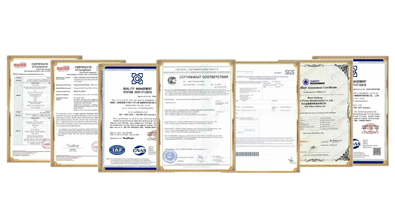
For sour service uses in the oil and gas, petrochemical, and power production industries, RAYOUNG makes forged flanges that meet NACE MR0175 standards and are made to the highest standards. As a trusted forged flanges manufacturer, we keep our ISO 9001:2015 certification up to date and also have GOST-R and SGS export compliance approval. This way, we can be sure that every part meets the strict quality and safety standards.
Our wide range of products includes weld neck, slip-on, blind, and socket weld styles in carbon, stainless, and alloy steel types from ASTM A105 to A182 standards. Every order comes with full material traceability, full testing documentation, and expert engineering help, which makes it easier to verify compliance and install. Email our procurement experts at info@hb-steel.com to talk about the needs of your project, get specific quotes, or set up plant checks. We're dedicated to meeting the needs of your vital assets for performance, safety, and dependability.
References
1. NACE International (2015). NACE MR0175/ISO 15156: Petroleum and Natural Gas Industries—Materials for Use in H2S-Containing Environments in Oil and Gas Production. Houston: NACE International.
2. American Society of Mechanical Engineers (2020). ASME B16.5: Pipe Flanges and Flanged Fittings NPS 1/2 Through NPS 24 Metric/Inch Standard. New York: ASME Press.
3. American Petroleum Institute (2018). API Specification 6A: Wellhead and Tree Equipment, 21st Edition. Washington: API Publishing Services.
4. ASTM International (2019). ASTM A105/A105M: Standard Specification for Carbon Steel Forgings for Piping Applications. West Conshohocken: ASTM International.
5. Greer, J.B. (2017). Sour Service Piping Materials: Selection, Testing, and Performance in Hydrogen Sulfide Environments. Houston: Gulf Professional Publishing.
6. Rhodes, P.R. & MacDonald, K.A. (2016). Forged Steel Flanges: Manufacturing, Inspection, and Application Standards for Critical Service. Cambridge: Woodhead Publishing.

Need a quote? Want to see samples? Just say hello. We’re friendly. We’re fast. And we’re ready when you are.
Welcome to RAYOUNG – Strong Pipes, Stronger Promise