Selecting Stainless Steel Pipe Flanges for Corrosive Environments
Picking the correct stainless steel pipe flange for corrosive settings is an important purchase choice that has a direct effect on the safety, dependability, and cost of operation of the system. Flanges must be able to handle chlorides, acids, and high temperatures in chemical processing plants, offshore platforms, and desalination plants. Choosing the right material, especially between types like 304, 316, or duplex stainless steel, will determine whether your work lasts for decades without any problems or needs a lot of upkeep. This guide helps project developers, buying managers, and engineers understand technical requirements, make sure they follow standards, and evaluate suppliers so they can make smart choices that lower risk and keep total cost of ownership low.

Understanding Stainless Steel Pipe Flanges in Corrosive Environments
Flanges are mechanical links that connect pipes to valves, pumps, and vessels. They also make it possible to take parts apart for repair. In corrosive settings like oil pipelines, drug factories, and marine uses, these parts are constantly attacked by chemicals that can weaken the seals and make the structure less stable.
Why Stainless Steel Grades Matter?
Stainless steel's chromium content creates a passive oxide layer that stops corrosion. Grade 304 has about 18% chromium and 8% nickel, which makes it resistant to rust in most situations and good for use in food preparation. Grade 316 adds 2 to 3 percent molybdenum, which significantly improves resistance to pitting and crevice corrosion in chloride-rich environments such as marine installations and certain chemical processing applications.
Duplex stainless steels, like 2205, have microstructures that are both austenitic and ferritic. They typically have approximately twice the yield strength of 316L stainless steel and offer excellent resistance to chloride stress corrosion cracking. Super duplex grades improve performance in high-temperature brine and deep-sea oil output. When buying teams know about these differences in metallurgy, they can match the prices of materials to the needs of the service instead of over-specifying for every use.
Pressure and Temperature Considerations
The mechanical properties of stainless steel flanges remain reliable across a wide temperature range, from working with cold liquefied gases to steam systems that are above 500°C. The tensile strength of the material—usually at least 515 MPa for the 316 grade—keeps the structure strong even when pressure changes and temperatures rise and fall, which would cause weaker materials to break too soon.
How to Choose the Right Stainless Steel Pipe Flange for Corrosive Environments?
To choose the right stainless steel pipe flange specs, you need to carefully look at the operational factors, regulatory standards, and expected long-term performance. This organized method cuts down on mistakes in purchasing that can cause safety problems or expensive repairs.
Evaluating Application Environment
The chemical make-up, composition, temperature, and flow velocity of the corrosive medium decide the minimum material needs. At the same time, hydrochloric acid service needs more corrosion-resistant nickel alloys than sulfuric acid service. When working with saltwater spray on remote platforms, the rules are different from when you're submerged in treatment brine. If you correctly record these factors, you can avoid under-specification, which shortens the service life, and over-specification, which wastes money on upgrades that aren't needed.
Flange Type Selection
Different flange designs are best for different installation situations and operating needs:
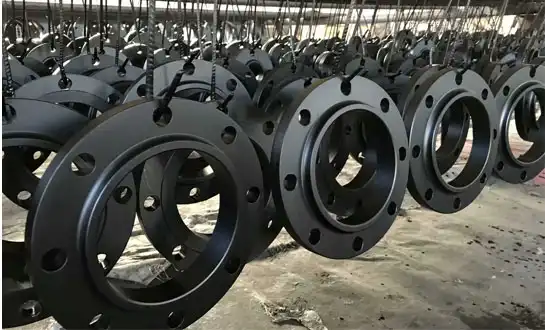
- Weld neck flanges with a long, curved hub that is welded straight to the pipe offer better stress distribution for high-pressure and high-temperature uses. The smooth change from pipe to flange lowers turbulent flow and stress concentration places where fatigue cracks may initiate. These systems are used for the most important tasks in power generation and petrochemical processes, where failure would have very bad results.
-
Slip-on stainless steel flanges offer ease of installation by sliding over the pipe prior to double-fillet welding. While providing lower fatigue resistance compared to weld neck designs, they represent a cost-effective solution for moderate-pressure applications, such as municipal water treatment facilities and commercial process lines.
- Blind flanges seal pipeline ends or vessel nozzles, providing isolated access points for cleaning, inspection, and future system expansion. Blind flanges are used to briefly separate parts of chemical reactor systems and pipeline testing activities.
- Lap joint flanges and stub ends work together to let the flange rotate so that the bolt holes are lined up correctly without moving the pipe. This form makes installation easier in systems that need to be taken apart often to clean, which is common in food processing and the production of drugs.
Standards Compliance and Pressure Ratings
ANSI/ASME B16.5 covers flanges up to 24 inches wide and pressure classes from 150 to 2500, while B16.47 covers NPS sizes greater than 24 inches. European specs are based on DIN and EN 1092 standards, while Japanese manufacturing markets use JIS standards. To make sure that dimensions can be used interchangeably and to avoid expensive changes in the field, procurement papers must clearly refer to the relevant standards.
The 150, 300, 600, 900, 1500, and 2500 pressure class designations indicate allowable pressure-temperature ratings that can be used at certain levels. At 38°C, the allowable pressure for a Class 150 stainless steel flange depends on the material grade specified in ASME B16.5 pressure-temperature rating tables, but at 260°C, it can only handle 180 psig because the strength of the material drops with temperature. Accurately measuring pressure and temperature during design stops both dangerous under-rating and useless over-rating that costs money.
Face Type Selection
How the flange face affects how well the seal works and which gasket to use. Raised face (RF) flanges have a sealing area that is raised about 2 mm high and can be used with normal gasket materials in general industrial settings. Flat face (FF) designs let weak seal materials like PTFE or compressed fiber sheets touch the whole surface. Ring-type joint (RTJ) flange faces feature precision-machined grooves that accommodate metallic ring gaskets, engineered for high-pressure, high-temperature service where soft gaskets would fail. CNC-machined sealing surfaces give RTJs the exact measurements they need, getting rid of the tiny surface flaws that let air leak in harsh circumstances.
Comparing Stainless Steel Pipe Flanges with Other Materials in Corrosive Settings
The choice of material affects the original costs, the frequency of upkeep, and the total costs over the life of the product. Comparing success helps procurement managers show project partners why they need to make big investments.
Stainless Steel Versus Carbon Steel
Carbon steel flanges are 40–60% less expensive than stainless steel parts that do the same job, but they need coats or cathodic protection in places where they could rust. Hot-dip galvanizing is a cheap way to protect carbon steel from corrosion in atmospheric service and light chemical contact. In suitable atmospheric environments, it can significantly extend service life. Galvanized carbon steel works well in places where rust isn't a big problem, like cooling water systems, structural pipes, and gas transport networks.
Stainless steel eliminates the need for external protective coatings, offering inherent resistance to severe chemical degradation that would rapidly deteriorate carbon steel. In ocean service, a 316-grade flange stays strong for decades without coats, but galvanized carbon steel needs to be inspected and fixed every 5 to 10 years. In important or hard-to-reach systems, the higher cost of purchasing stainless steel is often justified by the difference in how much it costs to maintain.
Forged Versus Cast Flanges
Forging tightens up the grain structure and gets rid of any holes, making the stainless steel pipe flange material stronger and more resistant to rust than cast materials of the same type. Forged flanges are most common in high-pressure situations above Class 600 and in situations where impact loads or shaking could damage the structure. The way the product is made provides directional grain flow that stops cracks from spreading along stress lines.
Cast flanges are better than forged ones when they are big or have complicated shapes. Investment casting makes complex shapes with little cutting, which lowers the cost of making custom forms. Careful selection of materials and non-destructive tests make sure that cast parts meet the performance standards for moderate-pressure work.
Seamless Versus Welded Construction
When flange blanks are machined from forged solid stock, you get rid of the weld gaps that cause corrosion and mechanical stress to build up. In some critical hydrogen, sour gas, or high-pressure steam services, forged or seamless components may be preferred to minimize concerns related to weld heat-affected zones. A full material test certificate (MTC) traceability record shows the chemical makeup and mechanical features of a material from the time it is from heat treatment through final manufacture. This is necessary for quality control in industries that are controlled.

Best Practices for Installation and Maintenance of Stainless Steel Pipe Flanges in Corrosive Environments
The right way to put something in will protect your investment and make sure it works well for a long time. Even high-end parts break early if they are put on wrong or not taken care of properly.
Gasket Selection and Installation
The material used for gaskets has to be able to stand up to process media and still be flexible across a range of working temperatures. Gaskets made of spiral-wound stainless steel and graphite or PTFE can handle harsh chemicals and high temperatures well. For lower-pressure water service, compressed fiber sheets work well, while elastomers like EPDM or Viton work best with certain chemicals.
Thoroughly cleaning the flange seating surfaces removes mill scale, weld spatter, and corrosion products that prevent proper gasket seating.For soft gaskets, flange faces require surface finishes between 125 and 250 RMS. For metallic gaskets, they need finishes between 63 and 125 RMS. Too much roughness cuts through seal material, and too much smoothness stops mechanical grip.
Bolt Tightening Procedures
When bolts are loaded evenly, they squeeze seals evenly, blocking leak paths around the outside. Starting with 30% of the goal torque, then 60%, and finally 100%, cross-pattern tightening steps spread stress out gradually. With hydraulic tensioning tools, torque doesn't change because of frictional differences between nuts. This makes sure that gasket loading stays the same in important services.
In flange standards, torque numbers are given assuming that the threads are clean and dry. Lubricants lower friction, but the force needs to be adjusted to keep seals from being damaged by over-compression or flanges from being stressed too much. Keeping records of the tightening steps and torque values helps with quality control and finding solutions if leaks appear during testing.
Routine Inspection and Maintenance
Visual inspection programs find early signs of crevice corrosion around the areas where the gasket touches the flange and pitting on the flange faces that are exposed to splashes or sprays. If you see white or brown stains, that means chloride has built up and needs to be cleaned off before rust can get through to the passive layer. Non-destructive testing methods, such as dye penetrant screening, can find cracks on the surface that can't be seen with the naked eye.
Over time, thermal cycling and shaking can loosen nuts, especially when the system is starting up and shutting down in systems using a stainless steel pipe flange. Gasket tension is kept up by retorquing bolts after the first use and during regular maintenance. Tracking bolt stretch or using spring-loaded fasteners can make up for the different ways that stainless steel pipe flanges and pipe materials expand and contract when heated.
Conclusion
To choose the right stainless steel flanges for corrosive work, you have to weigh the metal's qualities, its technical design, its ability to meet standards, and its cost. Knowing the different types of materials, how they fit together, and how much pressure they can hold helps you make choices about what to buy that are safe, reliable, and cost-effective over time. The service life of components is extended by following the right installation and repair procedures. This protects financial investments and keeps operations running smoothly. Working with certified providers who provide full traceability and quality paperwork lowers project risk and helps meet long-term performance goals in a wide range of industry settings.
FAQ
1. What distinguishes stainless steel flanges from carbon steel alternatives in corrosive environments?
The chromium in stainless steel creates an oxide layer that protects the metal and heals itself when it gets scratched. This means that the metal can withstand constant chemical attack without any protective coats. Carbon steel needs to be painted or galvanized, which wears off over time and leaves the base metal open to rust. In harsh chemical service, the longer life and lack of upkeep often make up for the higher cost of stainless steel.
2. How do I determine required pressure ratings for my application?
Compare the highest pressure and temperature that the system can handle with the flange class rates found in the relevant standards (ANSI B16.5, DIN EN 1092). Include safety margins for changes in working conditions, pressure spikes, and thermal expansion. Engineering estimates take into account the weight of the pipes, changes in temperature, and vibrations that put extra stress on flange joints beyond what the internal pressure can handle.
3. Can corroded stainless steel flanges be repaired, or must they be replaced?
Small amounts of surface rust can be fixed by mechanical cleaning and passivation processes, which put back the protective oxide layer. If deep pitting, severe crevice corrosion, or cracking is present, the flange must be replaced, as the structural integrity and critical sealing surface flatness cannot be safely restored. When it comes to important services with bad failure outcomes, cost analysis usually suggests replacement over repair attempts.
Partner with RAYOUNG for Reliable Stainless Steel Pipe Flange Solutions
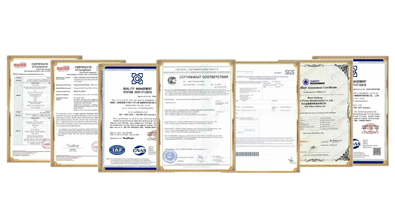
RAYOUNG makes approved stainless steel pipe flanges that are designed to work in harsh, corrosive conditions in the marine, industrial, and chemical processing fields. Standard setups from ANSI, DIN, and JIS can be made by us, along with RF, FF, and RTJ facings that are good for high-pressure uses up to Class 2500. CNC-machined sealing surfaces make sure that the dimensions are exact so that there are no leaks. Full MTC tracking keeps track of the material properties from mill certification to final inspection. Hybrid carbon-stainless systems can be made safer with hot-dip galvanising. Our ISO 9001:2015 certification and export qualifications, such as GOST-R and SGS validation, show that we are committed to consistent quality, which is something that procurement managers rely on. It doesn't matter if you need regular catalogue items or unique specifications; our engineering team can help you find the best material grades and configurations for your needs. Get in touch with our experts at info@hb-steel.com right away to talk about your project needs with a stainless steel pipe flange provider who knows how to balance performance, safety, and cost-effectiveness for your projects.
References
1. American Society of Mechanical Engineers. (2020). ASME B16.5: Pipe Flanges and Flanged Fittings NPS 1/2 Through NPS 24 Metric/Inch Standard. New York: ASME Press.
2. Davis, J.R. (Ed.). (2018). Corrosion of Stainless Steels: Second Edition. Materials Park, OH: ASM International.
3. Gunn, R.N. (2017). Duplex Stainless Steels: Microstructure, Properties and Applications. Cambridge: Woodhead Publishing.
4. ASTM International. (2021). ASTM A182/A182M: Standard Specification for Forged or Rolled Alloy and Stainless Steel Pipe Flanges. West Conshohocken, PA: ASTM International.
5. European Committee for Standardization. (2019). EN 1092-1: Flanges and Their Joints - Circular Flanges for Pipes, Valves, Fittings and Accessories, PN Designated - Part 1: Steel Flanges. Brussels: CEN.
6. Bringas, J.E. (2016). Handbook of Comparative World Steel Standards (5th Edition). West Conshohocken, PA: ASTM International.

Need a quote? Want to see samples? Just say hello. We’re friendly. We’re fast. And we’re ready when you are.
Welcome to RAYOUNG – Strong Pipes, Stronger Promise