Shot Blasting Surface Finish for Industrial Flanges
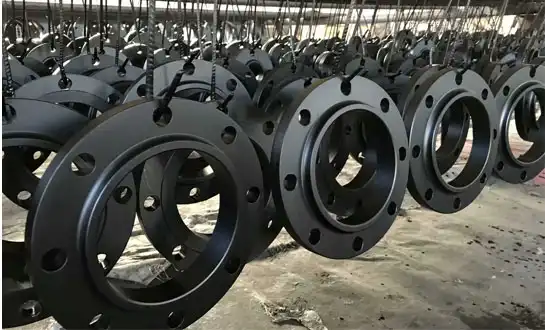
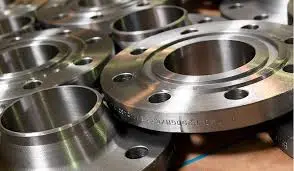
A special kind of surface treatment called shot blasting is used on industrial flanges. It uses high-velocity abrasive media to clean, texture, and improve the useful qualities of pipe connection parts. This high-tech finishing method gets rid of impurities like rust, scale, and mill dust while making the surface profile perfect for sealing gaskets and sticking protective coatings on. Shot blasting, unlike grinding or manual preparation, creates a consistent rough surface on a wide range of flange materials, such as carbon steel, stainless steel, and alloys. This makes it essential for high-pressure applications where long-term reliability and preventing leaks are very important.
Understanding Shot Blasting and Its Role in Industrial Flange Surface Finishing
Shot blasting changes the surface of pipe flanges by projecting abrasive media at high speeds and controlling their effect. This mechanical process gets rid of rust layers, contaminants, and surface irregularities. At the same time, it makes the material uniform, which makes it easier for coatings to stick and gaskets to seal.
The Shot Blasting Process Explained
In shot blasting, compressed air or centrifugal force is used to propel steel shot, steel grit, or ceramic beads against the flange surface. The contact energy gets rid of surface dirt and creates a controlled pattern of micrometer-sized roughness. In sandblasting, silica particles can become embedded in the metal surface. Shot blasting, on the other hand, uses metal media that can be recycled and keeps its impact properties throughout the process.
Modern shot blasting equipment has dust collection systems and media recovery devices that keep the equipment working efficiently and in line with environmental standards. The process factors, such as the media size, impact speed, and contact time, are carefully set based on the grade of the flange material and the surface finish that is needed.
Advantages Over Traditional Surface Preparation Methods
When compared to hand grinding, wire brushing, or chemical cleaning, shot blasting has a number of clear benefits. Shot blasting is automated, so it prepares surfaces consistently across big production runs. This gets rid of the variation that comes with human methods. The resulting surface roughness is often within the range of 2.5 to 6.3 micrometers Ra, which can provide a suitable profile for gasket seating and sealing applications.
Also, the process gets rid of hidden dirt better than cleaning methods that use machines. Areas that have been heated up during cutting or welding are cleaned without adding more thermal stress to the base material. This keeping of metallurgical qualities is especially important for high-pressure uses where the safety of the system depends on the purity of the material.
Key Characteristics and Standards Impacting Shot Blasting on Industrial Flanges
Different types of flanges and uses have different surface finish requirements set by different international standards. Knowing these specs helps procurement workers choose the right shot blasting settings and make sure that suppliers are meeting project needs.
Standard Classifications and Surface Requirements
The ASME B16.5 and B16.47 standards say how the surface of raised face (RF), flat face (FF), and ring-type joint (RTJ) flanges should be finished. ASME B16.5 sealing faces are commonly specified with a finish of 125–250 AARH (approximately equivalent to a roughness range near 3.2–6.3 μm, depending on measurement method and profile characteristics).
API 6A guidelines for wellhead equipment set stricter requirements for surface finish, especially for RTJ joints that work under very high pressure. Shot blasting is commonly used for cleaning and surface preparation of API 6A flanges prior to machining or coating operations. Critical sealing features such as RTJ grooves must be produced by precision machining to meet API dimensional and sealing requirements.
In the same way, European EN 1092 norms set requirements for surface finish that can be met by shot blasting. The process works with different flange materials, like nickel alloys and duplex stainless steels that are often used in harsh service situations.
Material-Specific Shot Blasting Considerations
To get the best results without damaging the metal's qualities, shot blasting needs to be done with specific settings for each type of flange material. For carbon steel flanges, steel shot media with a hardness of approximately 40–50 HRC works well for cleaning without removing too much of the surface.
To keep the top layer from becoming too hard, stainless steel and duplex materials do better with softer media or slower contact speeds. Austenitic stainless steels are typically blasted using dedicated stainless steel media, ceramic media, or glass beads to prevent ferrous contamination that could reduce corrosion resistance.
To preserve the passive oxide layer that provides corrosion resistance, nickel metal flanges need to have their parameters carefully chosen. To get the right surface finish on these materials without changing the way they're made, shot blasting often has to be done in more than one step using increasingly smaller media.
How Shot Blasting Optimizes Performance and Extends Flange Life
The better surface qualities that are achieved by shot blasting directly lead to better operating performance and longer service life for industrial flanges. These benefits show up in a number of ways that deal with common ways that pipe systems fail.
Enhanced Gasket Sealing Performance
Shot-blasted areas are the best places for both metallic and non-metallic gasket materials to touch each other. The controlled roughness of the surface makes tiny depressions that let gasket material flow when the bolt is tightened, while still keeping the contact pressure across the sealing surface at the right level.
Proper surface preparation can improve gasket seating consistency and coating performance. However, flange sealing performance depends on multiple factors, including flange facing finish, gasket type, bolt load, and assembly practices. The even pattern gets rid of any high spots that could damage the gasket during fitting, and the roughness is just right to keep the gasket from coming out under pressure.
Improved Coating Adhesion and Corrosion Protection
It is much easier for protective coats to stick to surfaces that have been shot blasted than to surfaces that have been prepared in other ways. The abrasive impact makes a mechanical anchor design that gives the surface more area and mechanical linking for coating systems that paint, galvanize, or cover things in a special way.
Shot blasting can improve surface cleanliness before coating operations and may be used as part of the preparation process for certain galvanizing applications. However, hot-dip galvanizing performance primarily depends on proper cleaning, pickling, fluxing, and galvanizing process control. The clean, active surface encourages even galvanizing coverage and gets rid of flaws like bare spots or poor adhesion that can happen on surfaces that aren't properly prepared.
Reduced Maintenance Requirements and Extended Service Life
Coupled with better sealing performance and better rust protection, this directly leads to fewer upkeep needs and a longer service life for the flange. Proper surface preparation can contribute to improved sealing reliability and reduced maintenance requirements. Actual leakage performance depends on flange design, gasket selection, assembly practices, and operating conditions.
The even surface finish also makes inspections easier because it gets rid of surface flaws that could hide the start of cracks or rust damage. Because the surface is always the same after being shot blasted, non-destructive testing methods like magnetic particle screening or dye penetrant testing give more accurate results.
Choosing the Right Shot Blasting Solution for Your Industrial Flange Needs
To choose the right shot blasting services or equipment, you need to carefully look at their technical skills, quality systems, and output capacity. It changes the standard of the product, the time it takes to produce, and the long-term dependability of the system.
Evaluation Criteria for Shot Blasting Service Providers
Professionals in procurement who care about quality give more weight to sellers who have written quality systems that meet the requirements of ISO 9001:2015 and other relevant industry standards. Certification programs or personnel qualifications associated with organizations such as AMPP (formerly NACE International and SSPC) show that you know how to properly prepare surfaces.
The project's needs for flange sizes, materials, and delivery dates should be in line with the company's production capacity and equipment's abilities. Advanced shot blasting facilities use automatic handling systems and process controls to make sure that results are the same across big production runs. This is done while minimizing the amount of human handling that could contaminate the surface.
Process Control and Documentation Requirements
For projects that need full material tracking and quality records, detailed process paperwork is a must. Shot blasting companies that you can trust keep careful records of the media specs, process factors, and surface roughness measures for each batch of work they do.
Digital surface profilometers and tiny screening tools make it possible to measure and record surface features accurately. These records back up material test certificates (MTC) and show that project requirements are being met all along the supplier chain.
Integration with CNC Machining and Finishing Operations
CNC-machined sealing areas are often needed for modern industrial flanges to meet exact size and surface finish standards. It is important to carefully plan the order of shot blasting and grinding processes so that accuracy in measurements is not lost and the surface is properly prepared.
In advanced production plants, shot blasting is coordinated with steps like heat treatment, non-destructive testing, and applying a protective coating. This unified method makes sure that each step of the process builds on the benefits of the ones that came before it, instead of taking them away.
Procurement Considerations for Industrial Flanges with Shot Blasted Surface Finish
People who work in B2B procurement have to deal with complicated technical needs, as well as tight budgets and tight delivery dates. Knowing the important factors for evaluation and the skills of the provider lets you make a smart choice that combines performance needs with business needs.
Supplier Assessment and Qualification Criteria
A full assessment of a supplier looks at their technical skills, quality processes, and financial security. Manufacturing facilities should demonstrate compliance with relevant industry standards and quality requirements through audit records, quality certifications, and documented procedures.
When figuring out production capacity, it's important to look at both regular working conditions and surge capacity for big projects. When suppliers have more than one production line and can change their schedules, customers can be more sure that their orders will be delivered on time, even if demand changes unexpectedly.
Technical Specification Development and Verification
Clear technical standards get rid of any doubt about the requirements for the surface finish and the acceptance criteria. Specifications should include references to relevant standards as well as project-specific needs, like the level of cleaning, surface roughness, and paperwork needed.
Sample approval methods let you check a supplier's skills before committing to big production runs. To make sure the combined manufacturing method works, representative samples should go through the whole manufacturing process, such as shot blasting, machining, and any protective coating applications.
Cost Optimization Strategies for Large-Scale Projects
By consolidating shot blasting operations across multiple project phases, procurement teams can leverage economies of scale to achieve significant cost savings. Furthermore, meticulously coordinating purchasing schedules with the supplier's production planning dramatically increases delivery reliability and eliminates expensive expediting fees.
Long-term partnerships with qualified providers keep costs stable and give you priority access to production capacity when demand is high. In these kinds of relationships, there are often plans for ongoing quality and speed improvements that are good for both sides.
Conclusion
With shot blasting surface finish technology, regular industrial flanges can be turned into high-performance sealing parts that can handle the tough demands of modern industrial uses. The process makes changes that can be seen in how well gaskets seal, how well coatings stick, and how resistant they are to corrosion. It also gives big projects the uniform quality they need. Procurement workers who know how to use shot blasting and how to evaluate suppliers can choose and get flanges that will last longer and work better while still meeting the project's cost and schedule goals.
FAQ
1. What surface roughness values does shot blasting achieve on flange faces?
Shot blasting can produce surface profiles within a wide roughness range depending on media type and process parameters. However, it is critical to note that the stringent ASME B16.5 sealing surface requirements for RF and FF flange faces are typically achieved through precise CNC machining (such as spiral serration or phonographic finishing), rather than shot blasting. Shot blasting is primarily utilized on the non-sealing surfaces of the flange to optimize coating adhesion and corrosion resistance.
2. Can shot blasting be applied to stainless steel and alloy flanges?
When the right media and process conditions are used, shot blasting can be used on stainless steel and nickel-alloy flanges. Softer media or slower impact speeds stop work hardening while still preparing the surface as needed without worrying about contamination.
3. How does shot blasting compare to machining for sealing surface preparation?
Shot blasting makes a smooth surface that helps gaskets close better, and cutting makes sure that the dimensions are correct. CNC machining is the primary method used to achieve the required sealing-face geometry and surface finish. Shot blasting is commonly applied to non-sealing surfaces for cleaning and coating preparation, complementing the machining process rather than replacing it.
4. What quality documentation should be provided with shot-blasted flanges?
Full records include material test papers, measures of surface roughness, checks for cleanliness, and records of process parameters. This paperwork backs up the project's quality standards and makes it possible to track upkeep and review work.
Partner with RAYOUNG for Superior Industrial Flange Solutions
RAYOUNG makes high-quality shot-blasted industrial flanges that meet ANSI, DIN, and JIS standards and come with RF, FF, and RTJ facings that are good for high-pressure uses. Our CNC-machined sealing surfaces, along with full MTC tracking and hot-dip galvanizing as an option, guarantee top performance and long-term dependability.As a premier manufacturer and trusted supplier of industrial flanges, we strictly maintain our ISO 9001:2015 certification and provide comprehensive expert support throughout the entire procurement process. Email our engineering team at info@hb-steel.com to talk about your unique needs and find out how our advanced production can help your next project go more smoothly.
References
1. ASME B16.5-2020, Pipe Flanges and Flanged Fittings: NPS 1/2 through NPS 24 Metric/Inch Standard, American Society of Mechanical Engineers.
2. NACE SP0178-2018, Design, Fabrication, and Surface Finish Practices for Tanks and Vessels to be Lined with Polymeric Materials, NACE International.
3. SSPC-SP10/NACE No.2, Near-White Metal Blast Cleaning, Society for Protective Coatings and NACE International.
4. API Specification 6A-2019, Specification for Wellhead and Christmas Tree Equipment, American Petroleum Institute.
5. EN 1092-1:2018, Flanges and their joints - Circular flanges for pipes, valves, fittings and accessories, European Committee for Standardization.
6. ASTM D4417-14, Standard Test Methods for Field Measurement of Surface Profile of Blast Cleaned Steel, American Society for Testing and Materials.

Need a quote? Want to see samples? Just say hello. We’re friendly. We’re fast. And we’re ready when you are.
Welcome to RAYOUNG – Strong Pipes, Stronger Promise