Butt Weld vs Socket Weld: Pressure Rating Comparison
When evaluating pipe fitting options for industrial applications, understanding the butt weld vs socket weld pressure rating comparison becomes crucial for project success. Butt weld fittings are generally preferred for higher pressure and higher temperature applications because their full penetration weld design provides excellent structural integrity, making them ideal for critical high-pressure systems. Socket weld fittings, while easier to install and cost-effective for smaller diameter pipes, generally operate at lower pressure thresholds. The choice between these welding methods directly impacts system safety, compliance, and long-term operational reliability in demanding industrial environments.
Understanding Butt Weld and Socket Weld: Definitions and Key Differences
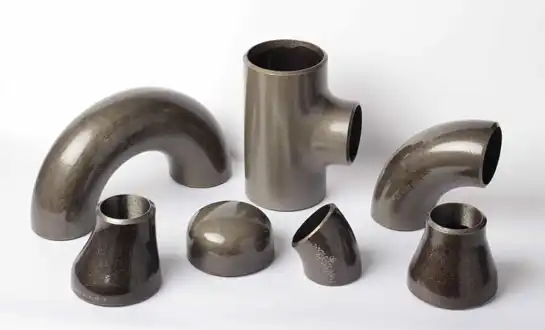
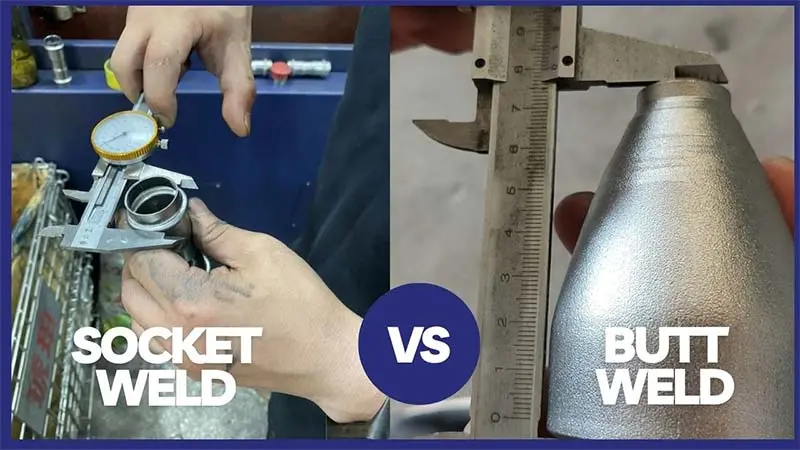
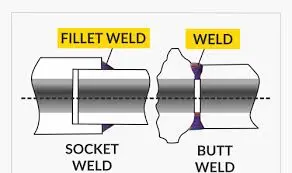
Butt weld fittings are a straightforward way to join two pipes together. The ends of the pipes meet flush, making a continuous flow path with no internal blockages. ASME B16.9 specifies dimensional and tolerance requirements for factory-made wrought butt weld fittings intended for use with matching pipe schedules, and the ends should be beveled so that the weld can go through properly. The smooth transition reduces flow disturbances and improves the structural strength across the joint. Socket weld fittings work differently because they contain a recessed socket that the pipe end fits into. These fittings are governed by ASME B16.11 and can work with square-cut pipes without requiring beveling first. When the pipe goes into the socket, it leaves a small space for growth before welding goes around the outside, making a fillet weld link. To understand butt weld vs socket weld differences, you need to know how their shapes work. When you butt weld, the metal that fills the angled gap between the pipe ends forms a smooth, inside surface. This creates a smooth, continuous bore that helps maintain consistent flow throughout the piping system. The fitting's socket can be seen clearly as a hollow area around the pipe in socket welds, which have a very different look. The external fillet weld makes a raised ring around the outside of the pipe. Internally, the mandatory expansion gap at the socket shoulder creates an abrupt discontinuity in the pipe bore, which can induce flow turbulence, increase pressure drop, and trap corrosive media or debris.
Pressure Rating Comparison: Butt Weld vs Socket Weld
Pressure rating performance differs significantly between these two connection methods. Butt weld fittings are widely used in high-pressure piping systems and are available in pressure classes up to Class 2500 and higher, depending on system design, material grade, and applicable standards. The design of a full penetration weld spreads stress widely across the joint, getting rid of any weak spots that could let the system fall apart under high pressure. Socket weld fittings are commonly available in pressure classes such as Class 3000, 6000, and 9000, depending on size, material, and wall thickness, but they can be higher or lower based on the material and the design of the fitting. The fillet weld design can handle high pressures, but it creates stress concentration points at the socket shoulder, which could lower the maximum working pressures compared with equivalent butt weld connections under similar service conditions. International standards help determine the appropriate pressure rating requirements. Butt weld fitting dimensions and tolerances are covered by ASME B16.9, while allowable pressure ratings are determined by the applicable piping code and material specifications. Socket weld fittings are covered by ASME B16.11. These standards consider material properties, temperature effects, and safety factors to ensure reliable performance across diverse operating conditions. In butt weld vs socket weld applications, the choice of material has a big effect on the pressure that can be applied to both types of welds. Pressure capability depends on material grade, temperature, wall thickness, and piping design rather than simply whether the material is stainless steel or carbon steel, and specialty alloys can further increase operating limits. Even though these new materials are better for socket weld joints, their application in very high-pressure or severe cyclic service conditions may be more limited because of their joint geometry.
Pros and Cons of Butt Weld and Socket Weld in High-Pressure Piping
Because of their design, butt weld fittings perform well in high-pressure situations. With a full penetration weld, a smooth joint is created that is as strong as or stronger than the parent pipe. This design eliminates internal crevices that could trap corrosive materials or create stress concentration points. This makes butt welds ideal for use in environments where corrosion is a problem. Another major advantage is the ability to perform a comprehensive non-destructive examination after welding. Radiographic testing is a good way to check the whole weld volume to make sure there are no flaws and that the joint goes all the way through. This thorough inspection feature gives you peace of mind about the soundness of the joint, which is especially important for high-pressure situations where failure would have serious effects. In some situations, socket weld setups are much better than other methods. Because the socket fits self-align, they require less skill and less time to install, as accurate pipe alignment is not as important. This feature comes in handy in the field, where there may not be many skilled welders available or where installation times are limited. On the other hand, socket welds are hard to work with in high-pressure situations. The intentional assembly gap left for thermal expansion, often called the “expansion gap,” can collect dirt or materials that corrode, which could cause localized rusting. When high-pressure systems are loaded and unloaded many times, the fillet weld design also creates stress peaks that can spread fatigue cracks. When evaluating butt weld vs socket weld options, you need to carefully think about a number of project-specific factors. Operating pressure levels are the most important thing to consider. Butt welds are generally preferred for higher-pressure, higher-temperature, or critical service systems where pressure spikes are likely to occur. The size of the pipe also plays a role in the choice, since socket weld fittings are generally limited to smaller pipe sizes, typically NPS 4 and below under ASME B16.11, because of cost and fitting availability limitations. Accessibility for maintenance and testing needs also affects the decision-making process. Butt welds are better for systems that need to do regular internal inspections because they have a smooth internal shape. Socket welds may be fine in less serious situations where saving money is more important than performance.
Welding Techniques, Inspection, and Quality Assurance for Pressure Rating Compliance
To achieve the rated pressure capabilities, butt weld fabrication requires careful planning and skilled execution. To make sure the weld goes through properly, beveling processes must produce consistent bevel angles and root faces. Root pass welding must be carefully controlled to avoid incomplete penetration or excessive weld reinforcement that could cause stress concentrations. Different steps are needed for socket weld production, but the level of detail needs to be the same. Proper fit-up creates the correct expansion gap, which is usually 1/16 inch, to allow for temperature growth without putting too much stress on the system. When executing the fillet weld for socket connections, the required weld leg sizes must be strictly met while carefully avoiding undercuts, which could severely lower the joint's pressure capacity and fatigue resistance. Comprehensive inspection systems are a big part of making sure the quality of pressure-rated applications. Butt weld joints are inspected using radiographic or ultrasonic testing to make sure they go all the way through and find any problems inside. These methods give clear proof of the quality of the weld and make sure that the relevant pressure vessel rules are followed. The geometry of socket weld fillet joints makes volumetric non-destructive examination more challenging. Visual inspection is the main way to check the quality, and magnetic particle or penetrant testing is used to find surface flaws. Because volumetric inspection methods are harder to get to, process control and welder training are more important to make sure quality is always the same. For both types of welds, post-weld heat treatment is a key part of getting the stated pressure performance. Stress relief operations get rid of leftover stresses that could lead to breakdowns in service. This is especially important in high-pressure situations where working stresses are getting close to the limits of the material. Butt weld joints are generally more suitable for uniform post-weld heat treatment because of their consistent joint geometry. Socket welds, on the other hand, can create thermal differences that need careful temperature control.
Procurement Considerations for Butt Weld and Socket Weld Fittings
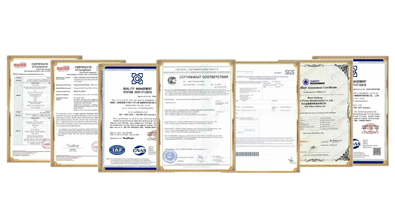
When comparing butt weld vs socket weld fittings, you should look at more than just the initial purchase price. You should also look at the installation and maintenance costs as well. In the beginning, socket weld joints usually cost less because they are easier to make and need less material. In big-diameter uses, where socket welds are hard to find, however, butt weld fittings may be more cost-effective. The two choices have very different installation costs. Socket welds generally require less complex fit-up and alignment during installation and less time to prepare the work area, which could help cover higher material costs in projects that need a lot of labor. Butt welds need more exact preparation and skilled welding than socket welds, but they may save money on long-term maintenance costs by improving system reliability and making it easy to check. When sourcing, you need to think about what materials are available and what the seller can do. Reliable manufacturers, such as RAYOUNG, keep large stocks of both types of fittings to keep project plans on track even when demand changes. Compliance with international standards and ISO 9001:2015 approval ensures that the quality of each output lot is the same. When choosing a supplier, you should give more weight to companies that have a history of working under high pressure. GOST-R certification and SGS inspection support demonstrate a company’s commitment to export quality standards. Full material test results confirm the chemical makeup and mechanical traits that are needed to meet pressure rating requirements.
Conclusion
To choose between butt weld vs socket weld fittings, you need to carefully think about the pressure needs, placement limitations, and expected long-term performance. Because they can handle more pressure and don't rust, butt-weld fittings are perfect for high-pressure uses that need to be reliable. In systems with a smaller diameter and low pressure, socket welds are easier to install and cost less. Knowing these basic differences helps you make smart choices that combine performance needs with project costs, which leads to the best system design and stable operation for the whole service life.
FAQ
1. Butt weld fittings are generally preferred for higher-pressure applications because their full penetration weld design helps minimize stress concentration points and makes the joint strength the same as the parent pipe material.
2. Even though socket weld fittings can get Class 3000 ratings, they may be less suitable for certain high-pressure or cyclic service applications than butt weld fittings because of their fillet weld design and the fact that stress may build up at the socket shoulder.
3. However, because of the way the fillet weld is made, socket welds primarily rely on visual inspection and surface examination methods and some surface testing methods, while butt welds can handle full volumetric testing using radiographic and ultrasound methods.
4. Socket weld fittings usually cost less at first because they are easier to make, but butt weld fittings may be more practical and economical in larger diameter applications where installation speed and long-term dependability are important.
Partner with RAYOUNG for Premium Pipe Fitting Solutions
You can trust RAYOUNG as your premier manufacturer and reliable supplier of industrial pipe fittings, dedicated to delivering comprehensive piping solutions that meet the strictest global standards.We have a wide range of products, such as carbon steel pipe fittings, stainless steel elbows, reducers, and flanges. All of these are made to international standards and are certified by ISO 9001:2015. Our technical know-how and quality control measures make sure that your project runs smoothly, whether it needs high-pressure butt weld parts or low-cost socket weld options. Email us at info@hb-steel.com to talk about your unique needs and get access to low prices on certified products supported by GOST-R certification and SGS inspection services.
References
1. American Society of Mechanical Engineers. "ASME B16.9: Factory-Made Wrought Buttwelding Fittings." New York: ASME Press, 2018.
2. American Society of Mechanical Engineers. "ASME B16.11: Forged Fittings, Socket-Welding and Threaded." New York: ASME Press, 2016.
3. Smith, Robert J. "Pressure Vessel Design and Welding Technology." Industrial Press, 2019.
4. International Organization for Standardization. "ISO 15156: Petroleum and Natural Gas Industries - Materials for Use in H2S-Containing Environments." Geneva: ISO Publications, 2020.
5. Johnson, Michael P. "Piping Systems Design and Engineering: A Comprehensive Guide." McGraw-Hill Professional, 2021.
6. Williams, Sarah K. "Non-Destructive Testing Methods for Industrial Piping Systems." Technical Publishing International, 2020.

Need a quote? Want to see samples? Just say hello. We’re friendly. We’re fast. And we’re ready when you are.
Welcome to RAYOUNG – Strong Pipes, Stronger Promise