When choosing the right flange for your pipeline project, knowing the differences between class 150 and class 300 flanges can have a big effect on how well the system works, how safe it is, and how much it costs in the long run. Class 150 flanges are commonly rated for pressures up to approximately 285 psi at ambient temperatures, depending on material type and applicable ASME standards, which makes them perfect for low to moderate pressure uses. Class 300 flanges are commonly rated for pressures up to approximately 740 psi at ambient temperatures, depending on material type and applicable ASME standards, and are made for harsh industrial settings. Your choice will rely on how the installation is used, your budget, and any safety requirements that are specific to it.
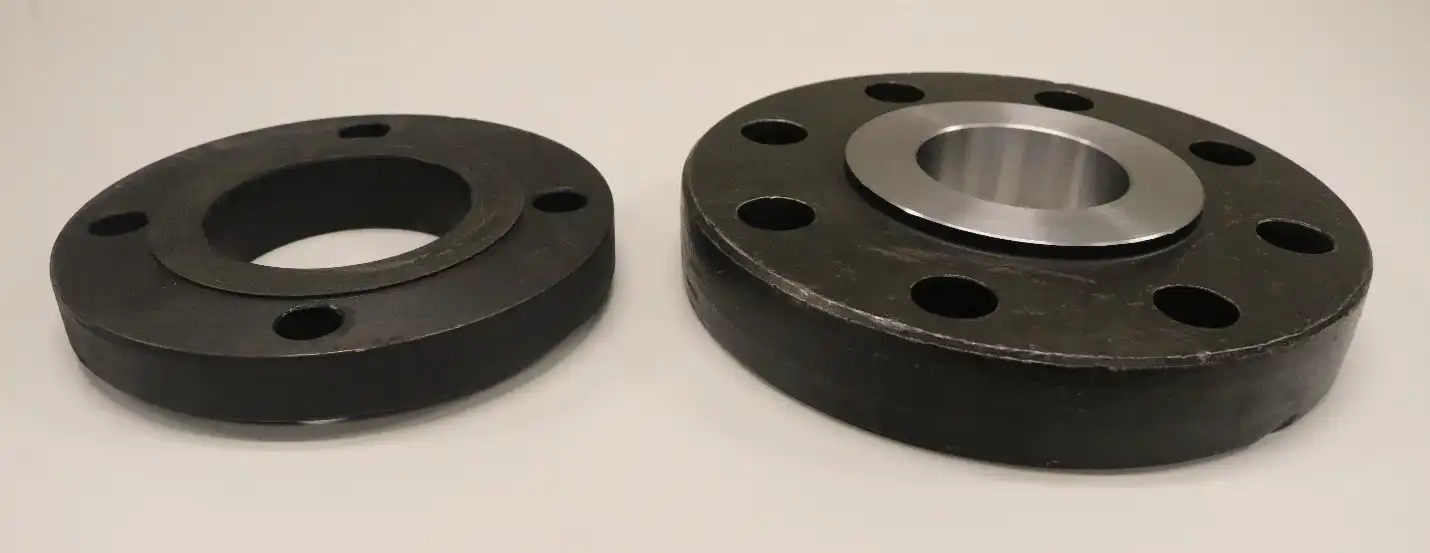
Understanding Flange Pressure Rating Classifications
The ASME flange classes show the highest pressures that can be used at certain temperatures. These ratings help ensure safe system operation and prevent catastrophic failures that could cause expensive downtime. Depending on the material grade and operating temperature, Class 150 flanges can handle different allowable working pressures, with approximately 285 psi being typical at ambient temperatures for carbon steel flanges. The pressure-temperature chart shows that these flanges work best in places that treat water, run HVAC systems, and are used in general industry settings. Class 300 flanges are designed for higher-pressure applications, with allowable pressure ratings varying according to material type and operating temperature. These flanges work great in power plants, petroleum plants, and high-pressure process systems.
Key pressure rating differences:
- The maximum allowable pressure varies by 455 psi between classifications
- Temperature derating affects both classes differently
- Safety factors remain consistent across both pressure classes
- Operating margins provide additional protection against pressure spikes
If you need reliable performance for normal business tasks, Class 150 flanges are a good option. When you need reliable connections for high-pressure applications, Class 300 flanges provide greater safety margins.
Class 150 Flange Dimensions and Specifications
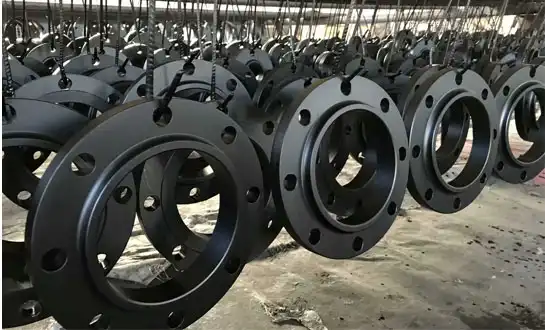
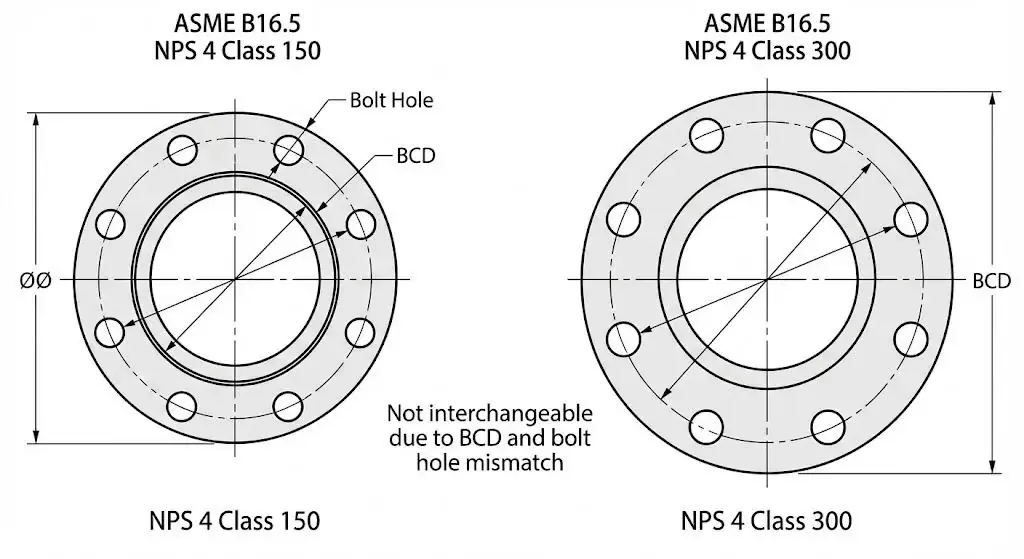
Class 150 and Class 300 flange dimensions follow ASME B16.5 standards, ensuring universal compatibility across manufacturers. These flanges feature thinner profiles and lighter weights compared to higher-pressure classes.
Standard class 150 flange specifications include:
- Bolt circle diameters ranging from 3.5 inches (1-inch flange) to 46 inches (48-inch flange)
- Flange thickness measurements from 0.44 inches to 3.56 inches
- Bolt hole quantities varying from 4 holes to 44 holes
- Raised face heights are typically 0.06 inches for smaller flange sizes and 0.25 inches for larger sizes in accordance with ASME B16.5 standards.
Common material options include carbon steel, stainless steel, alloy steel, and other specialised materials, depending on service requirements. Common flange face types include raised face (RF), flat face (FF), and ring-type joint (RTJ), although RTJ designs are more commonly associated with higher-pressure flange classes. When you look at bigger sizes, you can see that Class 150 flanges weigh about 30 to 40 percent less than Class 300 parts of the same size. This reduction makes installation easier and lowers structural support requirements. If you need cost-effective options for low-pressure uses, Class 150 flanges work well and don't cost as much to make.
Class 300 Flange Specifications and Design Features
Class 300 flange specifications incorporate enhanced thickness and reinforced designs to handle elevated pressures. These flanges demonstrate superior structural integrity under demanding operational conditions.
Critical design features include:
- Class 300 flanges generally feature thicker cross-sections than Class 150 flanges, with exact dimensions varying by flange size and standard specifications.
- Enhanced bolt patterns with larger diameter fasteners
- Reinforced hub sections for improved stress distribution
- Advanced metallurgy options for extreme service conditions
Specialised materials such as Inconel, Hastelloy, and duplex stainless steels can be used for these flanges. In harsh chemical conditions, these materials are very resistant to corrosion. Precision-machined areas and controlled surface finishes make sealing work better. CNC-machined sealing areas make sure that the gaskets fit perfectly and stop leaks from happening when the pressure is high. Common gasket types used with Class 300 flanges include spiral wound, metal-clad, and solid metal gaskets. These advanced sealing options can handle changes in temperature and pressure. If you need reliable connections for important high-pressure systems, Class 300 flanges offer better dependability and longer service life.
Pressure-Temperature Performance Comparison
Pressure-temperature charts reveal significant performance differences between Class 150 and Class 300 flanges.These charts guide proper selection based on your specific operating conditions.
Class 150 Performance Data:
- 285 psi maximum at -20°F to 100°F
- 260 psi working pressure at 200°F
- 200 psi operational limit at 400°F
- 150 psi maximum rating at 500°F
Class 300 Performance Data:
- 740 psi maximum at -20°F to 100°F
- 680 psi working pressure at 200°F
- 535 psi operational limit at 400°F
- 410 psi maximum rating at 500°F
Temperature derating affects both classes similarly, so safety margins stay the same across all operating areas. For both classes, higher temperatures reduce the allowable pressure ratings. When working with high temperatures, thermal expansion becomes very important. Class 300 flanges can handle higher thermal pressures because the material is thicker and the hub designs are better. Class 150 flanges work great for systems that are kept below 200°F and have modest pressures. Class 300 flanges make sure that your equipment will work reliably in high-temperature and high-pressure situations.
Installation Guidelines and Best Practices
Proper installation of Class 150 and Class 300 flanges directly impacts system performance, safety, and longevity.Both flange classes require specific installation procedures to achieve optimal results.
Universal Installation Requirements:
- Verify flange face alignment within 0.003 inches per inch of diameter
- Confirm gasket compatibility with process media and temperature
- Apply proper flange bolt torque according to ASME PCC-1 guidelines
- Maintain consistent bolt tensioning patterns during assembly
Because less pressure is needed, Class 150 installations usually need smaller bolt torques. Most applications can use standard carbon steel bolting materials, which lowers the overall cost of connecting things. For many Class 300 systems, higher bolt torques and stronger bolting materials may be required depending on operating conditions and applicable standards. These higher-strength fasteners help maintain joint integrity under elevated pressure conditions. Hydrostatic pressure testing is commonly performed in accordance with applicable piping or pressure vessel codes to verify joint integrity before service. Before they are put into service, both types go through the same testing procedures to make sure they are complete. To place a gasket correctly, you need to pay close attention to where it goes and how much it is compressed. Too much compression hurts seals, and too little compression lets leaks happen. If you want an easy fix that can be done with common tools, Class 150 flanges make things easier. Class 300 flanges offer greater reliability if you need strong connections that need to be installed using specific methods.
Cost Analysis and Economic Considerations
Flange cost comparison reveals significant economic differences between pressure classes. Initial purchase prices represent only one component of the total cost of ownership.
Initial Cost Factors:
- Class 300 flanges cost 40-60% more than equivalent Class 150 units
- Specialized materials increase costs exponentially for both classes
- Larger sizes demonstrate proportionally greater cost differences
- Expedited delivery requirements add 25-40% premium charges
The cost of installation depends on how complicated the job is and what special needs are met. For Class 300 installations, trained welders and better quality control methods are often needed. Maintenance costs are very different between classes. Class 150 flanges may experience shorter service life if used near their maximum allowable operating conditions. Improper flange selection, or operating systems beyond their specified design limits, can result in catastrophic failures whose costs completely eclipse any initial savings gained by specifying lower-rated components. Selecting appropriately rated flanges helps prevent costly emergency repairs and production downtime. Evaluations of long-term performance show that Class 300 flanges have a longer useful life in tough situations. Longer service intervals can offset the higher initial investment. Class 150 flanges are a great choice if you want to save money right away and use them in the right situations. Class 300 flanges are often more cost-effective if you want to lower your total cost of ownership.
Conclusion
When deciding between Class 150 and Class 300 flanges, engineers and procurement teams must carefully evaluate the system's maximum operating pressures, extreme temperatures, and long-term performance requirements.When cost is important and modest pressure is needed, Class 150 flanges work best. On the other hand, Class 300 flanges are more reliable in harsh industrial settings. When making this important choice, you should think about the specifics of your job, your budget, and your safety needs. Choosing the right flanges is important for getting the best system performance, avoiding expensive breakdowns, and getting the most out of your investment. Partner with suppliers who have extensive industry experience and understand your operational requirements, and can give you full technical support throughout the whole job.
Choose RAYOUNG for Reliable Flange Solutions
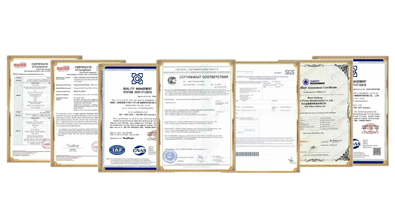
RAYOUNG stands as a premier manufacturer and trusted global supplier of industrial piping components, delivering precision-engineered Class 150 and Class 300 flanges that consistently meet the most demanding industrial requirements.Our comprehensive quality certifications, including ISO 9001:2015, GOST-R, and SGS validations, ensure every flange meets international standards while providing exceptional value for your pipeline projects. Whether you require cost-effective Class 150 flanges for standard applications or robust Class 300 flanges for high-pressure systems, our expert team provides tailored recommendations based on your specific operational needs. Experience the RAYOUNG difference through superior manufacturing quality, competitive pricing, and reliable delivery schedules that keep your projects on track. Contact us at info@hb-steel.com to discuss your flange requirements and receive detailed specifications.
References
1. American Society of Mechanical Engineers. "ASME B16.5-2020: Pipe Flanges and Flanged Fittings NPS 1/2 Through NPS 24." New York: ASME Press, 2020.
2. Bickford, John H. "Gaskets and Gasketed Joints: Second Edition." Industrial Engineering and Manufacturing Technology Series. New York: Marcel Dekker, 2003.
3. Escoe, Keith A. "Piping and Pipeline Assessment Guide: Volume 1." Burlington: Gulf Professional Publishing, 2006.
4. Nayyar, Mohinder L. "Piping Handbook: Seventh Edition." New York: McGraw-Hill Professional, 2000.
5. Singh, Kailash. "Pressure Vessel Design Manual: Fourth Edition." Burlington: Butterworth-Heinemann, 2013.
6. Watkins, Robert J. and Anderson, Lyle. "Structural Mechanics of Buried Pipes." Boca Raton: CRC Press, 2000.