Seamless vs ERW Pipes for High-Pressure Service
When pressure, temperature, and the chance of failure are high, I always start with one simple rule when I have to choose between seamless pipes and ERW pipes for high-pressure service: seamless pipes are safer. Since they don't have a lengthwise weld line, their strength under stress is more even. ERW pipes can still work well in many situations, especially when money is tight and the service conditions are average. It depends on the code, the pressure grade, the risk of corrosion, the cost over the duration, and the quality of the seller to give the right answer. When it comes to pipelines, power plants, and important process lines, seamless pipes often win because they offer more safety than a lower initial cost.
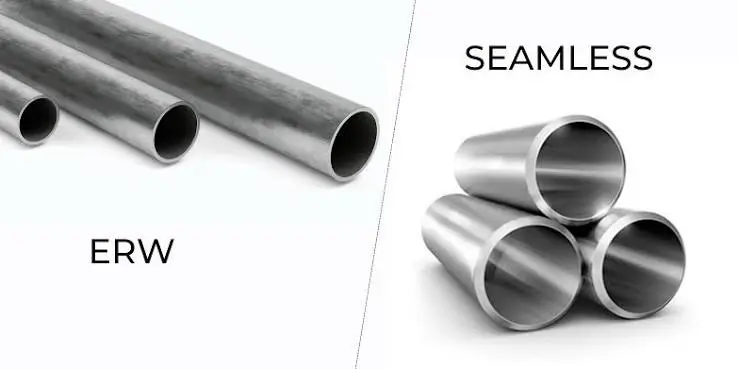
Understanding Seamless and ERW Pipes
People who search for this topic are often interested in both business and technology at the same time. Clients need proof and want an answer quickly. The featured-snippet version is this: seamless pipes are usually better for high-pressure service because they have no weld seams, which means there are fewer weak spots and higher pressure reliability; ERW pipe can be a cost-effective option when service conditions aren't as bad and weld quality is closely monitored.
How is each pipe made?
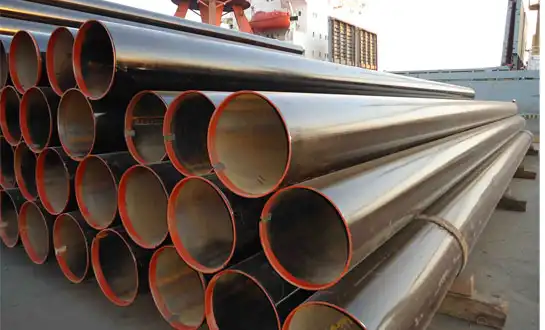
It is called a seamless pipe because it is made without any seams or parts that are welded together. They are manufactured by piercing a solid steel billet and then hot or cold rolling it into a pipe shape. This rigorous process yields a seamless cylindrical structure boasting exceptional mechanical consistency and uniform wall strength.
The fundamental production process includes:
- heating a billet
- piercing the billet with a mandrel
- rolling and shaping until the final diameter and wall thickness are reached
- last steps like cutting, smoothing, and heat treatment
ERW pipe goes in a different direction. Electric resistance welding is used to join the sides of a steel strip or coil that has been shaped into a circle. When the mill does a good job of controlling the heat, alignment, and checking, the weld is strong, but buyers still look closely at that seam when it comes to high-pressure service.
Common grades and standards buyers check:
Many people use ASTM A106 and ASME SA106 as guidelines for seamless carbon steel pipe that will be used at high temperatures. A106 Grade B is used a lot in chemical plants, power plants, and factories. Tensile strength must be at least 60,000 psi, and yield strength must be at least 35,000 psi. In oil and gas transportation, API 5L seamless pipes are also often used.
Buyers of ERW pipe often look at API 5L and ASTM A53, but it depends on the business and code needs. Before I compare costs, I always look at the ASME, ASTM, and project requirements. Compliance is not an extra thing; it determines whether the pipe is even okay.
Performance Comparison: Seamless Pipes vs. ERW Pipes in High-Pressure Service
In high-pressure work, pipes are constantly under load, their temperatures change, and they are sometimes exposed to corrosive media. That's where the difference in how it was made becomes very important.
Strength and pressure handling
Since there is no weld seam on seamless pipes, the mechanical properties are generally more uniform throughout the pipe wall. That helps when you're under a lot of stress and pressure inside. That regularity makes long-term operation safer in vital steam lines, hydrocarbon services, and high-temperature pipes.
ERW pipes can also get good performance, but only if the weld area is well made and checked. Even though more modern ways of making ERW are better than older ones, many engineers still choose seamless for heavy-duty applications because eliminating the weld seam removes one potential area of concern.
Heat, corrosion, and service life
ASTM A106 seamless steel pipes are made to work at high temperatures. The chemistry of killed steel helps make the metal more consistent and improves its performance in elevated-temperature service. In real life, that helps performance in places like factories, process plants, and steam lines where heat stability is important.
It's not just whether the pipe is seamless or welded that affects its corrosion protection. The grade, climate, covering, and medium are also important. Still, if there isn't a weld seam in seamless pipes, there isn't a weld zone that may require additional inspection for corrosion or weld-related defects. That can lower the risk of unexpected shutdowns and the amount of upkeep that needs to be done over many years.
What this means for lifecycle cost?
The cost up front doesn't tell the whole story. I look at the total cost of owning something:
- Seamless pipes usually cost more at purchase, but they can lower risk in important systems where leaks, downtime, or safety events cost a lot of money. One mistake in an oil and gas, petrochemical, or power job can wipe out any savings made on the first order of materials. That's why a lot of EPC teams are willing to pay more for materials when the service is tough and failure would have a big impact.
- ERW pipe may be a better value for money in less challenging situations, especially when project deadlines are tight and large amounts are needed. ERW can help buyers protect their earnings without lowering the basic performance as long as the pressure class, working temperature, corrosion environment, and relevant code all allow it. Disciplined vendor approval, NDT review, and mill paperwork that can be tracked are the keys.
Evaluating Cost and Procurement Factors
For people in charge of buying things, the best pipe isn't just the biggest one. It's the one that follows the rules, shows up on time, stays within the budget, and works for as long as it's supposed to.
Price, lead time, and availability
The process of making seamless pipes is more complicated and wastes more materials than ERW production, so it typically costs more. Large widths and certain wall thicknesses can also make something less available. When it comes to lead time and bulk availability, ERW pipe often has an edge, especially for standard sizes.
In foreign buying, things like freight, clearing customs, and packaging are also important. It might not be worth it to have a cheaper ex-works price if delivery risks or missing paperwork cause the job to be late.
How I assess supplier reliability?
I look at more than just the price sheet when I compare suppliers. I need mill test certificates, the ability to check, to be able to track my items, to be able to control the sizes, and to be able to export them. People often use well-known global names like Tata Steel and Salzgitter as guides for what kind of quality to expect, but customers should still compare each source to their specific project needs.
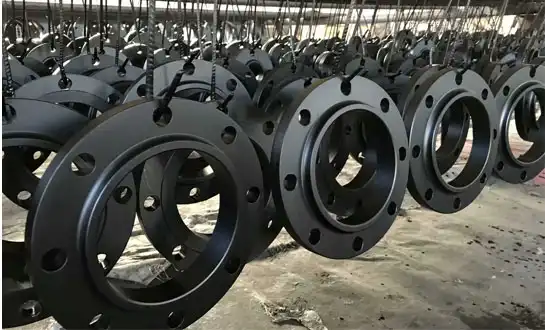
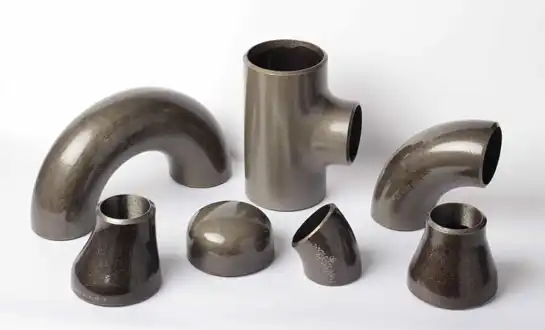
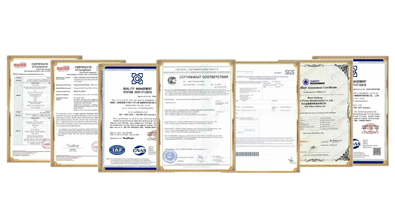
At RAYOUNG, we help buyers who need more than just pipe. We offer a range of industrial pipe fittings, such as buttweld steel elbows, steel reducers, and flanges, that make sure connections are safe. Our lineup can handle straight runs, changes in pipe diameter, and joint needs that are flexible. As a premier global manufacturer, RAYOUNG has earned the trust of massive industrial enterprises worldwide. Backed by rigorous ISO 9001:2015 quality management, comprehensive SGS inspection protocols, and GOST-R certifications, we ensure absolute export compliance and deliver uncompromised product reliability for the most demanding international projects.
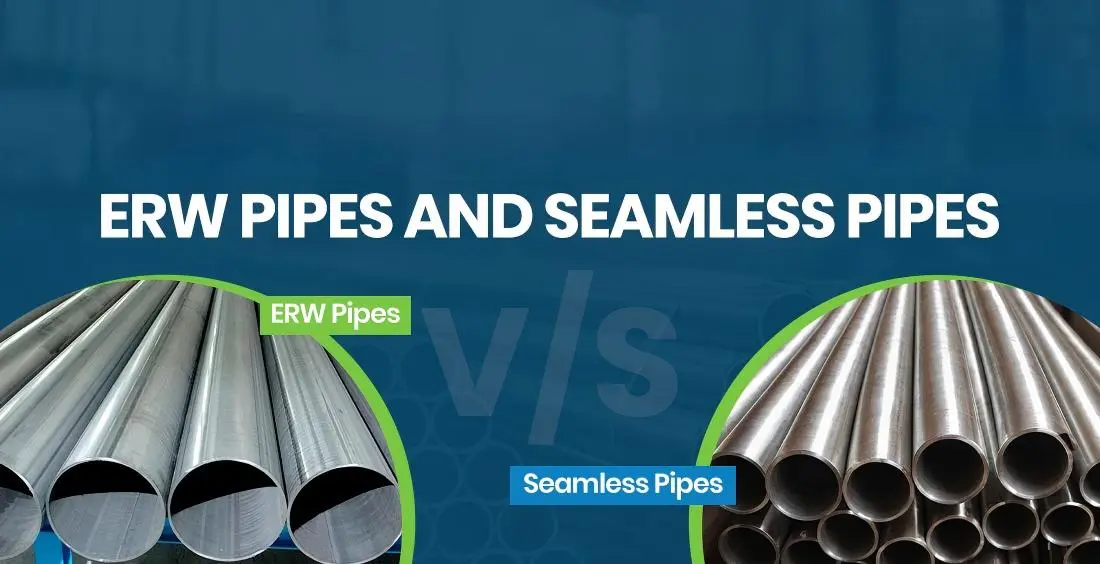
Application Scenarios: When to Choose Seamless or ERW Pipes?
It's easier to see which option is best when I compare the type of pipe to how it will be used.
Where seamless is usually the better fit?
Most of the time, seamless pipes are better for the following:
- lines for high-pressure steam
- pipes for the chemical process
- oil and gas refineries
- boiler and power-generation piping systems
- moving toxic or dangerous fluids
- hydraulic and mechanical systems that need to be strong and dimensionally stable and reliable
The safety margin, resistance to pressure, and long-term longevity are more important in these situations than the lowest starting cost.
Where ERW may make sense?
ERW pipes can be useful for water transport, utility lines, lower-pressure process systems, building use, and projects where keeping costs low is a top priority. For those codes that allow it and suppliers that offer strong weld inspection and tracking, ERW can be a good choice.
This is important for wholesalers, stockists, local installers, and building companies that need to stick to a budget. Often, they need a steady supply, margins that work, and approved goods that still meet the needs of end users.
Making the Right Choice: Procurement Decision Framework
I like to make decisions that are clear and easy to understand. There are four ways for a buyer to look at the job.
A practical selection checklist
- Technical fit: Check the code, working pressure, temperature, fluid type, corrosion conditions, and any other relevant information. Most of the time, seamless pipes should be used first when the system is high-pressure, high-temperature, repetitive, or safety-critical. Material grade is also important. For high-temperature carbon steel pipes, ASTM A106 Grade B is still the standard, but API 5L may work better for line pipe jobs.
- Commercial fit: Look at the total cost of installation and service life, not just the unit price. Scope of the inspection, tests, lead time, freight, customs, and the risk of replacement should all be included. In moderate service, a cheaper ERW choice can work well, but for important assets, the extra cost of seamless is often worth it. It is more useful to be reliable when downtime costs a lot.
Guidance by buyer type
A lot of the time, OEMs and EPC companies worry about making sure work gets done, keeping records, and meeting deadlines. Distributors need a steady quantity of consistent products. Tender compliance and lifetime cost are important to the government and people who buy assets. Most of the time, industrial end users want to avoid safety issues and downtime.
That's why the skills of the seller are just as important as the type of goods. A premier manufacturing partner provides fully certified materials, highly responsive communication, and a comprehensive suite of perfectly integrated piping components—including seamless steel pipes, buttweld elbows, reducers, and precision flanges.
Conclusion
When it comes to high-pressure service, choosing between seamless pipes and ERW pipes is not just a matter of product; it's also a matter of risk. When safety, long-term dependability, pressure, and temperature are important, I choose seamless. I think about ERW when the service isn't too bad, the code lets me, and the provider can show that the weld is good and can be tracked. For the most important industrial pipes, seamless construction gives you more security over time and a stronger safety case. The smartest purchasing decision takes into account engineering facts, price constraints, and trust in the seller.
FAQ
1. Are seamless pipes always better for high-pressure service?
They aren't always better, but seamless pipes are often chosen for important high-temperature and high-pressure systems. The fact that they do not contain a longitudinal weld seam takes away a common worry and gives engineers more faith in their ability to meet tough service needs. When system conditions are modest and quality control is good, ERW can still be okay.
2. What minimum order quantities should I expect for bulk pipe orders?
Minimum order numbers depend on the size, grade, wall thickness, and whether the order is from stock or is being made from scratch. Standard sizes may let you choose the amount you need, but unique needs usually require bigger investments. I always tell people to check the MOQ along with the wait time and the testing scope.
3. How can I verify a pipe supplier’s certifications?
Ask for test papers for the mill, records of quality management, and records of inspections by a third party. When it's important, buyers often look at export compliance records like GOST-R, ISO 9001:2015, and SGS inspection reports. The important thing is being able to track the goods from the time they are made to the time they are shipped.
Contact RAYOUNG for Reliable Seamless Pipe Solutions
Need a highly dependable manufacturing partner to supply premium seamless pipes for your mission-critical industrial projects? RAYOUNG provides expert engineering support to help you compare grades, verify strict specification compliance, and ensure flawless, on-time delivery of fully integrated piping and fitting solutions. Before you place your order, you can email our team at info@hb-steel.com to talk about your pressure service needs, get a quote, or look over certification papers.
References
1. ASTM International, ASTM A106/A106M Standard Specification for Seamless Carbon Steel Pipe for High-Temperature Service
2. ASTM International, ASTM A53/A53M Standard Specification for Pipe, Steel, Black and Hot-Dipped, Zinc-Coated, Welded and Seamless
3. American Petroleum Institute, API Specification 5L Line Pipe
4. ASME, ASME B31.3 Process Piping
5. ASME, ASME Boiler and Pressure Vessel Code, Section II Materials
6. ANSI/ASME, B36.10M Welded and Seamless Wrought Steel Pipe

Need a quote? Want to see samples? Just say hello. We’re friendly. We’re fast. And we’re ready when you are.
Welcome to RAYOUNG – Strong Pipes, Stronger Promise