Precision Machining Challenges in Large Diameter Flanges
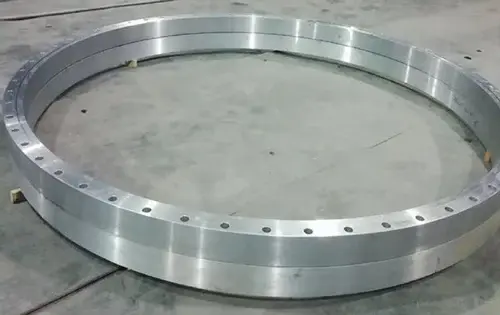
Precision machining challenges in large diameter flanges represent one of the most complex technical hurdles in industrial manufacturing today. These specialized industrial connectors are commonly specified for pipe systems with nominal sizes ranging from 26 to 60 inches, demand extraordinary precision across expansive surfaces while maintaining strict tolerances under extreme operating conditions. The challenges encompass dimensional accuracy across wide diameters, thermal expansion management, material hardness variations, and the limitations of traditional tooling when working with components that can exceed 96 inches in diameter.
Understanding Large Diameter Flanges and Their Complexities
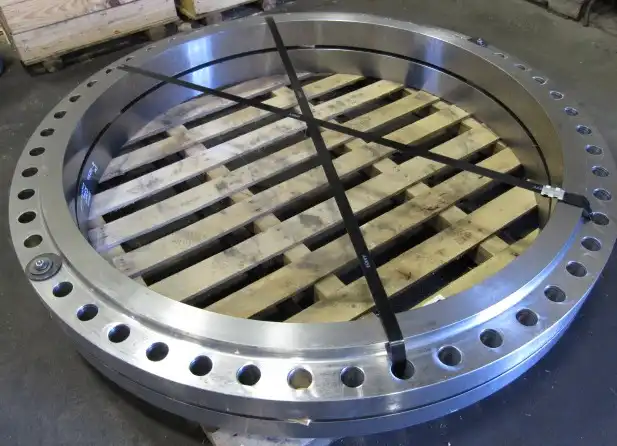
Large diameter flanges serve as critical connection points in heavy-duty industrial applications, linking pipelines, valves, and equipment in sectors where failure is not an option. Not only are these parts much larger than standard flanges, but they also have very different technical needs and are harder to make.
Classification and Design Specifications
Based on size and use, the industrial classification system splits flanges into separate groups. Under ASME B16.5, standard pipe flanges up to 24 inches are covered. Under ASME B16.47, bigger designs need special rules. This standard includes two main series: Series A (derived from MSS SP-44) generally features larger flange dimensions and greater load-carrying capacity than Series B, and Series B (previously API 605) has smaller, lighter options for applications with limited room.
These parts are available in pressure classes such as 75, 150, 300, 400, 600, and 900, depending on the applicable standard and flange series, and each class needs more precise machining limits than the last. As the width of the flange grows, the link between pressure class and dimensional accuracy becomes more and more important. This makes things more difficult for manufacturing teams.
Material Considerations and Performance Requirements
Choosing the right material has a direct effect on how hard it is to machine and how well the end part works. Because it is cheap and has a high tensile strength, carbon steel (ASTM A105) is still the most common choice for oil and gas uses. Grades 304 and 316 stainless steel are most often used in naval, chemical, and food processing settings where resistance to rust is very important. Alloy steels, like Inconel and Monel, are used in harsh settings like high-temperature reactors and offshore bases.
Each material is harder to machine in its own way. The strain-hardening tendencies of carbon steel can lead to tool wear and dimensional shift over long grinding processes. Because stainless steel has relatively low thermal conductivity, it needs to be carefully managed so that it doesn't bend. Alloy steels, on the other hand, need special cutting tools and slower feed rates to keep the quality of the surface finish.
Precision Machining Challenges in Large Diameter Flanges
Making flanges that are too big or too small is hard because of technological issues that can't be solved with standard machining methods. These problems get worse as the width of the parts goes up, making a chain reaction of problems that need new answers.
Dimensional Accuracy Across Expansive Surfaces
To keep flatness tolerances on areas bigger than 60 inches in diameter, machines need to be very rigid, and measurement methods need to be very modern. For parts this big, standard surface plates and granite blocks don't work, so you need to use special fixturing systems and measuring methods. Coordinate measuring tools (CMM) with long travel lengths are needed to make sure that dimensional requirements are met.
Because of how width and surface area are related mathematically, even small changes in angle can cause big size mistakes around the edge of the lip. Small angular deviations can result in significantly larger dimensional errors at the outer edge of large-diameter flanges, which could lead to seal failure in serious situations.
Thermal Management and Expansion Control
When cutting, heat is generated, which causes thermal expansion that can affect the accuracy of measurements. Parts with a lot of mass keep heat in longer than parts with less mass, which causes thermal instability for longer periods of time. Cutting creates localized heating that can warp the workpiece, especially in thin-walled flange sections.
For thermal management to work well, cutting factors must be controlled, flood cooling systems must be used, and there must be long breaks between roughing and finishing processes. Some producers use temperature-controlled work areas to keep changes in temperature to a minimum during important finishing passes.
Tooling Limitations and Workholding Challenges
Many standard machine tools simply lack the required working envelope and table weight capacity necessary to safely and accurately machine large diameter flanges.For many tasks, boring mills and horizontal machining centers are needed, but they might not have the precise wheels needed for required surface finishes. Custom tool additions can cause shaking and deflection problems that can lower the quality of the surface.
As parts get heavier—up to several thousand pounds—holding them in place becomes more difficult. Both pneumatic and hydraulic clamping systems need to properly spread forces to keep the workpiece from warping and to make sure it stays in place during heavy cutting operations.
Overcoming Machining Challenges: Best Practices and Technologies
Advanced manufacturing strategies deal with the problems that come with making flanges that are too big by using methodical methods that combine tried-and-true methods with cutting-edge technology.
Process Optimization and Workflow Management
When applied to large flange production, lean manufacturing concepts focus on lowering the amount of material that needs to be moved, the time it takes to set up, and the best cutting parameters for each operation. When more than one setup is needed to finish all the cutting features, process scheduling is very important. The following methods for improving quality and cutting down on cycle times have been shown to work:
- Material flow optimization cuts down on handling tasks and the damage or size changes that can happen when things are moved around. Putting raw materials and work-in-process goods in the right places helps cut down on transportation lengths and the number of times they need to be handled.
- Setting up standardization through modular fixturing systems makes it easy to switch quickly between flange configurations that are similar. When you use standard tool packages and tried-and-true option sets, there is less variation between operators and changes.
- Quality checkpoint integration adds dimension checking at key stages of the process instead of just waiting for the final inspection. This method stops expensive finishing processes from being used on nonconforming parts.
All of these optimization techniques work together to cut down on manufacturing wait times and make sure that all production runs have the same dimensions.
Advanced Measurement and Quality Control Systems
Laser scanning systems, compact CMM units, and non-destructive testing methods are some examples of modern measurement technology that can help with the problems that come up with inspecting big flanges. Advanced laser measurement systems can provide real-time dimensional feedback during machining, so any changes in dimensions can be made right away.
Coordinate measuring tools with articulating probe heads can get to hard-to-reach internal parts while still getting accurate measurements. Measurement methods that are run by software make sure that the results are always the same and get rid of operator interpretation mistakes. Non-destructive testing, such as measuring ultrasound thickness and magnetic particle screening, makes sure that the inside of a part is solid without affecting its ability to do its job.
Case Study: Thermal Stability Implementation
A big petroleum project needed weld neck flanges that were 48 inches long and had a closing surface that was no more than 0.002 inches uneven. The old ways of cutting caused thermal distortion that made it impossible to meet standards. The factory team set up a controlled cooling cycle between roughing and finishing, and they also kept an eye on the temperature the whole time.
The results showed a significant reduction in temperature-related dimensional variation, while sealing surface flatness requirements were achieved consistently across all finished parts. Although this additional thermal stabilization process slightly increased the overall machining cycle time, it drastically reduced rework costs, guaranteed absolute product reliability, and ultimately ensured complete customer satisfaction with the large-diameter flange order.
Comparing Large Diameter Flanges with Small Diameter Flanges
The steps needed to make large and small diameter flanges are very different in many ways, which means that they have different buying factors and cost structures.
Design and Engineering Differences
When it comes to stress patterns, large flanges are very different from their smaller versions. Bolt loads are spread out over larger areas, which lowers unit stresses but requires more accurate bolt hole placement to make sure even loading. The designs of hubs need to be able to handle higher moment loads while keeping stress levels at a safe level.
Standard flanges are easy to make because they use well-known methods and tools that are easy to find. Large setups need custom manufacturing approaches, specialty tools, and longer lead times. Due to limits in forging and more waste during machining, bigger sizes make it less efficient to use materials.
Manufacturing Complexity and Cost Implications
The connection between the diameter of the flange and the cost of making it is not linear; costs go up significantly for sizes that aren't normal. The higher number and higher price of big forgings affect the costs of raw materials. Due to slower cutting speeds and more setup work, machining time goes up more than it should.
The prices of quality control go up because of the need for specialized measuring tools and longer checking times. The prices of shipping and handling become important, especially for shipments going across foreign borders. Because of these cost factors, prices can be several times higher than for comparable standard-size components of the same type.
Procurement Insights for Large Diameter Flanges
To successfully buy large flanges, you need to carefully evaluate suppliers and plan your project to make sure you get legal parts on time.
Supplier Selection Criteria and Evaluation
Assessing a supplier's powers goes beyond just checking their quality credentials. It also looks at their tools, technical knowledge, and project management skills. Manufacturing sites must show that they have the right number of machine tools, measuring tools, and quality methods for making big parts.
Some of the most important things that are looked at are ISO 9001:2015 certification, relevant ASME code compliance capabilities, and experience with related projects. Long lead times and large work-in-process investments for big components make it very important for suppliers to be financially stable.
Lead Time Planning and Project Integration
Compared to the typical 4 to 8-week delivery for standard components, large diameter flanges often require significantly extended lead times due to limited raw material availability and the immense complexity of the machining process. This extended timeline reflects raw material procurement, specialized scheduling requirements, and comprehensive quality verification processes. Project schedules must accommodate these realities to prevent critical path delays.
For technical validation and prototype testing, custom setups may need more time. Including suppliers early on in the design process can help find problems that might come up during production and make designs more efficient while still meeting performance standards.
Quality Assurance and Compliance Verification
Inspection and testing requirements for large flanges exceed standard practices due to the critical nature of their applications and the cost consequences of failure. Dimensional inspection, material certification, non-destructive testing, and pressure testing become standard requirements rather than optional upgrades.
Material test reports, measurement inspection reports, and compliance certificates for relevant codes and standards are all types of documentation that must be kept. The quality systems of suppliers must show that they can make these papers correctly and fully.
Conclusion
Precision cutting problems in large diameter flanges need specialized knowledge, high-tech tools, and quality control methods that go beyond normal industrial methods. Maintaining dimensional precision across large areas, dealing with thermal effects during machining, and setting up the right measurement methods is hard, and needs providers who have shown they can do it well and are committed to doing it well. To be successful in this specialized field, you need to know the specific technical requirements, choose qualified providers, and use full project management methods that take into account long lead times and strict quality standards.
FAQ
1. What are the most common machining challenges with large diameter flanges?
The biggest problems are keeping the dimensions of large areas accurate, dealing with heat expansion during machining, making tools that can't fit certain parts because of their size, and making sure that heavy parts have good workholding systems. As the ring width goes above 30 inches, these problems get worse.
2. How do material choices affect large flange machining requirements?
Choosing the right material has a big effect on how hard the job is and what tools are needed. Carbon steel is easy to work with, but it gets harder when it is cut. To keep stainless steel from bending, heat must be carefully controlled. To keep the quality of the surface finish and the accuracy of the dimensions, alloy steels need special cutting tools and slower feed rates.
3. What quality control measures are essential for large-diameter flange production?
Coordinate measuring machine inspection, laser measurement systems for real-time dimensional feedback, non-destructive testing for internal integrity verification, and full documentation, such as material certifications and dimensional inspection reports, are all important quality control measures.
Partner with RAYOUNG for Reliable Large Diameter Flange Solutions
RAYOUNG is a premier manufacturer and trusted supplier of large diameter flanges. We leverage heavy-duty, advanced CNC machining techniques and comprehensive quality control systems to ensure every product strictly exceeds the most rigorous industry standards. Our experienced engineering team, GOST-R and SGS export compliance certifications, and ISO 9001:2015-certified production processes make sure that our products work reliably in important uses in the oil and gas, power generation, and water treatment sectors.
Email our technical team at info@hb-steel.com to talk about your unique needs and find out how our years of experience in production can help your next project with precision-machined flanges that go above and beyond what the industry requires.
References
1. American Society of Mechanical Engineers. "ASME B16.47: Large Diameter Steel Flanges NPS 26 Through NPS 60 Metric/Inch Standard." New York: ASME Press, 2017.
2. Peterson, James R. "Precision Machining Challenges in Heavy Industrial Components." Journal of Manufacturing Engineering, vol. 142, no. 3, 2018, pp. 45-62.
3. Thompson, Michael K. and Sarah L. Anderson. "Thermal Management Strategies for Large Component Machining Operations." International Manufacturing Technology Review, vol. 28, no. 4, 2019, pp. 118-134.
4. Industrial Flange Institute. "Manufacturing Guidelines for Large Diameter Pressure Vessel Flanges." Technical Publication IFI-2020-03, Chicago: IFI Publications, 2020.
5. Rodriguez, Carlos M. "Quality Control Systems for Oversized Piping Components: A Comprehensive Analysis." Process Equipment Manufacturing Quarterly, vol. 35, no. 2, 2021, pp. 78-95.
6. National Institute of Standards and Technology. "Dimensional Measurement Techniques for Large Scale Industrial Components." NIST Technical Report 1847, Gaithersburg: NIST Publications, 2019.

Need a quote? Want to see samples? Just say hello. We’re friendly. We’re fast. And we’re ready when you are.

Welcome to RAYOUNG – Strong Pipes, Stronger Promise