Pipeline Construction Flanges for Long-Distance Transport
Long-distance transport systems require safe, leak-proof pipeline construction flanges to connect pipe sections, valves, and equipment. Mechanical connections improve assembly, maintenance, and system dependability in large infrastructure networks. Quality pipeline flanges reduce project risks and provide safety and operational continuity in tough transport conditions. Their modular architecture allows future expansions and repairs without affecting system integrity, making them essential for current infrastructure projects.

Understanding Pipeline Construction Flanges
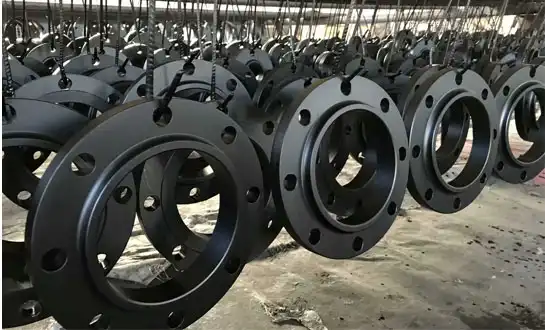
Long-distance transport systems use pipeline construction flanges to connect pipe segments, valves, and equipment. These detachable connectors allow maintenance and system upgrades while maintaining structural integrity under high pressure. The basic design places two flange faces together with a gasket seal held by round bolts.
Essential Roles and Benefits in Transport Systems
Flanged connectors simplify assembly, improve maintenance accessibility, and increase operating safety. No cutting is needed to disassemble flanges for inspection, repair, or component replacement, unlike permanent welded connections. Modularity saves downtime and maintenance costs, especially in distant pipeline systems with limited accessibility.
Thermal expansion and contraction cycles in long-distance transit are accommodated by modern flanges. The mechanical connection evenly distributes load throughout the joint, eliminating isolated failures that might affect system safety. Flange dimensions are defined to ensure manufacturer and project phase compatibility.
Common Flange Types and Applications
Several flange designs meet pipeline construction operating needs. Extended hubs in weld neck flanges improve stress distribution and fatigue resistance, making them suited for high-pressure applications across various ASME pressure classes, including high-pressure systems. Smooth bore transitions reduce turbulence and pressure decreases with the tapered hub design.
Slip-on flanges slide over pipe ends before welding for easy installation. Internal and exterior welds are needed for strength in moderate-pressure applications. In smaller diameter applications where accurate placement is important, socket welding flanges line up well during installation.
Blind flanges seal pipeline ends or allow future connections. These components support full system pressure and offer maintenance or extension ports. Though limited to lower-pressure systems, threaded flanges prevent welding in some applications.
Material Considerations for Demanding Environments
Material choice affects flange performance, durability, and project costs. The strength-to-cost ratio of carbon steel flanges is good for ordinary applications, while stainless steel versions resist corrosion in harsh conditions. In specialised transport systems, alloy steel flanges withstand high temperatures and pressures.
Environmental variables strongly influence material choices for pipeline flanges. Coastal installations need salt spray corrosion-resistant materials, whereas chemical delivery systems need media compatibility. Temperature cycles, seismic factors, and soil chemistry affect long-term material choices.
Choosing the Right Flanges for Pipeline Construction
Multiple technical and operational variables must be considered while choosing flanges. Flange selection is based on pressure ratings, dimensions, and international standards. Understanding these factors guarantees safe, dependable system functioning throughout its design life.
Pressure Ratings and Size Specifications
Under different temperatures, flange pressure ratings set safe operating limits. ANSI pressure classes (150, 300, 600, 900, 1500, 2500) represent pressure ratings under specified temperature conditions rather than absolute maximum working pressures. The ratings consider material qualities, stress concentrations, and safety elements needed for reliable operation.
Sizes include nominal pipe size, flange diameter, bolt circle dimensions, and bolt hole numbers. Proper sizing ensures pipeline infrastructure compatibility and suitable sealing surfaces. Large flanges enhance strength but raise material prices and installation complexity.
Pressure and temperature must be considered when choosing. In heated transport systems or high ambient temperature installations, higher temperatures lower flange rating pressures.
International Standards Compliance
Global projects are compatible, safe, and high-quality when standards are followed. DIN and EN standards dominate European markets, whereas ASME B16.5 dominates North American standard flanges for sizes up to 24 inches, while ASME B16.47 is used for larger diameter flanges. Asian projects use JIS standards for dimensional tolerances, material requirements, and testing processes.
Understanding standard differences reduces installation and modification compatibility issues. Projects with mixed standards might have connectivity issues and lower safety margins. Purchasing teams must explicitly outline criteria to avoid costly field adjustments or replacements.
Face Types and Gasket Compatibility
Gasket choice and sealing performance depend on flange face designs. Raised face (RF) designs focus on sealing pressure and perform well with spiral wound or metal-clad gaskets. Sealing regions are characterised by the elevated part 1/16 inch above the flange.
For brittle materials like cast iron or full-face gaskets, flat face (FF) designs disperse sealing stresses throughout the flange surface. Metal ring gaskets fit RTJ faces for severe pressure or temperature conditions where metal-to-metal sealing is required.
Proper face finish parameters optimise gasket performance. Surface roughness impacts gasket seating and sealing, with suggested ranges for gasket types and operating situations.
Manufacturing and Installation of Pipeline Flanges
Flange performance and system dependability depend on manufacturing quality. Procurement specialists choose suppliers and ensure field assembly by understanding production procedures and installation best practices. These issues are crucial in long-distance transit applications with significant failure implications.
Manufacturing Methods and Quality Impact
Forged flanges have better grain structure and mechanical qualities than cast ones. Forging eliminates casting porosity and refines grain structure. This approach makes pipeline transport system flanges that can withstand greater pressures and dynamic stresses.
Precision forging allows RAYOUNG to make ANSI, DIN, and JIS flanges. CNC-machined sealing surfaces optimise gasket seating and dimension accuracy. The controlled machining procedure removes surface imperfections that might affect seal integrity under pressure cycling.
Casting suits pipeline flanges for low-pressure applications or intricate geometries hard to forge. Modern casting processes can achieve adequate quality for many low- to medium-pressure applications, though forged products generally provide superior mechanical strength and consistency. Fully documented MTC material traceability assures project specs and quality.
Custom Manufacturing Capabilities
Complex pipeline installations typically demand non-catalogue flange arrangements. Custom manufacturing meets unusual measurement, material, or face design needs. These features help link pipe schedules and accommodate space restrictions.
Hot-dip galvanising options provide enhanced corrosion protection for flanges installed in moderately corrosive environments. This coating protects base steel from corrosion using zinc layers that sacrifice themselves. Galvanising increases coastal, industrial, and subterranean installation life.
Installation Best Practices
Correct installation ensures flange joint integrity and longevity. Alignment verification eliminates stress imbalances that cause gasket failure or bolt relaxation. Using proper lifting gear reduces injury while handling and placement.
Maintaining flange integrity requires competent welding methods and welders. Metallurgical changes that impair mechanical characteristics are prevented via heat input control. Post-weld inspection ensures penetration and no service-propagating faults.
Bolt tightening sequences evenly clamp gasket surfaces. Cross-patterns or star patterns promote consistent compression and avoid gasket degradation. Torque levels provide sealing without overstressing flanges.

Pipeline Flange Procurement Tips
Understanding market conditions, supplier capabilities, and project needs is key to procurement success. Large infrastructure project procurement specialists struggle to balance cost, quality, delivery timelines, and technical compliance.
Pricing Models and Economic Factors
Material prices, production complexity, quantity needs, and delivery schedules determine flange pricing. For huge installations with thousands of flanges, raw material price variations affect project finances. Understanding market cycles helps procurement teams time purchases.
Major projects save money with bulk order reductions. Supplier volume pricing tiers lower unit prices significantly as volumes rise. Potential savings must be weighed against inventory carrying costs and project timing limitations.
Flange parameters, volumes, and production capacity affect lead times. Custom designs might take months to produce, while standard setups ship in weeks. Project delays and expedited expenses are avoided with early procurement planning.
Supplier Evaluation and Certification
Supplier selection affects project performance through quality, delivery, and technical support. Assessing manufacturing facilities, quality processes, and certification status helps find project-ready vendors.
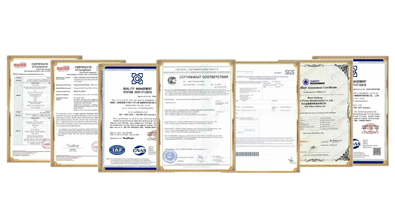
ISO 9001:2015 accreditation shows quality management and continuous improvement commitment. Additional certifications like PED or API standards show particular capabilities for demanding applications. For export compliance, RAYOUNG has GOST-R and SGS certifications.
Suppliers differ greatly in technical support. Engineering advice, material selection advice, and application-specific suggestions offer value beyond product supply. Field installation queries and specification clarifications require responsive customer assistance.
Supply Chain Resilience Strategies
Diversified sourcing is important due to global supply chain interruptions. Having many competent suppliers decreases capacity, material, and geopolitical concerns. Regional supplier networks improve delivery and service.
Inventory management weighs stockout risks against carrying costs. Stocking inventories near key projects minimises shipping costs and time. Financial planning and demand forecasts are needed to tie up working capital in inventories.
Maintaining Performance and Compliance
Throughout service life, flange integrity requires continuous inspection and preventative maintenance. Identifying issues before they happen reduces crucial transport infrastructure downtime and safety hazards.
Routine Inspection and Maintenance Protocols
Visual checks reveal corrosion, mechanical damage, and gasket degeneration. Operating circumstances, environmental exposure, and pipeline section criticality should be considered during regular inspections. Trend analysis and predictive maintenance planning are possible using inspection data.
Non-destructive testing finds underlying faults and metallurgical changes that visual inspection cannot. While dye penetrant testing shows surface fissures, ultrasonic thickness measurements track deterioration. These methods warn of probable failures before disasters.
Leakage and gasket failure are prevented via bolt integrity monitoring. Test torque during planned maintenance to guarantee clamping loads. Stress corrosion cracking and fatigue damage in high-cycle applications are considered in bolt replacement schedules.
Standards Adherence and Risk Mitigation
Strict compliance with international regulations and manufacturing standards for pipeline flanges is the cornerstone of ensuring uncompromised system safety throughout its entire service life. Regular audits ensure compliance as rules and operational situations change. Tracking regulatory compliance and insurance coverage requires documentation.
Risk assessment methods support maintenance resource allocation and critical failure mode identification. Quantitative analysis optimises maintenance plans by considering failure probability, repercussions, and mitigation costs. These methods are useful for ageing infrastructure requiring service life extension.
Emerging Technologies and Innovation
Advances in materials research increase corrosion resistance, temperature capacities, and mechanical qualities. While corrosion-resistant, duplex stainless steels are stronger than standard grades. Speciality alloys meet harsher application demands.
Advanced gasket materials and face designs increase sealing reliability in harsh environments. Live performance tracking and predictive maintenance are possible with smart monitoring systems. These technologies provide condition-based maintenance that optimises resources and safety.
Conclusion
Safety and reliability in long-distance transport infrastructure depend on pipeline construction flanges. Selection based on pressure, environment, and standards guarantees optimal performance throughout service life. Quality of manufacturing, installation, and maintenance affects system reliability and safety. Balanced cost, quality, and delivery procurement strategies help projects succeed and maintain operational excellence. Flange performance is improving as technologies and materials advance, enabling more demanding transport system applications.
FAQ
Q1: What flange types work best for high-pressure pipeline transport applications?
Weld neck flanges provide optimal performance for high-pressure transport systems due to their superior stress distribution and fatigue resistance. The extended hub design creates smooth bore transitions while handling pressures exceeding 600 PSI effectively. Ring-type joint (RTJ) face configurations accommodate metal gaskets required for extreme pressure conditions where standard elastomeric seals cannot perform adequately.
Q2: How can buyers verify flange quality and certifications before purchase?
Verification involves reviewing material test certificates (MTC) that document chemical composition, mechanical properties, and testing results. Supplier certifications like ISO 9001:2015, API specifications, and pressure equipment directives indicate quality system compliance. Physical inspection of manufacturing facilities and quality control processes provides additional assurance of production capabilities and consistency.
Q3: Can manufacturers produce custom flanges for specific project requirements?
Yes, qualified manufacturers routinely produce custom flanges addressing unique dimensional requirements, special materials, or modified configurations. Custom capabilities include non-standard sizes, speciality alloys, unique face designs, and specific coating requirements. Lead times typically extend beyond standard products, requiring early procurement planning to maintain project schedules.
Partner with RAYOUNG for Premium Pipeline Flange Solutions
RAYOUNG delivers precision-engineered flanges manufactured to ANSI, DIN, and JIS standards with RF, FF, and RTJ facing options for demanding high-pressure applications. Our advanced CNC-machined sealing surfaces ensure optimal gasket performance, while full MTC traceability provides complete quality documentation. Optional hot-dip galvanising enhances corrosion protection for challenging environments. As a certified and premier manufacturer of industrial pipeline components, we strictly maintain ISO 9001:2015, GOST-R, and SGS certifications to fully support both domestic and complex international projects. Contact our engineering team at info@hb-steel.com to discuss your specifications and receive customised quotations for your next pipeline project.
References
1. American Society of Mechanical Engineers. "ASME B16.5 - Pipe Flanges and Flanged Fittings: NPS 1/2 through NPS 24 Metric/Inch Standard." ASME International, 2020.
2. Deutsches Institut für Normung. "DIN EN 1092-1 - Flanges and their joints - Circular flanges for pipes, valves, fittings and accessories." DIN Standards Committee, 2018.
3. Japanese Industrial Standards Committee. "JIS B 2220 - Steel pipe flanges." Japanese Standards Association, 2019.
4. American Petroleum Institute. "API 6A - Specification for Wellhead and Christmas Tree Equipment." API Publishing Services, 2021.
5. International Organisation for Standardisation. "ISO 7005-1 - Metallic flanges - Part 1: Steel flanges." ISO Central Secretariat, 2022.
6. Pipeline Research Council International. "Guidelines for Pipeline Construction Flange Selection and Installation." PRCI Publications, 2023.

Need a quote? Want to see samples? Just say hello. We’re friendly. We’re fast. And we’re ready when you are.
Welcome to RAYOUNG – Strong Pipes, Stronger Promise