Pipe Elbows vs Tees: Selection Guide for Process Pipelines
The choice between pipe elbows and tees affects process pipeline efficiency, cost, and long-term performance. Tees allow flow branching or merging at connection sites, whereas pipe elbows divert fluid flow at 45° or 90° angles. Both fittings are essential in chemical processing and oil and gas activities. Engineers and procurement experts may reduce project risk, assure safety, and maximize operating efficiency by understanding their underlying distinctions, performance characteristics, and selection criteria. This detailed reference covers fitting selection considerations to assist pipeline installations in varied industrial contexts.

Understanding Pipe Elbows and Tees: Definitions and Core Functions
Pipe Elbow Fundamentals and Applications
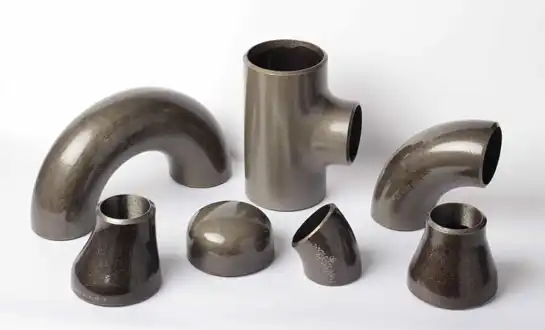
Pipe elbows are crucial connectors that reverse fluid flow in pipelines. Industrial applications generally need 90-degree and 45-degree components made to exact specifications. Long-radius elbows generally produce lower pressure drops than short-radius elbows because their larger radius of curvature reduces turbulence and flow resistance.
Carbon steel butt-weld 90-degree elbows are widely used in industrial pipelines. These fittings are typically manufactured from seamless pipe, welded pipe, or steel plates using hot forming, cold forming, or welding processes depending on size and specification requirements. Precision hot-forming ensures dimensional accuracy and structural integrity under operating stresses.
Space, pressure, and system flow greatly influence elbow type selection. Long-radius elbows with 1.5 times the normal pipe diameter centerline radius reduce turbulence and pressure loss. Short-radius variations with a centerline radius equal to the nominal pipe diameter are compact for space-constrained installations.
Tee Configurations and Flow Management
Tees allow complicated flow distribution networks by splitting or combining pipeline branches. Equal tees maintain the same diameter throughout all three openings, whereas reducing tees enhance flow transitions for differing pipe diameters. Fitting design affects fluid dynamics, pressure distribution, and system efficiency.
Branch connections using tees can split flow from a main line to many branches or combine flow from multiple sources into one exit. Tee connection orientation and size impact pressure losses and flow homogeneity, making optimal selection essential for system performance.
Industries use tees in manifold systems, where numerous simultaneous operations need supply lines from a single header. Engineers may improve flow distribution while lowering installation complexity and project costs by customizing tee arrangements.
Critical Selection Criteria for Pipe Elbows vs Tees in Process Pipelines
Material Selection and Compliance Standards
Industrial applications often use carbon steel, stainless steel, and alloy steel for fitting performance. Carbon steel fittings are strong and cost-effective for ordinary working circumstances, whereas stainless steel ones resist corrosion in hostile chemical environments.
Standards enable pipeline system interoperability and safety. Wrought steel butt-welding elbows and tees must meet ASME B16.9 dimensions and materials. Material attributes, chemical composition, and mechanical features in ASTM requirements affect operational stress fitting performance.
Steel pipe elbows manufactured according to GOST 17375 standards commonly utilize hot-forming and heat treatment processes to ensure dimensional accuracy and mechanical performance. These fittings feature stringent dimensional tolerances and smooth inner surfaces that comply with Russian and international quality requirements while offering competitive pricing and dependable worldwide shipping.
Pressure Ratings and Dimensional Considerations
Pressure ratings set fittings' maximum operating pressure at certain temperatures. Wall thickness, material grade, and manufacturing process affect pressure handling capability, making them important for system safety. Standard pressure classifications are 150–2500, with higher values needing thicker walls and better materials.
Dimensional compatibility assures installation fit and system integrity throughout time. To avoid stress concentrations and failure spots, nominal pipe size, outer diameter, and wall thickness must match pipeline components. Schedule ratings provide pressure capacity and flow area correlations by wall thickness.
Threaded, butt-weld, and socket-weld connections have benefits depending on the application. Threaded connections allow field assembly without welding equipment, whereas butt weld connections are strongest and smoothest. Socket welds are easy to install and give robust mechanical connections.
Flow Dynamics and Performance Optimization
Elbow and tee flow affect system efficiency and energy usage. Elbows cause secondary flows, and pressure losses increase with flow velocity and fitting geometry. The elbow radius-pressure loss connection helps engineers improve system design under specific operating circumstances.
Tee designs impact flow distribution patterns, and flow division is often uneven due to momentum effects, downstream resistance differences, and branch geometry. Branch takeoff angles, pipe size, and flow velocity ratios affect system performance and distribution uniformity. The right tee selection takes these elements into account to divide the flow.
Pressure drop calculations using fitting loss coefficients provide correct pump and system sizing. Depending on fitting type, size, and flow conditions, these coefficients must be carefully considered during design. Understanding these linkages helps optimize systems cost-effectively and ensure downstream pressure availability.
Comparison of Pipe Elbows and Tees: Performance, Durability, and Cost
Manufacturing Methods and Quality Considerations
Manufacturing procedures affect fitting performance, durability, and cost. Seamless fittings, made by hot-forming solid pipe stock, are stronger and leak-resistant than welded ones. Lack of longitudinal weld seams minimizes weak areas and ensures homogeneous material qualities throughout the fitting.
For bigger sizes where seamless manufacture is too expensive, welded fittings offer design freedom and cost savings. Modern welding methods and appropriate post-weld heat treatment can provide mechanical properties suitable for many industrial applications while maintaining cost advantages over seamless fittings.
Quality control during manufacturing ensures dependability and performance. Heat treatment removes residual stresses and normalizes material characteristics for long-term performance. Dimensional and pressure testing ensure standards and client specifications are met.

Long-term Performance and Maintenance Requirements
Durability affects the total cost of ownership through maintenance, replacement, and system reliability. Despite greater prices, stainless steel fittings last longer in corrosive conditions. For equal service life, carbon steel choices need protective coatings or corrosion allowances.
Material choice, installation, and system design affect fitting integrity during thermal cycling. Different thermal expansion between fittings and pipework can cause stress concentrations and shorten service life. Proper material matching and expansion joint location reduce these effects and ensure system dependability.
Maintenance accessibility affects operating costs and downtime. Fittings in tight places or lofty positions may require specialized access equipment for inspection and replacement. Early design consideration of maintenance requirements minimizes long-term operational costs and increases system availability.
Economic Analysis and Procurement Strategies
Beyond fitting expenses, installation labour, system efficiency, and lifespan costs are considered. Premium materials may offer better value due to longer service life and lower maintenance. Economic analysis should analyze all cost aspects to choose the best fittings for applications.
Securing volume discounts and leveraging logistical advantages can make bulk purchases of piping components—including elbows, tees, and flanges—highly cost-effective.Standardizing fitting types and sizes simplifies inventory management and boosts supplier purchasing power. Large projects with several identical systems or continuous maintenance benefit from these methods.
Cost, quality, delivery, and technical assistance should be considered while selecting suppliers. Suppliers with extensive product certifications and track records reduce project risk and ensure compliance. Many long-term suppliers offer preferred pricing and priority service during high demand.
Practical Guidelines for Choosing Pipe Elbows or Tees in Your Pipeline Projects
Process Condition Assessment and Design Requirements
First, analyze process factors such as fluid characteristics, operating pressures, temperature ranges, and flow needs to choose a fitting. Corrosive fluids demand stainless steel or specialty alloys, while high-temperature applications may require heat-resistant grades with thermal expansion concerns.
Smooth elbow installations with minimum pressure drop are preferred for flow direction changes. Multiple branch connections require tee arrangements to distribute flow and sustain system pressure. Knowing these essential connections helps choose suitable types before sizing and specifying.
Space, access, and supporting structural capabilities affect fitting choices and configuration. In cramped regions, compact elbow designs may be needed, although normal radius alternatives optimize flow where space allows. These factors impact installation costs and maintenance accessibility.
Installation Methods and Connection Technologies
Installation difficulty, system integrity, and dependability depend on the connection technique. Butt weld connections yield optimum strength and smooth interior profiles but need professional welding and post-weld inspection. These connectors are best for high-pressure and permanent installations that demand dependability.
Strong enough for moderate pressure applications, threaded connectors allow field assembly without welding. Proper application of thread compound and tightening torque ensures leak-tight connections that withstand temperature cycling. These connectors make periodic disassembly easier for maintenance.
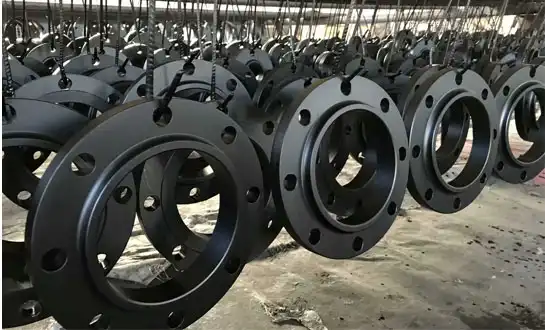
Flanged connections provide highly reliable sealing through precise gasket compression. When correctly installed and torqued, they offer the critical advantage of non-destructive disassembly, making them indispensable for systems that require regular maintenance and inspection. Integration of instruments and easy maintenance offset higher startup expenses. These benefits make flanged connectors appealing for sensitive applications needing frequent examination.
Supplier Qualification and Quality Assurance
Product quality, delivery reliability, and technical support are guaranteed by supplier qualification. Traceability, material certifications, and performance test data from established manufacturers with complete quality management systems assist regulatory compliance and project quality goals.
ISO 9001:2015 quality management system certifications show supplier commitment to quality and improvement. Industry-specific API, ASME, and ASTM approvals validate conformity with standards and application compatibility. These certifications decrease procurement risk and ensure product dependability.
Supply chain stability is crucial for projects with tight timeframes or distant sites where delivery delays can drastically increase project costs. Global suppliers with significant inventory and distribution networks reduce delivery risk and provide local support for urgent needs. Long-term supply agreements improve dependability and price.
Real-world Applications and Performance Validation
Industrial Case Study Analysis
Proper fitting selection and installation are crucial in high-pressure steam distribution systems. A modern petrochemical facility installed stainless steel long-radius elbows to handle 600°F and 600 PSIG superheated steam. The long-radius design reduced pressure drop, and the stainless steel structure was strong and corrosion-resistant for the working circumstances.
The project needed ASME B16.9 compliance with material traceability and pressure testing paperwork. Pre-heating and post-weld heat treatment ensured proper material properties and stress relief during installation. Over two years, system performance monitoring validated pressure drop design projections and showed exceptional dependability with no fitting-related problems.
Chemical processing emphasizes material selection in corrosive settings. A sulfuric acid handling system distributed concentrated acid to several industrial vessels using 316L stainless steel tees. The equal tee design ensured balanced flow distribution, and 316L stainless steel provided better corrosion resistance than 304 stainless steel.
Performance Monitoring and Validation
Rigorous flow testing validates initial design calculations and identifies optimization opportunities across all directional fittings and piping components. Pressure drop across elbow installations is usually within 10% of calculated values when loss coefficients are used. Installation difficulties, internal scaling, or upstream flow disruptions may cause deviations.
The performance evaluation emphasizes flow distribution homogeneity and branch pressure constancy. Combining CFD modelling with field data helps understand flow patterns and identify improvement possibilities. These evaluations optimise systems and verify design assumptions.
Routine examination and monitoring of performance over time might reveal faults or optimization possibilities. Thickness measurements identify corrosion or erosion, whereas pressure monitoring detects system resistance changes. Early detection of these tendencies allows proactive maintenance planning and prevents breakdowns.
Conclusion
Process circumstances, performance needs, and economic aspects must be considered while choosing pipe elbows or tees. Tees allow complicated flow distribution networks, whereas elbows work well for smooth flow direction changes with minimum pressure drop. Long-term system performance and TCO depend on material selection, manufacturing quality, and supplier reliability. Evaluation of these parameters and compliance with standards and quality assurance methods guarantee optimal fitting selection that achieves project goals while minimizing operational risk and lifetime costs.
FAQ
Q1: What determines the choice between a 45-degree and 90-degree elbow?
The choice between 45-degree and 90-degree elbows depends on space constraints, desired flow characteristics, and pressure drop requirements. 45-degree elbows generally create lower pressure losses than 90-degree elbows and can be combined to achieve smoother directional changes where installation space permits. 90-degree elbows provide compact directional changes but create higher pressure losses due to sharper flow direction changes.
Q2: How do pressure ratings affect fitting selection for high-pressure applications?
Pressure ratings determine maximum allowable working pressure under specific temperature conditions. High-pressure applications require fittings with adequate pressure class ratings, typically achieved through increased wall thickness or premium materials. ASME B16.5 and B16.9 standards define pressure-temperature relationships that guide proper fitting selection for safe operation.
Q3: What are the advantages of seamless versus welded pipe fittings?
Seamless fittings offer superior strength properties and uniform material characteristics without longitudinal weld seams. Welded fittings provide cost advantages and design flexibility, particularly for larger sizes. Quality welding processes and post-weld heat treatment can achieve mechanical properties approaching seamless alternatives while maintaining competitive pricing.
Q4: How do material grades affect corrosion resistance in different environments?
Carbon steel provides adequate corrosion resistance in mild environments with proper protective coatings. Stainless steel grades offer superior corrosion resistance, with 316L generally providing better resistance to chloride-induced corrosion than 304 stainless steel in many industrial environments. Specialized alloys address extreme conditions, including high temperatures, strong acids, or chloride stress corrosion applications.
Partner with RAYOUNG for Superior Pipeline Solutions
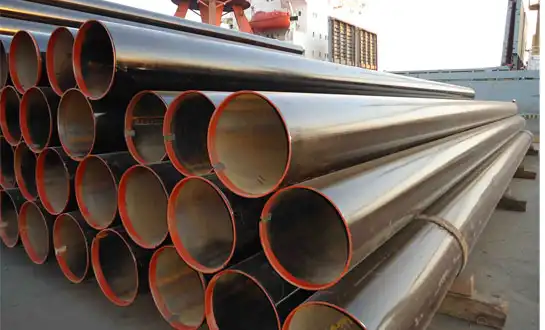
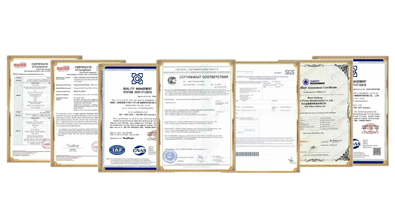
RAYOUNG delivers comprehensive pipeline fitting solutions that combine technical expertise with reliable manufacturing capabilities. Our diverse industrial pipe fittings, including buttweld steel elbows, steel reducers, and flanges, ensure secure connection points across demanding applications. As a trusted carbon steel pipe supplier, we maintain GOST-R and SGS certifications that validate export compliance and quality standards for global markets.
Our comprehensive portfolio of industrial pipe fittings and steel pipes delivers proven performance, uncompromising safety, and long-term durability for applications ranging from heavy commercial systems to complex industrial installations.
ISO 9001:2015 certification demonstrates our commitment to consistent quality management and continuous improvement across our manufacturing operations. Connect with our technical team at info@hb-steel.com to discuss your specific requirements and discover how our certified products, competitive pricing, and expert consultation services can optimize your next pipeline project.
References
1. Smith, J.R., "Industrial Pipeline Design Standards and Best Practices," Journal of Process Engineering, Vol. 45, 2023, pp. 123-145.
2. Anderson, M.K., "Material Selection for Corrosive Service Applications," Materials and Corrosion Engineering Quarterly, Vol. 28, 2022, pp. 67-89.
3. Thompson, R.L., "Pressure Drop Analysis in Pipeline Fittings and Components," Flow Systems Engineering Review, Vol. 33, 2023, pp. 201-225.
4. Wilson, D.A., "Quality Assurance in Steel Pipe Fitting Manufacturing," Industrial Manufacturing Standards, Vol. 19, 2022, pp. 445-467.
5. Davis, P.M., "Economic Analysis of Pipeline Component Selection," Process Industry Economics, Vol. 41, 2023, pp. 78-95.
6. Martinez, C.E., "Installation Best Practices for High-Pressure Pipeline Systems," Pipeline Construction Technology, Vol. 52, 2022, pp. 156-178.

Need a quote? Want to see samples? Just say hello. We’re friendly. We’re fast. And we’re ready when you are.
Welcome to RAYOUNG – Strong Pipes, Stronger Promise