LSAW vs. SSAW for API 5L Pipelines: Which Process is Better for High Pressure?
When choosing pipeline API 5L LSAW pipe options for high-pressure uses, the LSAW (Longitudinal Submerged Arc Welded) or SSAW (Spiral Submerged Arc Welded) manufacturing process has a big effect on how well the project turns out. In high-pressure settings, API 5L LSAW pipe always works better than SSAW options because the weld seams are more stable, the sizes are more accurate, and the structure is more reliable. The longitudinal welding process makes joints that are stronger and can handle high pressures. This is why LSAW is the best choice for oil, gas and water pipeline systems that need to be safe and work well all the time.
Understanding API 5L LSAW and SSAW Pipes
API 5L pipes represent the industry standard for pipeline transportation of oil, gas, and water across diverse geographical terrains. These pipes employ two distinct fabrication methodologies that fundamentally affect their performance characteristics and suitability for various applications.
Manufacturing Process Differences
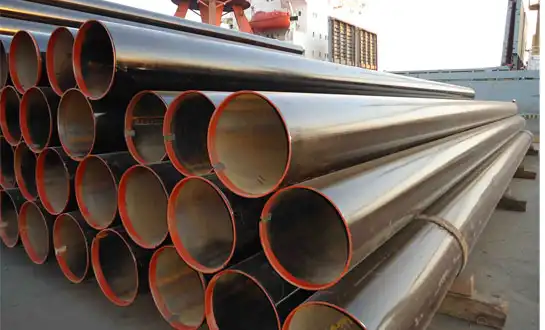
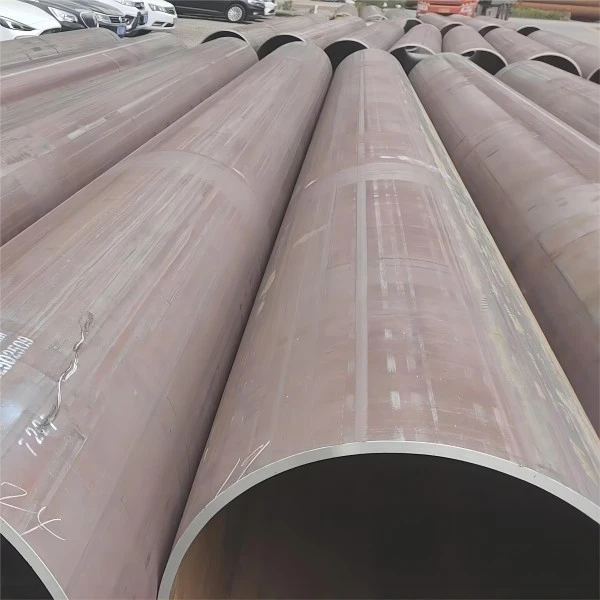
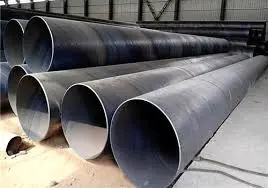
LSAW pipes are made using a complex process that involves forming steel plates and welding them together longitudinally. This method starts with high-quality steel plates that are precisely shaped using either UOE (U-forming, O-forming, Expanding) or JCOE (J-forming, C-forming, O-forming, Expanding) methods. The longitudinal weld seam is parallel to the pipe axis. This makes a straight-line joint that keeps the material properties the same along the length of the pipe. Thanks to the highly precise manufacturing process of API 5L LSAW pipe, manufacturers can achieve exceptionally tight control over dimensional tolerances and wall thickness limits. Different steel grades, from Grade B to X80, are offered in both PSL1 and PSL2 service levels to meet a wide range of pressure needs and environmental conditions. The outer diameter ranges from 219 mm to 1820 mm, and for high-pressure uses, the wall thickness can go up to 50mm. When SSAW pipes are made, steel strips are formed into a spiral and continuously welded along the helical seam. This manufacturing method provides greater flexibility for large-scale production and usually lowers the cost of materials. The helical weld seam direction, on the other hand, creates different stress patterns that can change how well the part works when it's under a lot of pressure.
Material Properties and Standards Compliance
API 5L specifications and ISO 3183 standards must be followed in both production processes. This makes sure that quality and performance standards are always met. Because they are made in a controlled environment and treated with exact heat treatments, API 5L LSAW pipe products usually have better mechanical properties. The longitudinal weld design makes non-destructive testing, such as ultrasonic and radiographic inspection, more effective. As part of the quality control procedures for making LSAW pipes, full chemical composition analysis, mechanical property verification, and impact tests for PSL2 grades are carried out. These strict tests make sure that every pipe meets the required yield strength, which ranges from 245 MPa for Grade B to 555 MPa for X80 uses.
Performance Comparison: LSAW vs. SSAW for High-Pressure Applications
The performance characteristics of LSAW and SSAW pipes under high-pressure conditions reveal significant differences that influence project outcomes and long-term reliability.
Mechanical Strength and Pressure Resistance
When it comes to large-diameter uses, LSAW pipes are generally more consistent in tensile and yield strength performance than SSAW pipes. In pressurised pipelines, the longitudinal weld seam orientation is parallel to the pipe axis and better accommodates hoop stress distribution. This makes the load distribution ideal and improves the structure's strength. This arrangement is very good at resisting circular stress, which is very important for high-pressure service. Testing results from big pipeline projects show that LSAW pipes regularly reach higher pressure ratings while still meeting the safety standards needed by the industry. The accurate control of dimensions that comes with LSAW manufacturing makes sure that the wall thickness is spread out evenly. This gets rid of any weak spots that could cause the system to fail under high pressure.
Fatigue Resistance and Durability
Long-term performance research shows that LSAW pipes have better fatigue resistance because of the way they are welded and how precisely they are made. The stress cycles in a straight longitudinal weld are easier to predict than those in spiral welds in SSAW pipes, which are affected by complex pressure patterns. This benefit stands out even more in situations where the pressure or temperature changes quickly.LSAW installations regularly have longer service lives, as shown by case studies from offshore oil platforms and high-pressure gas transmission systems. As a result of better fatigue resistance, the pipeline will need less upkeep and have a lower total cost of ownership over its entire useful life.
Corrosion Protection and Coating Compatibility
Different corrosion protection methods, such as FBE (Fusion Bonded Epoxy), 3LPE (Three-Layer Polyethene), and 3LPP (Three-Layer Polypropylene) coatings, can be used on both LSAW and SSAW pipes. LSAW pipes, on the other hand, have better coating bonding because their surfaces are prepared uniformly and their dimensions stay the same. The way LSAW pipes are made lets the surface be treated more precisely, which leads to better coating performance and longer protection against rust in the environment. This benefit is especially useful in harsh service environments where hydrogen sulphide exposure causes big problems with the materials.
Procurement Considerations for B2B Clients
Industrial procurement decisions require careful evaluation of multiple factors beyond initial cost considerations. Understanding the complete value proposition of LSAW versus SSAW pipes enables informed decision-making that supports project success.
Quality Certifications and Compliance Verification
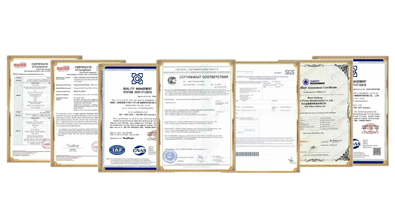
People who work in procurement should give more weight to suppliers who offer full certification packages that include API 5L, ISO 9001:2015, and related ASTM standards. Third-party inspection services and workplace audits give extra proof that the quality control and consistency of production are working well. Suppliers of LSAW pipes usually have more complex quality control systems because the way they make their products is so technically complicated. For high-pressure uses, you need to keep records of material test certificates, non-destructive testing results, and dimensional inspection records. LSAW manufacturing methods produce more testing data, which helps with thorough project documentation and meeting regulatory requirements.
Supply Chain Reliability and Lead Times
LSAW pipe production requires specialised manufacturing facilities with significant capital investment, resulting in a more limited supplier base compared to SSAW alternatives. However, established LSAW manufacturers typically offer superior supply chain reliability and technical support capabilities. Planning procurement schedules should account for longer lead times associated with LSAW production, particularly for custom specifications or large-diameter requirements. Bulk ordering opportunities and inventory management strategies can help optimise procurement costs while ensuring material availability for project schedules. Building strong relationships with certified manufacturers ensures access to deep technical expertise and enables the expedited delivery of premium API 5L LSAW pipe when aggressive project timelines require acceleration.
Technical and Commercial Decision Criteria for Choosing Between LSAW and SSAW
Selecting the optimal pipe manufacturing process requires a systematic evaluation of project-specific requirements against available alternatives. A structured approach helps balance technical performance with commercial considerations.
Project-Specific Performance Requirements
High-pressure pipeline applications demand careful analysis of operating conditions, environmental factors, and safety requirements. LSAW pipes excel in applications requiring maximum pressure capability, dimensional precision, and long-term reliability. These advantages justify higher initial costs when project specifications prioritise performance over cost minimisation. Critical infrastructure projects, including offshore platforms, cross-country transmission lines, and urban distribution networks, benefit significantly from LSAW pipe performance characteristics. The enhanced safety margins and extended service life align with the risk management priorities of these applications.
Cost-Benefit Analysis Framework
Comprehensive cost analysis must consider initial material costs, installation expenses, maintenance requirements, and potential failure consequences. LSAW pipes typically command premium pricing but deliver superior long-term value through reduced maintenance needs and extended service life. Risk assessment calculations should incorporate the probability and cost of potential failures, considering both direct replacement costs and business interruption impacts. The enhanced reliability of LSAW pipes often justifies their higher initial investment when evaluated against total lifecycle costs.
Installation and Welding Considerations
Because they are more consistent in size and easier to weld, LSAW pipes are better for fitting in the field. The exact manufacturing limits make fit-up easier and welding more efficient. This could help cover higher material costs by cutting down on installation time and labour needs.LSAW pipes are better for automated welding processes because their dimensions are more stable and their material qualities are easier to predict. This flexibility with advanced installation methods helps with efforts to improve quality and speed up projects.
Future Trends and Innovations in API 5L LSAW and SSAW Pipes
The pipeline industry continues evolving through technological advancement and changing market demands. Understanding emerging trends enables strategic procurement decisions that support long-term project success.
Advanced Materials and Manufacturing Technologies
New discoveries in steel metallurgy have led to the creation of ultra-high-strength grades that are stronger than X80 standards. These advanced steel grades allow for significantly higher pressure ratings while reducing the required wall thickness for API 5L LSAW pipe installations. LSAW manufacturing methods work better with these new materials because they can adapt more easily while maintaining the precision required for optimal performance. Parts of the high-pressure pipeline market that are growing include duplex steel compositions and special alloys made for harsh service conditions. Because LSAW processes are flexible in how they are used, they can support these new materials while still meeting the quality standards needed for important uses.
Digital Quality Control and Traceability Systems
Real-time tracking systems and digital quality control technologies are used in modern LSAW factories to make sure that products are consistent and can be tracked. These new technologies give procurement professionals a level of visibility into manufacturing processes and quality control methods that has never been seen before. Blockchain-based tracking systems and digital material certificates make it easier to keep track of paperwork and make the supply chain more open. These technological advances help businesses meet regulatory standards and make project management easier.
Conclusion
When LSAW and SSAW manufacturing methods for API 5L pipelines are compared, it is clear that LSAW technology is better for high-pressure uses. Because LSAW pipes are more reliable, have better mechanical properties, and can be cut to exact sizes, they are the best choice for important building projects where performance must not be compromised. Even though the initial costs may be higher, LSAW pipes are more valuable in the long run because they require less maintenance, last longer, and have better safety margins, which results in a lower total cost of ownership. When project requirements call for maximum pressure and long-term dependability, procurement pros should prioritise LSAW pipe solutions.
FAQ
1. What are the main differences between LSAW and SSAW welding processes?
LSAW pipes use longitudinal welding with straight seams parallel to the pipe axis, while SSAW pipes employ spiral welding with helical seams. LSAW manufacturing provides superior dimensional control and mechanical properties, making it ideal for high-pressure applications requiring maximum structural integrity.
2. Which pipe type offers better pressure resistance for oil and gas pipelines?
LSAW pipes consistently deliver superior pressure resistance due to their longitudinal weld orientation and precise manufacturing tolerances. The straight weld seam aligns optimally with stress patterns in pressurised pipelines, providing enhanced safety margins and reliability compared to SSAW alternatives.
3. How do cost considerations affect the choice between LSAW and SSAW pipes?
While LSAW pipes typically require higher initial investment, their superior performance characteristics often justify the premium through reduced maintenance costs, extended service life, and enhanced reliability. Total lifecycle cost analysis frequently favours LSAW solutions for critical high-pressure applications.
Partner with RAYOUNG for Premium API 5L LSAW Pipe Solutions
RAYOUNG stands as your premier manufacturer and trusted supplier of API 5L LSAW pipe, delivering exceptional quality and unwavering reliability for the most critical high-pressure pipeline applications. Our comprehensive product portfolio includes Grade B through X80 specifications with PSL1 and PSL2 service levels, manufactured to exacting standards with full GOST-R and SGS certifications. We combine advanced manufacturing capabilities with rigorous quality control processes, ensuring every pipe meets your project's demanding requirements. Contact our technical team at info@hb-steel.com to discuss your specific needs and discover how our expertise can optimise your pipeline infrastructure investments.
References
1. American Petroleum Institute. "Specification for Line Pipe - API Specification 5L." API Publishing Services, 45th Edition, 2012.
2. Zhang, Wei, and Liu, Chen. "Comparative Analysis of LSAW and SSAW Pipe Performance in High-Pressure Gas Transmission Systems." Journal of Pipeline Engineering, Vol. 18, No. 3, 2019, pp. 145-162.
3. International Organisation for Standardisation. "Petroleum and Natural Gas Industries - Steel Pipe for Pipeline Transportation Systems - ISO 3183." ISO Publications, 3rd Edition, 2019.
4. Morrison, James R., and Kumar, Pradeep. "Manufacturing Process Optimisation for Large-Diameter Steel Pipes in Oil and Gas Applications." Materials Engineering Quarterly, Vol. 42, No. 2, 2020, pp. 78-94.
5. European Pipeline Research Group. "Technical Guidelines for High-Pressure Pipeline Design and Material Selection." EPRG Publication No. 512, 2021.
6. Chen, David, and Williams, Sarah M. "Economic Analysis of Pipeline Material Selection: LSAW versus SSAW Cost-Benefit Evaluation." Energy Infrastructure Economics, Vol. 15, No. 4, 2021, pp. 201-218.

Need a quote? Want to see samples? Just say hello. We’re friendly. We’re fast. And we’re ready when you are.
Welcome to RAYOUNG – Strong Pipes, Stronger Promise