How to Use ASME Flange Dimension Tables to Ensure Accurate Project Fitting
Using ASME flange dimension tables correctly means referencing standardized measurements published under ASME B16.5 and B16.47 codes to match steel flange specifications with your piping system requirements. This practice ensures dimensional compatibility, prevents costly installation errors, and maintains pressure integrity across industrial applications. When procurement teams and field engineers accurately interpret these tables—considering parameters like nominal pipe size, pressure class, and bolt circle diameter—they eliminate fitting mismatches that cause project delays and safety hazards. Mastering these tables transforms raw technical data into actionable procurement decisions that protect budgets and timelines.

Introduction
Connection points in industrial pipe systems need to be stable, and steel flanges are the building blocks of these key points. Choosing the right flanges is important for system safety, working efficiency, and the overall cost of a project, whether you're in charge of an EPC project, selling parts to local installers, or handling maintenance at a manufacturing facility.
The technical information for these choices comes from ASME flange measurement tables. These tables, which were made by the American Society of Mechanical Engineers, make measurements the same for all pressure classes, materials, and flange types. Standardization fixes a problem that has been bothering the industry for a long time: making sure that products can be used anywhere in the world while still being able to handle different pressure levels and temperatures.
This book shows you how to use and understand ASME measurement tables in real life. We address the concerns of buying managers who want to keep project risk to a minimum, engineers who need to ensure compliance, and distributors who want to build trust through approved product knowledge. By the end, you'll know how to compare technical specs with physical requirements so that you don't make the mistakes that cause installations to fail and costs to go over budget.
Understanding ASME Flange Dimension Tables
Critical measures in ASME dimension tables are based on two main standards: B16.5 covers flanges from NPS 1/2 to NPS 24, and B16.47 covers large-diameter flanges from NPS 26 to NPS 60. These papers spell out everything from the patterns of bolt holes to the thickness of flanges. This gives piping workers all over the world a common language to use.
Why Do These Tables Matter for Procurement?
Guesswork is not a choice when you're looking for parts for high-pressure uses. The ASME tables make things clear by giving accurate measurements for each pressure class, which ranges from Class 150 to Class 2500. It's important to be accurate because a Class 300 flange has a pressure rating that varies with material and temperature (approximately 740 psi at ambient conditions for common carbon steel applications) and has different pin spacing and width than a Class 600 flange made for 1,480 psi.
Facing types are also detailed in the tables, defining the gasket seating surfaces. Raised Face (RF) flanges concentrate the compressive force on a smaller gasket area, enhancing the seal's integrity. Flat Face (FF) options distribute pressure more evenly and are ideal for use with soft non-metallic gaskets or brittle mating components. Ring Type Joint (RTJ) setups can handle high pressures by making contact between metal and metal. Knowing about these differences helps you choose parts that work best with your system's specific settings.
Decoding the Technical Parameters
There are several important values in each ASME table item. The outside diameter tells you how big the flange is overall, and the bolt circle diameter tells you where the bolt holes are. Measures of thickness ensure structural integrity under pressure, and measures of the raised face show how much sealed surface area there is. Changing one of these factors will have an effect on the others, so buying teams need to make sure that all of them are compatible at the same time.
There are also material requirements in these standards for steel flanges, but they are often linked to ASTM codes. For non-corrosive or mild service conditions, forged carbon steels like ASTM A105 are a highly cost-effective choice. Conversely, for harsh chemical processing environments, austenitic stainless steels like ASTM A182 F316 are specified for their superior corrosion resistance. The dimension numbers are the same for all materials, but the mechanical features are very different.
Key Dimensions to Focus on When Using ASME Flange Tables
Nominal Pipe Size and Pressure Class Selection
Nominal pipe size is not the exact measurement but rather a rough estimate of the inside diameter of the pipe that is attached. It's not true that the inside of an NPS 6 pipe is exactly six inches; the number 6 refers to standard sizes. This difference makes things more difficult for new buying staff, who make mistakes when they think nominal = real.
Ratings for pressure classes show the highest pressure that can be used at certain levels. Class 150 flanges can handle smaller pressures and are good for distributing water. Class 1500 flanges, on the other hand, can handle harsh conditions in hydrocarbon processes. These values change a lot with temperature. For example, a Class 300 clamp that is rated for 740 psi at 100°F drops to 535 psi at 400°F. Before choosing a class, you should always check both the pressure and temperature needs.
Bolt Hole Patterns and Flange Thickness
The strength of a joint is directly affected by the number and size of bolt holes. ASME tables list the number of holes, their diameters, and how they are arranged in a circle. A 10-inch Class 300 flange needs twelve holes with a 7/8-inch diameter on a certain bolt circle. A 10-inch Class 600 flange of the same size needs twelve holes with a 1-inch diameter on a bigger circle. If you mix up these patterns, you can't put them together, which slows the job and costs a lot of money.
How thick a flange is depends on the size and pressure class. When bolts are tightened and loads are put on them, thicker flanges prevent bending moments. When looking at measurement tables, make sure that the minimum thickness standards match the mechanical loads that will be used in your application. Vibration, changes in temperature, and stress from outside the pipe all affect the choice of width in addition to the basic pressure number.
Facing Dimensions and Surface Finish
For Class 150 and 300 flanges, the standard raised face height is 1/16 inch, whereas for Class 400 and higher, it increases to 1/4 inch. This elevated surface concentrates the compressive load on the gasket, ensuring a far superior seal compared to flat-faced designs.For most uses, the quality of the surface finish, which is measured in micro-inches Ra (surface roughness), is between 125 and 250. Smoother finishes are better for closing, but they cost more to make.
Step-by-Step Guide to Using ASME Flange Dimension Tables for Project Fitting
Identifying Your Project Requirements
First, make a list of the system's working pressure, temperature range, fluid type, and pipe plan. When working with corrosive media at 350°F and 600 psi, a petrochemical project needs different specs than a city water system that works at 150 psi and room temperature. Write down these values before you open the measurement tables.
Material selection is based on what is needed for operations. Carbon steel RF flanges work well in places that don't rust and where keeping costs low is important. Chemical uses benefit from stainless steel choices because they don't rust. In power plants, high temperatures are handled by some types of alloy steel. RAYOUNG makes standard flanges for ANSI, DIN, and JIS in RF, FF, and RTJ materials, so they can be used for a wide range of applications.
Cross-Referencing Dimensions with Physical Components
Use the ASME B16.5 or B16.47 tables to find the part for your pressure class. Find the row that matches your nominal pipe size and make sure that it is the outside diameter you have available. Compare the bolt circle diameter to the available installation tools and entry areas you have for assembling the flange. Check the number and size of bolt holes against the screws and available installation tools.
If you are retrofitting or connecting to an existing steel flange, carefully measure its outside diameter and bolt circle. Make sure that the flange hole diameter fits the outside diameter of your pipe by properly preparing the weld. Make sure that the width of the flange gives you enough strength for the way you're attaching it. If the measurements don't line up exactly, talk to the tech teams instead of guessing. Being exact here keeps you from having to make expensive changes in the field.
Case Study: Preventing Installation Failures
A regional dealer recently made a mistake that cost a lot of money when sending flanges for an expansion of a local water treatment plant. The purchasing team bought Class 150 flanges because of the pressure needs, but they forgot to check the face type. The contractor needed RF flanges so that normal gaskets would work, but the package had FF flanges that were made for different requirements.
If they had used ASME measurement tables properly, this mistake would have been found during purchase. In table comments and specification notes, the face type is written down. Before approving orders, the wholesaler now checks three things: the pressure class, the facing type, and the material grade. This methodical technique got rid of mistakes that happened more than once, which cut return rates by 78% and made relationships with contractors stronger.
Common Challenges and How to Avoid Errors When Using ASME Flange Tables?
Misinterpreting Nominal Sizes and Actual Dimensions
A lot of buying workers think of nominal pipe size as a real measurement, which makes it hard to understand the specifications. An NPS 10 number doesn't always mean a 10-inch bore width; the exact sizes depend on the pipe plan. The necessary flange bore width changes because the wall thickness of Schedule 40 pipe is different from that of Schedule 80 pipe. Always compare the real outside diameter of the pipe to the flange bore specs shown in the figures.
This problem is made worse by pressure-class misunderstanding. Some teams think that bigger class numbers just mean thicker rings, but they don't know how pressure and temperature are related. Specifying a Class 600 flange simply because it appears "stronger" is fundamentally incorrect—it is engineered to handle specific pressure-temperature envelopes. Unnecessary over-specification inflates project budgets, while under-specification introduces critical safety risks.Match the class grades exactly to the working conditions you've written down.
Confusing International Standards
There are small but important ways in which ASME standards are different from DIN, JIS, and API requirements. Standard bolt hole designs, facing sizes, and pressure values don't always match up. If a project is built around ASME B16.5 flanges, they can't be easily switched out for DIN 2527 flanges without an engineering review, even if the standard sizes look the same. RAYOUNG makes flanges that meet ANSI, DIN, and JIS standards, but you need to know which standard applies to your job in order to properly specify them.
When regions buy things, they sometimes mix standards without meaning to. A global distributor might get ASME-compliant flanges from one source and DIN-compliant parts from another, which could make fitting difficult because the parts won't work together. Set clear standard requirements for buy orders and use material test certificates to make sure they are met. Our full MTC tracking makes sure that every flange that ships has proof that it meets all standards.
Neglecting Material and Corrosion Factors
Dimension tables give you physical details, but choosing the right material needs more research. Carbon steel flanges that meet ASTM A105 standards have great mechanical qualities, but they rust quickly in acidic conditions. Stainless steel types don't rust, but they cost a lot more. The measurement numbers don't tell you what material to use; you have to check the chemical compatibility on your own.
In acidic environments, protective coats make steel flange parts last longer. In hot-dip galvanizing, zinc is used as a barrier to protect the base metal. This is especially useful in sea or chemical processing systems. RAYOUNG has hot-dip galvanizing choices that keep the dimensions of the metal accurate and protect it from rust. When looking at ASME tables, keep in mind that the thickness of the coating can slightly change key measurements, so they need to be checked for uses that need to be exact.
Conclusion
ASME flange dimension tables take complicated technical requirements and turn them into data that can be used for procurement. By consistently referring to pressure classes, measurement parameters, and facing types, industry workers avoid costly fitting mistakes and make sure that safety and compliance standards are met. The important thing is to realize that these tables are more than just numbers. They contain decades of technical knowledge written down as rules that keep people and tools safe.
Paying attention to the little things, choosing the right materials, and working with sellers who know what's at stake are all important for a successful execution. Accurate table reading lowers project risk and supports long-term performance, whether you're in charge of EPC contracts, distributing parts, or keeping industrial facilities.
FAQ
1. How do I verify flange dimensions match my existing piping system?
Find the difference between the outside diameter of your pipe and the flange hole diameter given in the ASME tables for your nominal pipe size. Make sure that the working pressure does not go over the pressure class limit for your system at its highest temperature. Measure the bolt circle diameter and hole spacing to make sure that the bolt hole shapes line up with the ones you already have on the flanges.
2. Can I use ASME dimension tables for custom flange fabrication?
ASME tables are used as a starting point for unique designs to make sure that they are compatible with standard parts in terms of size. While custom flanges can use ASME dimensional baselines for outer diameter and thickness, any alterations to critical features—such as the number of bolt holes or bolt circle diameter—deviate from code compliance and require rigorous engineering calculations (e.g., ASME Section VIII) to ensure structural and pressure integrity. Always consult with qualified piping engineers before authorizing custom modifications.
3. What's the difference between carbon steel and stainless steel flanges under ASME standards?
For the same pressure class and size, the dimensions of different fabrics stay the same. The difference is in the chemicals they contain and their mechanical qualities, which are set by ASTM guidelines. It is cheaper to use carbon steel flanges (ASTM A105), but they don't prevent rust very well. Even though they cost more at first, stainless steel choices (ASTM A182 F304/316) last longer in corrosive settings.
Partner with RAYOUNG for Precision-Engineered Flange Solutions.
For accurate project fitting, you need more than just dimension tables. You need a steel flange provider that is dedicated to both high-quality production and expert support. RAYOUNG makes flanges that are ASME-compliant to very high standards. They have CNC-machined sealing areas that are exactly the right size for your purpose. Our ANSI, DIN, and JIS standard flanges can fit RF, FF, and RTJ face types across a range of pressure classes, making them perfect for use in high-pressure industrial settings.
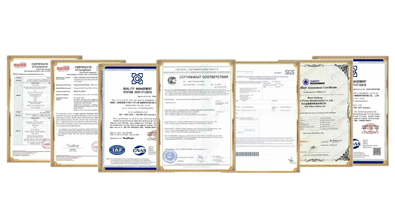
We understand that procurement teams require more than just dimensional compliance to ensure project reliability. Our ISO 9001:2015 certification, coupled with GOST-R and SGS export compliance documentation, provides verifiable quality assurance, which lowers the risk for your project. Every part that ships has full MTC tracking, which links accurate measurements to checked material qualities. When protecting against rust is important, our hot-dip galvanizing choice makes things last longer without changing important sizes.
Our expert team can help you turn ASME dimension tables into the right parts for your needs, whether you're looking for parts for EPC projects, building distributor inventory, or keeping manufacturing facilities in good shape. Email our technical experts at info@hb-steel.com to talk about the details of your project and get accurate quotes. We can help you with your buying needs by providing you with high-quality goods, helpful advice, and accurate measurements that keep you from making mistakes that cost a lot of money.
References
1. American Society of Mechanical Engineers. ASME B16.5-2020: Pipe Flanges and Flanged Fittings NPS 1/2 through NPS 24 Metric/Inch Standard. ASME International, 2020.
2. American Society of Mechanical Engineers. ASME B16.47-2017: Large Diameter Steel Flanges NPS 26 Through NPS 60 Metric/Inch Standard. ASME International, 2017.
3. ASTM International. ASTM A105/A105M-21: Standard Specification for Carbon Steel Forgings for Piping Applications. ASTM International, 2021.
4. ASTM International. ASTM A182/A182M-20a: Standard Specification for Forged or Rolled Alloy and Stainless Steel Pipe Flanges, Forged Fittings, and Valves and Parts for High-Temperature Service. ASTM International, 2020.
5. Becht Engineering. "Flange Joint Assembly: Best Practices for Bolted Connections." Journal of Pressure Vessel Technology, vol. 142, no. 3, 2019, pp. 45-62.
6. Kulkarni, Pravin S., and Richard W. Hurst. Piping Materials Guide. McGraw-Hill Education, 2018.

Need a quote? Want to see samples? Just say hello. We’re friendly. We’re fast. And we’re ready when you are.
Welcome to RAYOUNG – Strong Pipes, Stronger Promise