45 degree elbow vs 90 degree elbow: Key Differences Explained
Understanding the difference between 45-degree elbow vs 90-degree elbow configurations is important for optimizing project costs and maximizing flow efficiency when planning piping systems for manufacturing facilities. A 45-degree elbow changes the flow of fluid at a less sharp angle, which lowers turbulence and pressure loss. A 90-degree elbow, on the other hand, makes a sharp right-angle turn, which is useful for setups with limited room. In water delivery, HVAC networks, and process piping, choosing the right elbow type has a direct effect on how well the system works, how much energy it uses, and how much upkeep it needs over time.
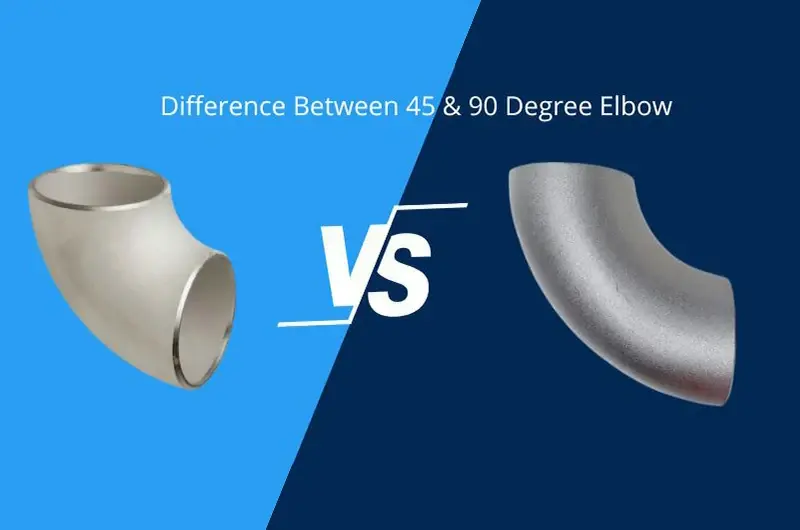
Understanding 45-Degree and 90-Degree Elbow Pipe Fittings
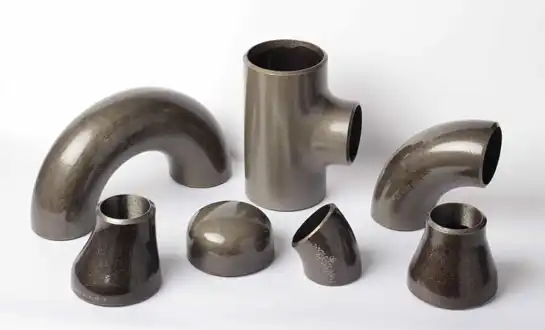
Elbow fittings are necessary to change the direction of flow in pipe networks. They come in two main angular forms to meet different technical needs. Both types use buttweld, threaded, or socket-weld joints to connect pipe pieces and keep the system together when pressure and temperature change.
Defining 45-Degree Elbow Fittings
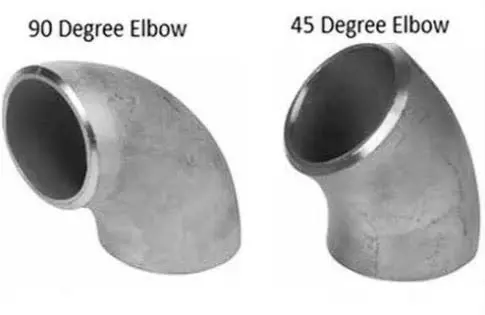
A 45-degree curve changes the flow direction at half the angle of a right-angle turn. This makes the change slower, which lowers the resistance to flow. This type of fitting usually follows the dimensions set out in ASME B16.9 for buttweld designs. Its bevelled ends allow for full-penetration welds that match the strength of the base pipe. For general commercial use, carbon steel (ASTM A234 WPB) is used. For corrosive conditions, ASTM A403 WP304/316 stainless steel grades are used. Manufacturing methods include hot forming for larger diameters and cold forming combined with CNC machining for high-precision requirements. The standard pipe size ranges from 1/2 inch to 48 inches, and the wall thickness schedules go from SCH 10 to XXS to meet the pressure values.
Defining 90-Degree Buttweld Elbow Fittings
A 90-degree buttweld elbow makes a perfect right-angle flow path. It is made to meet the standards for industrial pipe systems set by ASME B16.9 and ASTM. There are two types of this fitting: Long Radius (LR) and Short Radius (SR). LR elbows have a centerline radius that is 1.5 times the standard pipe size, while SR elbows have a 1.0 ratio for smaller setups. The bevel-ended design lets you weld around the circumference of the butt, which gets rid of the possible leak paths that come with mechanical joints. The carbon equivalent values are carefully controlled by the material's makeup to make sure that it can be welded at all temperatures. The dimensions of these elbows are the same as those for 45-degree versions, and the wall thickness requirements are the same on both sides to keep stress from building up at the weld joints during heat cycles.
Material Options and Their Impact
The choice of material affects how well it resists rust, how strong it is, and how long it will last in different working conditions. Carbon steel elbows are a cheap way to handle non-corrosive media in power plants and industrial plants. Their yield strengths are usually higher than 30,000 psi. Stainless steel choices offer better protection against oxidation in pharmacy and food processing settings, and the surface stays intact even when exposed to acids. For use in refineries, alloy steel types with chromium and molybdenum can withstand temperatures above 1000°F. PVC elbows are used for low-pressure water distribution and residential piping systems, but they aren't ideal for use in factories. Different types of materials need different ways to be welded and heated, which affects both the initial cost of buying them and the time it takes to weld them.
Key Differences Between 45-Degree and 90-Degree Elbows
The shapes and properties of the fluids inside these elbows make them different in ways that have a direct effect on how the system is designed and how well it works. When engineers choose parts for complicated pipe networks, they look at a number of performance factors.
Angular Configuration and Space Requirements
To get the same lateral shift as a 90-degree fitting in a 45-degree elbow vs 90-degree elbow comparison, you need to add more linear space because the 45-degree angle makes the direction change less sharp. If there is enough vertical space, two 45-degree elbows can be used instead of one 90-degree elbow. This makes the run longer but improves the flow. On the other hand, 90-degree bends make the best use of space in equipment rooms and mechanical chases where pipes need to go around structural parts. This difference in angle affects both the amount of material needed and the difficulty of the manufacturing process during installation.
Flow Efficiency and Pressure Drop Analysis
Hydraulic tests show that 45-degree elbows generally produce significantly lower pressure drops than 90-degree fittings, with reductions typically ranging from 40% to 60% under identical flow conditions.When 90-degree bends have sharp changes in angle, they separate the flow and create secondary circulation patterns. This converts kinetic energy into heat through turbulence dissipation. A standard radius elbow with a 90-degree long radius elbow typically has a resistance coefficient (K-factor) in the range of about 0.6–1.0, while a 45-degree elbow has a K-factor of about 0.35 in the same circumstances. This difference means that high-speed steam systems or long-distance slurry transport will use less energy and need less pump horsepower over the life of the system.
Installation and Maintenance Considerations
When there are a lot of pipes in a tight space, and engineers have to work with small pieces of equipment, 90-degree bends are easier to install. The small shape makes the prefabrication steps easier and cuts down on the number of support pieces that are needed. Maintenance times are also different. Systems with more than one 45-degree bend spread erosion over a larger surface area, which could mean that it takes longer between thickness checks. However, wear patterns are more concentrated at the bend extrados in 90-degree elbows, which means that ultrasonic screening methods are needed in erosive service conditions. When figuring out the total cost of ownership, procurement managers should take these lifetime cost effects into account.
Different industries use these technical differences to make choices about specifications. For water treatment plants, 45-degree designs use less pumping energy, while modular skid-mounted systems use 90-degree bends by default to save room. Both types of materials are compatible with each other, and makers offer the same grade choices and certification paperwork.
Application Scenarios: When to Use 45-Degree vs 90-Degree Elbows?
When you match the elbow geometry to the needs of the system, you get consistent performance while keeping capital and running costs low. Real-world uses show different choices based on the properties of the fluid and the limitations of the placement.
Plumbing and Water Distribution Systems
When it comes to transmission mains, municipal water networks usually call for 45-degree bends. This is because friction losses build up over long distances and affect pumping costs directly. Using 45-degree fittings at direction changes on a 12-inch water main can cut annual energy use by 8–12% compared to 90-degree setups across a 10-mile distribution loop. For vertical risers and branch links in buildings where tight routing through structure penetrations is important, 90-degree elbows are used. Both types are used in fire protection systems. 90-degree elbows are used for sprinkler drops and cross-main connections, while 45-degree fittings are used in underground yard pipes to keep flow speeds at the minimum levels needed by NFPA standards.
HVAC and Gas Piping Applications
In commercial HVAC chilled water systems, using 45-degree bends in the supply and return lines reduces the differential pressure required by pumps and significantly lowers system noise levels. To keep erosion from happening, natural gas distribution has strict speed limits. 45-degree bends help increase flow within the speed limits by reducing the stress on the walls caused by turbulence. In process gas systems that deal with corrosive chemicals, long-radius 90-degree elbows made of alloy materials are preferred because they can handle higher pressure drops and fit more tightly within the limits of the reactor skid. Pressure drop estimates must be written down in order to follow ASME B31.3 process piping rules. This makes elbow selection an important engineering input during the design steps.
Industrial Process and Manufacturing Facilities
In chemical processing plants, 45-degree bends are used in slurry transfer lines because the solids that are floating in the fluid speed up erosion when the flow direction changes. In abrasive media use, the softer angle spreads the impact forces of particles over larger surface areas, which doubles the predicted service life compared to angles of 90 degrees. On the other hand, polished stainless steel 90-degree elbows are used for bioprocessing skids in clean-service pharmaceutical manufacturing, where safe tri-clamp connections and small holdup volumes are more important than hydraulic concerns. Power plants require 90-degree bends in the pipes that carry engine oil and in the systems that return condensate because the equipment's nozzles need to be positioned in a certain way. In these situations, material certificates and inspection records from a third party are more important than small changes in pressure loss when making purchasing choices.
Procurement Guide for 45- and 90-Degree Elbow Fittings
To keep projects on time and on budget, sourcing strategies need to find a balance between technical requirements, source dependability, and total acquisition costs. Procurement teams typically consider and put a lot of weight on a few important evaluation factors.
Material Selection and Quality Standards
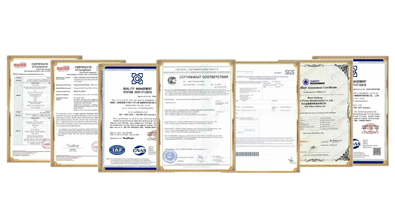
When price is important, carbon steel elbows are the best choice. ASTM A234 WPB types are commonly used in service conditions ranging approximately from -20°F to 650°F, depending on design requirements. While stainless steel elbows are more expensive, they don't allow for corrosion and need to be inspected more often in food-grade and seaside settings. Alloy steels with 1.25% chromium and 0.5% molybdenum can be used for high-temperature tasks that are too hot for carbon steel. Buyers should check mill test results that show the chemical make-up, mechanical properties, and heat treatment factors match the needs of the project. The production quality systems are approved by GOST-R and ISO 9001:2015, and the standards for dimensional tolerances and surface finish are confirmed by an SGS third-party review.
Evaluating Supplier Credentials and Certifications
Established makers keep large inventories of their products and offer expert help tools that cut down on the time it takes to get them. When a company has compliance with ASME B16.9 dimensional standards, it shows that it meets the standards for dimensional tolerances and pressure-temperature rates that are used in foreign markets. When evaluating a supplier, it's important to check their production ability, especially if you need large-diameter or unusual materials that are hard for smaller manufacturers to handle. Request proof of tracking from the heat numbers of the raw materials to the markings on the finished product. This will make sure that everyone in the supply chain is responsible. The warranty period is usually between 12 and 18 months from the date of shipment. It covers flaws in the material but not damage caused by installation or normal use.
Cost Optimization Strategies
Volume purchasing deals use predictions of yearly usage to get better prices, which usually saves 12 to 18% compared to buying on the spot. Standardizing on fewer sizes and schedule combos makes inventory easier to manage and increases the number of items that are in stock. To save money while protecting important parts that are prone to rust, think about mixed-material packages that have both carbon and stainless steel parts. Online sourcing sites make prices clear, but they might not offer as much technical help or the ability to make things to order. When you have offline relationships with regional wholesalers, you can make plans for emergency deliveries and consignment stocking that protect against problems in the supply chain.
RAYOUNG maintains a large inventory of both 45-degree and 90-degree buttweld elbows, manufactured from high-quality carbon and stainless steel. These elbows are made according to ISO 9001:2015 quality management system certification and come with full paperwork that shows where the materials came from. Our engineering team helps with hydraulic calculations and making suggestions about which materials to use based on the unique service conditions.
Conclusion
By knowing the difference between 45-degree elbow vs. 90-degree elbow designs, engineering and procurement teams can find the best way to make a pipe system work within the limits of the project. The 45-degree choice cuts down on pressure loss and energy use by a noticeable amount. This is especially helpful for high-velocity and long-distance pumping uses. On the other hand, 90-degree bends are the best way to save room and make installation easier in places with a lot of equipment. You can choose from different types of carbon steel, stainless steel, and alloys to get even better performance that meets your needs for temperature and corrosion protection. Strategic buying looks at unit prices along with factors like source dependability, lifecycle considerations, and certification paperwork that meets regulatory requirements.
FAQ
1. Can 45-degree elbows replace 90-degree fittings in tight spaces?
When space is limited, 90-degree elbows are usually the best choice because one 90-degree fitting changes the direction of flow the same way two 45-degree elbows placed one after the other do. But if the vertical space is greater than the horizontal limits, stacked 45-degree elbows may be a good way to route the pipe while still keeping the best flow qualities. Before making any final decisions about replacements, look at the specific dimensional envelope and pipe isometric models.
2. How does elbow angle affect system pressure loss?
According to research, 45-degree bends cause about 40–60% less pressure drop than 90-degree joints when the flow rates are the same. These differences accumulate across multiple fittings, meaning that piping layouts dominated by 90-degree elbows often require larger pump motors or additional booster stations to maintain flow. During the planning phase, accurate system analysis is possible with hydraulic modeling software that includes K-factors given by the manufacturer.
3. What standards govern elbow fitting procurement?
When buying things from other countries, people usually look at ASME B16.9 for limits on sizes and ASTM material standards (A234 for carbon steel and A403 for stainless steel). Pressure-temperature ratings are determined by the applicable piping system design codes and component standards such as ASME B16.5 (for flanges) and ASME B16.34 (for valves), while EN 10253 norms may be used for European work. Check to see if the supplier's certifications match the project codes and the owner's written standards in the technical specs.
Partner with RAYOUNG for Premium Elbow Fittings
RAYOUNG manufactures fully certified 45-degree and 90-degree elbow fittings that comply with ASME B16.9 standards for engineered piping systems. We sell different types of steel, like carbon steel, stainless steel, and alloys. All of our products come with full mill test reports and SGS export approval. As a seller of elbow fittings with a lot of experience working with EPC contractors and industrial end users, we offer reasonable bulk prices and technical support that is tailored to your unique flow and plan needs. Email our team at info@hb-steel.com for thorough specs, pressure drop calculations, and project-specific buying advice that keeps costs low and delivery dates on track.
References
1. American Society of Mechanical Engineers. (2020). ASME B16.9: Factory-Made Wrought Buttwelding Fittings. New York: ASME Press.
2. Hydraulic Institute. (2019). Pipe Friction Manual: Engineering Data for Fluid Flow Analysis. Parsippany: Hydraulic Institute Publications.
3. Nayyar, M.L. (2018). Piping Handbook, 8th Edition. New York: McGraw-Hill Education.
4. American Society for Testing and Materials. (2021). ASTM A234/A234M: Standard Specification for Piping Fittings of Wrought Carbon Steel and Alloy Steel for Moderate and High Temperature Service. West Conshohocken: ASTM International.
5. Process Industry Practices. (2017). PIP VESV2000: Piping Material Specifications and Fabrication Details. Austin: Construction Industry Institute.
6. Crane Company. (2018). Flow of Fluids Through Valves, Fittings, and Pipe Technical Paper No. 410M. Stamford: Crane Co. Engineering Division.

Need a quote? Want to see samples? Just say hello. We’re friendly. We’re fast. And we’re ready when you are.
Welcome to RAYOUNG – Strong Pipes, Stronger Promise