How to Select Steel Pipe Flange Pressure Ratings Correctly
Selecting the correct steel pipe flange pressure ratings begins with understanding your system's maximum operating pressure and temperature. The pressure rating, expressed in classes like 150, 300, or 600, determines a flange's ability to safely contain pressurized fluids under specific thermal conditions. Material composition plays a critical role: carbon steel ASTM A105 flanges suit moderate conditions, while stainless steel ASTM A182 grades handle corrosive environments. Engineers must account for pressure spikes, thermal expansion, and safety margins when matching pressure classes to piping specifications, ensuring compliance with ANSI B16.5 or equivalent standards while avoiding costly over-specification or dangerous under-rating.
Introduction
Picking the right steel pipe flange pressure ratings isn't just a technical task; it has a direct effect on the safety of the system, the cost of the project, and the soundness of the system itself. Flange problems are often caused by choosing the wrong pressure class, even in fields like petrochemical processing and local water distribution. Manufacturers don't like to say this. It can be hard for procurement managers to meet strict safety standards and keep costs down at the same time, especially when project deadlines leave little room for mistakes.
When you get pressure ratings wrong, it has effects that go beyond immediate safety risks. Flanges that aren't rated properly can cause terrible leaks, lost production time, and fines from the government. Over-specification makes things safer, but it also raises the cost of materials and makes transportation more difficult. This guide talks about the organized way to handle these trade-offs, giving decision-makers the skills they need to find a balance between budget realities and compliance requirements. We use well-known standards, such as ASME B16.5, and real-life procurement situations to make the selection process clearer, even for engineers with a lot of experience.
Understanding Steel Pipe Flange Pressure Ratings
The Foundation of Pressure Classification Systems
Pressure numbers tell you the highest working pressure that a flange can safely handle at a certain temperature. The capacity goes down as the working temperature goes up because heat weakens materials. There are seven main pressure classes in ASME B16.5: 150, 300, 400, 600, 900, 1500, and 2500. Each class represents the allowable pressure-temperature rating of the flange based on the material group and service temperature, not under real-life pipeline pressure. Many times, engineers think that Class 150 is only good for 150 psi systems, but its real grade depends on the material and service conditions.
Material Composition and Thermal Behavior
Due to their good cost-to-performance ratios, carbon steel flanges made to ASTM A105 standards are most commonly used in general industrial settings. Within a temperature range of -20°F to 650°F, these flanges work reliably with water, steam, and non-corrosive gases. At a temperature of about 100°F, a Class 150 carbon steel flange has an allowable working pressure of approximately 285 psi. At 600°F, this number drops to 140 psi. Stainless steel options, such as ASTM A182 F316, are better at resisting rust and have slightly different relationships between pressure and temperature. The chemical composition of the material includes carbon, manganese, phosphorus, and other alloying elements. Depending on the size and manufacturing requirements, ASTM A105 forgings may undergo normalization or other heat treatments to improve microstructure and mechanical properties.
Critical Dimensional Parameters
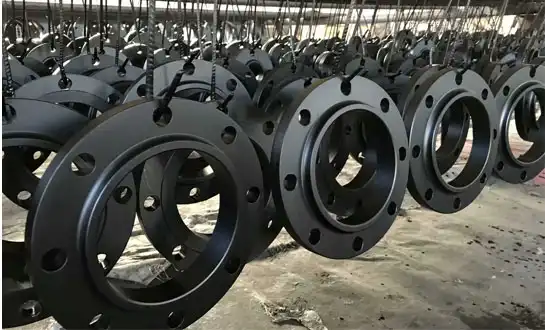
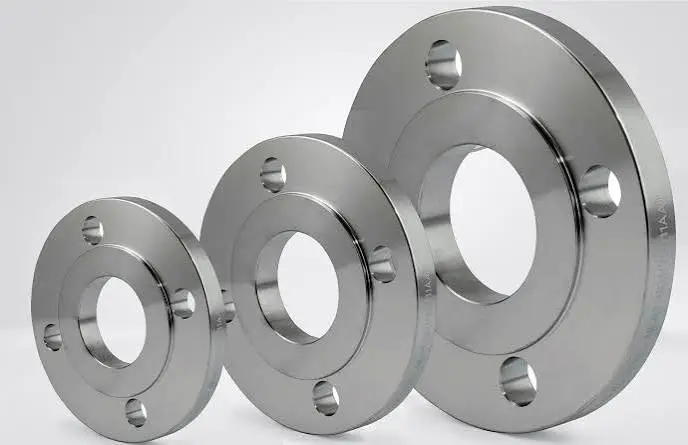
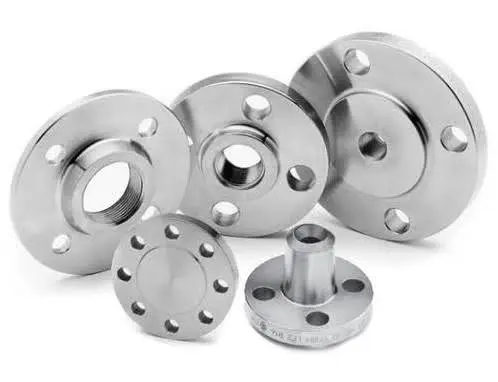
A 6-inch NPS flange illustrates the direct relationship between dimensional geometry and pressure ratings. Class 150 versions have an outer diameter of 11 inches and eight bolt holes. Class 300 versions have an outside diameter of approximately 12 inches and eight bolt holes with larger bolt dimensions. The sealing surface on the raised face (RF) features a precision serrated finish (concentric or spiral grooves) between 125 and 250 AARH (Arithmetic Average Roughness Height) to optimize gasket seating and seal performance. Ring-type joint (RTJ) facings can be used in high-pressure situations where regular seals don't work. The thickness goes up in direct relation to the pressure class. For example, a Class 600 flange is much heavier than a Class 150 flange, which affects the cost of shipping and the amount of work needed to install it.
Comparing Steel Pipe Flange Pressure Ratings: ANSI vs API and More
ANSI/ASME Standards for General Industrial Use
Pipe flanges in sizes NPS 1/2 through 24 are governed by ASME B16.5 and are used in most industrial piping systems. This standard gives exact measurements, bolt patterns, and face types so that parts from different makers can be used together. The ANSI tables with pressure-temperature ratings take into account different types of materials, so engineers can choose the right classes based on the conditions of the job and evaluate steel pipe flange pressure ratings for specific applications. Class 300 flanges are used for moderate-pressure steam and chemical processing, while Class 150 flanges are used for low-pressure water distribution and HVAC systems. Class 600 and higher are commonly used for high-pressure oil and gas transport, power generation, and certain industrial applications.
API Standards for Oil and Gas Applications
Different grade names are used for API 6A flanges that are made for wellhead and Christmas tree connections. These names are 2000, 3000, 5000, 10000, 15000, and 20000 psi. These flanges typically use RTJ facings with metal-to-metal sealing and are designed to handle high pressures and temperatures in drilling and other upstream applications. The pressure rating is defined according to API 6A requirements and must be evaluated together with the applicable temperature rating and service conditions. API flanges are much more expensive than their ANSI counterparts, but they are necessary for upstream oil processes where there is almost no room for failure.
International Standards and Regional Variations
The European standard DIN 2501 and the Japanese standard JIS B2220 both have different ways of rating things using the letters PN (nominal pressure) and K (pressure class). PN16 and PN40 may have similar pressure ranges to ANSI Class 150 and Class 300 in some applications, but they are not directly interchangeable because their pressure-temperature ratings and dimensions differ. There are some small differences in the specs of the materials. For example, DIN uses steel types like 1.0460 and 1.4571, which are similar to ASTM equivalents but not exactly the same. Teams that buy things from around the world need to be very careful when checking material certificates, because EN10204 3.1 certificates (European) have different forms for test results than ASTM standards. These differences between regions don't usually affect speed, but they do make it harder to record and check quality.
Step-by-Step Guide to Selecting the Correct Pressure Rating
Define Accurate Operating Parameters
First, write down the maximum design pressure, which should include possible surge conditions. When a pressure relief valve or a liquid system experiences water hammer, it can temporarily increase pressure significantly above normal operating conditions depending on system design and operating conditions. Write down the highest temperature that the machine can stay at all times and any patterns of thermal cycling. The chemical make-up of the fluid is important—corrosive media may need better materials even if the pressure numbers seem fine. Safety standards like ASME B31.3 require appropriate design margins and pressure testing requirements, which may include hydrostatic testing at 1.5 times the design pressure under applicable conditions.
Match Requirements to Standard Pressure Classes
Check your written values against pressure-temperature tables that have already been made public for possible materials. If the working conditions are in between standard classes, choose the next higher pressure class. Not meeting the requirements doesn't help in real life. Class 300 flanges are needed for a system with carbon steel pipes that works at 450 psi and 400°F; Class 150 flanges would not be safe enough and would not meet most safety rules. Think about plans for future growth or changes to the process that could raise pressure needs. Adding higher-class flanges after the fact costs a lot more than the initial proper specification.
Evaluate Manufacturer Certifications and Quality Assurance
For all flanges, you should ask for full material test certificates (MTC) that can be linked to heat numbers. Reliable sellers give out EN10204 3.1 or 3.2 certificates that list the chemical make-up, mechanical qualities, and heat treatment parameters of the goods. CNC-machined sealing surfaces are more accurate in terms of size than products that are finished by hand. Verify that quality testing complies with applicable standards such as ASME B16.5 and ASME B31.3, ensuring material traceability, dimensional compliance, and hydrostatic integrity across specified carbon and alloy steel pressure ratings.Hot-dip galvanizing options can increase the service life of outdoor installations that are prone to corrosion, but it's important to make sure that the coating thickness doesn't get in the way of sealing surfaces.
Procurement Insights: Sourcing and Ordering Steel Pipe Flanges by Pressure Rating
Standard Availability and Lead Time Considerations
For sizes up to 24 inches, Class 150 and 300 flanges made of common materials can often be obtained quickly from a distributor's stock. Class 600 and specialty materials such as Hastelloy alloys or Alloy 20 need mill orders with lead times of 8 to 16 weeks, based on the amount and market conditions. Emergency sourcing costs a lot more than usual—sometimes 200% more than normal. Strategic buyers keep a safety stock of important sizes and classes, weighing the costs of keeping inventory against the chance that a project will be delayed. Smaller engineering firms can avoid the minimum order numbers that mills require by working with dealers who keep a wide range of pressure classes in stock.
Cost Structures Across Pressure Classes
Material costs go up or down fairly directly with weight, but making things in higher pressure classes is more complicated than making things in lower pressure classes. Even though it only has 1.9 times as much steel, a Class 600 6-inch weld neck flange costs about 2.8 times as much as a Class 150 version. Tighter tolerances for machining and stricter testing require more work, which costs more as the class level goes up. Prices may increase when custom facings such as RTJ are required because of additional machining and manufacturing requirements. Over-specification is bad for projects that want to stay within their budgets. For example, using Class 300 when Class 150 is enough loses money and doesn't improve safety or performance.
Supplier Qualification and Risk Mitigation
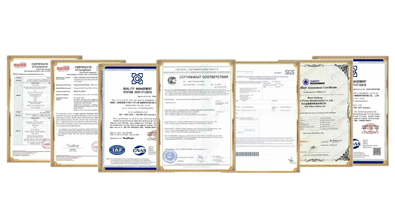
Working with certified manufacturers makes the supply chain a lot less vulnerable. Certification to ISO 9001:2015 means that quality management is done in a planned way, and API Q1 certification demonstrates quality management capability for the oil and gas industry, while PED compliance supports pressure equipment requirements in applicable European markets. Before placing large orders, ask for samples of MTCs to make sure that the format of the documentation meets your quality assurance needs. Products with fake certifications, like counterfeit flanges, sometimes get into supply lines through gray-market wholesalers. RAYOUNG keeps full MTC traceability on all of its products, and its export compliance is backed up by GOST-R and SGS certifications. Our manufacturing process includes checking the dimensions of the flanges at several stages to make sure they always meet ANSI, DIN, or JIS standards.
Knowing how these factors affect procurement helps you balance different priorities well. Sourcing strategies that are well thought out take into account things like wait times, licensing needs, and cost structures. This keeps safety standards high and project delays to a minimum. The complexity of global supply chains requires close attention. Qualifying suppliers properly and reviewing paperwork can help avoid mistakes that cost a lot of money and damage system integrity.
Conclusion
To choose the right steel pipe flange pressure ratings, you need to carefully look at the working conditions, the qualities of the material, and the standards that apply. The choice affects not only the short-term costs of the project but also the long-term costs of upkeep and how safe the area is. As a way to protect themselves against uncertainty, engineers and procurement managers should fight the urge to over-specify. They should also avoid the even bigger risk of under-rating key connections. To reach this balance, you need to carefully record the system's parameters, compare them to pressure-temperature tables, and work with manufacturers who offer certifications that can be checked. The time spent studying needs and the money spent on the right pressure classes of flanges pay off over many years of reliable service, avoiding the catastrophic failures and production interruptions that happen with systems that were chosen too quickly.
FAQ
1. How does temperature affect flange pressure ratings?
As the temperature rises, the allowable working pressure generally decreases according to the material pressure-temperature rating tables because heat weakens materials. The link between pressure and temperature is shown in detail in ASME B16.5 charts. Class 150 flanges made of carbon steel can take 285 psi at room temperature but only 140 psi at 600°F. At higher temperatures, stainless steel keeps its strength better than carbon steel. Thermal cycling adds more stress by expanding and contracting, which might mean that ratings need to be raised above what steady-state estimates suggest.
2. What certifications should I look for when purchasing pressure-rated flanges?
As long as chemistry and mechanical properties are recorded, material test certificates (MTC) are still necessary. As a minimum, look for EN10204 3.1 certificates. For critical applications, 3.2 certificates allow for independent inspection. Make sure that the dimensional inspection reports match the ASME B16.5 tolerances. There should be proof of hydrostatic testing at 1.5 times the rated pressure in the pressure test paperwork. ISO 9001:2015 recognition shows that quality management is done in a planned way, and approvals specific to the industry, like API Q1 or PED, show that the company can provide demanding services.
3. Can I use flanges with different pressure ratings in existing systems?
Directly bolting flanges of different pressure classes (e.g., mating a Class 150 flange directly to a Class 300 flange) is physically impossible because their bolt circle diameters (BCD), outer diameters, and bolt hole counts do not match. However, higher-class flanged components can be welded into a lower-pressure system using transition spools, provided the system's design limits are clearly derated to the lowest-rated component. Downgrading is against safety rules and could lead to a fatal failure. Mixed-class systems need detailed documents to make sure that the lowest-rated part sets the limits for the whole system. When mixing classes, bolt lengths and gasket thicknesses need to be checked to make sure that the right amount of force is applied without threads bottoming out.
Partner with RAYOUNG for Certified Steel Pipe Flange Pressure Rating Solutions.
To understand the complicated rules for steel pipe flange pressure ratings, you need to have the right knowledge and a trusted production partner. RAYOUNG specializes in ANSI, DIN, and JIS standard flanges with RF, FF, and RTJ facings that are made for high-pressure uses in a variety of industries. Our CNC-machined sealing surfaces are more accurate in size than options that are finished by hand, and full MTC tracking gives you the proof your quality control standards need. Hot-dip galvanizing options make things last longer in tough conditions without affecting the integrity of the seal.
As a well-known company that supplies steel pipe flange pressure ratings to EPC contractors, distributors, and industrial end-users around the world, we know how important it is to meet safety standards and keep your project on schedule. Our production methods are ISO 9001:2015 certified and have been checked by GOST-R and SGS to make sure that the standard of every order is the same. No matter if you need normal Class 150 carbon steel flanges for municipal water systems or unique alloy Class 1500 parts for processing petrochemicals, our engineering team can help you with expert advice that is specific to your needs. You can email us at info@hb-steel.com to get standard guides and unique pressure rating solutions that meet your needs while also being safe and affordable.
References
1. American Society of Mechanical Engineers. (2020). ASME B16.5: Pipe Flanges and Flanged Fittings NPS 1/2 through NPS 24 Metric/Inch Standard. ASME Press.
2. American Petroleum Institute. (2018). API Specification 6A: Wellhead and Christmas Tree Equipment, 21st Edition. API Publishing Services.
3. Becht, C. (2017). Process Piping: The Complete Guide to ASME B31.3, 4th Edition. ASME Press.
4. Deutsches Institut für Normung. (2019). DIN 2501: Flanges for General Purposes and Type of Connection. Beuth Verlag GmbH.
5. Japanese Standards Association. (2016). JIS B2220: Steel Pipe Flanges. Japanese Standards Association Publications.
6. Nayyar, M.L. (2019). Piping Handbook, 8th Edition. McGraw-Hill Education.

Need a quote? Want to see samples? Just say hello. We’re friendly. We’re fast. And we’re ready when you are.
Welcome to RAYOUNG – Strong Pipes, Stronger Promise