Best Corrosion-Resistant Materials for Pipelines: A Guide
When selecting corrosion resistant materials for pipelines, project managers face critical decisions affecting safety, lifecycle costs, and operational reliability. The right material choice balances upfront investment against decades of service life, minimizing maintenance risks while ensuring regulatory compliance. This guide addresses practical considerations for procurement professionals navigating material selection in oil and gas, water infrastructure, chemical processing, and marine environments. Understanding protective coating technologies, alloy compositions, and application-specific performance metrics empowers informed decisions that protect your investment and ensure uninterrupted operation across demanding industrial conditions.
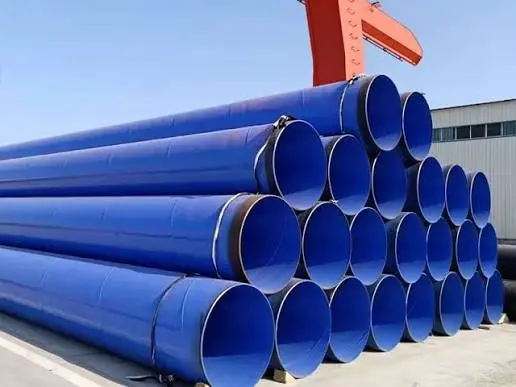
Understanding Corrosion and Its Impact on Pipelines
One of the most expensive problems in industrial infrastructure is pipeline corrosion. We have seen how environmental factors speed up the breakdown of materials, putting people's safety at risk and costing facility owners a lot of money.
Common Corrosion Mechanisms in Industrial Pipelines
When whole surfaces slowly break down due to electrochemical reactions with their surroundings, this is called uniform corrosion. Pitting corrosion creates deep, localized cavities that often remain undetected until catastrophic perforation occurs. Galvanic corrosion occurs when dissimilar metals come into electrical contact within an electrolyte, accelerating the degradation of the less noble metal. When tensile stress is combined with corrosive media, stress corrosion cracking can happen. This is especially dangerous in high-pressure systems. Each mechanism reacts differently to the properties of the material and the ways that it is protected.
Environmental Factors Accelerating Pipeline Degradation
When exposed to seawater, chloride ions break through protective oxide layers. This is especially dangerous for sites that are out at sea. Different types of soil have very different compositions. For example, acidic soils with low resistance speed up weathering more than alkaline, dry soils. Pipelines in processing plants are exposed to acids, alkalis, and organic solvents that break down certain materials. Changes in temperature put stress on protective coatings by making them expand and contract, which speeds up electrochemical reactions. Patterns of condensation are set by humidity levels. These patterns create wet-dry cycles that make corrosion worse in both underground and above-ground systems.
Consequences of Pipeline Corrosion for Industrial Operations
Loss of materials weakens structures and increases the chance of cracks that put people and towns nearby in danger. Leaks that pollute the environment lead to regulatory problems and cleanup costs that are in the millions of dollars. Unplanned downtime throws off production plans, which leads to losses of money all along the supply chain. As infrastructure gets older and needs more checks, fixes, and emergency services, maintenance costs go up. When accidents happen, insurance rates go up, and damage to the company's reputation hurts its value and the trust of its stakeholders.
Types of Corrosion-Resistant Materials for Pipelines
Choosing the right material means knowing both how it protects and what it can't be used for. We look at tried-and-true solutions that work in certain corrosive environments and meet performance and cost goals.
Stainless Steel Alloys for Pipeline Applications
Austenitic stainless steels, such as types 304 and 316, are very resistant to corrosion due to the formation of a self-healing, microscopic passive chromium oxide layer on their surface. The 316 version has molybdenum added to it to make it more resistant to chloride. This makes it good for use in chemical and saltwater settings. Duplex stainless steels have microstructures that are both austenitic and ferritic. This gives them higher strength and can improve their resistance to certain forms of stress corrosion cracking compared with some austenitic grades. These materials can be used across a wide temperature range, but their allowable operating temperature depends on the specific grade, service conditions, and applicable design code. Because they are more expensive, they are often selected for applications where their corrosion and mechanical performance justify the additional cost.
Advanced Corrosion-Resistant Alloys
Nickel-based alloys, such as Inconel 625 and Monel 400, are among the corrosion resistant materials for pipelines that work very well in places where sulfuric acid, hydrofluoric acid, and high chloride levels are present. These special materials can retain useful mechanical properties at elevated temperatures and offer good resistance to oxidation or carburization in selected service environments. Hastelloy grades are designed to protect against certain chemicals, making them suitable for use in the pharmaceutical, petrochemical, and specialty chemical industries. Even though they work very well, they are generally much more expensive to buy than carbon steel alternatives, with the price difference varying by alloy, size, market conditions, and project requirements. This means they are typically selected for demanding applications where other materials may not provide adequate corrosion resistance.
Carbon Steel with Protective Coating Systems
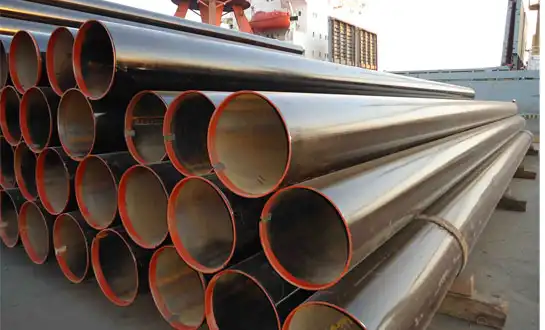
Thanks to new covering systems, corrosion-resistant steel pipe technology turns cheap carbon steel into long-lasting pipeline solutions. Three-layer polyethylene (3PE) coating systems comprise a fusion-bonded epoxy (FBE) primer, a grafted copolymer adhesive layer, and a high-density polyethylene outer jacket. The total coating thickness varies according to pipe diameter, service conditions, and the applicable coating specification. This layered method provides strong interfacial adhesion while maintaining the flexibility required during handling and installation. Fusion-bonded epoxy (FBE) coatings can provide chemical resistance and elevated-temperature performance, with the applicable service temperature depending on the specific coating formulation, thickness, and service conditions. These coating systems can significantly extend the service life of carbon steel when properly specified, applied, inspected, and maintained. Actual service life depends on the coating system, environment, installation quality, and operating conditions.
Polymer and Composite Pipeline Materials
High-density polyethylene (HDPE) lines are great for moving chemicals and water because they don't react with chemicals and don't suffer from electrochemical damage. Polyvinyl chloride (PVC) can be used in low-pressure applications and public water systems without spending a lot of money. Fiber-reinforced polymer materials are strong but not too heavy, and they don't rust. However, their mechanical strength limits their pressure values. Because they are lighter and can be joined in a variety of ways, these materials make installation easier. However, they are sensitive to UV light and temperature changes, so they need to be used with care.
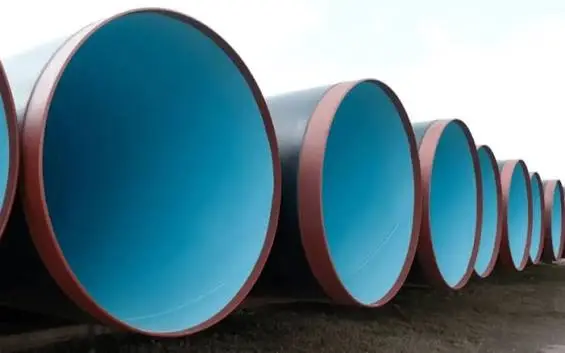
Comparing Corrosion-Resistant Pipeline Materials
When judging performance, you have to look at more than just corrosion resistance. This section examines how material properties affect practical pipeline performance.
Durability and Mechanical Performance Analysis
Stainless steel keeps its shape under high pressures and mechanical loads, and it provides good resistance to impact damage during installation or use. When properly designed for the same service conditions, carbon steel with protective coatings can provide suitable pressure performance at a lower material cost than many corrosion-resistant alloys. Impact resistance testing determines how long the coating will last mechanically. Properly designed corrosion-resistant steel pipe can withstand typical field handling conditions during trenching and backfilling. Although polymer materials offer excellent corrosion resistance, they generally have lower mechanical strength than steel. This means that pressure ratings need to be changed and extra support needs to be added for applications involving unsupported spans. Temperature cycling tests show that 3PE coatings stay stuck even after being frozen and thawed several times, while FBE systems can provide good resistance to elevated-temperature exposure, but the applicable continuous service temperature depends on the coating formulation and qualification requirements.
Cost-Benefit Analysis for Project Budgets
The initial cost of materials is only one part of the overall economics of the project. Carbon steel with a 3PE coating generally costs more initially than bare steel, but the coating can reduce corrosion-related maintenance and replacement costs over its service life. Stainless steel 316 generally costs more than coated carbon steel, although the price difference varies with pipe size, thickness, alloy prices, coating requirements, and market conditions. This is why corrosion resistant materials for pipelines can be particularly valuable in applications where smaller-diameter pipes are needed for space reasons or where the piping is difficult to access for maintenance. Nickel alloys are good for specific uses where the cost of losing the material is much higher than the cost of buying it. Selecting the right materials can reduce the total cost of ownership over the service life by reducing corrosion-related repairs, downtime, and premature replacement.
Performance in Aggressive Environments
Immersion testing in seawater shows that 3PE-coated steel can provide good cathodic disbondment resistance when the coating system is properly specified and qualified according to the applicable standard and test conditions. Osmotic blistering or related coating defects can be influenced by water absorption, coating formulation, adhesion, substrate preparation, and service conditions. Chemical processing settings need materials that are matched to the environment exactly. For example, sulfuric acid concentrations above 80% will damage stainless steel but not properly made epoxy linings. Low soil resistivity can indicate a potentially more aggressive corrosion environment for bare steel, but corrosion risk also depends on soil chemistry, moisture, oxygen availability, and other environmental factors. Properly coated pipelines with effective holiday detection are generally better protected against these risks. Extreme temperatures test the limits of materials. For example, coatings used for Arctic installations should be qualified for the expected low-temperature conditions and required flexibility, while high-temperature FBE formulas are needed for geothermal uses.
How to Choose the Best Corrosion-Resistant Material for Your Pipeline?
Smart choice of materials ensures that functional needs are met within the limits of the project. We describe decision frameworks that improve performance while staying within the budget.
Assessing Application-Specific Requirements
The purpose of the pipeline determines the materials that are most important. For example, non-toxic linings that meet NSF/ANSI 61 standards are most important for potable water systems, while chemical compatibility with certain goods is important for transporting hydrocarbons. The operating pressure and temperature set mechanical requirements that get rid of options that don't work. Flow speed affects erosion resistance. This is especially important when moving slurry because coating hardness and abrasion resistance can help reduce wear. As part of the external environment study, measures of soil resistivity, chemistry of groundwater, and stray current studies that figure out the risk of corrosion are performed. Material suitability is judged by the pH levels, contaminant amounts, and particle contents of the media itself.
Evaluating Supplier Quality and Certifications
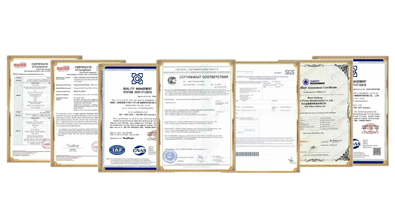
Quality assurance that can be checked is important for procurement security. The ISO 9001:2015 certification shows that the manufacturing process is controlled in a planned way, and the ISO 21809 standard sets standards for applying coatings to pipelines. Relevant AMPP/NACE certifications can demonstrate personnel competency in corrosion control, coating inspection, and related practices. Material test records that list the chemical make-up, mechanical qualities, and coating thickness of a material make project paperwork easier to find. Holiday detection testing uses electrical methods appropriate to the coating system to detect discontinuities before the coated pipe is installed. Reliable sources do a full check at voltages that are right for the thickness of the coating. Pull-off adhesion tests for epoxy coats and peel strength tests for 3PE systems both show that the interfacial bond is solid. Third-party inspection services, such as SGS, offer impartial confirmation, which is especially useful for buying things from other countries.
Balancing Performance and Lifecycle Economics
Lifecycle cost modeling takes into account buying materials, hiring people to install them, how often they need to be maintained, and when they need to be replaced. For most uses, coated carbon steel strikes the best balance. The smooth inside surface lowers the amount of energy needed for pumps by lowering the friction coefficient, which saves money over time. Coating systems designed and qualified for long-term service can reduce the need for premature replacement of bare steel, which saves money on excavation costs and production delays. Effective corrosion control can reduce corrosion-related maintenance requirements, but inspections and cathodic protection monitoring are still required as appropriate for the pipeline system. Risk assessment figures out how bad it would be if something went wrong too soon. High-consequence pipes that cross waterways or serve important buildings can afford to use better materials at first, even if they cost more. Through long-term partnerships, warranties, and support from suppliers after the sale protect project investments.
Conclusion
The best corrosion resistant materials for pipelines must be chosen by striking a balance between scientific performance, environmental factors, and financial constraints. Protective covering technologies like 3PE and FBE turn cheap carbon steel into long-lasting options that can compete with more expensive metals in some situations. Important choices have long-lasting effects on how reliably and safely something works and how much it costs to maintain. To be successful in procurement, you need to work with certified suppliers who have quality systems that have been tested thoroughly and offer quick expert help. Strategic selection of materials lowers project risk and keeps lifecycle costs low. This makes sure that investments in infrastructure deliver expected value over long service periods.
FAQ
1. What represents the most cost-effective corrosion protection for oil and gas pipelines?
For many buried oil and gas pipeline applications, carbon steel with a 3PE coating is a cost-effective option because it is resistant to corrosion and can handle pressure at a fair cost. The three-layer method protects against mechanical damage during installation and stays chemically resistant for decades of use. This option is generally less expensive than corrosion-resistant alloys, while proper specification and installation can provide a long service life.
2. How often do protective coatings require maintenance or inspection?
Quality steel pipe with properly applied 3PE or FBE coatings may require relatively little corrosion-related maintenance under normal conditions, but inspection and cathodic protection monitoring should still be performed as required. Once a year, cathodic protection surveys check how well the system is working, and where applicable, in-line inspection tools can be used to assess pipeline integrity, although not all tools directly assess coating condition. Above-ground installations may need to be inspected visually every three to five years, and any mechanical damage from outside impacts should be fixed on the spot.
3. Can polymer pipelines replace metal in highly corrosive environments?
HDPE and other polymer materials work well in applications involving corrosive or aggressive media, such as chemical transport and water distribution systems. Polymer pipeline pressure and temperature limits vary significantly by material, grade, pipe dimensions, design standards, and service conditions. Because polymers generally have lower stiffness and temperature resistance than steel, their use in high-pressure or high-temperature applications requires careful evaluation of the material grade, design conditions, and applicable standards. Hybrid solutions, such as polymer-lined steel pipe, combine the structural strength of steel with the exceptional chemical resistance of polymers.
Partner with RAYOUNG: Your Trusted Corrosion-Resistant Materials Supplier
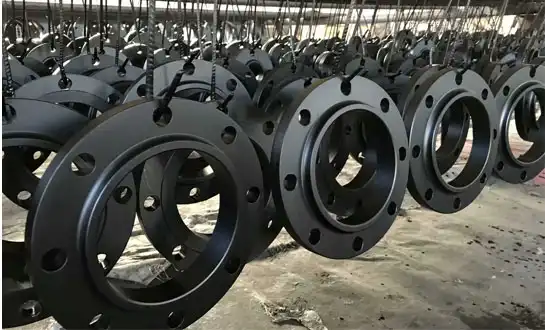
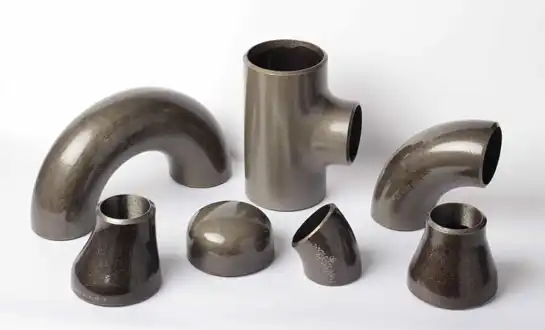
The success of a project depends on choosing the right anti-corrosion steel pipe supplier based on the quality of the materials, their technical knowledge, and how reliable their delivery service is. Our corrosion resistant materials for pipelines meet international standards because RAYOUNG keeps ISO 9001:2015 certification alongside GOST-R and SGS export compliance paperwork. RAYOUNG manufactures a complete range of butt weld fittings, flanges, and line pipe systems engineered with advanced 3PE and FBE anti-corrosion coatings. Technical support teams help you choose the right materials based on your budget, the conditions in which they will be used, and the pressure levels you need. We partner closely with EPC contractors, international distributors, and engineering firms serving the chemical processing, oil and gas, and municipal infrastructure sectors. For technical information, email our procurement experts at info@hb-steel.com to talk about your project needs and get full specifications and quotes.
References
1. American Petroleum Institute. "Specification for Line Pipe: API 5L." 46th Edition. Washington, DC: API Publishing Services, 2018.
2. NACE International. "Protective Coatings and Linings for Immersion Service." NACE Standard SP0169-2013. Houston, TX: NACE International, 2013.
3. Revie, R. Winston, and Herbert H. Uhlig. "Corrosion and Corrosion Control: An Introduction to Corrosion Science and Engineering." 4th Edition. Hoboken, NJ: John Wiley & Sons, 2008.
4. DIN Standards Committee. "Polyethylene Coatings for Steel Pipes: DIN 30670." Berlin: Deutsches Institut für Normung, 2012.
5. American Water Works Association. "Liquid-Epoxy Coating Systems for the Interior and Exterior of Steel Water Pipelines: AWWA C210. "Denver, CO: AWWA Publications, 2015.
6. Pourbaix, Marcel. "Atlas of Electrochemical Equilibria in Aqueous Solutions." 2nd Edition. Houston, TX: NACE International, 1974.

Need a quote? Want to see samples? Just say hello. We’re friendly. We’re fast. And we’re ready when you are.
Welcome to RAYOUNG – Strong Pipes, Stronger Promise