How to Choose Customized Pipe Fittings for Industrial Systems
Selecting customized pipe fittings for your industrial piping network involves understanding your system's unique pressure, temperature, and fluid transport demands. Unlike off-the-shelf alternatives, customized pipe fittings deliver precision-engineered dimensions, material compositions, and connection types that align perfectly with your operational parameters. This tailored approach minimizes installation errors, reduces long-term maintenance expenses, and enhances overall system safety. When procurement teams invest time in evaluating customization requirements—from wall thickness schedules to corrosion-resistant alloy grades—they secure fittings that integrate seamlessly, ensuring leak-proof performance and compliance with stringent industry standards across diverse applications.

Understanding Customized Pipe Fittings: Definition and Key Features
Customized pipe fittings are unique parts that are made to fit your particular needs and go beyond what's available in a standard list. When standard sizes or types of materials don't work for industrial fluid transport systems, these goods are made to solve the problems that come up.
What Makes a Pipe Fitting "Customized"?
Customization includes changing the sizes, wall thickness, material chemistry, and the shape of the connections. Manufacturers change these settings based on how your system is used, like in petroleum plants with high pressures or chemical processing plants with acidic media. Unlike standard fittings that are made for general use, customizable solutions take into account space limitations, non-standard pipe angles, and specific welding needs to ensure that the joints remain secure and don't leak even under tough service conditions.
Main Types and Their Functions
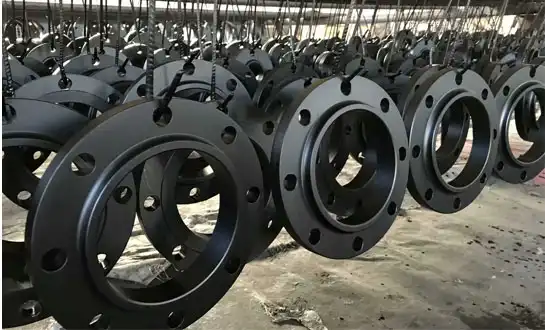
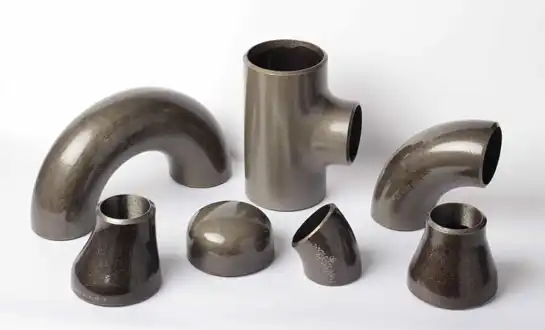
There are a few main types of fittings that are used in industrial piping. Butt-welded steel elbows change the direction of flow smoothly while keeping hydraulic efficiency. They come with radius options that range from short to long, depending on how much pressure drop you need to consider. Steel reducers smoothly change from one pipe diameter to another, which is very important for keeping the flow speed steady in systems with more than one stage. Precision bolt-hole patterns made to ASME B16.5 standards make flanges removable connection points that allow for repair access. Tees let parallel circuits branch off, and caps safely end pipes during testing or future phases of growth.
Material and Design Variations
The choice of material has a huge effect on how well and how long a fitting lasts. Carbon steel types like ASTM A234 WPB are good for general-purpose uses in mild temperature ranges because they are cost-effective and strong enough. Stainless steel types (ASTM A403 WP304/316) can handle the harsh conditions found in food processing plants and offshore platforms. Chrome-molybdenum alloys can handle creep at high temperatures in power plants. Forged vs. cast construction is one difference in design. Forged fittings have better grain structure and higher pressure ratings, while cast options work better for larger diameters where mechanical stresses are low.
Critical Factors to Consider When Choosing Customized Pipe Fittings
To choose the right fit, you need to carefully look at the working factors and compliance requirements.Overlooking even a single parameter can compromise system integrity and inflate lifecycle costs.
System Parameters and Operating Conditions
The pressure rating of your system determines how thick the walls need to be. For low-pressure water distribution, Schedule 40 fittings may be suitable depending on the material, size, temperature, and applicable design code. For high-pressure steam or gas service, thicker-wall schedules such as Schedule 160 or XXS may be required. Extreme temperatures determine how to heat-treat a material. Normalizing restores the grain structure after hot forming, mitigating the risk of brittle fracture.Fluid properties are equally critical. For instance, abrasive slurries accelerate erosion at directional changes, necessitating increased wall thickness or abrasion-resistant alloys. Because of space limitations, retrofits often need curves that aren't normal 45° or 90° bends.
Compliance Standards and Certifications
Industrial piping systems must adhere to stringent regulatory frameworks. ASME B16.9 sets the measurements for butt-weld fittings so they can be used by different makers. Specifications for ASTM materials (A234, A403, and A420) specify chemical composition limits and mechanical property requirements for customized pipe fittings. For safety-critical uses, pressure vessel rules like ASME Section VIII require certain building grades. EN 10253 norms are used in European markets. Always ask for EN 10204 3.1 Material Test Reports (MTRs) that show chemical analysis, heat numbers, and mechanical test results that can be tracked. This paperwork is very important for checks and figuring out who is responsible for what.
Material Choice and Durability
Corrosion resistance tells us if parts can last in harsh settings. When carbon steel is used outside in wet conditions, galvanized coatings protect it, but the zinc layer wears away over time. Stainless steel has passive oxide films that grow back when they are scratched, making it perfect for clean-in-place systems in the pharmaceutical industry. Nickel alloys can stand up to acidic environments in chemical reactions. Safety margins are affected by mechanical qualities such as tensile strength and impact toughness when there are pressure spikes or earthquake loads. Because the manufacturing process can produce a more refined and directional grain structure, forged parts can offer advantages in mechanical properties and pressure resistance compared with cast versions, depending on the material and design.
Design Precision and Measurement
Accurate measurement specs keep field changes from being too expensive. The thickness of the walls must match the schedules of the pipes next to them. If they don't, internal steps form that cause turbulent flow, which wears away metal through cavitation. Precision is needed for bevel angles. The standard 37.5° V-groove shape lets welders make full-penetration welds that fuse properly. To keep alignment stresses from happening, the center-to-face measurements on elbows and tees must match the isometric drawings of the pipes. Give makers full system plans, fluid data sheets, and any relevant codes to make sure that every fitting comes ready to be installed without any extra work having to be done.

Comparing Customized Pipe Fittings with Standard and Off-the-Shelf Alternatives
There is constant pressure on procurement teams to keep costs in check while keeping efficiency high. Figuring out when the extra cost of customization is worth it helps you achieve the best total cost of ownership.
Lifecycle Value Analysis
Standard parts may seem cheap at first, but they may need to be replaced often in demanding services, which adds up to costs for downtime and work. Customized fittings can handle certain operating stresses, which can extend service intervals in places where corrosion or high temperatures are common. Less upkeep means less downtime for output, which is very important when plant shutdowns cost thousands of dollars per hour. Figure out the total cost of ownership by adding up the purchase price, installation costs, estimated service life, maintenance expenses, and the expected number of replacements. Customized solutions are often more cost-effective over ten years, even if they cost more up front.
When Customization Becomes Essential?
For some apps, there is no good alternative to customizing them. Pipes that aren't standard sizes are common in older systems, so parts made to legacy dimensions that aren't available in current listings are needed. Custom bending is needed to keep interference from happening in congested equipment rooms and complicated shapes like multi-plane elbows. Extreme service conditions, such as temperatures over 1000°F or pressures over 2500 psi, may require special alloy compositions and heat treatments that aren't usually kept in stock. Traceability and testing protocols that can only be met through custom manufacturing are needed to meet regulatory requirements in the nuclear or aerospace industries.
Supplier Selection Criteria
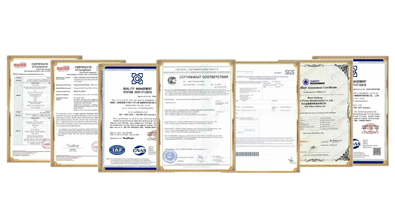
Working with reputable manufacturers will help keep your money safe. Check for quality management system certifications like ISO 9001:2015, which show that production rules are always the same. GOST-R conformity documentation and SGS inspection or testing reports can help demonstrate compliance with applicable market and project requirements. Read case studies and testimonials from customers that show projects that worked well in your industry. Tell the difference between trade middlemen who outsource production and original equipment makers (OEMs) who do their own metalworking. Direct manufacturers offer better technical support and shorter lead times. Before agreeing to large sales, ask for sample fittings to check the dimensions and, where required, perform appropriate mechanical or destructive tests.
The Manufacturing and Procurement Process for Customized Pipe Fittings
Knowing how production works helps procurement pros set reasonable deadlines and talk to providers in a clear way.
Design and Prototyping Stages
Collaboration between engineers is the first step in making something. Clients provide the operational parameters, including pressure limits, temperature ranges, fluid properties, and dimensional constraints.The manufacturer's engineering team evaluates the relevant codes and recommends material grades that satisfy performance standards.Computer-aided design (CAD) makes 3D models that can be approved and show any possible interference problems before they are made. Prototyping is best for large orders or new shapes. Sample fittings are tested for hydraulic pressure and material composition to make sure the design assumptions are correct. This investment up front keeps expensive fixes from having to be made after production starts.
Quality Control and Testing
Strict checking procedures make sure that every part meets the requirements. Using accurate micrometers and gauges, dimension checks make sure that the wall thickness, diameter limits, and bevel angles of customized pipe fittings are correct. Non-destructive testing (NDT) methods, such as ultrasonic testing, find problems inside things that can't be seen with the naked eye. Chemical research proves that the alloy's makeup fits the grades that were asked for. Samples are put through mechanical tests that check their tensile strength, hardness, and impact toughness. Hydrostatic testing, when required by the applicable product specification or purchase requirements, verifies pressure integrity and leak tightness. Fittings that pass all of the checks are the only ones that get MTR paperwork and batch traceability codes.
Lead Times and Project Planning
When compared to warehouse stock, customization makes the procurement process take longer. Standard wait times are between 6 and 12 weeks, but they can be longer or shorter based on production capacity and current workload. For complex alloys or large diameters, it could take 16 weeks. Expedited service costs more, but it cuts down on wait times by 30–40% when project plans need it. Plan your purchases around activities that are on the critical path. For example, to avoid missing construction milestones, order fittings as soon as the pipe plans are finalized. Keep safety stock of high-demand items on hand in case your business can't handle supply interruptions.
Procurement Strategies for Bulk Orders
Buying in bulk can save you money and keep your supplies safe. You can get savings of 10–25% on repeat orders by negotiating tiered pricing based on yearly usage forecasts. Set up blanket purchase deals with planned releases that match the stages of the project. This will make warehousing easier. MOQs, or minimum order quantities, start at 100 pieces for standard sizes and go up for rare alloys. Ask suppliers for manufacturing slots during their less busy times of the year, when they have more capacity and lead times are shorter. Access to technical support should be guaranteed by contract, providing engineering help throughout the lifespan of the product.
Case Studies and Practical Applications of Customized Pipe Fittings
Using customized fittings in the real world shows how they can solve practical problems and give measured returns.
Oil and Gas Industry Success
Catalytic cracker pipes at a big Gulf Coast plant that worked at 1050°F and 800 psi kept breaking down. Within 18 months, standard A234 WPB parts experienced premature deformation. After switching to customized chrome-moly fittings (A234 WP11) with improved heat treatment, the service life increased to seven years or more. The upgrade got rid of two unplanned shutdowns a year that were costing $2.3 million in lost work. Even though the cost of materials went up by 35%, the payback was seen in just nine months thanks to less downtime.
Chemical Processing Plant Optimization
A company that makes specialty chemicals needed fittings that could handle being exposed to hydrofluoric acid in polymer production lines. Off-the-shelf grades of stainless steel (304/316) started to pit and rust after only a few months. Custom nickel-alloy fittings (Alloy 400) significantly improved corrosion resistance, and improved flow geometries cut pressure drop by 12%, which made the pump use less energy. The system worked without any repairs for five years, which saved $180,000 a year on extra parts and improved the plant's operational safety.
Power Generation Scalability
For a combined-cycle power plant growth, the fittings had to work with the current steam headers while also being able to handle higher pressures to improve efficiency. Customized reducers and strengthened tees let new turbine circuits be added without having to replace old pipe infrastructure. Engineering analysis made sure that the distribution of stress stayed within the limits set by the code. The modular method saved $1.4 million compared to replacing the whole header, and it cut the time it took to build by eight weeks so that it could be finished on time for regulatory approval.
Conclusion
When picking customized pipe fittings, you have to balance technical accuracy with cost-effectiveness over the product's lifetime. To make a good purchase, you need to know your system's working envelope, which includes its pressure, temperature, and fluid properties, and then match these needs with the right material grades and shapes. Following industry norms protects legal and safety interests, and working with certified producers makes sure that quality is always the same. Customization costs more up front than normal options, but it saves money in the long run because it requires less upkeep, lasts longer, and doesn't require costly downtime. This is especially true for businesses that value reliability and efficiency.
FAQ
1. What is the difference between butt weld and socket weld fittings?
Butt weld fittings attach to pipes directly by welding their pointed ends on. They are commonly used for larger-diameter lines where strong welded joints are required. The method of welding makes full-penetration welds that match the strength of the base pipe. Socket weld fittings have a hole that the pipe slides into before fillet welding. They are commonly used for smaller-diameter lines where their compact design and installation characteristics are advantageous, and orientation is more important than joint strength.
2. Why does heat treatment matter for weldable fittings?
Metal grain structure can be changed by manufacturing methods like hot forming, which could make the metal less strong. As required by ASTM A234 standards, normalizing or quenching and tempering processes return the microstructure to its best state. This makes sure that the parts meet the required tensile strength, toughness, and flexibility. If you skip the heat treatment step, the product might break easily when put under stress or when the temperature changes.
3. Can I weld fittings of different wall thickness schedules?
When you join schedules that don't match, like a Schedule 40 fitting to Schedule 80 pipe, you get interior bore discontinuities that stop flow and cause turbulence and localized erosion. This goes against good engineering practice and might not pass code checks. For smooth hydraulic transfers, always match the fitting schedules to the pipe that is next to them.
4. How are bevels prepared on these fittings?
Standard 37.5° bevels are machined by manufacturers to make V-groove weld joints. This lets welders get full entry for the strongest joints. ASME B16.9 says that bevel angle errors should be no more than ±2.5°. The proper bevel geometry helps ensure adequate weld penetration and reduces the risk of defects that could lead to cracking under pressure or temperature fluctuations.
Partner with RAYOUNG for Precision-Engineered Customized Pipe Fittings
RAYOUNG makes engineered pipe fitting options that work properly with the needs of your industrial system. We offer a wide range of products, such as buttweld steel elbows, reducers, flanges, and other custom parts that are made to exact specs using ISO 9001:2015-approved methods. Our metallurgical knowledge helps you choose the best materials, whether you need NACE-compliant high-yield carbon steel parts for sour service or corrosion-resistant stainless metals for chemical handling. Get in touch with our expert team at info@hb-steel.com to talk about your customization needs, from the initial design advice to the validation of samples and the purchase of large quantities. With GOST-R and SGS certifications to back them up, RAYOUNG is a reliable company that can make customized pipe fittings for EPC contractors, distributors, and industrial end-users all over the world. They offer solutions that reduce project risk and improve operational reliability.
References
1. American Society of Mechanical Engineers. (2020). ASME B16.9: Factory-Made Wrought Buttwelding Fittings. ASME International, New York.
2. ASTM International. (2021). ASTM A234/A234M-21: Standard Specification for Piping Fittings of Wrought Carbon Steel and Alloy Steel for Moderate and High Temperature Service. West Conshohocken, PA.
3. European Committee for Standardization. (2019). EN 10253: Butt-welding Pipe Fittings — Part 2: Non-alloy and Ferritic Alloy Steels with Specific Inspection Requirements. Brussels, Belgium.
4. Harvey, J.F. (2019). Theory and Design of Pressure Vessels, 4th Edition. Springer Science+Business Media, New York.
5. Nayyar, M.L. (2018). Piping Handbook, 8th Edition. McGraw-Hill Education, New York.
6. Smith, P.R. & Zappe, R.W. (2017). Valve Selection Handbook: Engineering Fundamentals for Selecting the Right Valve Design for Every Industrial Flow Application, 6th Edition. Gulf Professional Publishing, Houston.

Need a quote? Want to see samples? Just say hello. We’re friendly. We’re fast. And we’re ready when you are.
Welcome to RAYOUNG – Strong Pipes, Stronger Promise