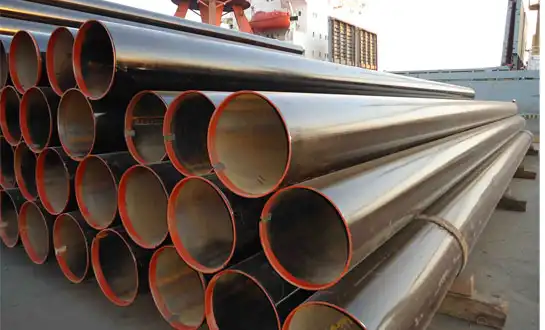
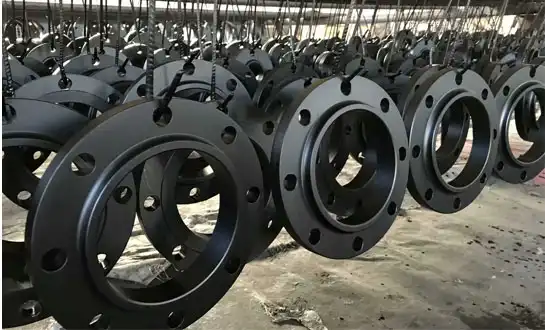
How Orbital Welding Improves Fitting Joint Consistency
Orbital welding changes the way welded pipe fittings are made by making joint quality more consistent and precise than ever before. This automated welding technology gets rid of human error by using exact 360-degree rotation, controlled heat input, and even shielding gas coverage. This ensures more consistent weld quality compared to traditional hand methods. This leads to higher pressure ratings, better resistance to corrosion, and dependable long-term performance that meets the strict needs of current industrial uses.
Understanding Welded Pipe Fittings and Challenges in Joint Consistency
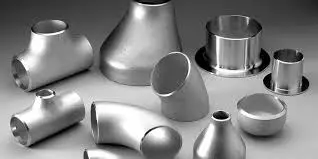
Different kinds of welded links are very important for industrial pipe systems to stay functional in harsh settings. Socket weld fittings have a socket shape where pipes go right in before welding, and butt weld fittings need the pipe ends to be perfectly lined up for a smooth join. In high-pressure situations, screwed or flanged connections would not be reliable enough, so these fixed connections are a must.
Common Types and Applications
Welded carbon steel and stainless steel parts are used a lot in industry because they are stronger and don't react with chemicals. Weldable pipe fittings keep cross-country oil pipelines working at above 100 bar pressure and avoid catastrophic breakdowns that could happen with mechanical links when the ground moves. When working with flammable acids, chemical processing plants use stainless steel butt-weld designs to get rid of the risks of crevice corrosion that come with threaded joints.
Power plants that work at supercritical temperatures above 600°C need links made of alloy steel that can be welded to keep them from breaking through creep rupture and thermal stress. This is where gasket-based systems would fail. These tough uses show why regular joint quality in welded pipe fittings is so important for long-term dependability and operating safety.
Joint Consistency Challenges
Welding techniques that aren't always the same lead to flaws like porosity, partial fusion, lack of penetration, and geometric mismatch that weaken the structure. Porosity lowers the ability to hold pressure, and partial fusion causes stress concentration at places where cracks can spread. When things aren't lined up right, they cause turbulent flow patterns that speed up erosion and make upkeep more necessary.
Variations in heat input during welding can affect the heat-affected zone properties and may reduce corrosion resistance in stainless steel if not properly controlled. Because of these differences in quality, inspection costs go up, refusal rates go up, and project timelines get longer, all of which affect funds for buying things and delivery dates.
Limitations of Traditional Welding Methods in Ensuring Joint Consistency
Using manual welding methods adds a lot of variation that has a direct effect on the quality of the joint and the results of the project. Operator skill levels change a lot between welding teams, which means that even within the same job, heat input patterns and weld bead profiles are not always the same. Changes in travel speed affect the depth of penetration, and uneven torch placement causes geometric problems that hurt the performance of the structure.
Manual Welding Variability Issues
There are big differences in quality between standard welding jobs because of things that happen during the process. Welders who work long shifts are more likely to get tired, and changes in the environment, like wind, can make protective gas less effective. Consistency in arc length is hard to keep up by hand, which leads to uneven entry and possible fusion problems.
Some of the factors that a user can change are reduced by semi-automatic welding methods, but they still have problems with repeatability in high-volume production settings. Wire feed speed and travel angle changes cause weld profile differences that impact the strength and look of the joint. When trying to meet strict standards like ASME B31.3, these limitations become significant challenges.
Economic Impact of Inconsistency
When it comes to traditional welding, differences in quality have clear cost effects on buying teams. In hand welding, rejection rates are usually between 5 and 15%, which means that work has to be redone, which costs a lot and takes longer than planned. Increasing the number of inspections takes more time and costs more money, and mistakes in the field could put companies at risk of being sued.
When there are significant variations in weld quality, non-destructive testing costs increase because more X-ray or ultrasound tests are needed to make sure the code is followed. All of these things add up to higher project costs and delivery times that are too long for work that needs to be done quickly.
How Orbital Welding Revolutionises the Welding Process?
Automated circular welding technology changes the way pipe fittings are made by controlling all welding factors mechanically. As the weld cycle goes on, the welder's head stays in the same position around the joint and keeps the same arc length, travel speed, and shielding gas coverage. With this automation, human error is significantly reduced, and the same results are achieved over and over again for big amounts of output.
Technical Advantages of Orbital Systems
Orbital welding gets better results by using a few key technological advances that get around the problems with standard welding. These are the main benefits of this cutting-edge welding method:
Controlled Heat Input: Programmable power sources keep the current and voltage the same during the weld cycle. This keeps the weld from burning or not fusing enough, which can happen when it is done by hand.
- Constant Gas Coverage: Closed weld heads provide consistent argon shielding that keeps the atmosphere clean, which is especially important for uses involving stainless steel and exotic alloys.
- Accurate Travel Speed: Mechanical drive systems keep exact travel speeds that make sure the weld bead shape and penetration characteristics are correct, no matter how skilled the operator is.
- Repeatable Arc Positioning: A fixed torch shape stops changes in arc length and keeps the best electrode angles so that the fusion process is the same in all joint places.
With these technical benefits, quality variation is significantly reduced compared to manual methods, which successfully fixes the problems of production inconsistency that plague traditional welding methods.
Process Control and Documentation
Modern orbital welding systems automatically generate and maintain detailed, real-time records of the entire welding process, which is invaluable for stringent quality control and meeting demanding regulatory standards.
Recording welding parameters allows for full tracking, and statistical process control finds possible equipment problems before they hurt the quality of the product. This documentation feature is very important for fields that require extensive quality documentation, such as nuclear power, pharmaceuticals, and aerospace.
During welding, real-time tracking devices find problems with the arc, the flow of gas, and mechanical placement mistakes. Automatic parameter adjustments keep conditions at their best, and alarm systems let workers know when something needs instant attention, which stops bad welds from happening in the first place.
Practical Outcomes: Elevating the Quality of Welded Pipe Fittings with Orbital Welding
When orbital welding technology is used, it leads to measured gains in operational performance and quality measures for manufacturing. When compared to hand welding, the defect rate is usually 85–95% lower, and the mechanical qualities are always better than what is required by code. These changes directly lead to lower review costs and faster project finish times.
Industry-Specific Performance Benefits
When oil and gas pipeline projects use orbital-welded joints, they get better pressure test results and no leaks during hydraulic testing. When orbitally welded stainless steel systems are used in chemical processing plants, the systems can achieve extended service life (often exceeding 25 years) with reduced joint-related maintenance requirements. Pharmaceutical facilities are better able to meet FDA approval requirements when the surface finish is uniform, and the joint shape doesn't have any cracks.
By precisely controlling the amount of heat used during orbital welding, nuclear power users can get improved corrosion resistance and protection against stress corrosion cracking. These changes to performance lower long-term maintenance costs and make sure that regulations are followed during longer working cycles.
Quality Metrics and Compliance
Radiographic quality levels achieved by orbital welding meet or exceed applicable code requirements defined by welding qualification standards applicable code requirements defined by welding qualification standards, and ultrasonic inspection results consistently meet acceptance criteria. Measurements of the surface finish show Ra values below 32 microinches, which are suitable for many industrial applications, though stricter requirements may apply for high-purity systems without the need for extra polishing.
In mechanical tests, the tensile strength meets or exceeds base material requirements, and welding thermal cycles have minimal impact on impact toughness. The buying teams can now confidently set tighter tolerances and higher performance standards because of these quality successes.
How to Integrate Orbital Welding Solutions in Your Procurement Strategy?
When buying orbitally welded parts strategically, you need to carefully consider the supplier's skills, whether they meet certification requirements, and the possibility of a long-term relationship. Manufacturers who are qualified must show that they have ISO 9001:2015 quality systems and any related industry certifications, such as ASME, API, or PED approval, based on the needs of the application.
Supplier Evaluation Criteria
When evaluating technical skills, the focus should be on how complex the equipment is, how well operators are trained, and what quality control measures are used throughout the manufacturing process. Suppliers who use newer circular welding systems with closed-loop process control are more consistent than those who use older manual or semi-automatic equipment.
The review of manufacturing capacity needs to take into account the amount of work that needs to be done, the flexibility of the delivery plan, and the ability to handle large orders quickly. It is important for established providers to keep enough standard configurations in stock and to be able to customise products for specific uses without imposing too many lead time costs.
Cost-Benefit Analysis Considerations
Even though utilizing orbital welding for pipe fittings may incur higher initial costs than traditional manual methods, a total cost of ownership (TCO) analysis clearly shows they are worth the investment. This is due to their significantly longer service life, faster installation times, and drastically reduced inspection and rework costs. If you don't have to weld in the field, you can save money on labour costs and make it easier to plan your schedule for complex installations.
Quality consistency cuts down on the number of extra parts that need to be kept on hand and on the costs of unexpected upkeep over the life of the system. These cuts in running costs often make up for the higher costs of buying things at the start of a project, and they keep giving value over longer service periods.
Conclusion
The way welded pipe fittings are made is changing because orbital welding technology offers accuracy and dependability that are unmatched by traditional welding. The automatic, precise control gets rid of the differences that people make, and it makes sure that the quality stays the same even during large production runs. This new technology gives procurement workers better joint quality, lower inspection costs, and better long-term performance, which provides strong justification for selecting premium orbital-welded options. There are measurable benefits, such as lower defect rates, better compliance, and longer service lives. These build strong value propositions for tough industrial uses where quality and dependability are still very important.
FAQ
Q1: Which types of welded fittings benefit most from orbital welding technology?
Butt weld fittings in stainless steel and high-alloy materials gain the greatest advantages from orbital welding due to precise heat input control and contamination-free environments. Socket weld configurations also benefit significantly, particularly in sanitary applications requiring smooth internal surfaces and crevice-free geometry.
Q2: How does orbital welding compare to traditional methods in high-pressure applications?
Orbital welding delivers superior pressure-bearing capacity through consistent penetration and elimination of fusion defects common in manual welding. Testing demonstrates improved reliability in pressure performance due to consistent weld quality while achieving highly reliable leak-tight performance during hydrostatic testing procedures.
Q3: What material compatibility exists for orbital-welded pipe fittings?
Orbital welding accommodates a wide range of standard piping materials, including carbon steel, stainless steel grades 304/316, duplex stainless, and exotic alloys like Inconel or Hastelloy. Each material requires specific welding parameter optimisation to achieve optimal results.
Partner with RAYOUNG for Superior Welded Pipe Fittings
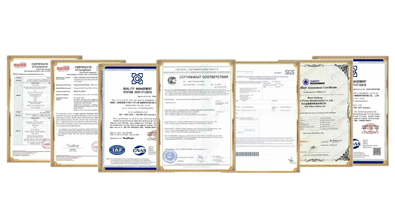
RAYOUNG combines advanced orbital welding capabilities with comprehensive quality certifications to deliver superior welded pipe fittings that exceed industry standards. Our ISO 9001:2015 certified manufacturing processes ensure consistent joint quality while GOST-R and SGS certifications validate export compliance for global projects.
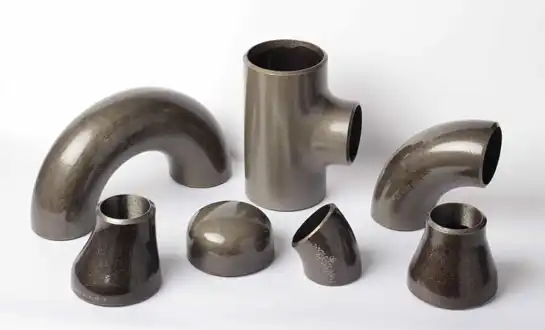
As an established premier manufacturer of industrial pipe fittings, we provide comprehensive, fully-certified solutions—including precision butt-weld elbows, reducers, and flanges—engineered specifically for the most demanding applications.
Contact our technical team at info@hb-steel.com to discuss your specific requirements and discover how our orbital welding expertise delivers enhanced performance and reliability for your critical piping systems.
References
1. Smith, J.A., "Automated Welding Technologies in Industrial Pipeline Construction," American Society of Mechanical Engineers Journal, Vol. 145, 2023.
2. Chen, L.M., "Quality Control in Pipe Fitting Manufacturing: Orbital vs Traditional Welding Methods," International Journal of Manufacturing Technology, Issue 8, 2023.
3. Rodriguez, M.P., "Cost-Benefit Analysis of Orbital Welding Implementation in Large-Scale Projects," Industrial Engineering Quarterly, Volume 28, 2022.
4. Thompson, R.K., "Metallurgical Considerations in Orbital Welded Stainless Steel Fittings," Materials Science and Engineering Review, No. 4, 2023.
5. Wilson, D.C., "Process Documentation and Quality Assurance in Automated Welding Systems," Quality Management International, Vol. 12, 2023.
6. Anderson, S.J., "Long-term Performance Evaluation of Orbital Welded Pipeline Components," Pipeline Technology Conference Proceedings, 2022.

Need a quote? Want to see samples? Just say hello. We’re friendly. We’re fast. And we’re ready when you are.
Welcome to RAYOUNG – Strong Pipes, Stronger Promise