Forged Tees vs. Welded Tees: Which Is Better for High Pressure?
When specifying piping components for high-pressure systems, forged tees can offer advantages over welded alternatives because they have no longitudinal weld seam and can provide favorable material continuity. The forging process subjects heated steel billets to intense compressive force, aligning the metal's grain flow with the contours of the tee, improving material continuity, and potentially enhancing fatigue resistance. Welded tees, while cost-effective for larger diameters, introduce potential failure points at the longitudinal weld seam—a critical concern in applications where cyclic loading, thermal expansion, or pressure spikes threaten system integrity. Throughout this analysis, we'll examine manufacturing differences, performance metrics, and procurement strategies to help you make informed decisions that minimize risk and extend asset life.

Understanding Forged Tees and Welded Tees
Manufacturing Process: Forging vs. Welding
Forged tees are made from solid steel billets that are heated to very high temperatures and then shaped with tools or hydraulic presses. This process can refine the grain structure and improve the material's microstructural uniformity, which can produce favorable grain flow patterns that support more uniform load distribution throughout the part. Since there are no joints, there are no weak spots, which can be particularly important in high-pressure service or applications involving significant temperature cycling. Materials commonly specified for wrought tees include carbon steel (ASTM A234 WPB), stainless steel (ASTM A403 WP316/316L), and alloy steel (ASTM A234 WP11, WP22), while forged carbon steel components may be specified to ASTM A105.
Arc welding is used to join steel plates or pipe pieces together to make welded tees. This method works for larger diameters (usually more than 24 inches), where smooth extrusion costs too much to be practical. Conversely, the longitudinal weld seam introduces a potential discontinuity within the pressure boundary.Even after a post-weld heat treatment, the Heat-Affected Zone (HAZ) next to the weld may have changed mechanical properties, such as changes in hardness and lingering stresses that make the product less reliable in the long run.
Material Composition and Standards
Both types of tees are made from similar materials, but the way they are made affects how well they work. Forged parts made from ASTM A105 carbon steel or applicable ASTM A182 stainless steel grades undergo controlled cooling processes that optimize both toughness and ductility. Following the requirements of ASME B16.9 helps ensure dimensional compliance, while NACE MR0175/ISO 15156 provides requirements for material suitability in sour service, including environments containing high concentrations of H₂S.
Welded tees may require different manufacturing controls and inspection requirements depending on the applicable product specification and service conditions. There are differences in the quality of the welds, the filler metals used, and the qualifications of the inspectors. These differences can show up years after the welds have been used when corrosion or fatigue causes cracking to initiate at the weld root.
Application Suitability Across Industries
In high-stakes fields like upstream oil and gas, petrochemical processing, power generation, and nuclear sites, forged buttweld tees are the norm. Their smooth construction and pressure-resistant design meet strict safety standards where failure could cause damage to the environment or harm to people. When working with steam, hydrogen, or corrosive acids, the manufacturing method must be selected based on the applicable material, design, welding, and inspection requirements.
Welded tees are useful in places where saving money is more important than slightly better reliability, like in low-pressure HVAC systems, public water distribution, and structural uses. When procurement professionals understand this distinction, they can specify the optimal component for each application requirement.
Performance Comparison Under High-Pressure Conditions
Strength and Pressure Rating Analysis
According to ASME B16.9, tees are made not to break and have reinforced crotch areas that can handle the same amount of pressure inside as a straight pipe of the same material and schedule. Forged tees are able to do this because they have a constant grain structure that keeps cracks from starting. Pressure testing and design requirements must be evaluated according to the applicable material specification and piping design code rather than assuming a universal burst-pressure multiplier, which gives a lot of room for error.
The safety factors for forged tees are higher. When there is cyclic loading, like in pumping systems or batch processes, the weld seam in welded alternatives works as a stress concentrator. Welded joints can act as stress concentrators in cyclic service, particularly when weld defects, residual stresses, or unfavorable geometries are present.
Fatigue Resistance and Lifecycle Performance
High-cycle fatigue occurs when a material undergoes failure after repeated cyclic loading, being stressed over and over again. It is a big problem in systems that are vibrating or experiencing pressure changes. Because their microstructure is more uniform, forged tees have a longer fatigue life. The lack of joint discontinuities stops the formation of micro-cracks that cause bonded parts to fail. From providing forged fittings to chemical processing plants, we know that they can provide long-term service when properly designed, manufactured, installed, and maintained.
When inspecting welded tees, appropriate inspection requirements need to be followed. Before installation, ultrasonic testing (UT) and radiographic examination (RT) must be done to make sure the weld has adequate penetration and to find problems below the surface. Welded components may still present fatigue- or defect-related risks even after appropriate inspection, particularly in demanding cyclic or corrosive service.
Real-World Case Study: Refinery Steam Header Replacement
A big plant on the Gulf Coast had problems with its 900 PSI steam transfer system over and over again. The original plans called for Schedule 80 welded tees to be made from A234 WPB material. After three failures in 18 months, all of which were caused by cracks in the weld seam, the engineering team changed the specs to use forged seamless tees instead. After the upgrade, the system has worked perfectly for eight years, keeping output going without stopping, which used to cost $180,000 per day. This case illustrates how forged components can provide a lower total cost of ownership despite their higher initial purchase price.
Procurement Considerations for B2B Buyers
Cost Analysis: Initial Investment vs. Total Cost of Ownership
For tees of the same size and schedule, forged ones usually cost 30 to 50 percent more than welded ones. End users need to learn about lifecycle economics from distributors and stockists who are trying to balance customer satisfaction with profit margins. A welded 6-inch Schedule 160 tee costs $195, while a forged 6-inch Schedule 160 tee costs $285. This is a starting difference of $90. However, the forged option may provide a better return on investment in critical applications because it can offer a longer service life and may reduce maintenance-related downtime.
Small engineering companies and local installers who are in charge of project costs can get the best specs by saving forged parts for high-stress areas like headers, manifolds near pumps, or high-vibration areas and using welded tees for lower-stress areas. This mixed method strikes a good balance between safety and cost-effectiveness.
Supplier Evaluation Criteria
When looking for trusted providers, you need to look at more than just price. To reduce risk, EPC contractors and project developers should check the following:
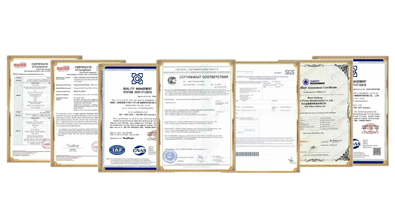
- Certification Compliance: Full material test reports (MTRs) documenting heat numbers, chemical composition, and mechanical properties per ASTM standards. RAYOUNG maintains ISO 9001:2015 certification with GOST-R and SGS export compliance validation, ensuring traceable documentation for every shipment.
- Heat Treatment Documentation: Forged tees may require normalizing, annealing, tempering, or other specified heat treatment depending on the material grade and applicable specification. Stainless variants need solution annealing to maximize corrosion resistance. Suppliers must provide heat treatment charts confirming time-at-temperature profiles.
- Dimensional Inspection: Coordinate measurement reports validating concentricity, wall thickness uniformity, and bevel geometry per ASME B16.9 tolerances prevent field fit-up issues that delay project completion.
Logistics and Lead Time Management
When you buy from other countries, the lead time changes. Standard forged tees (sizes NPS 1/2" to 24" and Schedules 40/80/160) usually arrive in 4 to 6 weeks. Depending on the mill's capacity, it could take 10 to 12 weeks for custom alloy grades or sizes that aren't standard. Distributors who keep a strategic stockpile of common sizes can meet pressing needs, but when buying overseas, project planners should allow extra time for quality assurance testing and customs clearance.
Customization options for OEMs include custom flange drilling patterns, wall thicknesses, or certification to two or more international standards (ASME, DIN, or JIS). Clear technical requirements and early involvement with the provider prevent costly design modifications during fabrication.

How to Choose the Right Tee for High-Pressure Applications?
Critical Selection Parameters
When engineering teams look at tees for high-pressure use, they have to look at a number of factors that affect each other:
- Pressure and Temperature Ratings: Check the service conditions against the allowed stress figures in ASME B31.3 Process Piping. For A234 WPB, allowable temperature and stress limits should be determined from the applicable material data and piping design code. Above this point, alloy steels (WP11, WP22) or austenitic stainless steel (WP316L) are needed. In cyclic service, welded alternatives may need to have their pressure ratings lowered.
- Corrosion Environment: To stop SSC, sour gas service requires materials that comply with the applicable NACE MR0175/ISO 15156 requirements, including the applicable hardness limits for the selected material. Streams that contain chlorine need duplex or super-duplex types to protect austenitic stainless steel. The corrosion performance of forged and welded parts depends primarily on material grade, heat treatment, fabrication procedures, and service conditions.
Installation Restrictions: To avoid HAZ embrittlement, forged tees must be welded by skilled professionals who know how to properly prepare and control the temperature between passes. Threaded forged tees can eliminate the need for field welding in applications where hot work is restricted, subject to the applicable pressure, temperature, and code requirements.
Decision Matrix for Procurement Managers
This screening framework can be used by industrial end-users and government infrastructure projects:
- Choose Forged Tees When: Pressure exceeds 1000 PSI; fluid contains H₂S, CO₂, or chlorides; system experiences thermal cycling; failure consequences include safety incidents or environmental release; compliance with API, ASME, or nuclear standards is mandatory.
- Consider Welded Tees when the diameter exceeds 24 inches, pressure remains below 600 PSI, the application involves non-corrosive fluids at ambient temperature, budget constraints are paramount, and adequate inspection protocols can verify weld integrity.
This smart method matches the choice of parts to the real-life operating conditions instead of automatically choosing the cheapest options, which raises the cost of maintenance over time.
Compliance and Risk Mitigation Strategies
Full tracking and third-party inspection should be required in the tender documents for government projects. Requiring PMI (Positive Material Identification) testing ensures that the chemistry of the alloy matches the certified documentation. This stops the installation of inferior materials by accident. Before commissioning, hydrostatic testing should be performed at the pressure required by the applicable piping code, product specification, and project requirements to find any problems with the way it was made before it is put to use.
Conclusion
For high-pressure service, choosing between cast and welded tees requires a thorough analysis of the working conditions, the effects of failure, and the cost over the whole lifecycle. Forged tees can offer advantages in critical applications because they are available without longitudinal weld seams and can provide favorable material continuity. These benefits make the higher price worth it in critical situations where safety and uptime are essential. Welded options are good for projects that need to stay within a certain budget and don't need a lot of pressure, as long as strict quality control checks the stability of the weld. Using these choice models, procurement professionals can choose parts that reduce project risk, make sure they follow the rules, and provide the best total cost of ownership. Part selection goes from being a buying task to a strategic risk management task when you work with certified suppliers who offer full documentation and technical support.
FAQ
1. What defines a seamless forged tee versus a welded tee?
Formed from a single billet or pipe piece and formed by extrusion or hot forging, seamless forged tees don't have any lengthwise seams. This manufacturing method ensures superior pressure ratings and eliminates failure modes associated with longitudinal welding. Welded tees are made from a formed steel plate that has a longitudinal weld seam. They are usually ordered for diameters bigger than 24 inches, since making them without the seam would be too expensive. The welding construction adds possible weak spots at the HAZ, which calls for stricter inspection rules.
2. Do forged tees require post-manufacturing heat treatment?
Yes, heat treatment is necessary to get the best mechanical properties. Normalizing or stress-relieving is done to carbon steel forged tees that have been hot-worked or cold-formed to restore ductility and relieve work-hardening stresses that come from the forming process. Solution annealing, which involves quickly heating to 1900–2050°F and then cooling in water, is needed to break down chromium carbides and make stainless steel tees more resistant to rust. Every package should come with the right heat treatment paperwork that proves it meets ASTM standards.
3. How do pressure ratings compare between equivalent forged and welded tees?
If both types meet the same applicable dimensional and material requirements, their allowable pressure must still be established using the applicable piping design code, material properties, wall thickness, and service conditions. But because their microstructure is more uniform, forged tees can demonstrate favorable burst and fatigue performance when their material, geometry, and manufacturing quality are properly controlled. The longitudinal seam of the welded tee is a weak spot, especially when the material is loaded and unloaded many times or is in an environment that is corrosive. When welded components are used in critical service, conservative engineering practice may require additional design evaluation or more stringent inspection.
Partner with RAYOUNG for Reliable Forged Tee Supply.
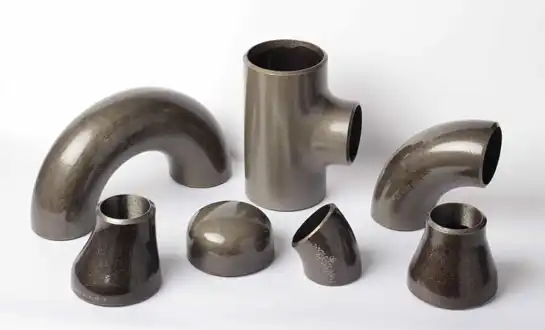
As a reliable manufacturer of forged tees, RAYOUNG provides certified pipe parts that meet the strict needs of high-pressure industrial applications. Buttweld steel tees, elbows, reducers, and flanges made from carbon steel, stainless steel, and alloy steel are all in our large collection. They are all in line with ASME B16.9, applicable ASTM specifications, and other international standards. We offer full material traceability and paperwork for every part with ISO 9001:2015 approval, GOST-R validation, and SGS export compliance. Our technical team can help you find the best solution whether you're an EPC contractor in charge of complicated projects, a distributor keeping track of strategic inventory, or an industrial end-user trying to get rid of the risk of downtime. Email our technical support staff at info@hb-steel.com to talk about your project needs and get specific quotes based on decades of manufacturing experience.
References
1. American Society of Mechanical Engineers (ASME). ASME B16.9: Factory-Made Wrought Butt-Welding Fittings. New York: ASME Press, 2018.
2. American Petroleum Institute (API). API 570: Piping Inspection Code - In-Service Inspection, Rating, Repair, and Alteration of Piping Systems. Washington, DC: API Publishing, 2016.
3. Boyer, Howard E. Atlas of Stress-Strain Curves, 2nd Edition. Materials Park, OH: ASM International, 2002.
4. Pressure Vessel Research Council. Technical Committee on Piping Systems: Fatigue Strength of Welded Pipe Connections. New York: Welding Research Council, 2014.
5. Davis, Joseph R. Alloying: Understanding the Basics. Materials Park, OH: ASM International, 2001.
6. National Association of Corrosion Engineers (NACE). NACE MR0175/ISO 15156: Petroleum and Natural Gas Industries—Materials for Use in H₂S-Containing Environments in Oil and Gas Production. Houston: NACE International, 2015.

Need a quote? Want to see samples? Just say hello. We’re friendly. We’re fast. And we’re ready when you are.
Welcome to RAYOUNG – Strong Pipes, Stronger Promise