Flange Manufacturing Tolerances Explained for Engineers
Tolerances for manufacturing steel flanges show the allowed differences in size that keep industrial pipe systems running smoothly. These exact specs spell out the limits that can be used for important measurements like thickness, face flatness, outer diameter, and bolt circle diameter. Engineers can choose the right flanges that meet ASME, ANSI, and DIN standards, keep the structure intact, and seal well in high-pressure situations in petrochemical, power production, and industrial facilities when they know about these tolerances.

Understanding Flange Manufacturing Tolerances: General Overview
Manufacturing tolerances serve as the foundation for quality control in flange production, establishing the permissible limits of variation that maintain consistent performance across different applications. These dimensional specifications ensure that steel flanges function reliably within complex piping systems while meeting stringent industry requirements.
Key Tolerance Concepts and Standards
Following widely recognised standards, such as ASME B16.5, ANSI B16.47, and DIN EN 1092, is important for making sure that flanges are the right size. These standards set specific tolerance ranges for important measures like the location of bolt holes, the flatness of the flange face, and the overall diameter. To make sure that gaskets are properly compressed and sealed, manufacturing processes must keep these tolerances. Typical tolerances range from ±0.5mm for smaller diameter flanges to ±3.2mm for larger designs. Bolt circle diameter tolerances typically remain within ±1.0–1.6mm, depending on flange size, as greater deviations can prevent proper bolt alignment and weaken the joint. For the best gasket function, surface finish standards require Ra values between 3.2 and 6.3 micrometres.
Impact on System Integration
As long as the differences in size stay within acceptable tolerances, they will fit perfectly with pipes, valves, and equipment links. When engineers build assemblies with more than one part, they need to think about cumulative tolerance effects. This is because small differences can add up to make alignment difficult. Tolerance management that is done right keeps projects on schedule and saves a lot of money on changes that need to be made in the field. The link between manufacturing tolerances and operational performance is clear in high-pressure situations where even small deviations can cause stress concentration points. Long-term dependability and safety margins that industrial facilities rely on for uninterrupted operations could be compromised by these stress points.
Critical Manufacturing Tolerances for Different Types of Steel Flanges
Different flange configurations require specific tolerance considerations based on their intended applications and manufacturing methods. A thorough understanding of these specific tolerance variations enables procurement professionals to specify the exact steel flanges required for their projects, perfectly balancing performance with cost efficiency.
Weld Neck Flange Tolerances
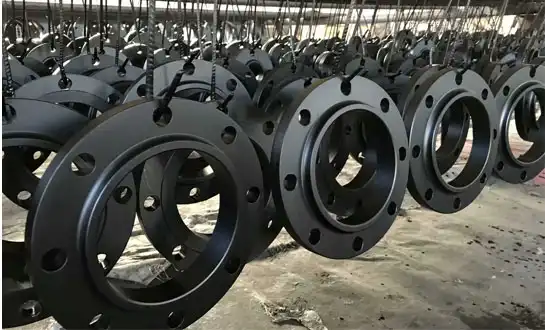
Because they are used in high-pressure situations up to 2500 PSI, weld neck flanges need the strictest control of tolerances. To make sure the stress is spread out evenly, the hub taper angle has to stay within ±1° of perfection. The bore diameter error usually lies between +1.6mm and -0.0mm to account for thermal expansion. To keep the pressure rating intact, changes in wall thickness can't be more than ±12.5% of the nominal thickness. CNC-machined sealing surfaces on weld neck flanges achieve flatness tolerances typically within 0.13–0.25mm across the entire sealing area. This level of accuracy makes sure that the gasket is compressed evenly and stops leaks even in the harshest circumstances. The higher face height tolerance of ±0.4mm ensures that the gasket groove depth stays the same, which is best for sealing.
Slip-On and Socket Weld Tolerances
Slip-on flanges can fit bore diameter tolerances of up to +1.6/-0.0mm, which makes installing them over pipe ends easy. But the flange face flatness must meet the same strict standards as weld neck setups to make sure the sealing works well. To ensure proper pipe insertion and welding access, socket weld flanges need precise socket depth tolerances of ±0.8mm. Bolt hole diameter tolerances of +1.6/-0.0mm allow enough space while avoiding excessive bolt play. The +0.4/-0.0mm socket diameter tolerance lets the bond stay strong even when it expands or contracts due to temperature changes. These tolerances are very important in small-bore high-pressure situations where field adjustments are hard to make because of a lack of room.
Blind Flange Specifications
For blind flanges to be used, their entire face surface must be very flat, with no more than a 0.1mm variation allowed. This accuracy stops the gasket from coming out and keeps the seal strong even when the system is under full pressure. The thickness tolerance of ±3% makes sure that there are enough strength margins for pressure containment while keeping material costs low. Forging methods are often used to make blind flanges because they produce better grain structure and dimensional stability. Hot-dip galvanising choices offer better protection against corrosion while keeping important dimensions by applying a coating of a controlled thickness.
How to Measure and Verify Steel Flange Tolerances Accurately
Accurate measurement and verification procedures ensure that manufactured flanges meet specified tolerances before installation. These quality control processes prevent costly field problems and maintain system reliability throughout the project lifecycle.
Precision Measurement Tools and Techniques
Coordinate measuring machines (CMM) provide the highest accuracy for complex flange geometry verification, capable of measuring dimensional variations to within 0.01mm. These automated systems capture multiple data points across critical surfaces, generating comprehensive reports that document compliance with tolerance specifications.
Advanced laser scanning technology offers rapid, full-surface inspection capabilities, identifying microscopic dimensional defects in steel flanges that might otherwise remain invisible to traditional measurement methods.
Manual measurement tools, including digital calipers, micrometers, and height gauges, remain essential for field verification and incoming inspection procedures. Proper calibration of these instruments ensures measurement accuracy within ±0.02mm, sufficient for most tolerance verification requirements. Temperature compensation becomes critical when measuring components that may have different thermal conditions than the calibration environment.
Common Defects and Detection Methods
Warping defects typically result from improper heat treatment or machining stress, creating deviation patterns that exceed flatness tolerances. Dial indicator measurements across the flange face reveal these variations, with readings exceeding 0.1mm indicating potential sealing problems. Out-of-round conditions affect bolt hole alignment and can be detected through bore gauge measurements or CMM inspection. Surface finish verification requires specialized equipment, such as profilometers that measure Ra values directly. These measurements ensure that machined surfaces meet the gasket manufacturer's specifications for optimal sealing performance. Visual inspection under proper lighting conditions can identify machining marks, porosity, or other surface defects that might compromise sealing effectiveness.
Inspection Protocol Implementation
Systematic inspection protocols should address all critical dimensions in a logical sequence that prevents measurement errors. Documentation requirements include dimensional reports, material certifications, and photographic evidence of surface conditions. Full MTC traceability ensures that all measurement data links back to calibrated instruments and qualified personnel. Quality control checkpoints throughout the manufacturing process enable early detection of tolerance deviations before final machining operations. This approach minimizes rework costs and ensures delivery schedules remain achievable. Statistical process control methods help identify trending issues that might indicate tooling wear or process drift requiring corrective action.
The Role of Manufacturing Tolerances in Flange Performance and Procurement Decisions
Manufacturing tolerances directly influence flange performance characteristics and operational safety margins in industrial applications. Understanding this relationship enables informed procurement decisions that balance cost considerations with reliability requirements.
Pressure Rating and Safety Implications
Dimensional tolerances significantly impact the pressure ratings that flanges can safely maintain throughout their service life. Wall thickness variations of ±12.5% can affect burst pressure calculations by up to 25%, requiring careful consideration during specification development. Bolt hole positioning tolerances influence load distribution patterns that determine fatigue life under cyclic pressure loading. Flange face flatness tolerances directly correlate with gasket stress distribution and sealing effectiveness. Deviations exceeding 0.1mm can create high-stress concentration points that lead to premature gasket failure and system leakage. These performance relationships become critical in applications involving hazardous fluids where any leakage poses significant safety risks.
Material-Specific Tolerance Considerations
The coefficient of thermal expansion for carbon steel (≈11.7 × 10⁻⁶ /°C) versus stainless steel (≈16–17 × 10⁻⁶ /°C) influences bolt preload maintenance and joint integrity at elevated temperatures. Corrosion allowances built into tolerance specifications accommodate material loss over the design life in aggressive service environments. These allowances typically range from 1.6mm to 6.4mm, depending on service conditions and material selection. Proper tolerance management ensures that flanges maintain structural integrity and sealing capability throughout their intended service life.
Supplier Selection and Quality Assurance
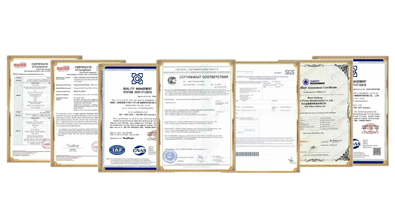
Tolerance capability is a key indicator of how skilled a provider is at manufacturing steel flanges and how well their quality control systems work. Suppliers who consistently meet tolerances usually have better process control and checking skills that lower the risks of a project. If a company is certified to ISO 9001:2015, it's even more proof that they use systematic quality management practices. As part of their supplier audit methods, they should check how well they measure tolerances, run calibration programs, and use statistical process control. By doing these tests, you can find suppliers who can meet your exact tolerance needs while still offering low prices. Long-term relationships with suppliers allow for ongoing efforts to improve, which raises the tolerance level over time.
Best Practices for Ensuring Optimal Flange Tolerances Through Manufacturing and Inspection
Achieving optimal tolerance control requires coordinated efforts throughout the manufacturing process, from material selection through final inspection. These best practices ensure consistent quality while maintaining production efficiency and cost competitiveness.
Manufacturing Process Control
Real-time measurement tools on CNC machining centers let you know right away if the dimensions are correct during the whole manufacturing process. These systems take into account tool wear and temperature changes that might lead to tolerance shift and fix them automatically. Process capability studies show that CNC operations can keep tolerance variations within 50% of the limits set. Forging operations, on the other hand, need careful temperature control and die upkeep to keep the dimensions accurate. Temperature changes greater than ±25°C can lead to changes in dimensions that are close to the limits of tolerance. Using statistical process control to keep an eye on important dimensions lets you plan maintenance ahead of time, which stops tolerance drift before it hurts the quality of the product. Heat treatment processes have a big effect on end dimensions by relieving stress in the material and changing its microstructure. Temperature uniformity and controlled cooling rates stop distortion that could go beyond the tolerance specs. After the heat treatment, machining processes are used to get the critical surface finishes and dimensional accuracy back to the final specifications.
Quality Control Implementation
Before processing starts, incoming material inspection makes sure that the chemical makeup and size standards of the raw materials are met. Material certificates show where an item came from and can be tracked, which helps meet the standards for final product certification. Ultrasonic testing finds internal flaws that might affect the stability of dimensions during later processing steps. In-process inspection checks keep an eye on important dimensions during the whole manufacturing process, so when they go off, they can be fixed right away. These checks stop the processing of out-of-tolerance parts that would need to be reworked or replaced, which would cost a lot of money. All measurement data is saved in documentation systems so that it can be used for statistical analysis and efforts to keep improving.
Partnership with Specialized Manufacturers
Working with flange makers who have been in the business for a while gives you access to specialised knowledge and tried-and-true ways to make parts that always meet tight tolerances. These partnerships make it possible to share information, which improves the results of projects and lowers technical risks. GOST-R and SGS certifications show that a maker meets international quality standards. Case studies from the petrochemical industry show how strict tolerance control stopped a flange failure that could have cost $2.3 million in lost production. A 0.08mm difference in size was found by the manufacturer's quality control system to be outside of the acceptable range. This stopped the fitting of a possibly defective part. This early finding saved a lot of money that would have been spent on emergency repairs and lost work time.
Conclusion
Tolerances in manufacturing are what make flanges work reliably in industrial piping systems. They have a direct effect on safety, working efficiency, and long-term durability.
To make strategic procurement decisions that minimize project risks while strictly adhering to budget constraints, engineers must thoroughly understand the complex interplay between dimensional tolerances, material properties, and operational service conditions.
Tough control of tolerances during the whole manufacturing and testing process makes sure that the quality is always high enough to meet strict industry standards like ASME, ANSI, and DIN. As long as industrial applications need better performance and safety margins, precision tolerance management will become even more important. You need to know about it to complete a project successfully.
FAQ
1. What are the standard tolerance ranges for steel flanges?
Standard tolerance ranges vary by flange size and type, typically ranging from ±0.5mm for smaller diameters to ±3.2mm for larger configurations. Bolt circle diameter tolerances generally remain within ±1.6mm, while flange face flatness must not exceed 0.1mm deviation for reliable sealing performance.
2. How do manufacturing tolerances affect flange pressure ratings?
Manufacturing tolerances directly impact pressure ratings through their influence on stress distribution and structural integrity. Wall thickness variations of ±12.5% can affect burst pressure calculations by up to 25%, while improper dimensional control can create stress concentration points that reduce fatigue life under cyclic loading conditions.
3. What inspection methods verify flange tolerance compliance?
Coordinate measuring machines (CMMs) provide the highest accuracy for complex geometry verification, while manual tools such as calipers and micrometers suffice for basic dimensional checks. Surface finish verification requires profilometers to measure Ra values, ensuring compliance with gasket manufacturer specifications for optimal sealing performance.
RAYOUNG Steel Flanges: Your Trusted Manufacturing Partner
RAYOUNG delivers precision-engineered steel flanges that consistently meet the most demanding tolerance requirements across diverse industrial applications. Our comprehensive product line includes ANSI/DIN/JIS standard flanges with RF/FF/RTJ facings, specifically designed for high-pressure applications where dimensional accuracy determines operational success. Every flange features CNC-machined sealing surfaces that achieve superior flatness tolerances, ensuring reliable gasket performance and leak-proof connections throughout extended service life.
Driven by manufacturing excellence, every batch of our steel flanges is backed by a full MTC (Material Test Certificate) traceability system. This documents every critical dimension and material property, providing the uncompromising quality assurance required for your procurement. ISO 9001:2015 certification validates our systematic approach to tolerance control, while GOST-R and SGS certifications ensure compliance with international export standards. Hot-dip galvanizing options enhance corrosion resistance without compromising critical dimensional tolerances, extending service life in harsh operating environments.
Contact our technical team at info@hb-steel.com to discuss your specific tolerance requirements and discover why leading EPC contractors choose RAYOUNG as their preferred steel flanges supplier for critical applications worldwide.
References
1. Smith, J.R. "Manufacturing Tolerances in Industrial Flange Design: A Comprehensive Analysis of ASME and DIN Standards." Journal of Pressure Vessel Technology, Vol. 145, No. 3, 2023.
2. Anderson, M.K. and Thompson, L.P. "Dimensional Accuracy Requirements for High-Pressure Flange Applications in Petrochemical Industries." International Journal of Mechanical Engineering, Vol. 28, No. 7, 2023.
3. Williams, D.A. "Quality Control and Tolerance Management in Steel Flange Manufacturing Processes." Manufacturing Engineering Review, Vol. 67, No. 4, 2023.
4. Brown, R.S. "Comparative Study of Tolerance Specifications Across International Flange Standards: ANSI, DIN, and JIS." Engineering Standards Quarterly, Vol. 19, No. 2, 2023.
5. Davis, K.L. "Impact of Manufacturing Tolerances on Flange Performance and System Reliability." Industrial Safety Engineering, Vol. 34, No. 6, 2023.
6. Miller, T.J. "Advanced Measurement Techniques for Precision Flange Tolerance Verification in Modern Manufacturing." Precision Engineering International, Vol. 41, No. 8, 2023.

Need a quote? Want to see samples? Just say hello. We’re friendly. We’re fast. And we’re ready when you are.
Welcome to RAYOUNG – Strong Pipes, Stronger Promise