ERW Pipe Quality Checklist for South African Buyers
This is what a business in South Africa needs to make sure they get the best results and follow all the rules when they buy electric resistance welding steel tubes. People who want to buy ERW pipes can use this full-quality guide to find the best ones. It looks at things like the type of material used, how accurate the measurements are, how well the welds are sealed, and how resistant the pipe is to rust. Because of this, they are more likely to buy things that lower project risks, raise long-term value, and make processes more stable.
Introduction
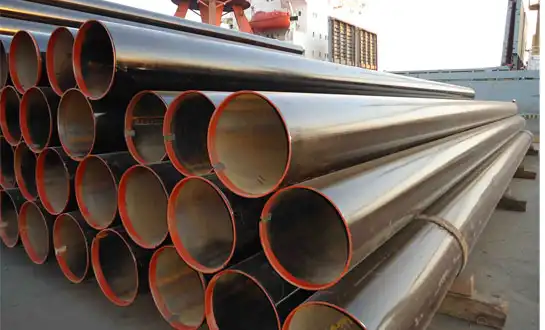
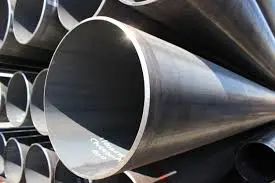
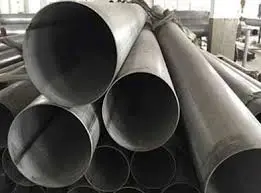
Electric resistance-welded (ERW) pipes are very important in the South African industry. Mines, construction sites, oil and gas fields, and public works projects all use them. The first step in making something is to run cold steel strips through special rollers. After that, the longitudinal seam of the pipe is welded using electrical resistance. ERW pipes are typically used for low to medium pressure applications and are commonly produced in diameters up to around 24 inches, depending on manufacturing capabilities.
In South Africa, procuring steel pipes can be challenging due to varying quality standards among suppliers, differences in international standards, and harsh environmental conditions. Many businesses in the country require pipelines that can withstand coastal corrosion and severe wear in mining environments. To make the project a success, quality control is very important.
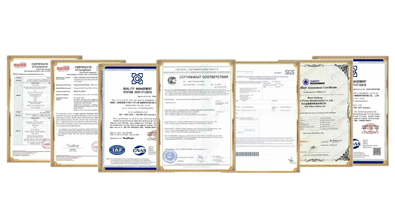
Reliable suppliers, such as RAYOUNG, provide products that are ISO 9001:2015 certified and undergo comprehensive testing. These companies know what the market wants and give people who buy things all the information they need to do their jobs and follow the rules.
Selecting the right pipes is critical, as poor-quality products can delay projects, create safety risks, and lead to long-term maintenance issues. This whole guide gives buying teams all the tools they need to do a good job of checking out sources and making sure that the electric resistance-welded steel products they offer meet the strict requirements of South African industrial uses.
Understanding ERW Pipes and Their Quality Parameters
Steel coils or strips are used to begin making ERW pipes, which are formed and joined using electric resistance welding. After that, the steel is put through a set of rollers that slowly make it into a tube shape. And finally, electric resistance welding is used to connect the pipe's ends. This process produces a strong and uniform weld seam that maintains the pipe’s dimensional integrity.
Uniformity of wall thickness around the pipe is just as important as its diameter and length when evaluating dimensional accuracy. These measures can be very different, which can affect the pipe's pressure rating and how well it works in tough situations.
Material Composition and Steel Grade Selection
It depends on the job and how well the pipe works, and what kind of steel you choose. ASTM A53, A135, and A500 are used most of the time. Tensile strength, yield strength, and flexibility are all mechanical properties that vary depending on the chemical composition of the steel. Typical carbon content varies by grade, generally up to around 0.30% depending on the applicable standard. Elements such as manganese and silicon contribute to strength, toughness, and weldability.
Critical Manufacturing Quality Control Steps
These days, companies check the standard of their goods at every step of the way. They try the finished product and keep an eye on the sizes as the forms are made. They also check the quality of the welds as they happen. In the most modern plants, ultrasound testing systems can detect very small weld defects that may affect pipe integrity.
International and South African Standards Compliance
Common standards referenced by South African buyers include ASTM A135 for electric-resistance-welded steel pipe. Another standard is ASTM A53, which covers welded and seamless steel pipe for pressure use. These standards help buyers pick the right amount of quality and make sure that sellers are following the law in their area.
Key Quality Checklist Items for Purchasing ERW Pipes
Different parts of quality must be checked in a controlled way for procurement to work well. For example, the rules for the final review must be followed to make sure that all the materials are correct. This helps buyers find problems before they change project timelines or performance.
You can find out how good a material is by looking at its chemical makeup. Mill test certificates show the exact amounts of carbon, manganese, phosphorus, sulphur, and other alloying elements. These certificates should also have heat numbers that can be tracked all the way back to the steel mill, so if problems happen in service, quality issues can be looked into.
Chemical Composition and Traceability Requirements
To see the whole supply chain, mill test certificates need to have full chemical analysis results that show they meet certain standards. The carbon content affects strength, the sulphur and phosphorus levels affect the ability to weld, and the manganese content affects the ability to harden. Traceability paperwork needs to include heat numbers, production dates, and steel mill names.
Dimensional Accuracy and Wall Thickness Evaluation
To check the dimensions, look at the outer diameter tolerances (which are usually ±1% for standard applications) and how uniform the wall thickness is around the pipe's circumference. Wall thickness variations greater than ±10% can cause stress concentrations that hurt the pipe's long-term performance. Professional buyers should ask for detailed dimensional reports that show measurements taken at several points along the length of each pipe.
Weld Quality Verification and Testing Methods
The weld quality is the most important thing about electric resistance-welded pipes. Ultrasonic testing can find problems inside the weld, eddy current testing can find breaks in the surface, and you can see the weld bead. RAYOUNG's 100% UT/ET testing protocol helps ensure that every pipe meets strict weld quality standards before shipment.
Corrosion Resistance and Surface Treatment Assessment
South Africa needs strong corrosion protection for ERW pipes because of its environment, especially along the coast and in mines. Depending on the service environment, surface treatments for ERW pipes can include galvanising, coatings, or specialised chemical treatments. Buyers of ERW pipes should look at how thick the coating is, how well it sticks to surfaces, and how well it meets their specific application needs.
Comparison Insights — ERW Pipes vs Other Pipe Types for South African Applications
By understanding the specific manufacturing processes and mechanical limits of different pipe types, procurement teams can select the most cost-effective and reliable solution for their project needs.
Both ERW pipes and seamless pipes have prices that depend on how well they work. Seamless pipes last longer and can handle higher pressures, but they cost more because they are made in a more complicated way. ERW pipes, on the other hand, work well in most situations and are much cheaper, which makes them great for projects that need to stay within their budget.
ERW vs Seamless Pipes: Strength and Cost Analysis
For high-pressure situations, seamless pipes are best because they have a smooth wall thickness and no weld seams. However, electric resistance-welded pipes can provide comparable performance in many applications and cost 15% to 25% less than seamless pipes. This is because the ERW production process is more efficient, which means that big projects can get them for less money.
ERW vs SSAW and LSAW: Performance Metrics
When the diameter exceeds 24 inches, Spiral Submerged Arc-Welded (SSAW) pipes become a practical choice, while Longitudinal Submerged Arc-Welded (LSAW) pipes are strictly preferred for heavy-wall and critical high-pressure applications. For diameters up to 24 inches, electric resistance-welded pipes are the most popular choice because they are cheap and give you great control over the dimensions. Which method to use depends on the project's needs, such as the pressure ratings, diameters, and quality standards that need to be met.
Procurement Best Practices for South African Buyers
Getting things for business, including ERW pipes, needs to be done in a way that balances quality needs with business needs and ensures a reliable supply chain. South African buyers can benefit from learning how the local market works and getting to know trustworthy suppliers who know what the region needs.
The first thing that buyers should do is look at the supplier's credentials. This includes looking at their ISO certifications, audits of their production facility, and calling past clients who have worked on similar projects. Buyers should also ask for detailed information about the facility, proof of their quality system, and proof that they have ongoing improvement programmes. Site visits are a great way to learn about how they make things and their quality control systems.
Supplier Credibility and Certification Verification
Legitimate suppliers keep their ISO 9001:2015 certification up to date and make sure their products are approved by groups like ASTM or API. When you do your research, you should look at the certifications' expiration dates, the products they cover, and the credibility of the certifying body. For example, RAYOUNG's GOST-R and SGS validations give buyers confidence in the quality of their products and that they are export-compliant.
Pricing Strategies and Commercial Terms
If buyers know how much a tonne costs, they can better negotiate and keep track of the total cost of the project. Discounts for buying in bulk begin at 100 tonnes, and larger orders can save you even more. It's important to be clear about payment terms, delivery schedules, and warranty terms so there are no misunderstandings that could cause the project to be held up.
Quality Assurance and After-Sales Support
For as long as the product is supposed to last, a good warranty should cover flaws in the material, the size, and the quality of the weld. Support after the sale, such as technical help, replacement parts, and ways to solve problems, is very valuable and should be thought about along with the price.
Case Studies and Practical Tips for South African Buyers
Procuring electric-resistance-welded steel products for demanding environments presents unique challenges. By analyzing past procurement hurdles and successful field implementations, South African buyers can develop robust quality verification strategies to ensure project success.
A big mine in the Witwatersrand needed high-quality pipes for its underground water management systems. If it broke, it would cost a lot of money to stop production, so the procurement team did a lot of checks on the suppliers, like visiting the facilities, testing samples, and calling references. This helped find quality problems early on and set performance standards that made sure the system would work well for a long time.
Mining Project Success Through Quality Verification
Strict procedures were implemented to verify the chemical composition, dimensional accuracy, and weld quality of each delivery. The buyer and supplier worked together to make sure that the quality of the products was checked on a regular basis, and they also worked on projects to make the products more consistent over time. This partnership approach lowered the total cost of ownership while keeping high reliability performance.
Common Procurement Pitfalls and Prevention Strategies
Common mistakes include not checking the supplier enough, not having enough quality documentation, and not being clear about what the specifications are. To avoid these problems, buyers should make detailed technical specifications, use organised ways to evaluate suppliers, and keep communication lines open throughout the procurement cycle. Buyers who plan and develop suppliers will have much better results than those who only look at price at first.
The most important things to look for in an ERW pipe supplier include: They should have clear warranty terms, material traceability documentation, dimensional inspection reports, weld quality test results, surface treatment specifications, a confirmed delivery schedule, and proof that they can help customers after the sale.
Conclusion
South African buyers can use this detailed quality checklist to look at ERW pipes and make sure they meet the project's needs and follow the government's rules. The step-by-step process includes important quality factors like the materials used and the final inspection, so buyers can choose a supplier with confidence and know the quality.
When you buy something, you should think about both your technical and financial needs. It's also a good idea to work with local suppliers who know how the market works. This article shows a quality verification framework that can help buyers get better products and lower their total cost of ownership by making smart choices and getting along well with suppliers.
FAQ
1. How can I verify ERW pipe quality before purchase?
If a product has mill test certificates, dimensional inspection reports, and weld quality documentation, you can tell if it is good. If you are working with a new supplier, make sure they are ISO 9001:2015 certified and ask for samples to be tested by a third party. Detailed documentation that includes chemical composition analysis and mechanical property test results gives you confidence in the quality of the product.
2. What are typical delivery timelines for ERW pipes in South Africa?
Shipping times can be longer or shorter depending on the size of the order, where the supplier is located, and other factors. Lead times for domestic suppliers are usually shorter, while lead times for international suppliers can be 6 to 12 weeks, which includes shipping and clearing customs. Projects stay on track when they plan their procurement schedules with enough extra time.
3. Are ERW pipes suitable for corrosive environments in South Africa?
There are different types of protective coatings that work better in different environments. For example, galvanised coatings are good for coastal uses, but mining environments may need different types of coatings. To get the best performance, the material grade and surface treatment should match the conditions of the environment.
Contact RAYOUNG for Premium ERW Pipe Solutions.
RAYOUNG is a premier manufacturer and global supplier of high-quality ERW pipes. Fully ISO 9001:2015 certified, our products are engineered to meet and exceed the strict operational demands of South African industries.We offer full traceability documentation, 100% UT/ET testing, and a history of performance in mining, construction, and infrastructure projects. This is why procurement professionals choose us when they need reliable suppliers.
Email us at info@hb-steel.com to talk about your needs, and our technical experts will come up with ideas based on what you need. Our wide range of products, low prices, and dedication to quality will help your projects succeed, and you can count on us.
References
1. South African Bureau of Standards. "SANS 719: Steel Pipes for Water and Sewage Applications - Quality Requirements and Testing Methods." Standards Publication, 2019.
2. American Society for Testing and Materials. "ASTM A135/A135M: Standard Specification for Electric-Resistance-Welded Steel Pipe." ASTM International Annual Book of Standards, 2020.
3. International Organisation for Standardisation. "ISO 3183: Petroleum and Natural Gas Industries - Steel Pipe for Pipeline Transportation Systems." ISO Technical Committee 67, 2019.
4. Industrial Development Corporation of South Africa. "Steel Industry Development Strategy: Quality Standards and Procurement Guidelines for Infrastructure Projects." IDC Research Publication, 2021.
5. South African Institute of Welding. "Quality Assurance in Electric Resistance Welding: Best Practices for Industrial Applications." SAIW Technical Bulletin, 2020.
6. Mining Industry Association of Southern Africa. "Pipeline Infrastructure Quality Standards: ERW Pipe Selection and Performance Criteria for Mining Operations." MIASA Technical Guidelines, 2021.

Need a quote? Want to see samples? Just say hello. We’re friendly. We’re fast. And we’re ready when you are.
Welcome to RAYOUNG – Strong Pipes, Stronger Promise