Common Pipe Flange Uses in Mechanical Engineering Projects
In almost every mechanical engineering application, pipe flanges are used to provide safe and reliable couplings. Understanding pipe flange uses is essential because flanges are the backbone of pipeline integrity – from petrochemical processing units to municipal water distribution networks. The round discs with precision-drilled bolt holes allow for construction, disassembly, and pressure containment in systems from low-pressure utility lines to high-pressure refinery loops. Knowing how flanges are used helps engineers and buyers pick parts that fit project schedules and strike the right combination of safety, regulatory compliance, and affordability.

Understanding Pipe Flange Functions and Applications in Mechanical Engineering
Flanges are mechanical joints between pipes, valves, pumps, and other equipment. Their major function is to create joints that will not leak and can resist internal pressure, thermal expansion, and mechanical stress. Welded joints are not like flanged joints, which allow repair technicians to readily access the lines without cutting them. This provides a significant advantage for facilities where unplanned shutdowns incur substantial financial losses.
Core Functions of Pipe Flanges
Flanges are vital in mechanical systems because of three extremely important functions they perform. They ensure that the bolt force is equally distributed across the diameter, keeping the gasket tight. This dispersion avoids stress build-up in one spot, which might lead to seal failure. Their installation is also made simpler since they guide pipes into position before they are eventually tightened. The raised-face or flat-face flange geometry accommodates minor surface imperfections, ensuring a tight seal under operational vibration and thermal expansion.
Industrial Applications Across Sectors
Flanged fittings are a critical element for process pipes that transport acids, caustic solutions, and crude oil derivatives in petrochemical facilities. A typical refinery includes thousands of flanges with ratings from Class 150 to Class 2500 depending upon the pressures and temperatures involved. The allowable pressure varies according to the flange material and service temperature. AWWA C207-compliant flanges are used for large-diameter mains in water treatment facilities. The initial increased expense is worth it since they are simpler to maintain than welded connections. HVAC systems in industry employ threaded and slip-on flanges to transport chilled water and steam. This balances speed of installation with performance demands. Flanges for oil and gas extraction must operate in temperature variations of -50°F to 1,200°F and resist hydrogen sulphide corrosion. This is particularly the case for wellhead systems and pipeline interconnections.
Supporting System Integrity
Selecting the correct flanges may prevent significant failures that might contaminate the environment, harm workers, or result in penalties from the government. Industry studies suggest that about 30% of unexpected shutdowns in process firms are due to difficulties with flanges. Material selection has a direct impact on long-term reliability, either carbon steel ASTM A105 for general applications or stainless steel ASTM A182 F316 for acidic media. The pressure class ratings should be equal to the maximum permitted working pressure (MAWP). Design pressure limits should be established according to the applicable piping code and project requirements.
Types of Pipe Flanges and Their Specific Uses
In mechanical engineering, several kinds of flanges are utilised for a given range of pressures, manner of installation, and service conditions. It is contingent upon factors like pipe schedule, the qualities of the fluid, and how simple it is to undertake maintenance.
Weld Neck Flanges
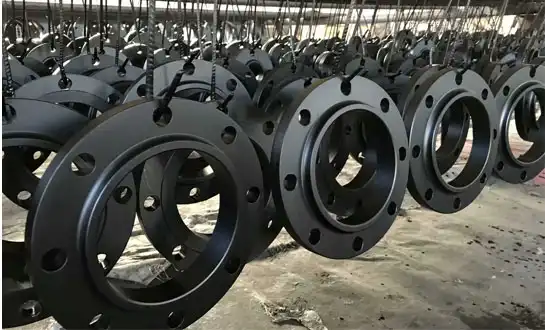
Weld neck flanges have a long hub that tapers gradually from the pipe wall to the face of the flange. The form allows better distribution of stress and makes them ideal for high-pressure applications beyond 600 psi. Weld neck pipe flanges have high-pressure strength (Class 150 to Class 2500) as per ASME B16.5 requirements. These are commonly manufactured from forged materials, such as ASTM A105 carbon steel or ASTM A182 F304/316 stainless steel, and they permit radiographic examination of butt welds to verify weld quality for critical duty. These flanges are widely used in hydrocarbon processing units and other critical pressure applications of petrochemical facilities since a failure in them would have extremely negative repercussions. The hole diameter is equal to the pipe schedule; thus, there is no flow turbulence that might damage the pipe or lessen the pressure.
Slip-On Flanges
Slip-on flanges need two fillet welds, one within the pipe and one outside the pipe, to function. The design is cheaper to install than weld necks, but the pressure ratings are still lower, often ranging from ASME Class 150 to Class 600. They are good for low-pressure water lines, cooling water systems, and process streams that are not extremely critical. The gap between the pipe and flange bore provides for slight variations in thickness and facilitates field fitting. However, when considering pipe flange uses, the twin-welded connection produces a crevice area which may corrode under severe circumstances and thus restricts their usage in chemical duty.
Blind Flanges
Blind flanges are used to seal the ends of pipes or holes in vessels. This also prevents flow and keeps the pressure within limits. Engineers choose these parts for future expansion points, equipment access ports, or testing applications. They can be designed with the same pressure class ratings as companion flanges when manufactured according to the applicable standards and come in materials ranging from normal carbon steel to exotic alloys like Hastelloy C-276 for use with hydrofluoric acid.
Specialty Flanges for Demanding Environments
Low-pressure flanges in rolled steel plate are cheaper in large diameters. A plate pipe flange lacks the curved hub of a cast form. Instead, it is shaped like a flat disc. This design is ideally suited for AWWA-compliant municipal water mains where pressure requirements are typically moderate and depend on the applicable AWWA C207 class. A flat-face design provides an economical advantage over raised-face (RF) configurations. Gasket sealing, however, calls for rigorous surface preparation to a roughness of 3.2 to 6.3 µm. Plate flanges are suitable for maritime exhaust systems since they are lightweight and have a small footprint. This is particularly true on the decks of ships where axial clearance is restricted.
Socket weld flanges are commonly used for small bore piping systems, especially in sizes up to NPS 4. They have a shoulder into which the pipe is inserted and then a single fillet weld. Lap joint flanges are short-ended and feature a loose backing flange that may be turned to align the bolt holes. This is highly useful for connecting to equipment with set bolt patterns. Threaded flanges may be threaded to pipe threads for rapid installation on low-pressure steam or compressed air lines commonly used for low-pressure applications where welding is undesirable without the requirement for bonding.

How to Select the Right Pipe Flange for Mechanical Engineering Projects?
Choosing a flange is a balance between technical needs and purchasing restrictions. Designers must check pressure class, temperature limitations, suitability of material, and that project parameters are met.
Matching Pressure and Temperature Ratings
ASME B16.5 includes seven pressure classes: 150, 300, 400, 600, 900, 1500, and 2500. For example, a carbon steel Class 300 flange can withstand approximately 740 psi at 100°F but only about 535 psi at 600°F. This derating occurs because the material's yield strength decreases at elevated temperatures. For service temperatures exceeding 800°F, alloy steels such as ASTM A182 F11 or F22 are required to resist creep deformation under prolonged thermal exposure. For cryogenic applications below -50°F, materials with a minimum Charpy V-notch toughness of 20 ft-lb are required to prevent easy breakage.
Material Compatibility Considerations
The choice of material is controlled by the corrosive media. 316L stainless steel uses molybdenum to improve resistance to pitting in chloride-containing environments. High-concentration sulphuric acid services may require more specialised alloys. For hydrochloric acid service, Hastelloy C-276 or titanium are good alternatives, depending on temperature and concentration. NACE MR0175 provides material requirements for resistance to sulphide stress cracking and hydrogen-related cracking in sour oil and gas environments.
Gasket Selection and Sealing
The gasket material should be able to withstand the process conditions and also be flexible under bolt loading. Understanding pipe flange uses helps in selecting the right gasket type for different applications. The filler for spiral wound gaskets is a blend of graphite and stainless steel coils. They are suitable for steam and petroleum service up to 900°F. RTJ gaskets of soft iron or stainless steel may provide a metal-to-metal seal in service in excess of 1,500 psi. Although PTFE envelope gaskets are restricted by upper temperature limits, they are widely utilized across aggressive chemical services. The PTFE envelope gaskets may be utilised with acid substances that would not function with elastomers.
Case Study: Petrochemical Plant Expansion
A Gulf Coast refinery required an additional 300 flange connections for alkylation expansion with hydrofluoric acid at 120°F and 250 psi. Engineers selected weld neck flanges, ASTM A182 F316L stainless steel, Class 300. Engineers specified raised-face (RF) configurations and PTFE-filled spiral-wound gaskets.The test findings of the materials demonstrated that they met the NACE MR0103 requirements for materials used in refining environments with potential cracking risks. The project was completed on schedule for start-up with no leaks and saved as much as $500,000 a day in profit from unplanned shutdowns.
Procurement Guide: Sourcing Pipe Flanges for Industrial Use
To find reliable flanges, you need to look at the manufacturer's skills, the authenticity of the certification, and the stability of the supply chain. Cost and quality are weighed by procurement managers to reduce the overall risk of a project.
Evaluating Manufacturer Credentials
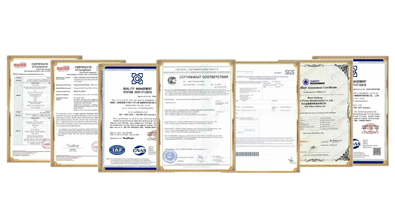
Reputable makers keep their ISO 9001:2015 certification up to date, which shows that they have quality management systems in place that oversee the whole production process, from receiving the raw materials to inspecting the finished product. Adherence to applicable ASME material specifications ensures full material traceability and verifies that qualified heat treatment procedures are strictly executed. Third-party inspections by SGS or Bureau Veritas provide independent confirmation of the accuracy of measurements and mechanical properties. According to ASTM standards, companies that sell their goods in the U.S. should provide material test reports (MTRs) that confirm the chemical make-up and tensile strength of their products.
Understanding Lead Times and Pricing
Standard flanges in popular sizes (2" to 12") and pressure classes (150 and 300) can usually be shipped within two weeks from stock in the United States. Larger diameter flanges than 24" or specialty materials like Inconel 625 need to be made in a forging mill, which adds 8 to 12 weeks to the lead time. Prices vary a lot depending on the material and complexity. For example, 6" Class 150 carbon steel slip-on flanges cost $15 to $50 per unit, while the same weld-neck flanges cost $40 to $120. Costs are three to four times higher for stainless steel 316 than for carbon steel, and exotic alloys can fetch ten to fifteen times the base price.
Strategic Supplier Relationships
Having relationships with more than one supplier makes supply disruptions less likely. Distributors keep stock in their own areas so that orders can be filled quickly, but the sizes available may be limited. When ordering more than 500 pieces, direct mill purchases lower the cost per unit, but they need more time to plan. Pipe flange spacer rings are used in specific situations where the distance between the flange faces needs to be very accurate. These parts, which can be made from carbon steel ASTM A105 or stainless steel ASTM A182 F316, keep pipe systems that are sensitive to vibration or thermal expansion straight. Surface finishes between 125 and 250 µin Ra make sure that the gaskets will work with the metal, and choosing materials that match the flanges next to them stops galvanic corrosion.
Best Practices & Troubleshooting in Pipe Flange Applications
Installing flanges correctly and keeping them in good shape will make them last longer and keep them from breaking down without warning, which could affect safety or production schedules.
Installation Best Practices
Before they are put together, the sides of the flanges must be clean and free of dirt, rust, and old sealing material. Any flaws on the surface that are deeper than 0.005 inches make the covering less effective. Gaskets should be perfectly centred on the face of the flange, and the sides should still be able to be seen outside the bolt circle to make sure they are in the right place. Bolt tightening is done in three steps, each leading to 30%, 60%, and 100% of the goal force. The steps are arranged like a star. This order makes sure that the gasket is compressed evenly and doesn't get distorted. The torque numbers vary with the size and type of bolt. For example, the required torque depends on bolt size, lubrication, gasket type, and the required bolt load, and in Class 600 service it needs 400 ft-lb.
Common Failure Modes
Misalignment leads to uneven gasket compression, which creates leak paths along the low-load side. An angle misalignment greater than 1/16 inch across the diameter means that the piping is under too much stress and needs to be fixed by realigning or adding expansion loops. Gasket blowout happens when the bolts aren't tightened enough or the gasket material has worn down and can't keep the seal when the pressure changes. Operators should look for visible staining around the bolt holes to spot early leaks that need to be fixed right away.
Maintenance Inspection Routines
Visual inspections every three months find corrosion, mechanical damage, or loose bolts before they break. Ultrasonic thickness testing finds erosion on inner flange bores that are exposed to high-velocity fluids or abrasive slurries. Bolt retorquing once a year fixes gasket creep and relaxation, which happens faster in high-temperature service where thermal cycling speeds up this process. Flanges with significant pitting, cracking, or wall loss beyond allowable limits should be evaluated according to applicable inspection criteria to keep the integrity of the pressure boundary.
Performance Enhancement Strategies
Protective coatings and new gasket technologies help in harsh environments. For example, tungsten carbide thermal spray coatings stop erosion in slurry service, which makes flanges last three to five times longer than uncoated surfaces. Expanded PTFE gaskets with tanged construction prevent gasket blowout in steam systems that experience pressure surges during startup. Using thread lubricant with molybdenum disulphide lowers friction, which ensures accurate bolt torque is transferred and stops galling on stainless steel fasteners.
Conclusion
Pipe flange uses range from low-pressure chemical processing to high-pressure municipal infrastructure. Choosing the right flange type requires careful consideration of pressure ratings, material compatibility, and service conditions. Proper installation practices and ongoing maintenance prevent costly failures while extending component service life. Procurement teams benefit from partnering with certified manufacturers who provide traceable materials, technical support, and reliable delivery schedules. Understanding these fundamental principles enables engineers and facility managers to optimise piping system integrity while controlling total ownership costs.
FAQ
1. What distinguishes weld-neck from slip-on flanges?
Weld neck flanges have a long, tapered hub that gradually transitions into the flange face. This provides better stress distribution and is suitable for high-pressure applications up to Class 2500. They only need a single butt weld, which allows radiographic inspection and ensures weld quality in critical service. Slip-on flanges, on the other hand, slide over pipe ends and use two fillet welds, which lowers installation costs but limits pressure ratings to Class 600. The weld neck design gets rid of the crevice found in slip-on joints, making it better for corrosive environments.
2. How do I select flanges for high-pressure systems?
For systems with pressures above 600 psi, you need weld-neck flanges made from forged materials that meet ASME B16.5 standards. Make sure the pressure class matches or exceeds the highest pressure that can be used safely. The choice of material depends on the temperature; ASTM A105 carbon steel is good for service below 650°F, while ASTM A182 F11 alloy steel can handle temperatures up to 1,100°F. For pressures over 1,500 psi, you should specify a ring-type joint (RTJ) facing to make sure the metal-to-metal seal stays intact.
3. Are stainless steel flanges suitable for chemical processes?
Stainless steel flanges work better in corrosive chemical environments than carbon steel ones would. Grade 316L with a molybdenum content above 2% resists pitting in chloride environments and acidic solutions. Check to see which chemicals are compatible—sulphuric acid above 80% concentration needs 316L, while hydrochloric acid may need Hastelloy C-276. Always look at corrosion resistance charts and ask for material test reports that confirm chemical composition.
Partner with RAYOUNG for Reliable Industrial Pipe Flange Solutions.
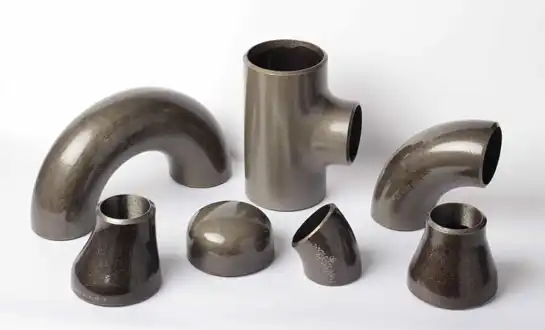
When procurement managers require reliable industrial pipe flanges, RAYOUNG delivers certified solutions. Our ISO 9001:2015-certified manufacturing produces butt-weld steel elbows, reducers, and flanges that meet ASME, AWWA, and DIN standards for uses such as municipal waterworks and petrochemical processing. We also serve domestic and international projects that need traceable materials and precise dimensional accuracy. Email our engineering team at info@hb-steel.com to talk about your specific needs, get custom quotes, or access our detailed product catalogues. As a trusted pipe flange supplier, we guarantee consistent quality, competitive pricing, and on-time delivery to keep your projects on track.
References
1. American Society of Mechanical Engineers. (2021). ASME B16.5: Pipe Flanges and Flanged Fittings NPS 1/2 Through NPS 24 Metric/Inch Standard. ASME Press.
2. American Water Works Association. (2019). AWWA C207-18: Steel Pipe Flanges for Waterworks Service, Sizes 4 In. Through 144 In. AWWA Publications.
3. Harvey, J.F. (2018). Theory and Design of Pressure Vessels. Chapman and Hall Engineering Handbook Series.
4. Singh, A. & Khanna, P. (2020). Piping and Pipeline Engineering: Design, Construction, Maintenance, Integrity, and Repair. CRC Press.
5. Mohitpour, M., Golshan, H., & Murray, A. (2019). Pipeline Design & Construction: A Practical Approach. American Society of Civil Engineers.
6. Ellenberger, J.P. (2022). Piping and Pipeline Calculations Manual: Construction, Design Fabrication and Examination. Butterworth-Heinemann Technical Publishing.

Need a quote? Want to see samples? Just say hello. We’re friendly. We’re fast. And we’re ready when you are.
Welcome to RAYOUNG – Strong Pipes, Stronger Promise