Common Manufacturing Defects in Steel Flanges
Cracks, voids or porosity defects, wrong measurements, surface flaws, and harm from corrosion are all common problems that can happen during the manufacturing process of steel flanges. These problems most often occur when raw material quality is inconsistent, when process control isn't strong, or when inspections are rushed. Even a small flaw in a real pipe system can cause it to leak, gaskets may not fit properly, pressure drops, require rework or premature failure. In the U.S. market, these flaws are more than just a technical matter for EPC companies, wholesalers, factories, and people who buy infrastructure. It is a practical way to reduce project risk, keep people safe, and avoid costly downtime.
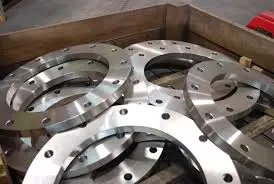
Understanding Common Manufacturing Defects in Steel Flanges
The flaws that have the most direct effect on closing, strength, and service life are the first ones I look at when I check the quality of a flange. People who search for this topic generally want useful information: They want to understand what defects are, why they occur, how to detect them, and how to prevent them. That's also how Google's featured snippets on industrial topics work: they give clear meanings, reasons, effects, and steps to take.
What defects appear most often
These are the most common flaws in cast or welded flanges:
- Cracks that can appear when metal is forged, heated, welded, or cooled. These are bad because they can get bigger when pressure and shaking happen. In high-pressure service, a crack near the hub, hole, or raised face can quickly become a way for water to leak out or cause the structure to break.
- Porosity and inclusions that happen because of improper melting practices, problems with casting, contamination, or gas that gets stuck. These flaws inside the material make it less stable and can reduce its mechanical strength and pressure resistance. This is why NDT is important: these defects may not be visible during visual inspection.
- Dimensional inaccuracies like mistakes in the dimensions, like bolt voids or porosity defects that are too far apart, bores that don't match, wrong thickness, or being out of shape. These problems cause fit-up issues on-site, slow down installation, and may even hurt the performance of the seal.
- Surface imperfections such as laps, gaps, pits, machining lines, and scale. When the sealing face is rough or broken, the gasket doesn't contract evenly, and there is a greater chance of leaking.
Why these defects matter in real projects
A flange is a mechanical connection between components, but it is also a critical safety point. The whole pipe system will not work if the flange breaks. Norms like ASME, EN, and API are very important because of this. They set standards for dimensions, material quality, pressure class ratings, marking, and testing. When buyers deal with ANSI, DIN, or JIS standard flanges, they usually expect each piece to conform to the specified standard and corresponding mill test certificates (MTCs).
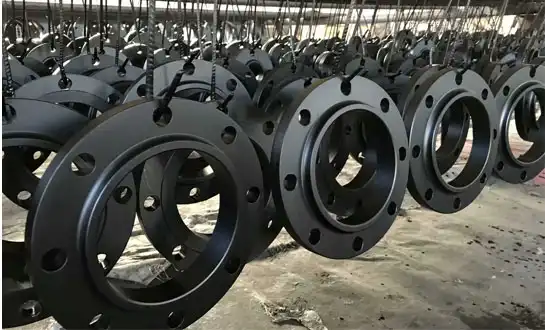
This is important to RAYOUNG because a lot of customers need ANSI/DIN/JIS standard flanges with RF/FF/RTJ facings that can handle high pressure. These flanges also need to have CNC-machined sealing surfaces, full MTC tracking, and the choice to be hot-dip galvanized. Those details are important. They immediately support the trustworthiness of inspections and the dependability of seals.
Analysis of Key Defects and Their Impact on Performance
Cracks and structural weakness
Cracks in flanges are some of the most dangerous flaws because they get in the way of the part's main job, which is to safely hold pressure. Forged carbon steel types, like ASTM A105, usually have better mechanical performance and strong grain flow than cast steels in tough service situations when the process is well controlled. Still, cracks can show up if the casting temperature, cooling rate, or way of welding isn't right.
It's possible for a broken joint to pass a quick check, but it will still fail later when it's loaded several times. That means shutdowns, repair work, product loss, and safety risks in oil and gas, industrial, power, and water systems. Buyers often look at materials like A350 LF2 if the job needs to be done in a cold place. They might say A694 F42 to F70 grades if it has to do with high-yield pipeline service. Choosing the right materials and knowing how to make things go hand in hand.
Dimensional deviations and leakage risk
Dimensional flaws often have secret costs that show up before the process even starts. A flange that is just a little out of spec can cause other parts to not fit properly, create uneven bolt load distribution, or stop the gasket from compressing properly. The result is not only a chance of leaks but also planned damage on the spot.
With RF, FF, and RTJ facings, this is even more important. Each type of face needs to be machined precisely and under tight supervision. RTJ (Ring Type Joint) steel flanges rely heavily on absolutely precise groove dimensions and extremely tight ring gasket tolerances, especially when they are deployed in high-pressure applications. If the machining isn't done right, the ring gasket might not fit properly, and the buyer will lose the pressure stability they paid for in the system.
Corrosion and material mismatch
Corrosion isn't always a flaw that can be seen at first, but buyers often see it as a quality failure because the materials weren't chosen well or the surface wasn't protected well enough. For high-pressure and high-temperature work, carbon steel flanges are still a strong and affordable option. Stainless steel options, such as ASTM A182 grades such as F304/F304L and F316/F316L, are better at resisting corrosion in chemical, water, and harsh conditions.
Flanges don't last long if the service medium, temperature, coating needs, or upkeep plan aren't taken into account. In many outdoor or utility uses, hot-dip galvanizing can protect the investment by making it more resistant to rust.
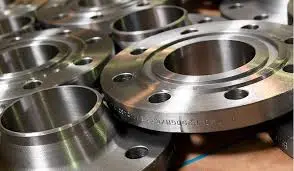
Quality Control and Inspection Techniques to Detect Defects
You can tell the difference between danger and value in quality assurance. I always suggest a multi-level review method because one method rarely finds all problems.
Visual and dimensional inspection
The best way to start is with a visual check. It can show damage to the face, cracks, pits, dents, casting defects, and more. Dimensional checks make sure that the flange's OD, ID, thickness, bolt hole orientation, bolt circle, face details, and smoothness are all correct. Even though these steps are simple, they keep many costly site problems from happening.
I look for more than a list when I analyze a seller. I need to see clear records that are linked to the heat number and MTC, as well as recorded process control and measurement tools that are in good shape. Full MTC tracking is very important for projects that need to pass an audit, follow the rules for a tender, or have vital pressure systems.
NDT methods that find hidden defects
Internal flaws need more than just a human eye to see them. People who want to buy in high-risk areas usually need:
- Ultrasonic testing helps find flaws inside cast parts. It can help find cracks, laminations, and inclusions below the surface of the flange before it is put to use. This helps keep the pressure stable and lowers the risk of a sudden field failure in important pipes.
- Radiographic testing (RT) can reliably detect internal voids, lack of fusion, or porosity defects deep inside the material that surface-level inspections might completely miss. It's useful when the joint or bonded area has to meet strict standards for quality. This extra check often pays for itself many times over in projects with a lot of downtime costs.
Simple lesson from real-world procurement: flaws found in the factory cost a lot less than flaws found after the product has been installed.
Best Practices for Avoiding Manufacturing Defects
The best way to deal with flaws is to stop them before the order goes. That starts with getting the right source and the right specs.
Material and process selection
You can use both carbon steel and stainless steel in strong ways. Grades of carbon steel like A105 are strong and useful in many pressure systems. Where long-term cost is important, stainless steel types like F304/F316 are better because they don't rust. When used in high-pressure situations, forged steel flanges usually work better than cast iron flanges. This is because forging makes the structure stronger and the hardness better.
The process way is another thing I pay attention to. Controlled forging, the right heat treatment, precise CNC cutting, and a strict final check all lower the chance of a flaw. This is one reason why many buyers would rather buy from sellers with a history of stable production than just those with low prices.
Supplier qualification and sourcing discipline
A good source plan keeps the budget, schedule, and image safe. Before making a large order, I suggest that buyers check these points:
- Confirm standard compliance, material grade, inspection scope, and marking requirements in writing. Find out if the seller can provide standard ANSI, DIN, or JIS flanges, any facings or MTCs that are needed, and any coatings that are needed. This makes things clearer and keeps disagreements from happening later, when the goods get to the building or job site.
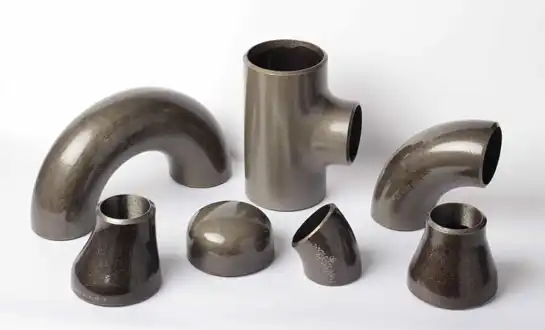
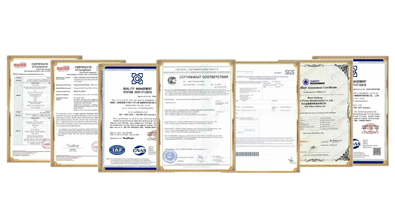
- Verify the credibility of the provider by evaluating their quality certifications, material traceability systems, export experience, and delivery reliability. As a premier global manufacturer, RAYOUNG offers a comprehensive range of industrial pipe fittings—including buttweld steel elbows, reducers, and precision-machined flanges—engineered to guarantee secure, leak-proof connections. Backed by GOST-R certification and rigorous SGS inspections, we ensure full export compliance and uncompromising quality control for international markets. Our industrial piping components deliver exceptional performance, safety, and long-term resilience across heavy industrial plants, petrochemical facilities, and massive infrastructure projects worldwide. Certified to ISO 9001:2015, we deeply understand that consistent manufacturing quality is the ultimate foundation for every successful application.
Maintenance and Repair to Mitigate Defect Impact
Gasket compatibility and leak prevention
If the seal is wrong, even a well-made plate might not work right. The pressure class, temperature grade, material of the gasket, and face type must all be right for the job. If you don't choose the right gasket, there is a greater chance of leaks, and the sealing face may get scarred, which leads to more expensive upkeep over time.
Repair methods and long-term care
Controlled repair methods, such as skilled welding repair when allowed by the standard and code, can fix some surface flaws and small cracks in one place. It is important not to change the flange's metal or shape in a way that makes it weaker.
Long-term dependability comes from regular checks, making sure bolts are tight, keeping an eye on rust, and replacing damaged seals or steel flanges as soon as possible. When buyers think of upkeep as part of the total cost of ownership, the equipment usually lasts longer and breaks down less.
Conclusion
Common flaws in flanges are easy to name, but cost a lot to ignore. Corrosion, cracking, internal voids, porosity defects, dimensional inaccuracies, and damaged sealing faces can all severely compromise system safety, drastically increase maintenance costs, and cause extensive project delays. I think the best security comes from using the right materials, making sure they are made in a controlled way, making sure they meet standards, and inspecting them carefully. When people buy flanges that can be tracked, are precisely machined, and come from quality systems that have been shown to work, they lower their risk throughout the whole system's life.
FAQ
1. How can I identify poor-quality steel flanges before purchase?
I check for missing MTCs, markings that aren't clear, sealing faces that aren't smooth, inconsistent dimensions, and poor paperwork on tests. A trustworthy provider should be able to quickly and easily provide records of inspections, standard compliance, and tracking.
2. Are forged flanges better than cast flanges for high-pressure service?
It is better for the structure and the mechanical function of many high-pressure uses to use forged flanges. Because of this, they are used a lot in power, oil and gas, and industrial projects.
3. What material should I choose: carbon steel or stainless steel?
It depends on how the service is run. Carbon steel is often the best choice because it is strong and doesn't cost too much. When corrosion protection is very important, like in chemical handling or places that are wet and rough, stainless steel is better.
Ready to Source Steel Flanges? Contact RAYOUNG Today
Need a reliable company to make or supply steel flanges for your next project? RAYOUNG sells traceable, standards-compliant flange solutions, such as RF/FF/RTJ options, to EPCs, wholesalers, builders, and industry end users. Email our team at info@hb-steel.com to talk about needs for inspections, wait times, and plans for bulk supplies.
References
1. ASME B16.5, Pipe Flanges and Flanged Fittings
2. ASTM A105/A105M, Standard Specification for Carbon Steel Forgings for Piping Applications
3. ASTM A182/A182M, Standard Specification for Forged or Rolled Alloy and Stainless Steel Pipe Flanges
4. ASTM A350/A350M, Standard Specification for Carbon and Low-Alloy Steel Forgings Requiring Notch Toughness Testing
5. API 6A, Specification for Wellhead and Christmas Tree Equipment
6. ASNT, Nondestructive Testing Handbook

Need a quote? Want to see samples? Just say hello. We’re friendly. We’re fast. And we’re ready when you are.
Welcome to RAYOUNG – Strong Pipes, Stronger Promise