Blind Flange Thickness Calculation Explained
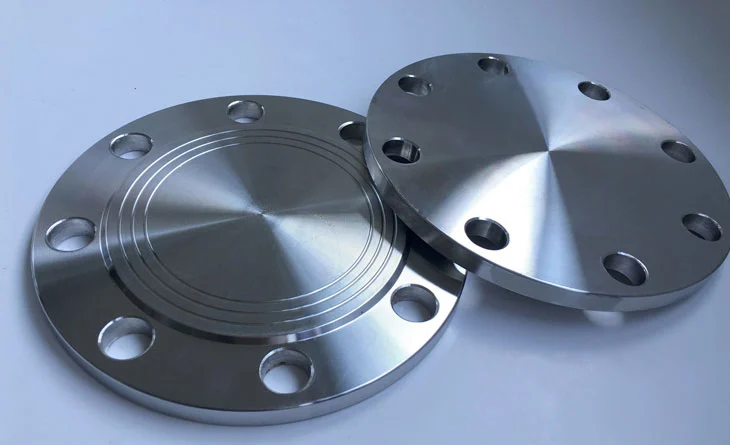
To figure out the right thickness for blind flanges, you need to know the pressure levels, material qualities, and safety factors so that the pipeline termination works well. These solid disk components are used to completely block or seal the end of a piping system in pipe systems. To avoid catastrophic failures during maintenance, testing, or system isolation, it is very important to accurately determine the thickness of these parts.
Understanding Blind Flange Thickness — Basics and Standards
The width of a blind plate has a direct effect on how well it can handle pressure inside it without breaking or deforming. When compared to other types of flanges that have central bores, blind flanges take the full force of system pressure across their whole surface area. This creates bending stress concentrated near the center of the blind flange.
Critical Role in Industrial Piping Systems
When we look at blind flange uses, thickness is the main thing that determines how well they can hold pressure. Because it is a solid plate, the maximum bending stress typically occurs near the center and support transition regions. This means that the material needs to be thick enough to safely spread out the stress. All ways of calculation are based on this link between thickness and resistance to pressure.
Changes in temperature make the thickness even more complicated. When temperatures rise, materials lose strength, so they need to be thicker to keep safety gaps. For cold service uses, the brittleness of the material may need extra attention, which can change the minimum width requirements.
Industry Standards Governing Thickness Requirements
It is widely recognized that ASME B16.5 dictates the dimensional standards for flanges across all standard pressure classes up to 2500#, while the actual thickness design calculations are governed by stringent pressure design codes such as ASME BPVC Section VIII or ASME B31.3.The standard provides dimensional and pressure-temperature rating requirements based on the grade of the material, the width, and the pressure number. ASME B16.47 adds these standards for bigger diameter uses, which are common in petrochemical and power plants.
ASTM standards go along with ASME rules because they define material qualities that are needed to figure out thickness. The ASTM standards for yield strength, tensile strength, and allowed stress values have a direct effect on the mathematical relationships that are used to figure out thickness.
European EN 1092-1 defines flange dimensions and pressure ratings, while design calculations are performed according to applicable pressure vessel or piping codes, which are useful for projects that involve people from different countries. Knowing about these differences helps buying teams set the right thickness standards for any project, no matter where it is being done or what the client wants.
Material Properties Impact on Thickness Specifications
Because they have lower yield strengths, carbon steel flanges usually need to be thicker than their stainless steel counterparts. A carbon steel blind flange rated for 600# service might need 2.5 inches of thickness, but the same job could be done with 1.8 inches of duplex stainless steel and still be strong enough.
Another thickness factor that is often missed in the first estimates is the corrosion limit. For raw water service, an extra 0.125 inches of thickness is usually needed. For sour gas service, it may be 0.25 inches or more, based on how much hydrogen sulfide is present.
Step-by-Step Thickness Calculation for Blind Flanges
To get an accurate thickness estimate, you need to take into account a lot of different factors that all add up to the end safety margin. Starting with setting up basic design factors, the process moves on to stress analysis, which gets more complicated.
Essential Input Parameters
The design pressure represents the maximum expected operating pressure plus an appropriate safety margin, as strictly defined by the governing design code (e.g., ASME B31.3). This number is used as a starting point for all figures that follow, and it has to take into account changes in pressure, temperature, and the possibility of operating problems.
The outside diameter of the flange and the width of the bolt circle set the physical limits for how stress is distributed. The bending moments are relatively higher for larger diameters, so the thickness needs to be raised to keep the stress levels at a safe level.
The allowed stress level is set by the material's yield strength at its design temperature. Values at room temperature often overestimate what a material can do at higher temperatures, which could lead to thickness standards that are too low.
Calculation Formula Application
The basic equation for thickness comes from plate bending theory: t = C × d × √(P/S), where t is the minimum thickness, C is a constant based on the geometry of the flange, d is the width of the bolt circle, P is the design pressure, and S is the allowed stress.
To illustrate this calculation practically, consider a 12-inch Class 600 carbon steel blind flange operating at 650°F and 1440 PSI.Using ASME SA-516 Grade 70 material that can handle 15,000 PSI of stress at room temperature:
The diameter of the bolt circle is 17.75 inches, and the geometry factor C for this setup is 0.3. Using the math, we get t = 0.3 × 17.75 × √(1440/15000) = 1.65 inches as the minimum thickness.
Practical Considerations Beyond Basic Calculations
To get the necessary thickness, you need to add a corrosion margin. Adding 0.125 inches for industrial water service is normal, but adding 0.25 inches or more for chemical process uses is possible. This extra piece keeps the lip from slowly losing material over time.
Both the qualities of a material and its thermal expansion forces are affected by temperature. For uses at high temperatures, the thickness may need to be increased by 10 to 20 percent above what is calculated at room temperature. This is to account for the material's lower strength and thermal cycling wear.
Tolerances in the manufacturing process also affect the end width requirements. Manufacturing tolerances depend on the governing standard and product specification and must be verified per the applicable flange standard. This means that the stated thickness must be higher than the estimated minimum by this amount to make sure there is enough material left over after creation.
Comparing Thickness Requirements Across Blind Flange Types and Materials
For the same working conditions, different flange configurations and material choices lead to different width requirements. By understanding these connections, you can make the best choice while taking speed, weight, and cost into account.
Pressure Class Impact on Thickness Requirements
Though it's not a perfect straight line, the link between pressure class and width can be predicted. Class 150 blind flanges are usually between 0.75 and 1 inch thick, and Class 300 blind flanges are between 1.25 and 1.5 inches thick. For Class 600 uses, the width should be between 2 and 5 inches, and for Class 900 uses, it can be more than 3 inches.
These rises in thickness show how pressure and bending stress are related in a way that is exponential. Due to the square root relationship in math, doubling the pressure number needs a lot more than just doubling the thickness.
Higher-pressure classes also need better bolt designs and gasket fitting areas, which makes things more complicated than just thinking about thickness. When you machine an RTJ gap for Class 900 or higher, it affects flange geometry and sealing design requirements.
Material-Specific Thickness Variations
Grades of stainless steel like 316L are better at resisting rust, but their different mechanical qualities may mean that the thickness needs to be changed. Because 316L has a lower yield strength than carbon steel, it is often necessary to add 10 to 15 percent more width to get the same pressure values.
Duplex stainless steel is an interesting option because it is very resistant to rust and has yield strengths higher than carbon steel. This mix often lets the thickness be lowered while keeping the pressure capability. This is especially helpful in uses that need to be light, like offshore platforms.
For extreme working conditions, exotic alloys like Inconel 625 or Hastelloy C-276 can be used, but they need special thickness estimates. These materials stay strong at temperatures where carbon steel loses its ability to do so, which often means less bulk is needed, even though the materials are more expensive.
Best Practices to Ensure Proper Thickness Selection and Installation
To choose the right width, you have to weigh safety, cost, and working needs while keeping long-term dependability in mind. Then, using the right fitting methods will make sure that the estimated thickness works as planned for the whole service life.
Optimization Strategies for Thickness Selection
Expectations for service life have a big impact on choices about how to optimize width. For uses with a design life of twenty years, choosing a thickness that is on the safe side is best. For temporary installs, however, minimum estimated values may be fine. Often, the difference in cost between width choices isn't that big when you compare it to the cost of replacing something too soon.
Operating state variability calls for wide margins that go beyond the bare minimum. Systems that go through a lot of pressure changes need extra thickness to keep them from breaking under stress. Temperature cycling applications benefit from similar thickness increases to accommodate thermal expansion pressures.
Another thing to think about when thinking about thickness is how it will change in the future. Systems that are likely to have their pressure ratings go up over time should have extra thickness built in from the start so that they don't have to replace expensive flanges when they are upgraded.
Critical Installation Practices
Choosing the right seal has a direct effect on how well a blind flange works, even if the width is fine. Full-face gaskets spread loads across the flange surface more widely, which lowers areas of high stress that could cause the part to fail early.
To get the gasket to fit properly without putting too much stress on the flange material, bolt tightening methods must be done according to the manufacturer's instructions. When bolts are loaded unevenly, they cause stress concentrations that can be too high for the thickness to handle, especially when the diameter is big.
As thickness goes down, surface finish standards get stricter. Rougher surfaces create stress concentration places that lower the effective strength, which could make it impossible to accurately calculate thickness. Standard finishes between 125 and 250 micro-inches are the best way to balance sealing and strength.
Supplier Certification and Quality Assurance
Working with approved sources makes sure that measures of thickness meet requirements and that the properties of the material match what was assumed in the calculations. ISO 9001:2015 approval means that there are structured quality control methods in place that make sure the thickness stays the same from one production run to the next.
Material test results are very important for making sure that the mechanical qualities match the numbers used in the calculations. Documentation of the chemical makeup, yield strength, and tensile strength allows thickness calculations to be checked and possible ways to improve them.
Third-party review services give important applications extra peace of mind. Before installation, ultrasonic thickness tests, dimensional verification, and material property proof give faith that the thickness is right.
Procurement Insights: Sourcing Blind Flanges with Optimal Thickness
Effective buying strategies combine the need for thickness with factors like cost, delivery times, and the dependability of the provider. If you know how thickness standards affect these things, you can make better buying choices.
Cost Implications of Thickness Variations
The cost of materials goes up about the same amount as the thickness, but the cost of cutting often goes up much more quickly. Thicker blind flanges require longer machining cycles, potentially doubling production time for thickness increases of 50% or more. This relationship becomes particularly important for large-diameter or exotic material applications.
Custom specs are more expensive and harder to get than standard thickness choices. Standard ASME B16.5 thicknesses are cheaper to make because they are made in larger quantities, but special thickness needs often cost 20–40% more, even though the materials are very similar.
When thickness needs match standard options, bulk buying opportunities get a lot better. When you buy standard-width flanges in bulk once a year instead of buying them one at a time, you can save 10 to 15 percent on the cost.
Supplier Evaluation Criteria
Verification of providers' manufacturing capabilities ensures that they can regularly meet the needed thickness tolerances. The consistency of thickness measurements and the general dependability of a product are directly affected by machining centers, quality control tools, and the ability to take measurements.
Certification paperwork shows that a seller is committed to quality standards that are important for uses that require very thick. If a product has a GOST-R or SGS certification, it means it meets international standards. If it has an ISO certification, it means it has structured quality management that can handle tough uses.
Technical support capabilities become crucial when thickness calculations require verification or modification. Suppliers with technical tools can help with things like finding the best thickness, comparing different materials, and making special specifications.
Delivery and Customization Considerations
Standard thickness flanges are usually kept in stock, so the most popular sizes and materials can be delivered within two to three weeks. Custom thickness requirements could make shipping times 6 to 8 weeks longer, which could affect project plans and needs to be planned for ahead of time.
Different providers offer a wide range of customization options. Some makers are great at making thicknesses that aren't standard, while others focus on making standard thicknesses. Cost and shipping performance are both improved when thickness needs are matched with suppliers' capabilities.
Support after the sale is especially important for thickness-critical applications. Suppliers offering technical assistance, replacement part availability, and application guidance provide additional value beyond initial product delivery.
Conclusion
To correctly figure out the thickness of a blind flange, you need to carefully think about the safety gaps, pressure levels, and the properties of the material. Formulas from ASME standards are used for the calculation process, but to use them in real life, you need to know about corrosion limits, industrial tolerances, and operating factors. The choice of material has a big effect on the thickness needed. For example, carbon steel has a different strength-to-thickness ratio than stainless steel and exotic metals. To get long-term working reliability, it's important to find a good balance between optimizing thickness while keeping costs, supplier skills, and shipping requirements in mind.
FAQ
1. What factors determine blind flange thickness requirements?
Blind flange thickness depends on design pressure, material yield strength, flange diameter, operating temperature, and corrosion allowance. ASME standards provide calculation formulas incorporating these variables to determine the minimum safe thickness for specific applications.
2. How does material selection affect blind flange thickness?
Different materials exhibit varying yield strengths and temperature capabilities, directly impacting required thickness. Carbon steel typically requires greater thickness than stainless steel for equivalent pressure ratings, while duplex alloys may permit reduced thickness due to superior strength properties.
3. Why do higher-pressure classes require exponentially thicker blind flanges?
The relationship between pressure and bending stress follows mathematical principles where stress increases proportionally to pressure, but thickness requirements involve square root relationships. This creates a non-linear increase governed by plate bending relationships as pressure classes advance from 150# to 2500# ratings.
4. What safety margins should be included beyond the calculated minimum thickness?
As a general rule, the industry adds an extra 10 to 20 percent to the minimum thickness that was determined, along with an extra 0.125 to 0.25 inches for corrosion, based on the conditions of service. When deciding on the end thickness, manufacturing errors of -12.5% must also be taken into account.
Contact RAYOUNG for Premium Blind Flange Solutions
RAYOUNG delivers engineered blind flanges with precisely calculated thickness specifications meeting your exact pressure and temperature requirements. Our ISO 9001:2015-certified production processes ensure consistent thickness tolerances, while GOST-R and SGS certifications guarantee international compliance standards. As a premier manufacturer of industrial flanges and a trusted engineering partner, we provide comprehensive technical support for precise thickness optimization, custom specifications, and expert material selection guidance. Contact our engineering team at info@hb-steel.com to discuss your specific thickness requirements and receive detailed calculations for your critical applications.
References
1. American Society of Mechanical Engineers. "ASME B16.5: Pipe Flanges and Flanged Fittings NPS 1/2 Through NPS 24 Metric/Inch Standard." New York: ASME Press, 2020.
2. American Society of Mechanical Engineers. "ASME B16.47: Large Diameter Steel Flanges NPS 26 Through NPS 60 Metric/Inch Standard." New York: ASME Press, 2017.
3. Harvey, John F. "Theory and Design of Pressure Vessels." New York: Van Nostrand Reinhold Company, 1991.
4. Moss, Ronald D. John Basic and Michael. "Pressure Vessel Design Manual: Illustrated Procedures for Solving Major Pressure Vessel Design Problems." The 4th Edition. 2013: Oxford: Butterworth-Heinemann.
5. Bickford, John H. "Gaskets and Gasketed Joints." Second Edition. New York: Marcel Dekker, 1998.
6. Singh, Krishna P., and Soler, Alan I. "Mechanical Design of Heat Exchangers and Pressure Vessel Components." Springer-Verlag, Berlin, 1984. 1648 pages.

Need a quote? Want to see samples? Just say hello. We’re friendly. We’re fast. And we’re ready when you are.

Welcome to RAYOUNG – Strong Pipes, Stronger Promise