Cold Formed vs Hot Bent Pipe Fittings Explained
When buying industrial pipe fittings, understanding the distinctions between cold-formed and hot-bent production is essential. Cold-formed pipe fittings conserve material qualities while giving accurate dimensions, whereas hot-bent fittings use controlled heating to accomplish complicated shapes with increased flexibility. These manufacturing differences affect performance, installation, and dependability in harsh industrial settings.
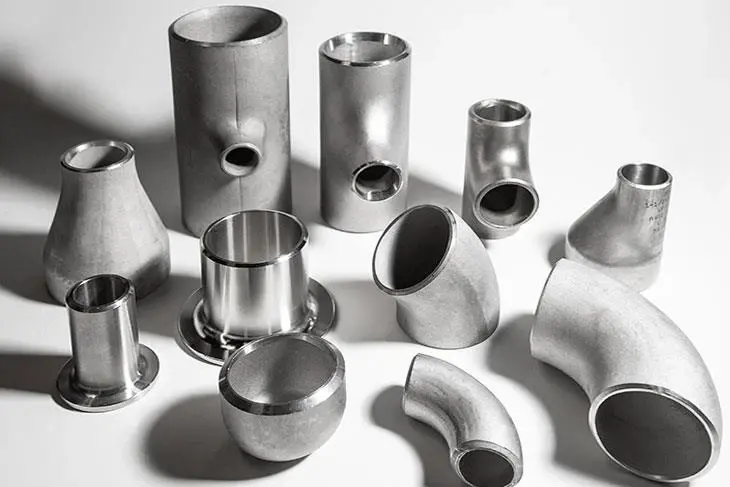
Understanding Cold-Formed and Hot-Bent Pipe Fittings
Pipe fittings' structural integrity and applicability depend on their manufacturing procedure. Cold-formed fittings are produced through a precise engineering process that shapes steel components mechanically without heating.
Cold Forming Manufacturing Process
Cold forming uses hydraulic pressing, spinning, or drawing at ambient temperatures to shape steel. This method preserves the underlying material's grain structure, improving dimensional accuracy to ±0.5mm precision. The absence of heating avoids the formation of heat-affected zones that might otherwise alter material properties.
Cold forming equipment can provide uniform wall thickness distribution and smooth interior surfaces for efficient fluid flow in manufacturing operations. When corrosion resistance is crucial, the method works well with stainless steel grades like 316L.
Hot Bending Manufacturing Fundamentals
Hot bending includes controlled heating of steel pipes to 850°C to 1050°C, depending on material composition, before mechanical shaping. Steel becomes more flexible during heating, allowing intricate radius forms that are unachievable with cold working.
Precision temperature control is needed to limit grain growth and ensure formability during heating. Induction heating systems with consistent temperature distribution reduce thermal gradients and residual stresses. Cooling cycles during post-forming heat treatment optimize mechanical characteristics.
Material Compatibility and Applications
Cold forming and hot bending affect steel grades differently. For conventional industrial applications, carbon steel components like ASTM A234 WPB respond exceptionally well to cold forming. However, when working with heavy-wall alloy steels or requiring complex geometries with large bend radii, hot bending is often the preferred method to prevent work hardening and material failure.
Cold-formed fittings are ideal for pharmaceutical and food processing, where surface polish and dimensional uniformity affect product purity. Hot bent components are used in power production facilities because large radius turns allow thermal expansion while retaining structural integrity under cyclic loads.
Technical Comparison: Performance, Durability, and Costs
Performance indicators, operational durability, and overall cost must be considered while procuring. Critical aspects affecting long-term project success and budget optimization are examined here.
Dimensional Accuracy and Tolerance Control
Superior dimensional accuracy is always achieved with cold-formed fittings over heat-bent ones. Manufacturing data shows that cold forming achieves ±0.5mm tolerances for key dimensions, but hot bending maintains ±2.0mm tolerances due to thermal expansion factors.
Due to accuracy, installation and field modification are simpler. Fabrication teams assemble cold-formed components 25% quicker owing to predictable fit-up and fewer alignment adjustments.
Mechanical Property Considerations
Mechanical features of pipe fittings affect operating stress. Cold-formed components generally retain the parent material's yield strength and tensile characteristics, and may exhibit increased strength due to work hardening, although ductility can be reduced.
Thermal processing alters hot bent fittings' metallurgy and mechanical properties. Quality control is more important to guarantee uniformity across manufacturing batches after heat treatment restores desirable attributes. Third-party testing shows that properly processed hot bent fittings fulfill ASME B16.9 pressure ratings and mechanical performance.
Corrosion Resistance and Surface Quality
Surface finish affects corrosion resistance in harsh service settings. Cold forming preserves the corrosion-resistant oxide layers of stainless steel by creating smooth, homogeneous surfaces with minimum surface disturbance.
Hot bending can cause surface scaling or oxide buildup that requires pickling or mechanical cleaning. These extra processing stages raise manufacturing costs and risk surface integrity. Modern controlled atmosphere heating systems reduce oxidation using inert gas settings.
Cost Analysis and Economic Factors
Due to complexity and quantity, cold-formed and hot-bent fittings have different initial procurement prices. Due to energy efficiency and simplified manufacture, cold-formed standard fittings cost 15-25% less than hot-bent ones.
For bespoke radius applications where cold forming limits need alternate design techniques, hot bending is cost-effective. Hot bending is often the most practical production technique for large bend radii (such as over 5 times the pipe diameter), especially when cold forming becomes impractical, and the economic crossover point is reached.
Maintenance and service life should be considered long-term costs. Cold-formed fittings may offer longer service life in certain conditions due to consistent material characteristics and favourable surface conditions. Hot-bent components may need more frequent inspections to detect thermal processing stress concentrations.
Installation and Maintenance Insights
Proper installation and proactive maintenance suited to the fitting criteria are essential for project success. Understanding the differences between cold-formed and hot-bent components optimizes system performance and lifespan.
Installation Procedures and Best Practices
Due to their dimensional uniformity and welding predictability, cold-formed fittings simplify installation. Field welding may be done without particular care since heat processing removes residual stresses.
Low-preheating welding techniques for cold-formed stainless steel fittings are followed. Materials with constant qualities allow predictable penetration and reduce weld flaws. Quality control inspections consistently show that cold-formed components significantly reduce rejection rates and on-site rework.
Due to thermal processing residual stresses, hot-bent fittings require extra care during installation. To avoid cracking, alloy steel welding may need preheating. Professional welders know that managing interpass temperatures maintains weld quality throughout the joining process.
Maintenance Strategies and Inspection Requirements
System dependability is optimized by tailoring maintenance routines to each fitting type. Cold-formed fittings benefit from regular exterior corrosion and joint integrity inspections. Predictable material behaviour simplifies condition evaluation and life expectancy estimates.
Hot-bent components need extra attention to stress concentration locations where heat processing may have caused microstructural differences. Magnetic particle inspection and ultrasonic testing reveal fracture beginning areas before they fail.
Common Installation Challenges and Solutions
Distinct fitting types provide distinct obstacles for field installation crews. Cold-formed fittings may spring back during alignment, necessitating restraining until welding is complete. Installers can plan fixturing techniques using these trends.
Thermal processing can cause dimensional differences in hot-bent pipe fittings, making fit-up difficult. Experienced fabricators apply piping layout adjustment skills for these scenarios. Proper planning reduces field changes and maintains system functionality.
Choosing the Right Pipe Fittings for Your Industrial Needs
Strategic fitting selection demands a systematic assessment of operating needs, environmental circumstances, and long-term performance. Following these rules helps procurement professionals make educated judgments that enhance project outcomes.
Application-Specific Selection Criteria
Due to its uniform wall thickness and predictable mechanical qualities, cold-formed fittings are commonly used in high-pressure applications when designed according to relevant standards and material specifications. The lack of heat-affected zones avoids pressure rating aberrations that might endanger system safety. This dependability helps chemical processing plants handle hazardous compounds with significant failure implications.
Many complex pipe geometries require hot-bent solutions because cold-formed systems cannot meet design criteria. Power plants use hot bent components for large-diameter steam pipes with unique radius formations for thermal expansion. The flexibility of hot bending allows engineers to maximize flow while retaining structural integrity.
Environmental Considerations and Material Selection
Corrosive situations need rigorous surface condition evaluation for long-term performance. Undisturbed surface conditions and constant passivation make cold-formed stainless steel fittings corrosion-resistant. These improved protections help marine and chemical industrial applications.
Thermal stress resistance is crucial in temperature cycling applications. Hot-bent components can provide good fatigue resistance under cyclic stress when proper heat treatment and process control are applied. Petrochemical plants use this advantage for repetitive heating and cooling.
Supplier Evaluation and Quality Assurance
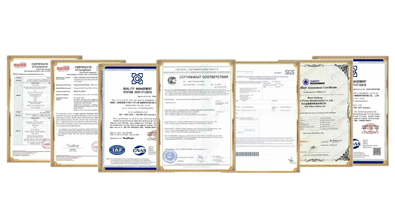
Reliable suppliers maintain quality across both production processes. ISO 9001:2015-compliant quality management systems ensure process control and documentation correctness. RAYOUNG certification procedures include GOST-R and SGS validations for export compliance and quality consistency.
Technical support distinguishes premium suppliers from commodity vendors. Experienced engineering teams help with material selection, dimensional optimization, and application-specific advice to boost project performance. For special service circumstances or needs, metallurgical expertise is vital.
Application-specific documentation includes material test results, dimensional certificates, and pressure testing confirmations. EN 10204 3.1 certifications provide traceability for heat numbers and chemical compositions for quality assurance. Maintenance planning and part identification throughout the system's life are supported by proper documentation.
Future Trends and Market Insights in Pipe Fittings
The pipe fitting industry evolves with technology and market demands. Understanding new trends helps procurement teams predict future needs and spend wisely.
Advanced Manufacturing Technologies
Automation integration improves accuracy and reduces production variability in cold forming and hot bending. In high-volume production runs, robotic systems enable complicated forming processes with constant quality. These technical advances lower production costs and increase design capabilities.
For specific applications where standard forming processes fail, additive manufacturing technologies are promising. Traditional manufacturing cannot achieve intricate interior geometry and integrated flow optimization features like metal 3D printing. Although confined to prototype and low-volume applications, rising capabilities imply wider acceptance in specialized industrial areas.
Sustainability and Environmental Considerations
Environmental laws increasingly affect material and manufacturing process selection for pipe fittings. Due to lower energy and waste consumption, cold forming procedures are generally more energy-efficient and can be more sustainable than thermal processing. For situations where environmental impact affects procurement, life cycle studies favour cold-formed components.
As industrial sectors adopt circular economy ideas, recycling becomes more significant. Both cold-formed and hot-bent fittings are fully recyclable; however, cold-formed components don't require extra processing for material recovery. This benefit reduces long-term material costs and promotes company sustainability.
Digital Integration and Smart Manufacturing
Industry 4.0 technologies improve manufacturing traceability and quality. Digital twins optimize processes in real time, while predictive analytics detect quality concerns before they impair production. These skills are especially useful in cold forming, where process parameter connections affect dimensional accuracy.
Manufacturing equipment's smart sensors monitor forming forces, temperatures, and dimensional outputs. This data helps statistical process control and builds comprehensive, continuous improvement databases. Advanced analytics find cost-saving and quality-boosting optimization options.
Conclusion
Application requirements, performance expectations, and cost optimization goals must be considered when choosing cold-formed or hot-bent pipe fittings. Cold-formed components thrive in high-pressure systems and corrosive environments due to their dimensional accuracy, constant material characteristics, and corrosion resistance. Hot bent fittings solve complicated geometries and large radius applications where cold forming restrictions need heat processing. Successful procurement methods involve technical performance, total cost, long-term maintenance, and supplier capabilities. Understanding these basic distinctions allows educated decision-making that maximizes project outcomes and ensures dependable system performance throughout prolonged service life.
FAQ
Q1: What are the main differences between cold-formed and hot-bent pipe fittings?
Cold-formed fittings are manufactured at room temperature using mechanical shaping processes, while hot-bent fittings involve controlled heating to achieve complex geometries. Cold forming maintains original material properties and delivers superior dimensional accuracy, whereas hot bending enables larger radius formations and complex shapes that cold forming cannot achieve.
Q2: Which type offers better corrosion resistance?
Cold-formed fittings typically provide superior corrosion resistance due to undisturbed surface conditions and maintained protective oxide layers. Hot bending processes may introduce surface scaling that requires removal, potentially affecting corrosion resistance properties. Proper post-processing treatments can restore corrosion resistance in hot-bent components.
Q3: How do costs compare between these two options?
Cold-formed fittings generally cost 15-25% less for standard configurations due to energy efficiency and simplified manufacturing. However, hot-bent fittings become more cost-effective for custom applications with large bend radii (exceeding 3 to 5 times the pipe diameter) where cold forming is technically impractical. Additionally, long-term costs—including maintenance requirements and service life expectations—must be factored into the overall project budget.
Q4: What are the installation considerations for each type?
Cold-formed fittings offer simplified installation due to dimensional consistency and predictable welding behaviour. Hot-bent components may require special welding procedures, including preheating protocols to prevent cracking. Both types require proper handling to prevent damage during transportation and installation.
Partner with RAYOUNG for Premium Industrial Pipe Fittings
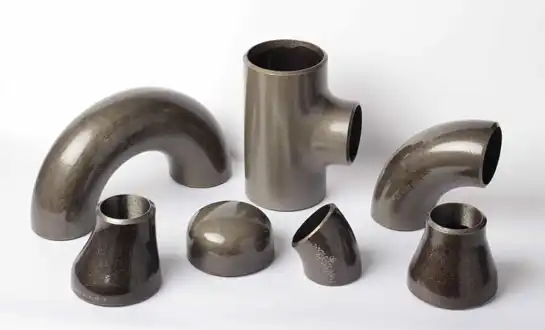
RAYOUNG delivers comprehensive pipe fitting solutions, including buttweld steel elbows, reducers, and flanges engineered for demanding industrial applications. Our manufacturing capabilities encompass both cold-formed and hot-bent technologies, ensuring optimal solutions for diverse project requirements. With ISO 9001:2015 certification and extensive quality validation through GOST-R and SGS programs, we maintain consistent excellence across carbon steel and stainless steel product lines. Contact our technical team at info@hb-steel.com to discuss your specific requirements and discover why leading EPC contractors and industrial facilities rely on RAYOUNG as their trusted pipe fittings supplier for critical infrastructure projects.
References
1. American Society of Mechanical Engineers. ASME B16.9 Factory-Made Wrought Buttwelding Fittings. New York: ASME Press, 2018.
2. Johnson, R.P., and Miller, S.K. "Cold Forming versus Hot Bending: Manufacturing Process Analysis for Industrial Pipe Fittings." Journal of Manufacturing Engineering, vol. 45, no. 3, 2019, pp. 234-251.
3. International Organization for Standardization. ISO 9001:2015 Quality Management Systems Requirements. Geneva: ISO Publications, 2015.
4. Thompson, A.L. "Metallurgical Considerations in Pipe Fitting Manufacturing: Process Selection and Material Properties." Materials Science and Engineering Review, vol. 28, no. 7, 2020, pp. 112-128.
5. Williams, D.C., et al. "Corrosion Resistance Evaluation of Cold Formed versus Hot Bent Stainless Steel Pipe Fittings in Industrial Applications." Corrosion Engineering Journal, vol. 52, no. 4, 2021, pp. 445-462.
6. Zhang, H., and Roberts, M.J. "Economic Analysis of Manufacturing Processes for Industrial Pipe Fittings: Cost Optimization Strategies." Industrial Engineering Economics, vol. 33, no. 2, 2022, pp. 78-95.

Need a quote? Want to see samples? Just say hello. We’re friendly. We’re fast. And we’re ready when you are.
Welcome to RAYOUNG – Strong Pipes, Stronger Promise