Carbon vs. Alloy Steel Flanges: Comparing ASTM A105 and A182 Specifications
Choosing the right carbon steel flange material has a direct effect on the safety, cost-effectiveness, and long-term dependability of your project. Procurement workers must weigh upfront costs against operational needs when choosing between carbon steel flanges that meet ASTM A105 and alloy steel flanges that meet ASTM A182. A105 carbon steel flanges work well in most industrial settings with mild temperature and pressure needs. A182 alloy steel, on the other hand, does great in harsh conditions that need high-temperature stability and excellent corrosion resistance. Knowing these important differences helps you make strategic sourcing decisions, which lowers procurement risk of the job and makes sure it meets strict industry standards.

Understanding ASTM A105 and A182 Flanges: Material Properties and Specifications
Chemical Composition Differences
ASTM A105 is a type of forged carbon steel flange material that is mostly used in pressure systems at room temperature or higher. The maximum carbon content allowed by the standard is about 0.35%, while manganese content is typically controlled between 0.60% and 1.05%. Because the composition is controlled, A105 flanges are easy to weld and machine, and they are also cost-effective for normal pipe uses.
ASTM A182 covers forged or rolled alloy steel and stainless steel pipe flanges, including grades such as F11, F22, F304, F316, and more. The alloy grades have chrome, molybdenum, and other elements that make the mechanical qualities much better. The F11 (1.25Cr-0.5Mo) and F22 (2.25Cr-1Mo) grades are more resistant to creep and oxidation at high temperatures, which is useful in industries like power generation and petroleum processing where carbon steel flanges would break down.
Mechanical Performance Characteristics
The tensile strength of ASTM A105 carbon steel flanges is typically around 70,000 psi, with a minimum yield strength of 36,000 psi. These mechanical qualities make the structure strong enough for water treatment plants, oil and gas gathering systems, and factories operating at moderate temperatures where carbon steel remains suitable. The material stays flexible over a wide temperature range, so there are fewer worries about it becoming brittle during installation and heat cycles.
If you choose the right grade, A182 alloy steel flanges have better mechanical performance. F22 alloy steel flanges can handle temperatures up to 1,100°F in continuous work and still retain their structural integrity under cyclic loading. The addition of chromium and molybdenum improves high-temperature strength and creep resistance, while resistance to hydrogen-related damage and sulfide stress cracking depends on proper heat treatment and compliance with NACE requirements where applicable.
Industry Application Suitability
Most of the time, carbon steel A105 flanges are used in places where corrosion isn't a problem and working conditions aren't too harsh. The cost-to-performance ratio of A105 is good for municipal water delivery networks, HVAC systems, and compressed air setups. Standardized production methods and a wide supply of the material make sure that large-scale infrastructure projects have short lead times and competitive prices.
Alloy steel A182 flanges are used in harsh settings, like fossil fuel power plants with steam temperatures above 900°F and offshore sites that are exposed to sour gas. Chemical processing plants that use acidic or caustic solutions choose A182 types to keep them from failing early from rust. Specific A182 alloy types are also used in aerospace ground support equipment that needs links that are both light and strong. This shows how useful the standard is in a wide range of industries.
Dimensional and Pressure Rating Comparison of Carbon Steel and Alloy Steel Flanges
Standard Dimensions and Compatibility
Both the A105 and A182 flanges meet the ASME B16.5 dimensional standards for sizes NPS 1/2 through NPS 24. This means that when defined correctly, they can be used by different makers. The guidelines set the number of bolt holes, their spacing, the thickness of the flange, and the hub's measurements, no matter what kind of material is used. This stability in dimensions makes it easier for wholesalers to keep track of their stock and gives engineering firms peace of mind when designing piping systems because they know that the parts will work together.
Larger-diameter flanges are made to the standards in ASME B16.47 Series A or Series B, and they come in sizes NPS 26 through NPS 60. The size standards work for both carbon steel flanges and alloy steel, but procurement teams must ensure that upgrading the material doesn't mean they need to change the pressure class as well. We make flanges that meet ANSI, DIN, and JIS standards. These flanges come with raised face (RF), flat face (FF), and ring-type joint (RTJ) facings to meet the needs of a wide range of projects around the world.
Pressure Class Ratings and Temperature Considerations
The 150#, 300#, 600#, 900#, 1500#, and 2500# pressure class numbers show the highest pressure that can be used at certain levels. According to ASME B16.5 pressure-temperature charts, A105 carbon steel flanges keep their full pressure ratings up to about 500°F before needing to be downrated. A Class 300 A105 carbon steel flange that can handle 740 psi at 100°F drops to about 535 psi at 600°F, which changes the design limits of the system.
Because they are less likely to creep, A182 alloy steel flanges can handle higher pressures even when they are heated. An F22 metal flange in Class 300 can keep about 635 psi at 750°F, which is a lot better than a carbon steel flange under the same conditions. Because of this temperature benefit, there is less need for over-specification in high-temperature services. This could lower the total cost of installation, even though the materials are more expensive. By choosing the right pressure class, you can avoid over-engineering and still meet the safety standards set by regulators.
Preventing Dimensional Mismatches
When buying flanges from different sources or areas with different production tolerances, global procurement can be hard. Mismatched bolt hole patterns or facing shapes make it hard to put things together, put the integrity of the seal at risk, and delay the building project. All of our products have CNC-machined sealing surfaces. This gives us tight control over the sizes of our products that meet or beat ASME standards. This careful production stops repairs in the field and gasket blowouts that could risk the safety of the system.
Material test certificates (MTCs) show the whole process, from heat numbers to chemical analysis to mechanical testing and confirming dimensions. Procurement teams should only accept MTCs that meet the standards set by EN 10204 Type 3.1 and have been approved by a third party. This paper record helps with quality checks, meets the requirements for government infrastructure projects, and boosts trust among end users who are in charge of long-term asset integrity programs.

Application Scenarios and Performance Considerations
Carbon Steel A105 Flange Applications
By using A105 flanges in all of their utility systems, manufacturing sites that work with non-corrosive materials like nitrogen, compressed air, and cooling water can save money. A medium-sized company that makes car parts recently improved its pneumatic conveying system by using Class 150 A105 slip-on flanges with raised faces. A manufacturer reported that the installation had been working perfectly for three years with no leaks while still meeting all performance standards.
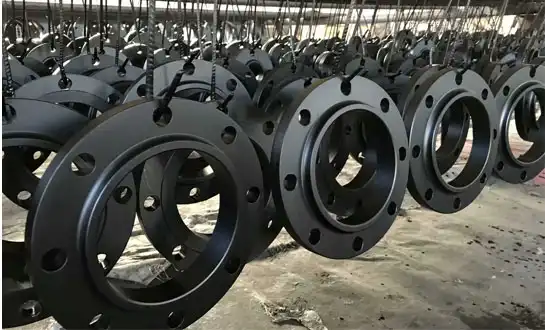
In coastal areas, A105 weld neck flanges are often used to connect pipelines in oil and gas gathering systems. At key points where vibrations and pressure spikes happen, these forged parts strengthen the structure. The tapered hub design spreads out stress points, which makes the wear life longer in cycle work. If you use the right corrosion coatings or cathodic protection with A105 carbon steel flanges, they will last for decades in fuel transfer uses with low levels of H₂S.
Municipal and corporate water treatment plants use A105 blind carbon steel flanges to seal the ends of pipelines while the system is being maintained or when it needs to be expanded in the future. Since there is no center hole, there is no flow at all, which makes replacing valves and inspecting equipment easier. For public utilities that are watching their budgets, hot-dip galvanizing choices offer better corrosion protection for outdoor installations or submerged service. This means that repair times are longer and lifetime costs are lower.
Alloy Steel A182 Flange Applications
Power plants that use coal, natural gas, or biofuels to make electricity run steam systems that are hotter than 1,050°F and pressurized more than 2,400 psi. Weld neck flanges A182 F22 connect high-pressure steam headers, superheater exits, and turbine inlet pipes. These are places where carbon steel flanges would creep, deform, and fail early. After switching from carbon steel flanges to F22 alloy flanges in key steam lines, a combined-cycle plant in the Gulf Coast region had no flange-related failures for fifteen years.
Aggressive materials like sulfuric acid, caustic soda, and chlorinated compounds are used in chemical processing plants that make fertilizers, plastics, and specialty chemicals. In these conditions, A182 F316 stainless steel flanges don't get pitted or corrode in cracks, but it's still important to be careful when choosing the seal and bolt material. A company that makes phosphate fertilizer got rid of leaks by moving from carbon steel flanges to F316 flanges in their acidulation reactors. This cut their yearly maintenance costs by $180,000 and made them more environmentally friendly.
Offshore oil platforms have special problems because they are exposed to high pressure, high temperature, and bad gas that contains hydrogen sulfide. In underwater production systems, A182 F22 flanges meeting NACE MR0175/ISO 15156 requirements are commonly specified to reduce the risk of sulfide stress cracking. The material is naturally tough at low temperatures, which makes it reliable during depressurization events and changes in temperature throughout the year in the North Sea and Arctic.
Procurement Insights: Choosing Between Carbon Steel and Alloy Steel Flanges
Cost Analysis and Lifecycle Value
The biggest difference can be seen in the prices of the materials. For example, A182 alloy and stainless steel flanges can cost up to 400% more than A105 carbon steel flange parts of the same size and grade, based on the market. When procurement teams only look at the original buy price, they might not think about how the steel will be used over its lifetime, which can make alloy steel more cost-effective in tough situations. To find the total cost of ownership, you have to add up the costs of installation, regular upkeep, the expected service life, and any costs for downtime caused by early breakdowns.
Over the course of twenty years, a petroleum plant looked at the lifetime costs of a high-temperature steam system that used A105 carbon steel flanges versus F22 flanges. At first, A105 flanges were $12,000 less expensive, but the study predicted that they would need to be replaced three times because of creep damage, which would cost $45,000 each in lost time and money. Even though they cost more up front, the F22 flanges saved $123,000 in net costs because they didn't need to be replaced during the whole operating time. This method is built on facts and changes the procurement strategy from finding the lowest starting cost to finding the best lifecycle value.
Supplier Qualification and Certification Requirements
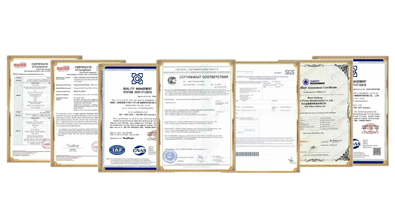
Some of the licenses that reliable providers keep up to date are ISO 9001:2015 for quality management systems, API 6A for wellhead equipment, and pressure equipment directive (PED) compliance for European markets. These certificates show that the production process is controlled in a planned way, that materials can be tracked, and that the company follows established industry standards. We have GOST-R certification for accessing the Russian market and SGS validation demonstrating export compliance. This means we can work on building projects around the world that have to meet a wide range of legal requirements.
The chemical makeup must be checked with optical emission spectrometry, the mechanical features must be checked with tensile and impact tests, and the material must be examined without damaging it using ultrasonic or magnetic particle methods. Positive material identification (PMI) tests should be required by procurement standards on finished flanges to stop material mix-ups that could damage the integrity of the system. Reliable providers do PMI as standard, writing down the results on tags for each component so that they can be checked in the field during installation.
Ordering Best Practices
Clear buy order specs cut down on mistakes and the time it takes to get things. Important information includes the ASTM material grade, the pressure class number, the nominal pipe size, the facing type (RF, FF, or RTJ), the dimensional standard (ASME B16.5 or B16.47), and any special needs, like impact tests for low-temperature work. For weld neck flanges that need to be installed in tight areas where movement isn't possible, making sure that the bolt holes are oriented correctly in relation to the hubs is important.
To handle lead times well, you need to know how much a supplier can do, what materials are available, and when tests need to be done. While specialty alloy grades or large widths may take eight to twelve weeks, standard carbon steel flanges in common sizes typically ship within two weeks. Setting up framework deals with qualified suppliers that offer blanket orders and scheduled releases helps wholesalers keep stock for local customers while keeping working capital from getting stuck in stock. This way of working together is good for everyone in the supply chain, from the producer to the end user.
Conclusion
When picking between an ASTM A105 carbon steel flange and an A182 alloy steel flange, you have to weigh the costs and the needs of the project. For mild service conditions, A105 flanges offer reliable performance at a low cost, while A182 alloys perform important tasks in harsh conditions, which justifies their higher cost. To be successful in procurement, you need to do more than just look at the initial price. You also need to accurately measure the service situation, qualify the suppliers, and do a lifecycle cost analysis. No matter what material is used, proper upkeep will make flanges last longer, protecting capital investments and keeping operations running. Knowing these details about the material helps project teams make sure their choices meet safety standards, price limits, and performance goals for many years to come.
FAQ
1. How can I identify whether a flange is ASTM A105 or A182?
ASME B16.5 says that flanges should have permanent markings that include the material standard, the heat number, and the name of the maker. Chemical analyses on material test papers provide proof that can't be argued with. Positive material identification (PMI) with small XRF analyzers can tell the difference between carbon steel flanges and alloy compositions when marks are missing or not clear. It does this by finding chromium, molybdenum, and other alloying elements that are found in A182 grades but not in A105 carbon steel.
2. What factors determine whether I should specify A105 or A182 flanges?
The main decision factor is the operating temperature. A105 Carbon steel flanges work well below 800°F, while A182 alloys need to be used at higher temps. Exposure to corrosive media, like acids, hydrogen sulfide, and chlorides, makes A182 grades more likely to not rust. Pressure cycle and fatigue loading conditions also affect the choice of material, since some A182 metals are stronger than others. In some fields, like power generation or chemical handling, alloy steel that meets NACE or other specific standards may be required by law.
3. Can I substitute stainless steel A182 flanges where carbon steel A105 is specified?
When engineers replace carbon steel flanges with stainless steel, they have to look at more than just the pressure and temperature numbers. When two different metals touch in a conductive setting, galvanic rusting can happen. This could speed up the breakdown of carbon steel flange pipes. There are differences in how much stainless steel and carbon steel flanges expand when heated, which can cause stress to build up at bonded points. To keep bolts from galling during assembly, the suitability of the materials must be checked. Even though it is technically possible with the right design changes, these kinds of replacements usually make things more expensive without giving any real benefits, unless the extra security against corrosion makes the cost worth it.
Source High-Quality Flanges from RAYOUNG
Finding your way around flange specs shouldn't throw off your project schedule or cost limits. RAYOUNG makes Carbon steel flange and alloy steel flanges that are precisely designed and meet ASTM A105 and A182 standards. All of the materials used can be tracked and the flanges are certified to be compliant. Our CNC-machined sealing surfaces keep leaks from happening in high-pressure situations, and hot-dip galvanising choices make them last longer in corrosive settings. We use ISO 9001:2015 quality systems, offer reasonable prices, and make sure deliveries happen on time for EPC builders, wholesalers, and industrial end users in North America and Europe. Please email our expert team at info@hb-steel.com to talk about your unique needs with a reliable flange supplier dedicated to the success of your project.
References
1. ASTM International. (2021). ASTM A105/A105M-21: Standard Specification for Carbon Steel Forgings for Piping Applications. West Conshohocken, PA: ASTM International.
2. ASTM International. (2022). ASTM A182/A182M-22: Standard Specification for Forged or Rolled Alloy and Stainless Steel Pipe Flanges, Forged Fittings, and Valves and Parts for High-Temperature Service. West Conshohocken, PA: ASTM International.
3. American Society of Mechanical Engineers. (2020). ASME B16.5-2020: Pipe Flanges and Flanged Fittings NPS 1/2 Through NPS 24 Metric/Inch Standard. New York: ASME.
4. American Petroleum Institute. (2019). API Standard 6A: Wellhead and Christmas Tree Equipment. 21st Edition. Washington, DC: API Publishing Services.
5. Becht Engineering Company. (2018). "Material Selection for High Temperature Piping Systems: Carbon Steel vs. Alloy Steel Performance Analysis." Journal of Pressure Vessel Technology, 140(4), pp. 041401-041408.
6. Singh, R. (2020). Applied Welding Engineering: Processes, Codes, and Standards. 3rd Edition. Butterworth-Heinemann, Chapter 12: Flange Design and Material Selection, pp. 287-315.

Need a quote? Want to see samples? Just say hello. We’re friendly. We’re fast. And we’re ready when you are.
Welcome to RAYOUNG – Strong Pipes, Stronger Promise