How do piping flange systems work? Industrial piping flanges are used on pipes, valves, pumps, etc. Bolted, interchangeable circular discs facilitate system maintenance. Flanges evenly transfer stress, preventing leaks and ensuring safety at various pressures. They are vital for reliable and accessible industrial applications since they can be constructed and disassembled without cutting pipelines.
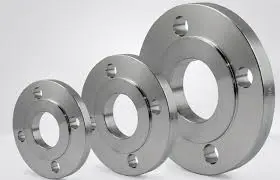
Understanding Pipe Flanges: Definition and Core Function
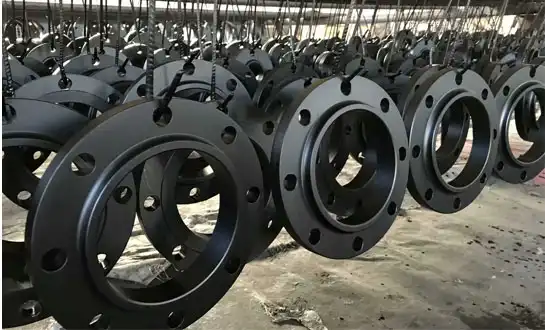
Modern piping systems rely on pipe flanges to create secure, detachable connections across a wide range of industrial applications. Pipe flanges are typically flat, circular components with precision-machined sealing faces and accurately positioned bolt holes. When assembled with appropriate gaskets and bolting, they allow pipelines, valves, equipment, and fittings to be connected in a leak-tight and serviceable manner.
The sealing mechanism of a flange joint is based on controlled gasket compression. A gasket is placed between two mating flange faces, and tightening the bolts applies uniform compressive force. This force causes the gasket material to conform to microscopic surface irregularities, creating an effective seal that prevents fluid or gas leakage. Proper bolt design and tightening procedures distribute loads evenly across the joint, reducing localized stress and minimizing the risk of joint failure.
International flange standards such as ANSI/ASME, DIN, and JIS define dimensions, pressure ratings, facing types, and material requirements. These standards ensure compatibility between components from different manufacturers and support safe operation under defined pressure and temperature conditions. Common sealing face types—including Raised Face (RF), Flat Face (FF), and Ring Type Joint (RTJ)—are selected based on service conditions. Material selection depends on the operating environment: stainless steel flanges offer corrosion resistance, carbon steel flanges provide strength and cost efficiency, and alloy steels are used for high-temperature or chemically aggressive services. Precision CNC machining ensures accurate sealing surfaces and dimensional tolerances essential for long-term reliability.
Critical Problems Solved by Pipe Flanges in Industrial Applications
Pipe flanges address several critical challenges in industrial piping systems, particularly the need for high-pressure, reliable, and maintenance-friendly connections. Without flanged joints, systems would rely heavily on permanent welded connections, making equipment replacement, inspection, and maintenance significantly more time-consuming and costly.
Thermal expansion is another important consideration in piping design. While flanges themselves are not intended to absorb thermal movement, properly designed flanged joints accommodate system expansion and contraction without compromising seal integrity when integrated into a correctly engineered piping layout.
In hazardous service conditions, flange connections contribute to system safety by providing controlled, inspectable sealing interfaces. When correctly designed, installed, and maintained, flanged joints can safely contain pressurized or hazardous media. The use of multiple bolts distributes mechanical loads evenly across the joint; however, proper bolt integrity and tightening practices remain essential to ensure safe operation.
Flanges also enable rapid access to system components for cleaning, inspection, repair, or replacement. Equipment can be isolated and removed without cutting or re-welding pipelines, significantly reducing downtime and maintenance costs. This accessibility is especially valuable in continuous-process industries.
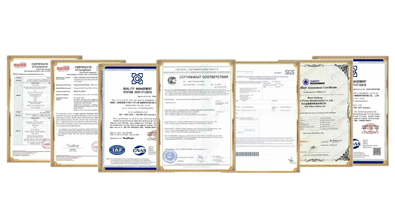
For regulated industries, traceability and documentation are critical. Reputable flange manufacturers supply full material traceability, including Mill Test Certificates (MTCs), inspection records, and compliance documentation. Such records are essential for meeting project requirements in pressure vessel systems, petrochemical facilities, power generation, and other regulated applications.
Core Features and Functionality Deep Dive
Several design and engineering factors influence the reliability of pipe flange connections. Pressure ratings and load distribution are determined by the combined design of bolt patterns, flange thickness, material properties, gasket selection, and applicable standards, rather than by bolt circle diameter alone. Standardized bolt layouts defined by international codes ensure interchangeability among manufacturers and simplify procurement.
Sealing face design plays a critical role in gasket performance. Raised Face (RF) flanges reduce the effective sealing area, increasing gasket contact pressure and improving sealing efficiency. A 1/16-inch raised face is commonly used for ASME B16.5 Class 150 and 300 flanges in moderate-pressure services. Flat Face (FF) flanges distribute load evenly across the gasket surface and are typically applied in low-pressure systems or when connecting to cast iron or other brittle materials.
For high-pressure and high-temperature applications, Ring Type Joint (RTJ) flanges provide superior sealing performance. These flanges incorporate precision-machined grooves designed to accommodate metallic ring gaskets. Under bolt preload, the ring gasket undergoes controlled plastic deformation, creating a reliable metal-to-metal seal. RTJ systems are commonly used in pressure classes up to 10,000 PSI and 20,000 PSI, as specified in API 6A, and require strict machining tolerances and installation procedures.
Flange hub geometry significantly affects stress distribution. Welding neck flanges, with their tapered hubs transitioning from pipe wall thickness to flange thickness, offer the highest resistance to cyclic and bending stresses, making them suitable for severe service conditions. Slip-on flanges, while easier to install, provide lower structural strength and are generally limited to low-pressure and non-critical applications.
Surface finish also influences gasket performance and service life. CNC-machined sealing faces are manufactured to be flat with controlled surface roughness, ensuring proper gasket seating and reducing wear caused by thermal cycling. Consistent surface finishing is essential to maintaining long-term sealing integrity.
Technical Excellence: Manufacturing and Quality Standards
Application precision is achieved with contemporary flange construction. CNC machines have precise specifications and industry-standard finishes. Automation reduces mistakes and ensures mass production quality.
Supplies are traced from raw supplies to manufacturing
Mill test certificates include mechanical, chemical, and heat treatment. From steel manufacturing to installation, this document trail assures pressure vessel code and strict industrial standards perfection.
Material properties are enhanced by heat treatment
By lowering machine residual stresses, stress-relieving methods increase dimensional stability and fatigue resistance. Treatments change grain structure for toughness and impact resistance. This metallurgical treatment requires temperature control and uniformity.
Internal quality assessment without product damage
Magnetic particle testing detects surface defects, whereas ultrasonic testing reveals interior ones. Pressure rating is verified by design standards and material testing, not individual pressure testing
Flange coatings improve corrosion. Metallurgically bonded zinc coatings in hot-dip galvanizing prevent corrosion. Galvanizing protects basic steel from minor coating damage. This prophylactic measure lasts decades in corrosion-prone marine or outdoor environments.
Key Advantages and Performance Benefits
For advantages, industrial pipe systems need flanges. The key benefit is leak-proof, maintained connections that can withstand high pressures and temperatures. Flanges are essential for electricity and chemical processing because of their strength and ease. Flexible installation lets flanges accommodate varied pipe and equipment orientations. Flanged connections can correct tiny misalignments with gasket compression and bolt adjustment, unlike welded connections that need precise alignment and trained welders. Installation is faster and sometimes without experienced welding.
Maintenance advantages substantially affect ownership cost. Quickly remove flanged joints for equipment or system replacement. Repairers can access pumps, valves, and instruments without cutting pipes or heating up. Eliminating workplace welding reduces downtime, maintenance, and safety. Flanges are dependable in crucial applications. Multiple bolts prevent disaster if one breaks. Good gaskets and workmanship make connections last decades without maintenance.
Standardization simplifies global inventories and sourcing. Compatible dimensions and bolt patterns allow competitive bidding and decrease procurement risks. Standard pressure ratings and safety margins simplify system and component selection. Permitted manufacturing ensures regulatory compliance and quality. ISO 9001:2015 quality systems track industrial operations. Systematic quality control reduces project risks and extends life.
Limitations and Important Considerations
Pipe flanges have pros and downsides that system designers must consider. Welding connections are cheaper than permanent flanged connectors. More costly flanges, gaskets, and bolts need tightening and alignment.
Pipes may be full
Bolt and wrench clearance is needed for flanged connections. Small installations may need creative routing due to space limits. Flange diameter may exceed pipe diameter under high pressures.
Replace gaskets and tighten screws to halt leaks
Thermal cycling loosens fasteners, requiring gasket compression retorquing. Environment may accelerate gasket failure, necessitating replacements. Predict and budget for routine maintenance.
Installation quality affects safety and performance
Gasket failure and flange distortion might result from improper bolt tightening. Incorrect gasket selection or damaged sealing surfaces may cause leaks. Installation sensitivities need expert workers and design. System reliability requires skilled installation.
Environment may affect long-term performance. Despite coatings, rust may damage bolts and flanges. Differential thermal expansion stresses connections during temperature cycling. The environment may need material selection, protection, or inspections.
Comparison with Alternative Connection Methods
The most common pipe system flange is welded. Welded joints are stronger and cheaper. Gasket removal reduces failure and maintenance. Specialists must remove welded connections for maintenance or modifications.
- For smaller applications, use threaded connections. These connections enable welding-free installation. Small, compact, and sturdy for low pressure. Vibration and temperature cycling may leak low-pressure threaded connections.
- Fire prevention and HVAC have grooved mechanical connections. Connectors deflect angularly and connect quickly with few tools. The speed and flexibility of grooved couplings make them suitable for large-diameter pipes where welding is expensive. The pressure rating is lower than flange connections.
- Certain compression fittings allow frequent detachment or accurate insertion. Small-bore pipes and accessible equipment benefit from these connections. Labs and pilot plants benefit from compression fittings' fine-tuning and fast disengagement. However, pressure and temperature restrict its use in heavy industries.
- Flanged connectors excel in high-pressure, low-maintenance, and durable applications. Flanges' maintenance and system lifespan TCO is better. Flanges work in cryogenic and high-temperature steam systems due to gasket material and face finish flexibility.
Target Applications and Ideal Use Cases
EPC contractors and industrial project developers employ flanged connections for reliability and consistency in major construction projects. Chemical facilities, refineries, and power plants require thousands of decade-long flanged joints. Selecting standard components from many manufacturers reduces procurement risks and ensures project schedule compliance.
- Pipe flange connectors are needed for government and infrastructure initiatives. Water treatment plants, municipal facilities, and military sites require connections local maintenance staff can handle without specialist equipment. Standard flanged connections simplify training and spares.
- End users maintain factories with flanged connections. Process equipment requires periodic maintenance that permanent welded connections cannot offer. Remove equipment quickly to save time and productivity. Flanges help plants and processes flourish.
- Small and midsize engineering firms like flanges' design flexibility and lower requirements. Standards and pressure ratings speed engineering and assure safety. Single-source procurement delays are reduced by certified parts from many manufacturers.
Flanged components are in demand across industries; therefore, distributors and merchants stock them. Different clients benefit from standard sizes and ratings. Durable flanges satisfy customers and encourage repeat business. Industry and installation standards simplify tech support.
Conclusion and Future Outlook
Industrial pipelines need durable, reliable, and maintained flanges. Standardized designs improve app performance and global sourcing. Modern manufacturing and quality improve flange reliability and ownership costs. Modern safety and environmental projects demand professionally engineered flanged connectors with consistent quality and traceability. Advanced materials and manufacturing precision will extend flanges' service life and value for critical industrial applications.
Frequently Asked Questions
Q1: What are the most common pipe flange pressure ratings, and how do I select the right one?
A: ANSI classifies 150, 300, 600, 900, 1500, and 2500 PSI. System pressure, temperature, and safety dictate selection. Class 150 accommodates most low-pressure applications, whereas Class 300 handles moderate pressures up to 740 PSI at ambient temperature. Upper classes handle pressure. Check pressure-temperature charts and define service safety criteria.
Q2: How often should flanged connections be inspected and maintained?
A: Most applications need annual visual inspections, depending on service. High-temperature or cycling services may require semi-annual monitoring. Check gaskets, bolt corrosion, and leaks. Maintenance may need bolt torque. Gasket replacement is needed for major leaks or maintenance disruptions. Keep records for trend research and regulations.
Q3: What causes flanged joint failures, and how can they be prevented?
A: Gasket deterioration, bolt relaxation, flange face damage, and poor installation cause failures. Safety involves proper installation, bolt tension, and materials. Replace service-specific gaskets per manufacturer directions. For secure connections, installers must master bolt tightening sequences and torque.
Partner with RAYOUNG for Your Pipe Flange Requirements
RAYOUNG makes precision pipe flanges for demanding industrial applications worldwide. These high-pressure ANSI, DIN, and JIS flanges feature RF, FF, and RTJ facing. CNC sealing surfaces and MTC traceability make every flange project compliant and reliable. ISO 9001:2015 and SGS export certification ensure project quality. Ask info@hb-steel.com about pipe flange suppliers and find why industry professionals use RAYOUNG for critical applications.
References
1. American Society of Mechanical Engineers. "ASME B16.5-2020: Pipe Flanges and Flanged Fittings NPS 1/2 Through NPS 24 Metric/Inch Standard." New York: ASME Press, 2020.
2. Deutsches Institut für Normung. "DIN EN 1092-1:2018: Flanges and their joints—Circular flanges for pipes, valves, fittings, and accessories, PN designated—Part 1: Steel flanges." Berlin: Beuth Verlag, 2018.
3. Japanese Industrial Standards Committee. "JIS B 2220:2012: Steel pipe flanges." Tokyo: Japanese Standards Association, 2012.
4. Bickford, John H. "An Introduction to the Design and Behavior of Bolted Joints, Fourth Edition, Revised and Expanded." Boca Raton: CRC Press, 2008.
5. American Petroleum Institute. "API 6A:2019: Specification for Wellhead and Christmas Tree Equipment." Washington: API Publishing Services, 2019.
6. Payne, J.R. "Piping Engineering Leadership for Process Plant Projects." Burlington: Gulf Professional Publishing, 2012.