Industrial pipeline systems use numerous flange types to establish secure, leak-proof connections that can survive harsh operating conditions. Engineers, procurement managers, and project planners must understand flange classifications to balance performance, cost, and safety. Every flange type has its own advantages, from high-pressure gas transfer to corrosive chemical processing. For the best system performance and long-term durability, pressure ratings, temperature limitations, material compatibility, and installation requirements must be considered during selection.
Understanding Flange Types in Industrial Piping
What is a flange? Definition and Purpose
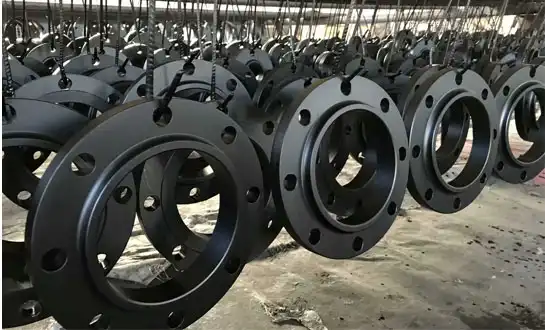
Industrial plumbing systems use flanges to connect pipes, valves, pumps, and other equipment. These mechanical pieces are flat and round with bolt holes around the circumference for gasket and fastener installation. Flanges enable access for maintenance, inspection, and system adjustments while preserving pressure integrity and avoiding leakage.
The role of flanges in system dependability and safety shows their engineering importance. They spread mechanical stress over the connecting point, decreasing failure caused by pressure and thermal cycling. Flanges for low-pressure water systems and high-pressure petrochemical operations up to ASME Class 2500 are needed in modern industry.
Common Flange Classifications by Shape and Function
Standardized flange classifications classify components by design and use. The most frequent flange classifications are raised face, flat face, and ring-type joint. Each design has benefits for various sealing and operating circumstances.
Flanges might be connecting, blind, or customized for certain uses. Connecting flanges allow pipe-to-pipe or pipe-to-equipment couplings, whereas blind flanges close system testing or expansion points. Specialist flanges have orifice apertures for flow metering and reduction arrangements for pipe size transitions.
Materials Used in Flange Manufacturing and Their Applications
Carbon steel is the most popular material for ordinary industrial applications owing to its strength-to-cost ratio and compatibility with conventional pipe materials. 304 and 316 stainless steels resist corrosion in chemical processes and maritime conditions. Alloy steels perform better in high-temperature applications, whereas exotic materials like Hastelloy and Inconel handle intense corrosion.
Material choice affects flange performance and lifespan costs. Carbon steel flanges work well in corrosion-free water, steam, and oil applications. Acidic chemicals, food-grade applications, and regular washing and sterilization need stainless steel.
Detailed Overview of Common Flange Types and Their Industrial Uses
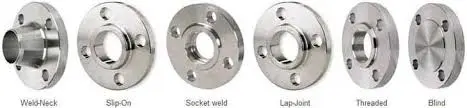
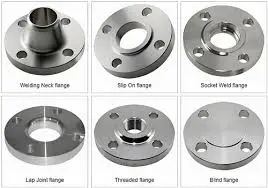
Weld Neck Flanges—Features, Advantages, and Typical Applications
Flange types like weld neck flanges are best for high-pressure and high-temperature applications because of their strength and stress distribution. The tapered hub reduces turbulence and stress accumulation spots by gently transitioning from the flange face to the pipe bore. This design makes them appropriate for important refinery, power plant, and chemical processing applications.
A permanent welded connection avoids mechanical joint leak pathways. The connection is reliable and long-lasting, but it needs competent welders and heat treatment. Steam lines, high-pressure gas systems, and corrosive chemical applications use these flange types for safety.
Slip-On Flanges—Performance, Cost, and Use Cases
Slip-on flanges are cost-effective for moderate-pressure applications that prioritize installation and cost. The design lets the pipe fit into the flange bore without cutting or preparation. The installation time and labor costs are far lower than with weld neck alternatives.
A correctly constructed slip-on design permits direct and secure pipe connections that can resist moderate pressure and temperature without leaking or exploding. These flanges are useful for general utility, water, and low-to-medium pressure gas distribution because they may be installed without extra tools beyond welding. However, the hub design concentrates stress, limiting its usage in high-service conditions.
Socket Weld Flanges—Strength and Suitability for High Pressure
Socket weld flanges combine slip-on installation with high-pressure strength. The socket arrangement ensures weld quality and connection strength by positive pipe placement and preventing pipe insertion beyond the required depth.
These flanges thrive in tiny bore situations where weld neck flanges are impractical or expensive. The partial penetration weld design is strong enough for most industrial applications and cost-effective to implement. Instrumentation connections, sample lines, and small-bore process pipework (typically up to 2 inches) are common uses.
Blind Flanges—Purpose and Safety Considerations
While testing, maintaining, or planning pipeline expansion, blind flanges ensure pipeline system closure and safety. The absence of a bore opening makes these solid flanges vital for pressure testing, system isolation, and emergency shutdown.
To avoid catastrophic system pressurization failure, pressure rating verification and bolt torque requirements are necessary. Blind flanges must match the pressure class and material of adjacent pipeline components for system integrity and operator safety.
Comparative Analysis: Choosing the Right Flange Type for Your Pipeline Needs
Flange Types Comparison Chart: Strength, Pressure Rating, and Cost Factors
Multiple performance and economic variables must be considered while choosing a flange type. Due to material constraints and installation complexity, weld neck flanges cost more but have the greatest strength and pressure ratings. Slip-on flanges simplify installation and are cost-effective for mild pressure applications.
Key performance variables that affect flange selection:
- Basic slip-on designs are typically used in ASME Class 150 applications, whereas heavy-duty weld neck versions are suitable for ASME Class 2500 service.
- Temperature restrictions range from approximately 400–800°F for carbon steel (depending on pressure) to 1200°F for specialized alloys.
- While slip-on flanges take 30-40% less welding time than weld neck options, installation prices reflect manpower.
- Depending on alloy composition, stainless steel costs 200-300% more than carbon steel.
Proper selection is crucial for project success and budget management since these performance qualities directly affect project costs and long-term operational dependability.
Best Flange Types for High-Temperature and Corrosive Environments
High-temperature applications need metallurgical and thermal stress-resistant flanges. Stress distribution and hub reinforcement make weld neck designs ideal for these situations. Chrome-molybdenum alloys retain high-temperature strength, making material selection crucial.
Material compatibility and galvanic corrosion potential are important in corrosive settings. Stainless steel flanges withstand most chemicals, whereas Hastelloy handles corrosives. In harsh chemical conditions, gasket selection and surface treatment criteria assure long-term sealing.
Procurement Guide: Sourcing and Buying Industrial Flanges
Key Factors When Purchasing Flanges: Quality, Certification, and Lead Time
Mill test certifications documenting chemical composition, mechanical qualities, and heat treatment records are provided by reputable suppliers to ensure quality. Additionally, third-party inspection services verify important applications.
Material availability, size requirements, and market circumstances greatly affect lead times. Standard carbon steel flanges in standard sizes ship in 2-4 weeks, while specialized alloys and big diameters may take 12-16 weeks. Project planning should accommodate supply chain interruptions and inventory reserves.
How to Find Reliable Flange Suppliers and OEM Brands
Suppliers should be assessed for production, quality, and technical support. ASME and ISO certifications show industrial standards, whereas ISO 9001:2015 accreditation shows quality management systems. Long-term suppliers provide cost savings, priority scheduling, and technical assistance.
Regional vendors provide faster delivery and lower transportation costs, while foreign suppliers may offer better prices for big volumes. Supplier diversity reduces supply chain risks and ensures supply amid market interruptions and capacity restrictions.
Company Introduction and Our Flange Product & Service Offering
About Our Company—Expertise in Industrial Pipeline Components
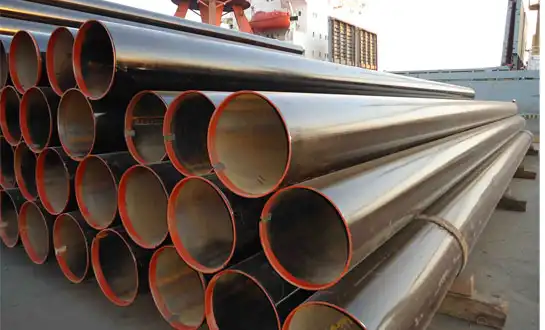
RAYOUNG is a trusted carbon steel pipe supplier with industrial pipeline component and flange production expertise. Our deep grasp of industry requirements allows us to address the demanding demands of EPC contractors, distributors, and industrial end users across varied market sectors.
We provide engineering consultancy, bespoke design, and application-specific suggestions in addition to product supply. This expertise helps customers understand difficult project requirements and choose the best flange types for their operational circumstances and budget.
Our Range of Flanges—From Standard to Custom Solutions
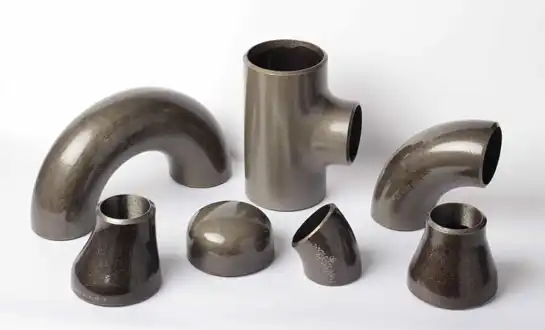
We provide butt-weld steel elbows, reducers, and flanges for reliable industrial pipe connections. Our products meet all design needs, from straight lines to intricate angles to flexible couplings. Custom-manufactured products handle unusual requirements and applications, whereas standard items cover typical sizes and pressure classes.
Steel pipe fittings and pipes provide performance, safety, and durability for residential, industrial, and commercial facilities. Our fittings serve water and gas flow systems with exact pressure ratings and material requirements.
Quality Assurance and Compliance with International Standards
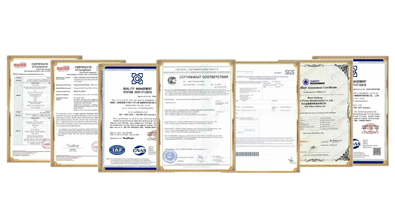
GOST-R and SGS export compliance and quality validation certificates reflect our quality superiority. These certifications verify our products satisfy international standards and are reliable for essential industrial applications. We value quality, ISO 9001:2015, and innovation in every application as leading pipe and fitting manufacturers.
Quality control includes material verification, dimensional inspection, and performance testing to verify product compliance. Complete traceability and customer quality assurance processes are supported by documentation bundles.
Conclusion
Industrial pipeline flange types must be understood to make educated purchase choices that balance performance, safety, and cost. From slip-on designs for low-pressure applications to sturdy weld neck arrangements for crucial high-pressure services, each flange type has its own benefits. Project parameters must be met for material selection, pressure ratings, and installation to optimize system performance and dependability. This detailed review helps engineers and procurement specialists choose flange solutions that match operating demands, budget, and industry standards.
Frequently Asked Questions
Q1: How do I choose the right flange type for a high-pressure pipeline?
A: High-pressure applications typically require weld neck flanges due to their superior strength characteristics and stress distribution properties. Consider factors such as operating pressure, temperature, fluid compatibility, and safety requirements when making the selection. Always verify that the chosen flange meets or exceeds the system pressure rating with appropriate safety margins.
Q2: What are the key differences between ANSI and DIN flange standards?
A: ANSI flanges follow American standards with inch-based dimensions and pressure classes (150, 300, 600, etc.), while DIN flanges use metric dimensions and PN pressure ratings. The bolt patterns, facing types, and dimensional specifications differ between the two systems, making them generally incompatible without adapters or special fittings.
Q3: Can stainless steel flanges be used in corrosive industrial environments?
A: Yes, stainless steel flanges offer excellent corrosion resistance for many industrial chemicals and environments. Grade 316 stainless steel provides superior performance in chloride-containing environments, while grade 304 works well for general chemical processing. However, specific corrosive conditions may require specialty alloys like Hastelloy or Inconel for optimal performance.
Partner with RAYOUNG for Your Industrial Flange Requirements
With its flange manufacturer and technological experience, RAYOUNG can serve your industrial pipeline projects. Our comprehensive selection of conventional and bespoke flange solutions meets current industrial application demands. Our ISO 9001:2015 accreditation and worldwide market expertise provide procurement managers with quality assurance and supply dependability. Contact info@hb-steel.com to discuss your project needs and see how our flange types supplier experience may help.
References
1. American Society of Mechanical Engineers. "ASME B16.5 - Pipe Flanges and Flanged Fittings: NPS 1/2 through NPS 24 Metric/Inch Standard." New York: ASME Press, 2020.
2. Buthmann, A. "Piping and Pipeline Engineering: Design, Construction, Maintenance, Integrity, and Repair." Boca Raton: CRC Press, 2018.
3. Mohitpour, M., Golshan, H., and Murray, A. "Pipeline Design & Construction: A Practical Approach." 3rd Edition. New York: ASME Press, 2007.
4. Nayyar, M. L. "Piping Handbook." 8th Edition. New York: McGraw-Hill Education, 2019.
5. American Petroleum Institute. "API Specification 6A—Specification for Wellhead and Christmas Tree Equipment." 21st Edition. Washington, D.C.: API Publishing Services, 2019.
6. International Organization for Standardization. "ISO 7005 - Metallic Flanges." Parts 1-3. Geneva: ISO Publications, 2011.