What Are Standard pipe flange dimensions in ASME Systems?
In ASME systems, the primary standards pipe flange dimensions are set by ASME B16.5 and ASME B16.47. These standards define important measurements like nominal pipe size, pressure class ratings from 150 to 2500, outer diameter, bolt circle diameter, flange thickness, and bolt hole specifications. In industrial piping uses, these standard sizes make sure that the pipes fit correctly, that the connections are safe, and that the system maintains structural integrity.Knowing these specs helps procurement professionals choose parts that will work together, lower the risks of installation, and keep operations safe throughout the project's lifecycle.
Overview of Standard Pipe Flange Dimensions in ASME Systems
Flanges are a key component of industrial piping systems that connect pipes, valves, pumps, and other machines. ASME standards are the blueprint that ensures all the parts fit together perfectly, no matter where they were made or who made them. The American Society of Mechanical Engineers made these rules so that all kinds of businesses, from industrial plants to city water systems, could use them together.
Key ASME Flange Standards Governing Dimensions
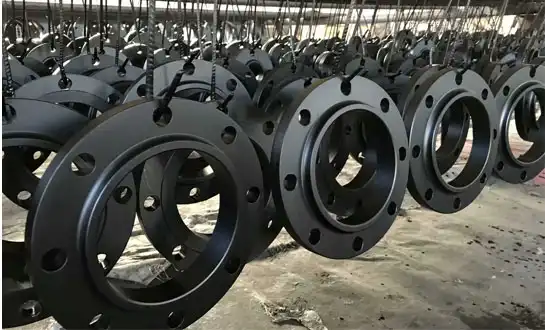
ASME B16.5 covers flanges for nominal pipe sizes from half an inch to twenty-four inches, which covers the most frequent industry uses. This standard describes raised-face, flat-face, and ring-type joint flanges, with different pipe flange dimensions for each. ASME B16.47 covers flanges with a width of 26 inches to 60 inches and uses Series A and Series B classifications to show different ways of making things and different limits for size.
These standards set seven pressure class ratings: 150, 300, 400, 600, 900, 1500, and 2500. Higher numbers mean that the flange bodies can handle more pressure, so they are larger. If a Class 150 flange is made for low-pressure uses, its diameter and bolt hole spacing will be very different from those of a Class 900 flange that is made for high-pressure oil drilling uses.
Why Dimensional Accuracy Matters in Industrial Procurement?
Precision in measurements has a direct effect on the success of a project. An EPC contractor must make sure that every supplier's 6-inch Class 300 weld neck flange for refinery growth meets the exact requirements for thickness, bolt circle, and outer diameter. During pressure testing, even small changes can lead to gaskets that aren't lined up right, problems with bolting up, or huge leaks.
The uniformity of the supply line depends on these rules. Distributors who keep a collection can be sure that ASME-compliant flanges will meet the needs of customers on a number of different projects. In order to encourage competitive bids and uphold quality standards, government building projects include ASME measurements in the tender papers. Interchangeability is good for industrial end users because it lets repair teams get new flanges from different suppliers without having to worry about compatibility issues.
Real-World Applications Across Industries
In the oil and gas industry, pipe flange dimensions make it possible for high-pressure pipes that carry crude oil over thousands of miles to join safely. Chemical processing plants use these guidelines to connect pipe systems that don't rust and handle aggressive substances. In business building systems, where consistent sizes make installation easier and lower labor costs, HVAC workers use smaller ASME flanges. Heavy-duty valves that meet ASME standards are used to connect steam lines that work at very high temperatures and pressures in power plants.
Detailed Dimensional Breakdown of ASME Pipe Flanges
To figure out the exact numbers that determine flange compatibility, you have to look at each size and what it does. Choosing the wrong specs can cause project delays, higher costs, and even safety risks, so these details are very important when making procurement choices.
Outer Diameter and Inner Diameter Specifications
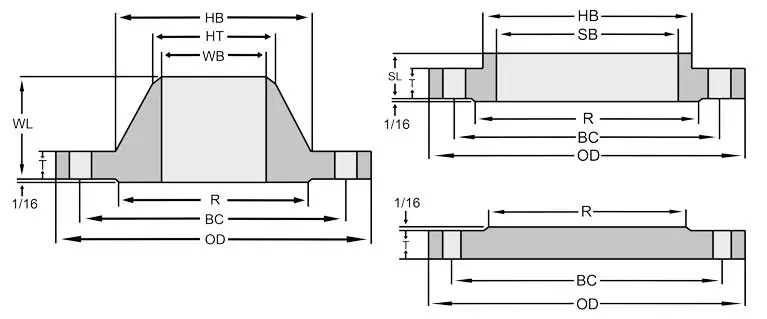
The outer diameter shows the flange's full width (pipe flange dimensions), which determines the fitting size and any clearance issues that need to be thought about. The outside diameter (OD) of a 6-inch Class 150 weld neck flange is 11 inches, but it's 14 inches for a Class 600 version of the same size. This is because the Class 600 version needs thicker material to handle higher pressures.
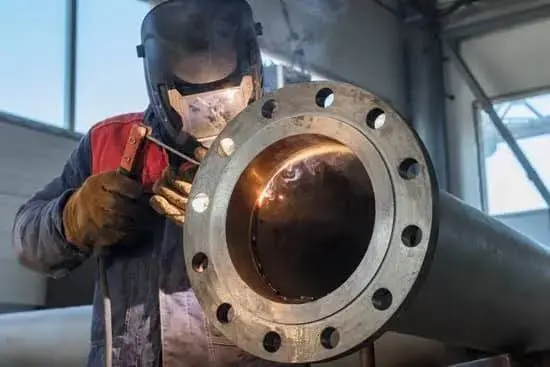
The inner diameter, which is also called the bore, fits the inside diameter of the pipe to allow fluid to run smoothly and without any problems. During manufacturing, when machine shops get flanges ready to be welded to pipe sections, this number is very important. To make good weld joints and keep the flow features, the hole has to line up perfectly with the pipe wall thickness.
Flange Thickness and Pressure Class Relationships
The thickness of the flange goes up in direct relation to the pressure class grade so that it can handle internal forces without deforming. A Class 150 flange might be 0.62 inches thick, but a Class 900 flange of the same stated size could be 2.5 inches thick. This thickness keeps the structure together when the bolts are tightened and when pressure builds up inside the pipe. This keeps the flange faces from coming apart, which would weaken the seal.
The raised face height, which is typically 0.06 inches for most ASME B16.5 flanges, makes a closing surface where the gasket is compressed more tightly. This small but important measurement makes sure that the seal has the right contact area and stops leaks from happening.
Bolt Circle Diameter and Bolt Hole Patterns
The bolt circle diameter defines the bolt pattern by drawing a circle through all the bolt holes. For proper installation, accurate readings of the bolt circle make sure that the bolts line up correctly. The bolt circle diameter on a 6-inch Class 150 flange is 9.5 inches, and there are eight bolt holes in it. The bolt circle diameter on a Class 300 flange is 10.62 inches.
Bolt hole diameter specs tell you what size bolt to use and how much space you need for fitting. ASME rules say that these holes should be a little bigger than the bolt width. This lets the bolts expand with temperature changes and makes it easier to line them up during assembly. There are 0.75-inch holes in a Class 150 flange for 0.625-inch bolts, which is enough space without letting the bolts move around too much.
Industry Tolerances and Machining Precision
ASME standards allow certain industrial limits that strike a balance between accuracy and the ability to machine things easily. For smaller flanges, the outer diameter margin is usually between 0.06 inches and 0.08 inches. Bolt hole width limits may allow plus or minus 0.03 inches to keep holes from being too small while also controlling the largest size.
These limits change how well the cover seals. Although tighter standards make seals more reliable, they also make production more expensive. Knowing the allowed tolerance ranges helps buying teams correctly judge the skills and prices of suppliers.
Converting Between Imperial and Metric Units
When you do global sourcing, you have to change between pipe flange dimensions based on inches and metric measures. In metric units, a 6-inch nominal pipe size is approximately designated as DN150. When buying from foreign sources, procurement teams need to be very careful when converting measurements because differences in rounding can cause problems with compatibility.
Standard adjustment factors help keep things accurate: to convert inches to millimeters, multiply the value by 25.4; to get inches from millimeters, divide millimeters by 25.4. However, a lot of international standards use "soft" metric conversions that don't exactly match estimated values. This means that real dimension tables must be used to check the values instead of just mathematical changes.
Comparing ASME Pipe Flange Dimensions with Other Standards
Multiple fastener standards are common in global industrial projects, which makes it hard for buying teams to make sure that everything works together. Knowing how pipe flange dimensions compare to those of other systems can help you avoid costly mistakes and make smart decisions about where to get things.
ASME Versus ANSI Flange Dimensions
The ANSI and ASME flange standards are very similar because ANSI accepted ASME specs and named them ANSI/ASME B16.5. Because of this harmonization, the sizes of ANSI Class 150 flanges and ASME B16.5 Class 150 flanges are the same. Professionals in procurement can confidently buy from sellers who use either standard because the dimensions will fit.
Older tools may use ANSI standards that were made before ASME standards were adopted. Even though measurements stayed mostly the same during these changes, checking against current standards keeps you safe from using old dimension tables.
DIN Standard Dimensional Differences
Different pressure names and measurement systems are used in European DIN standards. The pressure number of DIN PN16 flanges is similar to that of ASME Class 150, but they have different bolt designs, outer diameters, and thickness requirements. Without conversion parts, a DN150 DIN flange can't be used instead of a 6-inch ASME flange.
Standard bolt hole numbers are not all the same. For example, ASME might say that a certain size and pressure class needs eight bolts, but DIN uses a different number of holes based on the nominal width and the pressure grade. Because of this basic difference, goods cannot be directly exchanged, and when buying something from another country, the specifications must be carefully reviewed.
Material Impact on Dimensional Requirements
Carbon steel flanges are the standard for standard sizes. They are inexpensive and work well enough for mild working conditions. Carbon steel flanges and stainless steel flanges have the same measurements, so you can switch materials without changing the dimensions. This interchangeability makes buying easier when standards for corrosion protection or hygiene dictate that stainless steel construction is required.
Specialty metal flanges for harsh conditions with high temperatures or corrosion must meet the same size standards. However, they may have different tolerances or surface finish needs. Nickel alloy flanges used in chemical processes stay the same size as ASME standards and are much more resistant to chemicals that are harsh.
Industry-Specific Dimensional Considerations
Heavy-duty flanges with extra thickness above normal ASME dimensions are often needed in oil and gas uses to handle wellhead pressures and possible surge conditions. For compatibility reasons, these changed flanges keep the same bolt patterns and outer sizes, but they increase the hub thickness and height.
Most HVAC systems use Class 125 or 150 flanges, which are lighter and work well for low-pressure water and air service. Because of the lower pressure needs, thinner, cheaper flange designs are possible while standard bolt shapes are kept to make fitting easier.
When working with dangerous materials, chemical processing plants often need full-face gasket designs instead of raised-face flanges. These flat-face flanges offer better sealing for leak-critical uses while keeping the normal ASME pipe flange dimensions, outer dimensions, and bolt patterns.
Conclusion
To successfully buy things for industry and complete projects, you need to know the pipe flange dimensions in ASME systems. The ASME B16.5 and B16.47 standards set the dimensions that make sure all makers can work together, making global supply lines easier to manage and keeping operations safe. Buying professionals can easily choose the right parts if they know how to measure them correctly, are familiar with dimensions, and are aware of how specifications affect buying choices. Dimensional accuracy has a direct effect on controlling costs, staying on schedule, and the long-term dependability of systems, whether they are being bought for EPC projects, kept in stock by distributors, or chosen by the government as part of infrastructure systems. Working with qualified suppliers who consistently follow ASME standards saves project investments and operating performance.
FAQ
1. What is the difference between ASME B16.5 and B16.47 flange dimensions?
The most common industrial pipe flange dimensions standard is ASME B16.5, which covers pipe flanges with theoretical sizes from 0.5 inches to 24 inches. The ASME B16.47 standard covers flanges with a width of 26 inches to 60 inches. It is split into two series, A and B, which have different size requirements. Series A is based primarily on the MSS SP-44 standard, while Series B is derived from the API 605 standard. For large-diameter pipes used in things like power plant main steam lines, large-bore process pipes, and city water transfer systems, procurement teams request B16.47 flanges.
2. How do I determine the pressure class from flange dimensions?
Measure the overall flange thickness at the edge and how many bolt holes it has. Use the ASME B16.5 dimension charts to compare these values to the known nominal pipe size. The width of the flange goes up with the pressure class, and the number of bolt holes can also change. A 6-inch flange classified as Class 150 typically has a thinner body and fewer material requirements than a Class 300 flange, which has a significantly increased thickness to withstand higher pressure ratings. There are usually pressure class designations marked on the flange face, but wear or paint can cover them up.
3. Can I substitute DIN flanges for ASME specifications?
It is not a good idea to use DIN flanges instead of ASME standards without first consulting an engineer. Some DIN pressure values are similar to ASME classes, but the bolt designs, outer diameters, and thickness are very different. When you mix standards in the same system, it can cause problems with reliability and may even be against the rules of the code. When needed, transition flanges or adapters make links between different standards possible. However, keeping standards the same throughout a system is more reliable and makes upkeep easier.
Partner with RAYOUNG for Precision-Engineered ASME Flanges
Choosing the right pipe flange dimensions provider has a direct effect on the results of your project, the time it takes to deliver, and how well the system works in the long run. RAYOUNG makes flanges that are precisely made and meet the exact dimensions required by ASME B16.5 and B16.47. They also have a number of quality standards, such as ISO 9001:2015, GOST-R, and SGS export compliance. Our large collection includes carbon steel and stainless steel materials in pressure classes from 150 to 2500. This means that normal setups can be shipped right away, and we can also make custom parts for specific needs. Our technical team can help you choose the right dimensions and materials, whether you're an EPC provider in charge of large industrial projects, a distributor keeping local stock, or an engineering company looking for trusted component sources. We know that accurate measurements, on-time delivery, and regular quality are what make procurement agreements work. Talk to our team at info@hb-steel.com about the pipe flange dimensions you need and find out how RAYOUNG's production know-how and reliable supply chain can help your project succeed from the design stage to the fitting stage.
References
1. American Society of Mechanical Engineers. (2020). ASME B16.5: Pipe Flanges and Flanged Fittings NPS 1/2 through NPS 24 Metric/Inch Standard. New York: ASME Press.
2. American Society of Mechanical Engineers. (2017). ASME B16.47: Large Diameter Steel Flanges NPS 26 Through NPS 60 Metric/Inch Standard. New York: ASME Press.
3. Becht, C. (2019). Process Piping: The Complete Guide to ASME B31.3. New York: ASME Press.
4. Nayyar, M. L. (2019). Piping Handbook, Eighth Edition. New York: McGraw-Hill Education.
5. Smith, P. R., & Zappe, R. W. (2021). Valve Selection Handbook: Engineering Fundamentals for Selecting the Right Valve Design for Every Industrial Flow Application. Oxford: Gulf Professional Publishing.
6. Ellenberger, J. P. (2018). Piping and Pipeline Calculations Manual: Construction, Design Fabrication and Examination, Second Edition. Oxford: Butterworth-Heinemann.

Need a quote? Want to see samples? Just say hello. We’re friendly. We’re fast. And we’re ready when you are.
Welcome to RAYOUNG – Strong Pipes, Stronger Promise