Comparison: ERW vs. LSAW Steel Pipes — Which Is Better?
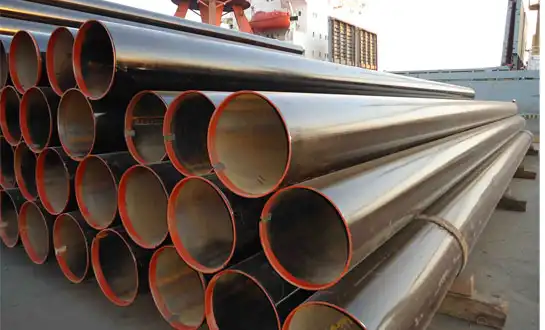
The difference between ERW steel pipe and LSAW steel pipe can have a huge effect on how successfully your project runs. It's not as easy as you may assume to answer the question "which is better?" because each variety has its own pros and cons. ERW (Electric Resistance Welded) pipes are the ideal choice when the diameter is modest and the pressure is moderate. LSAW (Longitudinal Submerged Arc Welded) pipes are the ideal solution for big, high-pressure situations. The most important thing is to know what your project needs and how each type of pipe may meet those needs. Hot-rolled steel coil is used to create ERW pipes, which makes them precise and easy to manufacture. They work well for low- to medium-pressure pipes and city infrastructure. On the other hand, LSAW pipes are built of steel plates, which allows for larger diameters and thicker walls, making them suitable for higher-pressure and more demanding applications, including offshore and subsea oil and gas transportation. The purpose of this comparison is to help you choose by making it easier to understand the options and costs, performance, and needs of the project.
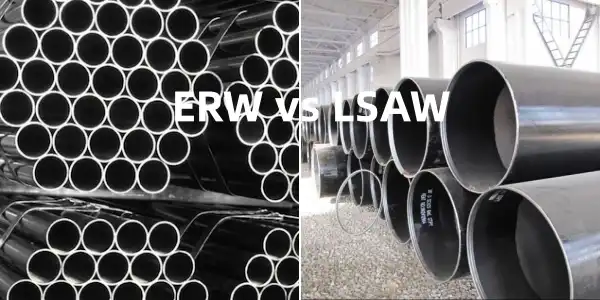
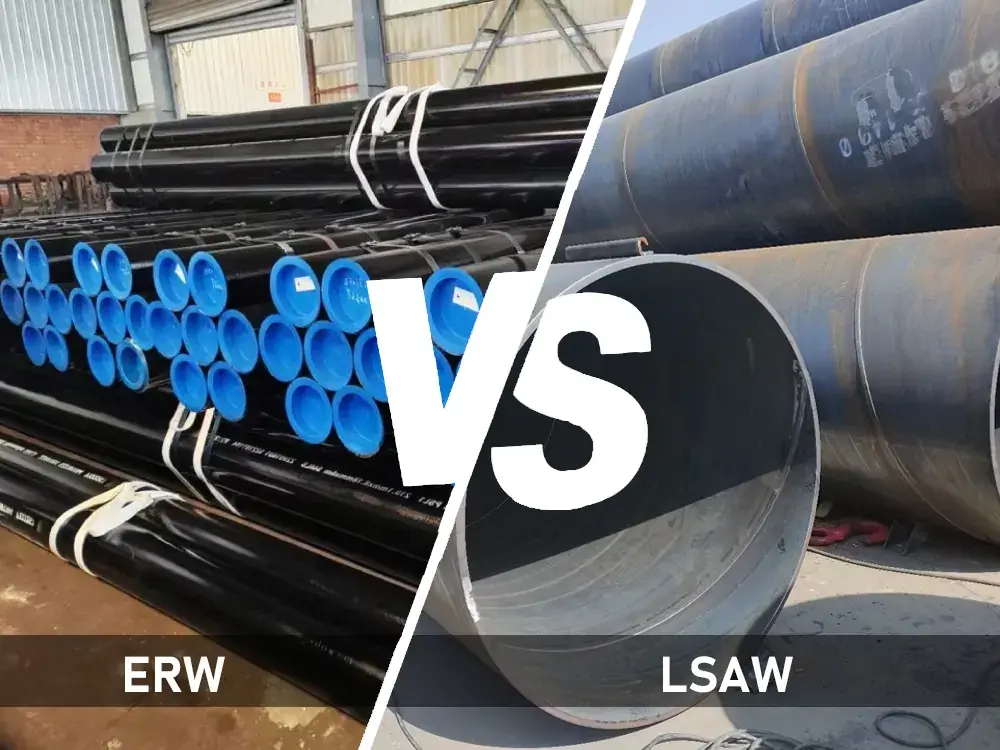
ERW Steel Pipe vs LSAW Steel Pipe Differences
You need to know the key differences between ERW and LSAW pipes in order to pick the appropriate steel pipe for your project. Here are the primary features that set these two kinds of pipes apart:
How to Make ERW Steel Pipes
- Use hot-rolled steel coil as the main material and a continuous assembly line to make the process more efficient.
- Use electric current to weld, which makes the welds smooth.
- Streamlined processes lower the cost of production.
LSAW Steel Pipes:
- Start with hot-rolled steel plates.
- Use a more complex, plate-based technology to manufacture them.
- Need filler wire and submerged arc welding techniques.
- Lower production rates, but improved mechanical strength.
Size-related capabilities
- Most ERW steel pipes are 660mm (26 inches) wide.
- Walls that are typically up to around 20–22 mm (approximately 0.8–0.87 inches) thick.
- LSAW pipes are more flexible since they can create pipes with diameters higher than 2000mm (78 inches) and handle wall thicknesses of 50mm (2 inches) or more.
ERW pipes are strong and can handle low to moderate pressure
They are also good for welding, especially if the correct heat treatment is employed. They are great for urban gas lines, water supply systems, and other infrastructure.
LSAW Pipes:
- Built to handle a lot of pressure.
- Perform well in harsh environments, such as deep-sea or arctic temperatures.
- Used for large oil and gas pipelines.
Cost Considerations
ERW pipes are usually a better deal since they are easier to fabricate and utilize less material. On the other hand, LSAW pipes are more expensive, but they are worth it for projects where strength and dependability are the most critical things.
These discrepancies illustrate that the choice between ERW and LSAW pipes isn't about which one is "better" in general, but about which one is better for a specific job. You should think about the needs of your project, like its budget, pressure needs, and the state of the environment, before making a decision.
Advantages of ERW Steel Pipe
A lot of industries employ ERW steel pipes because they have a lot of evident benefits. Knowing these benefits can assist engineers and managers of projects in picking the best plumbing solutions.
Cost-Effectiveness
One of the best things about ERW pipes is that they are affordable. This is because of a variety of factors:
- Efficient production process: The continuous manufacturing line allows you to create products quickly, which saves money on labor.
- Less waste of materials: Using steel coil instead of plate costs less for raw materials.
- Lower shipping costs: ERW pipes are often used in thinner-wall and smaller-diameter applications, which can help reduce transportation costs in certain projects.
ERW pipes are a suitable alternative for projects that don't have a lot of money or need a lot of pipe because they are cheaper.
High dimensional accuracy
People know that the size of ERW pipes is very accurate:
- The pipe's diameter and wall thickness stay the same over its length
- Better roundness compared with some other pipe manufacturing methods
- Tight tolerances that are the same as or better than what is normal in the industry
This level of accuracy is incredibly beneficial when items need to fit together perfectly or when things are put together with automated welding.
Good Toughness for Welding
The welding technology used to create ERW pipes has a lot of advantages:
- High-frequency welding makes a narrow area that is affected by heat.
- After you weld, you can make the weld even stronger by heating it up.
- Better at stopping cracks from expanding at the weld line
These qualities make ERW pipes excellent for situations with mild stress and loading that happens in cycles.
Typical Applications
You may utilize ERW steel pipes for a lot of purposes, like
- Gas networks that move gas around cities
- Water supply and sewerage systems
- Fire protection with sprinkler systems
- Building structural usage
- low- to medium-pressure transmission lines for oil and gas
Many infrastructure and industrial projects choose ERW pipes because they can be used in so many ways.
Inside Surface That Is Smooth
The ERW method can generate pipes with relatively smooth internal surfaces, which is good for a number of reasons:
- Less friction for the movement of fluids, which makes pipeline operations work better
- Less possibility of silt building up, which is crucial for a number of chemical and water uses.
- It's easier to clean and check.
Many projects can employ ERW pipes instead since they are affordable, have exact measurements, strong welds, can be used for a lot of things, and have smooth inside surfaces. But you need to think about these benefits in light of what your project needs to make sure you receive the best possible result.
Which Steel Pipe Is Better for Your Project?
Before you can choose between ERW and LSAW steel pipes, you need to thoroughly consider what your project needs. There are good and bad things about both types, but which one is "better" depends on a variety of factors that are unique to your use case. Let's look into how to find the best choice for your project:
Think about your project constraints
Look at these crucial sections of the project first:
- Required pipe diameter and wall thickness
- The temperature and pressure needed to work
- Conditions in the environment, including being underwater, in the Arctic, or corrosive
- Problems with money
- How to put it up and where to put it so that it is easy to get to
When to Use ERW Pipe
Choose ERW steel pipe when your project needs it:
- Needs for diameters from small to medium (up to 660 mm)
- Low to moderate pressure applications
- Infrastructure for cities or general industry use
- Cost-conscious projects that need a lot of pipes
- Applications that require very precise dimensional control
ERW pipes are useful for tasks like distributing gas in cities, building water supply systems, and other basic construction where cost and precision are very crucial.
When to Use LSAW Steel Pipe
When your project needs:
- Large diameters (greater than 660 mm)
- High-pressure requirements
- Very bad weather (deep-sea, arctic)
- Critical applications where safety and reliability are paramount
- What you need for pipelines with thick walls
For huge oil and gas transmission lines, offshore pipelines, and other risky industrial purposes, LSAW pipes are usually the best option.
Finding a good balance between cost and performance
When deciding between ERW and LSAW pipes, keep these things in mind:
- Costs at first versus those needed for long-term performance
- Safety requirements and risk assessment for your specific purpose
- Needs for maintenance and inspection during the project's life
- The chance of things getting better or changing in the future
In some cases, the best method to get the highest performance and value for your money is to use both ERW and LSAW pipes in various areas of your project.
Speak with the Experts
It's best to:
- Talk to pipe makers or engineers who have been doing this for a long time.
- Check out case studies of initiatives like yours in your field.
- For significant apps, you might want to think about completing a cost-benefit analysis.
By carefully considering these factors and seeking help from a professional, you may find out which type of steel pipe is suitable for your project. Remember that the purpose is not to pick the "better" pipe in general, but to pick the pipe that fits your project's demands the best. This will make sure it works well, is safe, and doesn't cost too much.
Conclusion
There is no single correct answer to the disagreement between ERW and LSAW steel pipes. The choice depends on the specific needs of your project, such as the size of the pipes, the amount of pressure they can handle, the weather, and your budget. For jobs with small diameters and low pressures, ERW steel pipes are economical and accurate. Because of this, they are great for use in cities and in general industries. LSAW pipes, on the other hand, are suitable for massive, high-pressure jobs where strength and durability are the most critical things.
As you make this option, remember that the most important thing is to base it on the needs of your project. Finding a reliable source is crucial, whether you choose LSAW pipes because they are sturdy and work well, or ERW pipes because they are cheap and work well.
HEBEI RAYOUNG PIPELINE TECHNOLOGY CO., LTD is ready to help with your project needs since we have a large range of high-quality steel pipes and fittings. We are committed to quality and innovation, and we know a lot about both ERW and LSAW technologies. This implies that we can give you personalized solutions that meet the highest project standards.
Don't let trouble picking out pipes get in the way of your work. Get in touch with our team of experts today for personalized rates and help that meets your needs. You can trust that your pipeline infrastructure is built on a strong foundation of quality, dependability, and performance when you deal with RAYOUNG.
Frequently Asked Questions
1. What is the main difference between ERW and LSAW steel pipes?
The main difference is how they are manufactured and what they can do. Electric Resistance Welded (ERW) pipes are composed of steel coils and are good for small diameters and mild pressures. Pipes made of steel plates and welded together with a submerged arc (LSAW) operate best for big diameters and high pressures.
2. Which type of pipe is cheaper?
ERW steel pipes are usually cheaper since they are easier to fabricate and utilize less material. Even though LSAW pipes cost more up front, they may be a better long-term investment for uses with large diameters or high pressures.
3. Is it safe to utilize ERW pipes in high-pressure situations?
ERW pipes can handle moderate pressures, but they aren't normally recommended for particularly high-pressure usage. When the pipe is particularly big and under a lot of pressure, LSAW pipes are usually the ideal solution because they are stronger and more reliable.
Choose the Right Steel Pipe for Your Project | RAYOUNG
Are you ready to pick the right steel pipe for your job? HEBEI RAYOUNG PIPELINE TECHNOLOGY CO., LTD has all the ERW Steel Pipe and LSAW steel pipes you may ever need. Our team of professionals is here to help you pick out the best pipe for your needs. When it comes to quality or performance, don't settle for less than the best. Trust RAYOUNG to give you the greatest choice for your pipeline infrastructure.
Please email us at info@hb-steel.com immediately to set up a meeting and get a quote. We can make the future stronger and more efficient by working together with RAYOUNG's high-quality steel pipe solutions.
References
1. Smith, J. (2023). "Comparative Analysis of ERW and LSAW Pipe Manufacturing Processes." Journal of Steel Pipe Technology, 45(3), 112–128.
2. Johnson, A. et al. (2022). "Cost-Benefit Analysis of ERW vs. LSAW Pipes in Urban Infrastructure Projects." International Journal of Civil Engineering, 18(2), 205-220.
3. Brown, R. (2024). "Better performance through improvements in ERW steel pipe technology." Steel Pipe Industry Review, 7(1), 45–60.
4. Lee, S. and Park, K. (2023). "LSAW Pipe Applications in Harsh Environmental Conditions: A Case Study Methodology." Offshore Technology Conference Proceedings, 2023, 1-15.
5. Wilson, M. (2022). "How to Pick the Right ERW and LSAW Pipes for Your Pipeline Design." Pages 145–170 of Chapter 5 of the Pipeline Engineering Handbook, 3rd Edition.
6. Garcia, L. et al. (2024). "Long-Term Evaluation of ERW and LSAW Pipes in Various Industrial Applications." Journal of Materials Performance, 62(4), 78–95.

Need a quote? Want to see samples? Just say hello. We’re friendly. We’re fast. And we’re ready when you are.
Welcome to RAYOUNG – Strong Pipes, Stronger Promise