The best pipe flanges for high-pressure industrial applications are ANSI/DIN/JIS standard raised face (RF), flat face (FF), and ring-type junction (RTJ). These high-pressure flanges seal well and are structurally strong for harsh industrial situations. These established designs reduce project risk and ensure long-term operating safety, so EPC contractors, distributors, and engineering companies pick them.

Introduction
Industrial activities in Latin America, Southeast Asia, the Middle East, and other growing regions need safe, high-pressure plumbing systems. Refineries, chemical plants, power plants, and industrial processes use high-pressure flanges as essential connection locations where system failure might be catastrophic.
Choosing the right flange type is critical when project budgets and timelines are limited. EPC contractors and project developers require confidence that their components will work consistently during the facility's operation. Government infrastructure projects must be cost-effective and meet international standards. Industrial users value downtime savings and ownership cost reduction.
Modern manufacturing methods, including CNC-machined sealing surfaces and MTC, have improved flange dependability. In difficult situations with restricted maintenance access, hot-dip galvanizing improves corrosion resistance and service life.
Essential Selection Criteria for High-Pressure Flanges
Multiple performance criteria that affect project success and long-term operating expenses must be considered when choosing high-pressure flanges. These criteria assure application compatibility and safety.
Pressure Rating and Temperature Compatibility
Pressure ratings must exceed operating requirements with safety margins. Specialized applications need greater pressure classes than ASME B16.5's 150–2500. Thermal cycling resistance is crucial for process industries since temperature changes material characteristics and seals.
Material Composition and Corrosion Resistance
Carbon steel is cost-effective for conventional uses, whereas stainless steel grades resist chemical processing corrosion. Inconel and Monel are used in specialist applications where typical materials fail early. Material choice affects maintenance and replacement costs.
Sealing Surface Design and Machining Quality
CNC-machined sealing surfaces provide a uniform polish and dimensional precision that hand-machining cannot match. Gasket performance and leak-tightness depend on surface roughness. Precision machining speeds installation and prevents unsafe field changes.
Top High-Pressure Flange Types for Industrial Applications
ANSI B16.5 Raised Face (RF) Flanges
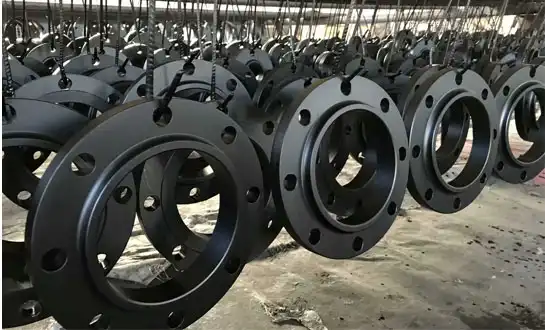
Raised face flanges dominate industrial applications because they seal well with ordinary gaskets and are cost-effective. The raised sealing surface focuses bolt strain on the gasket, improving sealing pressure over flat-face versions. These high-pressure flanges can handle 150–2500 pressure classes, making them appropriate for most industrial applications. The 1/16-inch increased surface height controls compression and avoids gasket blowout during pressure cycling. Standard dimensions simplify inventory management and promote manufacturer interchangeability.
High-pressure flanges perform well with compressed fiber, spiral wound, and metallic gaskets depending on pressure and temperature. Installation is simple, saving field personnel expenses and mistakes. The design makes gasket replacement during maintenance straightforward without tools.
Distributors and stockists like high-pressure flanges since they're the most sought-after configuration. For ordinary process applications where proven performance trumps unusual material requirements, EPC contractors select these flanges. Manufacturers favor high-pressure flanges because replacement parts are accessible globally.
Quality high-pressure flanges reduce stress concentrations with smooth hub-to-sealing face transitions. Avoiding fastener issues requires accurate bolt hole drilling spacing and quality. Forging material qualities are homogenous thanks to heat treatment.
DIN Standard Flat Face (FF) Flanges
Flat-face flanges work well in brittle pipe materials like cast iron and certain polymers, where raised-face designs might cause stress concentrations. The flat sealing surface effectively distributes bolt loads over the gasket, eliminating point stresses that might shatter sensitive components.
European and international projects generally specify DIN standards, making FF flanges vital for worldwide compatibility. These flanges work at lower pressures than raised-face ones yet are suitable for applications that need consistent load distribution.
FF flanges allow full-face gaskets to reach the bolt circle, increasing sealing surface and leak resistance. This arrangement is ideal for vacuum applications or hazardous fluid services that need leak-tight integrity.
To keep the sealing surface level, premium FF flanges must be machined precisely. Because defects influence sealing, surface finish standards are stricter than RF flanges. To avoid gasket deformation, bolt torque patterns are critical.
Installation involves gasket centering and bolt tightening for consistent compression. Field staff need training to use FF flange connectors effectively. Maintenance may vary from RF flanges, especially gasket replacement.
Ring-Type Joint (RTJ) Flanges
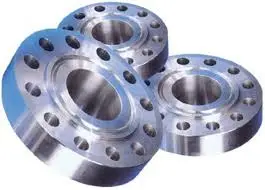
When ordinary gaskets fail to seal severe high-pressure situations, RTJ flanges are the best solution. These flanges use metal ring gaskets that bend into precision-machined grooves to provide metal-to-metal seals that can sustain extreme pressures up to 10,000 PSI or even 20,000 PSI (API 6A standards).
RTJ ring gaskets are octagonal or oval and made of soft metals like iron, steel, or exotic alloys depending on operating circumstances. To flex properly during installation, ring gasket materials must be softer than flange materials. At high temperatures, polymer gaskets fail, but this metal-to-metal sealing mechanism performs better.
To achieve ring gasket compression without metal overstress, groove diameters are accurately regulated. ASME B16.5 specifies ring gaskets, whereas API 6A governs oil and gas RTJ flange diameters. These standards guarantee equipment manufacturer interchangeability.
To work well, RTJ flanges need specialist installation and experienced staff. Avoid damaging sealing integrity by properly installing ring gaskets. Bolt tightening sequences and torque levels matter more than flange connections.
RTJ flanges are essential for leak protection in high-pressure process sectors like refineries and petrochemical facilities. Offshore drilling requires RTJ wellheads and high-pressure manifold connectors. Superior dependability and lower maintenance justify the initial cost increase.
Regional Market Characteristics and Compliance Requirements
Different worldwide markets bring different problems and possibilities for high-pressure flange selection and procurement. Learning regional preferences improves project results and guarantees regulatory compliance.
Latin American Market Dynamics
Latin American markets follow worldwide norms while being cost-sensitive. DIN standards are used in manufacturing and chemical processing, whereas ASME and API standards dominate oil and gas projects. Local content regulations may affect material sourcing.
Brazil, Mexico, and Colombia need dependable high-pressure flanges for infrastructure expansion. Government projects typically need certification and material traceability. Delivery schedules must allow long shipping and customs clearance timeframes.
Southeast Asian and Middle Eastern Preferences
These rapidly industrializing areas value proven technologies and supply systems. International standards with harsh climatic criteria govern high-pressure flange specifications. In coastal and desert regions, corrosion resistance is crucial.
Project funding might affect payment and delivery timeframes. Local collaboration requirements may affect supplier selection. Technical assistance and after-sales service are becoming more crucial in competitive bidding.
Purchasing Recommendations and Implementation Considerations
High-pressure flange procurement must balance performance, budget, and dependability. Smart buying affects project economics and operations.
Consider overall cost of ownership, not just purchase price. Premium flanges with exceptional sealing surfaces and certifications save maintenance expenses and unwanted downtime. Traditional machining processes provide less consistent parts than CNC machining.
Check material certificates and traceability before accepting delivery. Chemical and mechanical qualities should be verified by mill test certificates. Third-party inspections may verify quality from unknown vendors.
Consider inventory management that balances carrying costs and supply security. Critical applications may need safety stock for emergency repairs. Using common pressure classes and facings streamlines inventory management.
Find providers with trustworthy quality and delivery. Technical help is useful for field installation and performance difficulties. Supplier financial stability impacts long-term parts supply.
Industry Trends and Future Outlook
Digital manufacturing improves high-pressure flange quality and lowers costs. Advanced materials and coatings prolong service life in harsh situations. Predictive maintenance optimizes replacement schedules and lowers inventory costs. Environmental rules require better sealing and lower fugitive emissions.
Conclusion
Application needs, geographical preferences, and long-term operating objectives must be considered when choosing high-pressure flanges. For particular applications, ANSI raised face, DIN flat face, and RTJ designs provide benefits. CNC machining and material certification assure equipment reliability throughout its lifespan. Smart procurement practices that focus on total cost of ownership provide better project results than initial purchase price selections.
Frequently Asked Questions
Q1: What pressure ratings are considered high-pressure for industrial flanges?
A: High-pressure flanges typically begin at ANSI Class 300 (approximately 1440 PSI at ambient temperature) and extend to Class 2500 or higher. Specialized applications may require even higher pressure ratings with custom designs and exotic materials.
Q2: How do I determine the correct flange facing type for my application?
A: Facing selection depends on pressure, temperature, and piping material. Raised face (RF) works for most applications, flat face (FF) suits brittle materials, and RTJ provides maximum sealing for extreme conditions. Consult application engineers for specific recommendations.
Q3: What certifications should I require when purchasing high-pressure flanges?
A: Essential certifications include Mill Test Certificates (MTC) showing material properties, dimensional inspection reports, and pressure testing documentation. Additional certifications may include NACE compliance for sour service and PED marking for European applications.
Partner with RAYOUNG for Premium High-Pressure Flange Solutions
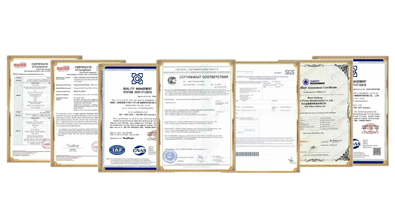
Engineering high-pressure flanges from RAYOUNG suits the needs of EPC contractors, distributors, and industrial end users globally. CNC-machined sealing surfaces assure constant performance, while MTC traceability offers material documentation. Our ISO 9001:2015 certifications demonstrate our quality dedication. Our expert staff optimizes flange selection for project success, whether you require ANSI or DIN designs. Email info@hb-steel.com to discuss high-pressure flange needs with industry specialists.
References
1. ASME B16.5-2020, Pipe Flanges and Flanged Fittings: NPS 1/2 Through NPS 24 Metric/Inch Standard, American Society of Mechanical Engineers, New York, 2020.
2. API Specification 6A-2019, Specification for Wellhead and Tree Equipment, American Petroleum Institute, Washington DC, 2019.
3. DIN EN 1092-1:2018, Flanges and Their Joints—Circular Flanges for Pipes, Valves, Fittings, and Accessories, Deutsches Institut für Normung, Berlin, 2018.
4. Brown, Michael J., "High-Pressure Piping Systems Design and Installation," Industrial Press Inc., Second Edition, 2021.
5. Smith, Robert K., and Anderson, David L., "Metallic Gasket Performance in High-Pressure Applications," Journal of Pressure Vessel Technology, Vol. 143, Issue 4, 2021.
6. International Association of Oil & Gas Producers, "Guidelines for High-Pressure Flange Connections in Offshore Applications," Report No. 435, London, 2020.