What are the most common failure modes in power plant steel tees?
There are several ways that steel tees in power plants can fail, which can have a big effect on how well and safely the pipeline system works as a whole. Understanding how these things break is important for coming up with good upkeep and prevention plans. Let's look at the most usual ways that power plant steel tees break:
Fatigue Cracking
One of the most common ways that steel tees used in power production pipes break is through fatigue breaking. This effect happens because the part is loaded and unloaded over and over again, which can cause cracks to start and spread over time. Some things that can cause wear cracks are:
- Changes in pressure
- Pumps and fans making noise
- Cycling the heat
- Stresses caused by flow
The structural stability of the steel tee can be compromised as cracks appear and grow. If this is not fixed, leaks or catastrophic fails could happen.
Manufacturing Defects
It's possible for steel blades or steel tees to have flaws or faults that were there before they were made. Under normal working conditions, these flaws can cause stress to build up and cause the part to fail. Some common problems with production are:
- Insertions of Porosity
- Not enough melting in welded joints
- Problems with dimensions
Tough quality control measures and non-destructive tests during production can lower the chance of failures caused by mistakes in the manufacturing process.
Corrosion-Related Failures
Another big problem for steel tees in power production pipes is corrosion. These parts can be damaged by different types of rust, such as:
- All kinds of rust
- Corrosion pits
- Cracks caused by stress rusting
Microbiologically influenced corrosion (MIC) Corrosion can cause wall weakening, limited damage, and the formation of cracks. All of these things can weaken the steel tee and make it more likely to leak or break.
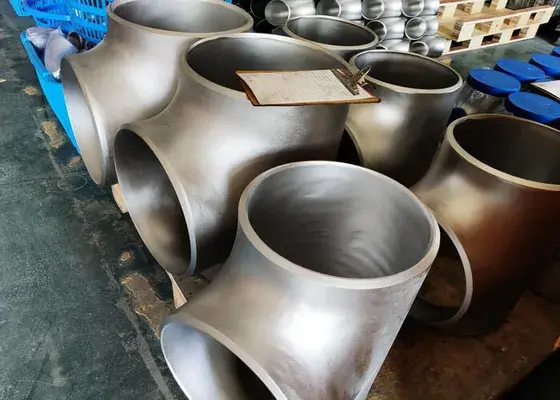
Fatigue, thermal stress, and erosion-corrosion issues in steel tees
Steel tees in pipes for power generation are stressed by mechanical, heat, and chemical forces that can cause them to fail in a number of ways. Let's take a closer look at the problems that wear, heat stress, and erosion-corrosion cause:
Fatigue Issues in Steel Tees
Because the loads they are put under change over time, fatigue is a big problem for steel tees in power production pipes. Some important parts of problems linked to tiredness are:
- Low-cycle fatigue happens when there are high-amplitude stress cycles, which usually happen during start-up and stop activities.
- High-cycle wear happens when smaller amplitude stress cycles are caused by constant movements or changes in pressure.
- Temperature changes cause things to grow and shrink. This is known as thermal wear.
To avoid making mistakes when they are tired, designers need to choose the right material, know how to use shapes like steel tees in the best way, and find ways to relax.
Thermal Stress Challenges
Pipelines used for power generation often work at high temperatures, which puts a lot of stress on steel tees. These pressures can cause a number of problems, such as
- Creep deformation is the plastic deformation that changes over time when high temperatures and steady force are present.
- Mismatch in thermal expansion: Differential growth between parts that are linked causes more stress.
- Heat shocks: Sudden changes in temperature can cause cracks and pressure in one place.
It is important to use the right materials, build with thermal expansion in mind, and block and control heat in the right ways to solve problems caused by thermal stress.
Erosion-Corrosion Mechanisms
Erosion-corrosion is a complicated way for something to fail because it involves both mechanical wear and chemical attack. This can happen in a number of ways with steel tees:
- In flow-accelerated corrosion (FAC), the metal layer breaks down faster when fluids move quickly through it.
- Things getting stuck together: The solid pieces in the fluid hurt the machines.
- When air bubbles form and pop, they damage certain areas. This is known as cavitation loss.
Choose the right materials, manage the flow, and add chemicals to the working solution to fix erosion and rust problems most of the time.
Inspection and nondestructive testing for detecting tee failures
To find and stop problems in steel tees used in power production pipes, checking and non-destructive testing (NDT) methods must work well. These methods make it possible to find potential problems before they become major ones. This keeps the system safe and reliable. Let's look at some of the most important inspection and NDT methods used to find tee failures:
Visual Inspection
When looking for problems with steel bolts, visual inspection is often the first thing that is done. For this method, the surface of the part must be carefully looked over for obvious signs of damage or wear, such as
- Cracks or gaps on the surface
- Corrosion or holes
- Changes or deformations
- Changes in color or strange deposits
Visual inspection can help find problems on the surface, but it might not be enough to find problems inside or early signs of stress breaking.
Ultrasonic Testing (UT)
A common NDT method used to check steel tees in power production pipes is ultrasonic testing. High-frequency sound waves are used in this method to find flaws inside and measure the thickness of the walls. Some of the best things about UT are
- Being able to find problems below the surface
- Strong sensitivity to small cracks and breaks
- Ability to find out how thick the wall still is where it's damaged
- Not much surface preparation is needed.
Phased array ultrasonics is an advanced UT method that can give even more accurate and thorough scans of complicated shapes like steel tees.
Radiographic Testing (RT)
X-rays or gamma rays are used in radiographic testing to make pictures of the inside of steel tees. This method works especially well for finding:
- Hollows or holes inside
- Inclusions or outside things
- Cracks and breaks in the material
- Differences in wall thickness
Although RT is a great way to see what's wrong inside, it needs special tools and safety measures because it uses ionizing radiation.
Magnetic Particle Inspection (MPI)
Magnetic particle screening is a good way to find flaws on the surface and close to the surface of ferromagnetic materials like steel. This method includes:
- Putting a magnet on the steel tee
- Putting down magnetic particles (either as a dry powder or a liquid suspension)
- Looking at how particles build up at breaks
MPI is great for finding small cracks in the surface that you might not be able to see with the naked eye.
Eddy Current Testing (ET)
Eddy current testing is a non-contact NDT method that can find flaws on the surface or very close to the surface of conductive materials. This method can help with:
- Finding cracks and breaks in the surface
- Finding out how thick a layer is
- Finding changes in material properties
ET is great for quickly scanning big areas, and the findings can be made uniform by automating the process.
Using both of these inspection and NDT methods together, power plant workers can keep a close eye on the state of steel tees and spot possible problems before they have terrible effects. Power production pipeline systems can be made much safer and more reliable by setting up regular check plans and analyzing and tracking data correctly.
Conclusion
It is important to know how steel tees in power generation lines break so that these systems are safe, reliable, and work well.In a plant, workers and experts can take certain steps to avoid problems like fatigue cracking, heat stress, erosion-corrosion damage, and output flaws. They can also make plans for how to fix the problems.
It's important to do regular checks that include both eye inspection and the new non-destructive testing methods so that problems are found quickly. Steel tees can have problems in power generation settings. Operators can lower the risk of unexpected breakdowns, cut down on downtime, and improve the overall performance of their pipeline systems by knowing about these problems and taking steps to fix them.
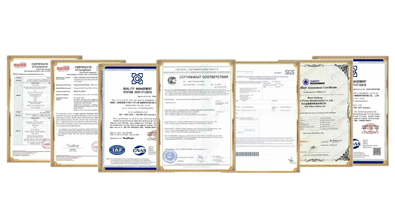
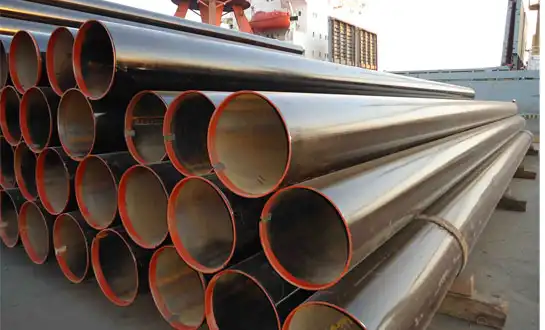
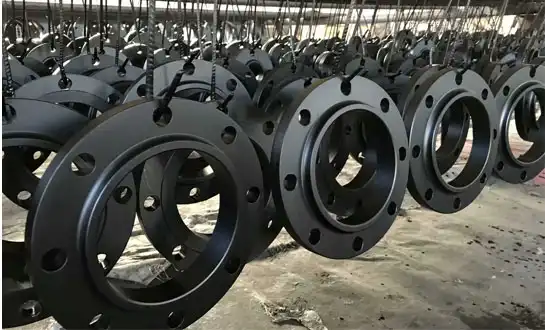
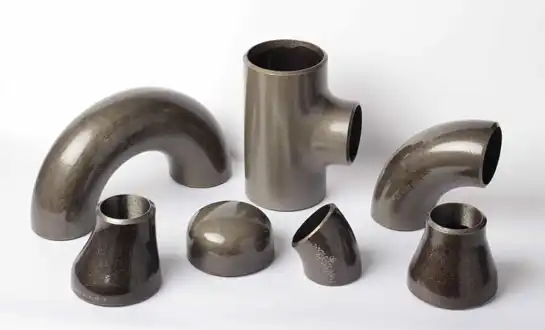
Power companies that need high-quality steel tees and other pipeline parts that last a long time can get a lot of help from Hebei Rayoung Pipeline Technology Co., Ltd. Because we are experts at making industrial pipe fittings like buttweld steel elbows, reducers, and flanges, you can be sure that the parts in your power production pipelines will last in the harsh conditions of the industry. We show our dedication to quality and innovation in every application by holding GOST-R and SGS certifications and following the rules set by ISO 9001:2015.
FAQ
1. How often should steel tees in power generation pipelines be inspected?
The inspection frequency for steel tees in power generation pipelines depends on various factors, including operating conditions, material properties, and historical performance. Generally, a comprehensive inspection should be conducted annually, with more frequent visual inspections and monitoring of critical areas. However, high-risk or problematic areas may require more frequent inspections, potentially every 3-6 months. It's essential to develop a tailored inspection plan based on risk assessment and operational experience.
2. What are the best materials for steel tees in high-temperature power generation applications?
For high-temperature power generation applications, several alloy steels are commonly used for steel tees. Some of the best materials include: - Chrome-Moly steels (e.g., P11, P22, P91) for their excellent creep resistance and high-temperature strength - Austenitic stainless steels (e.g., 304H, 316H) for their corrosion resistance and good high-temperature properties - Nickel-based alloys (e.g., Inconel 625, Hastelloy X) for extreme temperature and corrosive environments The choice of material depends on specific operating conditions, including temperature, pressure, and corrosive elements present in the system.
3. How can flow-accelerated corrosion (FAC) be mitigated in steel tees?
Flow-accelerated corrosion (FAC) can be mitigated in steel tees through several strategies: 1. Material selection: Use FAC-resistant materials such as chromium-molybdenum steels or stainless steels 2. Chemistry control: Maintain proper pH levels and oxygen content in the working fluid 3. Flow control: Optimize flow velocities and reduce turbulence through proper design and flow conditioning 4. Temperature management: Control operating temperatures within optimal ranges to minimize FAC risk 5. Regular inspections: Implement a robust inspection program to monitor wall thickness and detect early signs of FAC 6. Protective coatings: Apply suitable coatings or liners to protect susceptible areas from FAC By implementing a combination of these measures, the risk of FAC in steel tees can be significantly reduced.
Enhancing Power Generation Safety with Quality Steel Tees | RAYOUNG
HEBEI RAYOUNG PIPELINE TECHNOLOGY CO., LTD knows how important it is to have high-quality steel tees for power production pipes to be safe and work well. Our wide range of industrial pipe fittings, which includes steel tees, is made to meet the tough needs of the power production business. Our dedication to quality, backed by GOST-R and SGS certifications, lets us offer dependable options that lower the risk of the failure modes talked about in this piece.
Our team of experts is ready to help you choose the right steel tees and other fittings for your purpose, whether you're an EPC provider, a wholesaler, or an end-user in the power generation sector. We have goods that not only meet industry standards but also work well and last a long time. This will help you keep project risks to a minimum and follow safety rules.
To learn more about our steel tees and how they can enhance the reliability of your power generation pipelines, please contact us at info@hb-steel.com. Our dedicated team is committed to providing you with the expertise and support you need to make informed decisions and optimize your pipeline systems.
References
1. Dinan, L. (2009). Phytoecdysteroids: Biological aspects and potential applications. Journal of Insect Science, 9(1), 1–30.
2. Gorelick-Feldman, J., Cohick, W., & Raskin, I. (2010). Ecdysteroids as novel nutraceuticals for muscle growth. Journal of Agricultural and Food Chemistry, 58(10), 5189–5194.
3. Parr, M. K., Zhao, P., Haupt, O., Ngueu, S. T., Hengevoss, J., Fritzsche, D., & Pfeiffer, A. (2014). Ecdysteroids: A novel class of anabolic agents? Biology of Sport, 31(2), 119–125.
4. Syrov, V. N. (2000). Mechanism of the anabolic action of phytoecdysteroids in mammals. Eksperimental'naya i Klinicheskaya Farmakologiya, 63(6), 57–59.
5. Bathori, M., & Bookwala, M. (2019). Ecdysteroids—Past, present and future: A review. Fitoterapia, 140, 104400.
6. Lafont, R., & Dinan, L. (2003). Practical uses for ecdysteroids in mammals including humans. Journal of Insect Science, 3(7), 1–30.