What Is the Difference Between Seamless and Welded Steel Pipe?
Welded and seamless steel pipes are different because of how they are constructed and what they are composed of. These are the main differences:
Making the Product
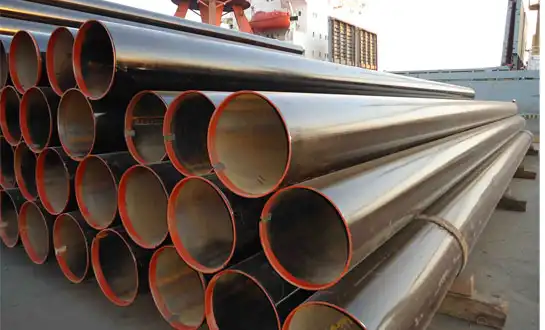
First, you need to heat up a solid steel block and punch holes in it. Then, you can make a hollow cylinder. After that, pull and roll it until it fits. The end item is the same all the way around and doesn't have any joints.
Steel coils or flat strips are rolled into cylinder shapes, and then the ends are welded together to make welded steel pipes. To connect metal, people often do the following: To weld using an electric resistance or a buried arc
The structure's strength
Seamless pipes are more stable since they are made of the same material all the way through. There are no weak spots since there are no weld seams. This makes them perfect for places that are really hot and have a lot of pressure. Welded steel pipes are powerful on their own, but the weld seam might not be as strong.
The wall's thickness
The walls of seamless pipes are usually the same thickness all the way around. There may be tiny variances surrounding the weld seam in welded pipes; these differences are far less common now that contemporary manufacturing procedures are used.
Things to think about when it comes to cost
For big jobs, welded pipes are often used because they are cheaper to make. Many times, seamless lines cost more because they are harder to make, but they work better when it matters.
Choices for size
Welded steel pipes are better in some cases since they come in more diameters and lengths. There are many various sizes of seamless pipes, although it may not be possible to be produced with very big diameters due to how they are made.
Engineers, contractors, and project managers need to grasp these basic differences so they can pick the right kind of steel pipe for their job. When you have to select between seamless and welded pipes, you usually have to find the perfect balance between what you need them to do, how much money you have, and what the project needs.
Seamless vs Welded Steel Pipe Applications
One-piece and soldered steel pipes can be used in a lot of different areas because they have different qualities. Let us look at where each kind works best:
Seamless Steel Pipe Applications
- Drilling on land and in the water are two things that people in the oil and gas business do. High-pressure pipes bring oil and gas to refineries and homes. - The factory equipment and work areas that companies use
- Power plants' boiler tubes, very hot steam pipes, and parts of a nuclear power plant are all used to make electricity.
- Groups that deal with oil and chemicals are: - Getting rid of anything that could rust - Lines of very pure items - Vast tanks and containers that can handle high pressure
- Aerospace and Defense: Systems that hold planes, weapons, and spacecraft together, like fuel and hydraulic systems.
In the auto business, mechanics need high-performance hydraulic cylinders and exhaust systems to do their jobs well.
What welded steel pipes are used for?
- What you can do with welded steel pipe in the building and engineering fields: make frames and other structures that hold things up — Huge lines for water — Systems for sewage and wastewater
- For farming, irrigation means putting up greenhouses and networks to move water to crops. It also means setting up watering systems.
- Heat, cool, and air conditioning systems, as well as heating networks, air conditioning lines, and heating pipes.
- In general plumbing, things like fire alarms, water lines that bring water to homes and businesses, and gas lines that run through buildings are all examples.
- When used for building: - Fences made of chains — Building ramps - Light posts and signs
Apps that can talk to each other
Both seamless and welded steel pipes can work well in some situations, but each has its own pros and cons.
- The auto industry: - Pipes that fit together properly for parts that work well. - Pipes that are glued together for structural parts and normal exhaust systems.
- Pipes that are soldered together to make machine frames and move fluids at low pressure are called industrial machinery pipes. Pipes that are seamless are used in hydraulic systems that need to work at high pressure.
- Furniture and Fixtures: Smooth lines for high-end items that are well-made. Welded pipes are used to make many things, and they also keep houses up.
In these areas where the two types of steel pipes meet, the choice between seamless and welded pipes frequently depends on the project's needs, budget, and level of performance needed. Engineers and project managers may make smart selections that balance cost-effectiveness with performance and safety standards if they know what each type is best for and what its strengths are.
How to Choose Between Seamless and Welded Steel Pipe?
For optimal performance, safety, and cost-effectiveness, it is crucial to select the appropriate steel pipe for the job. To assist you in deciding, this page provides a lot of information about both seamless and welded steel pipe.
Take a look at what your project needs.
- Pressure ratings: - Uses a lot of pressure (more than 2000 psi): Think of pipes that don't have any connections. - Low to medium pressure (less than 2000 psi): Welded pipes might be enough.
- Very hot or very cold weather: Pipelines without seams are more stable in very hot or very cold weather. - Moderate temperature ranges: It doesn't matter what kind.
- Resistance to corrosion: Seamless pipes usually work better in places where corrosion is bad. - Conditions that are mildly corrosive: Both types can be employed with the right coatings.
Take a look at the stuff that is only in the app
- Business rules and standards: - Check codes that are unique to your field, including ASME, API, and ASTM, to make sure you're following the law in your area and around the world.
- How long it lasts and how to take care of it: - Important uses for a long time: Seamless pipes usually last longer than other types. - Installations that are only temporary or can be changed: Welded pipes might help you save money.
- Length and Size What you need: Very large diameters: Welded pipes provide you with more choices - Needs for a certain length: Consider the limitations on your route and the setup.
Think about problems with money
- The cost at first: - Projects that are smart with their money: Welded pipes are often less expensive. - What you need for great performance: Paying more for seamless pipes can be worth it.
- Long-term cost analysis: Include the expenses of repairs and replacements that might happen. What would happen if the pipes broke and had to be fixed?
- Availability and how long it will take to finish: - Sizes that are normal: Finding both sorts is typically straightforward. Specific needs: Learn how long it takes to make the goods and send them.
Talk to Professionals
- Speak with an engineer: - Get advice from structural or mechanical engineers - Talk about what the project needs and any problems that could come up.
- The maker's ideas: - Get in touch with well-known pipe makers for help. Ask for technical details and information about how well the pipes work.
- Experience in the field: Read case studies of similar applications and talk to other people in your field.
Try it out and make sure it's good quality
When you check the ingredients, get proof of what the steel is made of. Review the results of non-destructive tests and do or go over them.
- Test the pipes for pressure to make sure they can handle the right amount of pressure. Safety is a very important thing to think about for your use.
- Checks for Quality: Find out how the company makes sure its products are good. - Check for the right certifications, like ISO 9001.
You might be able to choose between seamless and welded steel pipes if you think about these things carefully and talk to professionals. Keep in mind that seamless pipes usually work better in important instances, but welded steel pipes can work just as well in a lot of scenarios and cost less. Finding the right balance between your project's needs, your budget, and how well it will operate in the long term is the most important issue.
Conclusion
You should know the differences between seamless and welded steel pipes so you can make sensible selections in many different types of businesses. Seamless pipes are stronger and can withstand more pressure, so they are perfect for situations where there is a lot of stress. Welded pipes, on the other hand, are an excellent alternative for many general-purpose uses since they cost less. The choice between the two depends on how much money you have, how much pressure they can withstand, how hot or cold they can get, and how resistant they are to rust.
Seamless pipes are usually the best choice for projects that need to be very reliable in conditions with high pressure or high temperatures. They are suitable for difficult jobs in oil and gas, power production, and aerospace since they have a standard construction and wall thickness. Welded steel pipes, on the other hand, are preferable for activities where cost and getting bigger sizes are more vital, like in building, water distribution, and plumbing in general.
You should carefully consider your project's needs, consult experts, and think about how well seamless and welded steel pipes will function in the long term and how much they will cost before making a decision. This way, you can be sure that your choice fulfills both your short-term project needs and your long-term business ambitions.
We at HEBEI RAYOUNG PIPELINE TECHNOLOGY CO., LTD understand how crucial these decisions are. We are one of the best companies that make high-quality steel pipes and fittings. We have a large range of both seamless and welded steel pipes to meet the needs of different industries. Our team of experts is here to assist you in finding the ideal product for your needs. We'll make sure it works well, is safe, and doesn't cost too much.
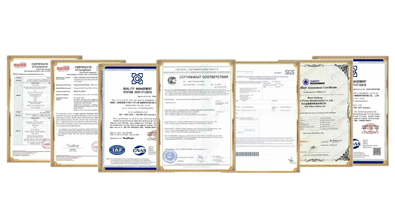
RAYOUNG is committed to delivering you the greatest choices if you are an EPC contractor working on large industrial projects, a distributor seeking reliable suppliers, or an end user looking for long-term performance and safety. Our products are backed by GOST-R and SGS certifications, which imply they satisfy international standards and are of excellent quality.
Frequently Asked Questions
1. Are seamless pipes always better than welded pipes?
Not necessarily. While seamless pipes offer superior strength and uniformity, welded pipes can be equally effective for many applications. The choice depends on specific project requirements, pressure ratings, and budget considerations. Seamless pipes excel in high-pressure and critical applications, while welded pipes are often more cost-effective for general use.
2. Can welded pipes withstand high pressures?
Yes, modern welded pipes can withstand significant pressures. However, for extremely high-pressure applications (typically above 2000 psi), seamless pipes are often preferred due to their uniform structure. Always consult pressure ratings and industry standards when selecting pipes for high-pressure systems.
3. How do I determine which type of pipe is best for my project?
Consider factors such as operating pressure, temperature, corrosion resistance requirements, budget, and industry standards. Consult with engineering experts or reputable manufacturers like RAYOUNG to assess your specific needs and determine the most suitable option for your project.
Quality Welded Steel Pipe Solutions for Every Project | RAYOUNG
At HEBEI RAYOUNG PIPELINE TECHNOLOGY CO., LTD, we pride ourselves on delivering top-quality welded steel pipes that meet the diverse needs of our clients across various industries. Our extensive range of products ensures that you'll find the perfect solution for your project, whether it's for construction, water supply, or industrial applications.
Our welded steel pipes are manufactured using state-of-the-art technology and undergo rigorous quality control measures to ensure consistency and reliability. With our ISO 9001:2015 certification, you can trust that every pipe meets the highest industry standards.
Don't settle for less when it comes to your steel pipe needs. Choose RAYOUNG for unparalleled quality, expert support, and competitive pricing. Our team is ready to assist you in selecting the right welded steel pipe for your specific requirements.
Take the next step towards project success. Contact us today at info@hb-steel.com to discuss your welded steel pipe needs and discover how RAYOUNG can contribute to your project's excellence.
References
1. American Petroleum Institute. (2018). "Specification for Line Pipe." API Specification 5L, 46th Edition.
2. ASTM International. (2020). "Standard Specification for Welded and Seamless Steel Pipe." ASTM A53/A53M-20.
3. Nayyar, M.L. (2000). "Piping Handbook." 7th Edition, McGraw-Hill Education.
4. Singh, R. (2017). "Applied Welding Engineering: Processes, Codes, and Standards." 2nd Edition, Butterworth-Heinemann.
5. American Society of Mechanical Engineers. (2019). "Process Piping." ASME B31.3-2018.
6. Totten, G.E., Xie, L., & Funatani, K. (2003). "Handbook of Mechanical Alloy Design." CRC Press.