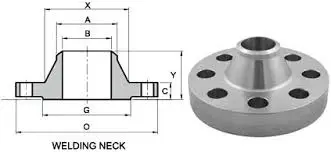
What documentation and certifications are needed to import weld-neck flanges into Canada?
When bringing in welding neck flanges from China to Canada, legitimate documentation and certifications are pivotal to guarantee compliance with Canadian controls and traditions requirements. Here's a breakdown of the fundamental printed material you'll need:
Commercial Invoice
A detailed commercial invoice is the foundation of your import documentation. It should include:
- Complete portrayal of the welding neck flanges
- Quantity and unit price
- Total esteem of the shipment
- Country of origin (China)
- Terms of deal (Incoterms)
- Harmonized System (HS) code for welding neck flanges
Bill of Lading or Airway Bill
This document serves as a receipt for the goods and a contract between the shipper and the carrier. It should clearly state the consignee, shipper, and notify party details.
Packing List
A comprehensive packing list detailing the contents of each package, including weights and dimensions, is essential for customs clearance and efficient handling.
Certificate of Origin
This document verifies that the welding neck flanges were manufactured in China. It may be required for preferential tariff treatment under certain trade agreements.
Material Test Reports (MTR)
MTRs give significant data approximately the chemical composition and mechanical properties of the ribs. These reports are basic for quality affirmation and compliance with industry standards.
Product Certifications
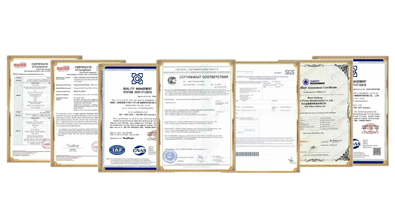
Depending on the intended use and industry requirements, you may need additional certifications such as:
- ASME B16.5 certification for pressure vessel flanges
- API 6A certification for wellhead and Christmas tree equipment
- CSA certification for compliance with Canadian standards
Safety Data Sheets (SDS)
While not continuously required for welding neck flanges, SDSs may be vital if the items have any coatings or medicines that may pose security risks.
Ensuring all these records are precise, total, and promptly accessible will streamline the purport handling and help maintain a strategic distance from delays at Canadian customs. It's moreover fitting to work with a learned traditions broker who can direct you through the particular necessities for your shipment of welding neck flanges from China to Canada.
Supplier due diligence: material origin, forging process, QA/QC, and flange standard compliance
When bringing in welding neck flanges from China, conducting intensive provider due diligence is pivotal to guarantee you get high-quality items that meet Canadian guidelines and your project requirements. Here's a comprehensive look at the key ranges to center on during your provider evaluation:
Material Origin and Traceability
Verifying the origin of the raw materials used in manufacturing welding neck flanges is essential for ensuring quality and compliance. Consider the following:
- Request fabric certificates from trustworthy steel mills
- Ensure traceability through warm numbers and bunch tracking
- Verify that materials meet ASTM, ASME, or other important standards
Forging Process and Equipment
The forging process significantly impacts the strength and integrity of welding neck flanges. Evaluate your supplier's capabilities by:
- Assessing their fashioning hardware and capacity
- Understanding their manufacturing procedures (open kick the bucket, closed pass on, etc.)
- Verifying temperature control and warm treatment processes
Quality Assurance and Quality Control (QA/QC) Procedures
A robust QA/QC system is critical for consistent product quality. Look for suppliers with:
- ISO 9001:2015 certification for quality administration systems
- In-house testing offices for mechanical and chemical analysis
- Non-destructive testing capabilities (e.g., ultrasonic, attractive particle)
- Documented review methods and quality control checkpoints
Flange Standard Compliance
Ensure that the supplier's welding neck flanges comply with relevant international and Canadian standards, such as:
- ASME B16.5 for pipe ribs and flanged fittings
- ASTM A105 for carbon steel forgings
- CSA B51 for kettle, weight vessel, and weight channeling code
- API 6A for wellhead and Christmas tree gear (on the off chance that applicable)
Manufacturing Capabilities and Capacity
Assess the supplier's ability to meet your specific requirements:
- The range of spine sizes and weight appraisals they can produce
- Production capacity and lead times
- Ability to handle uncommon materials or custom specifications
Third-Party Certifications and Audits
Look for suppliers who have undergone independent audits and hold relevant certifications:
- PED 2014/68/EU for pressure equipment
- API Q1 for quality management systems in the oil and gas industry
- Third-party inspection reports from reputable agencies (e.g., SGS, Bureau Veritas)
Track Record and References
Evaluate the supplier's experience and reputation in the industry:
- Request case ponders or venture references, especially for Canadian projects
- Check for any history of item reviews or quality issues
- Seek criticism from other industry experts or exchange associations
By completely verifying your Chinese providers based on these criteria, you can essentially decrease the chance of accepting substandard welding neck flanges and guarantee that the items you purport will meet the thorough requirements of your Canadian ventures. Keep in mind, contributing time to the provider due to perseverance forthright can spare considerable costs and cerebral pains down the line.
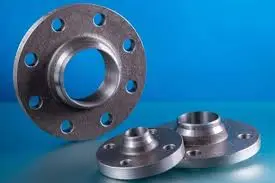
Using Chinese weld-neck flanges in Canadian pipelines: pressure ratings, welding practice, and compliance
Integrating welding neck flanges from China into Canadian pipeline projects requires careful consideration of pressure ratings, welding practices, and compliance with local regulations. Here's a comprehensive guide to ensure successful implementation:
Pressure Ratings and Selection
Selecting the appropriate pressure rating for welding neck flanges is crucial for safe and efficient pipeline operation:
- Verify that the flange's weight course matches or surpasses the pipeline's most extreme working pressure
- Consider temperature derating variables for high-temperature applications
- Ensure compatibility with ASME B16.5 pressure-temperature ratings
- Factor in extra security edges based on project-specific requirements
Material Compatibility
Ensure the flange material is compatible with:
- The pipeline fabric to avoid galvanic corrosion
- The transported liquid or gas is used to dodge chemical reactions
- Canadian natural conditions, particularly for open-air installations
Welding Practices and Procedures
Proper welding is critical for the integrity of the pipeline system:
- Develop and qualify welding strategies in accordance with CSA W47.1 for the combination welding of steel
- Ensure welders are certified to Canadian standards
- Implement appropriate pre-heating and post-weld warm treatment as required
- Conduct non-destructive testing (NDT) on welds as per venture specifications
Compliance with Canadian Standards
Adherence to Canadian standards is non-negotiable:
- Ensure compliance with CSA Z662 for oil and gas pipeline systems
- Meet the necessities of CSA B51 for the kettle, weight vessel, and weight channeling code
- Adhere to common weight hardware security regulations
- Consider extra industry-specific measures (e.g., API standards for oil and gas)
Quality Control and Inspection
Implement rigorous quality control measures:
- Conduct dimensional checks to guarantee appropriate fit-up
- Perform visual assessments for surface abandons or damage
- Implement NDT strategies such as ultrasonic testing or attractive molecule inspection
- Verify fabric traceability through legitimate documentation
Installation and Bolting Practices
Proper installation is crucial for long-term performance:
- Follow ASME PCC-1 rules for weight boundary catapulted joint assembly
- Use calibrated torque torques to accomplish appropriate jolt tension
- Implement Jolt stack sequencing to guarantee gasket compression indeed
- Consider utilizing pressure-driven tensioners for basic joints
Documentation and Record-Keeping
Maintain comprehensive records for regulatory compliance and future reference:
- Keep point-by-point material test reports (MTRs) for all flanges
- Document welding methods and welder qualifications
- Maintain review and testing reports
- Preserve as-built drawings, appearing in spine areas and specifications
Maintenance and Inspection Programs
Develop ongoing maintenance strategies:
- Implement customary assessment plans based on hazard assessment
- Train support staff on appropriate rib administration techniques
- Establish conventions for spill location and crisis response
- Plan for intermittent re-torquing of catapulted connections
By carefully tending to these perspectives, you can effectively coordinate Chinese-manufactured welding neck flanges into Canadian pipeline ventures, guaranteeing security, compliance, and long-term execution. Keep in mind that whereas sourcing from China can offer fetched points of interest, it's fundamental to keep up thorough quality control and adherence to Canadian benchmarks all through the process.
Conclusion
Importing welding neck flanges from China to Canada presents a profitable opportunity for cost-effective acquisition in different mechanical applications. By following the rules sketched out in this direct, you can explore the complexities of worldwide exchange, guarantee compliance with Canadian regulations, and keep up the high standards required for basic pipeline components.
Remember that effective importation and usage of welding neck flanges pivots on an intensive provider due to consistency, fastidious consideration to documentation and certifications, and strict adherence to Canadian guidelines and best practices. By prioritizing quality control, appropriate establishment procedures, and progressing support, you can maximize the execution and life span of these fundamental pipeline components.
For EPC temporary workers, wholesalers, and mechanical end-users looking to optimize their channeling frameworks while overseeing costs, Chinese-manufactured welding neck flanges can be a great choice when sourced and actualized accurately. As you set out on your another venture, consider joining forces with trustworthy providers who understand the one-of-a-kind necessities of the Canadian advertise and can provide the essential support and documentation to ensure a smooth procurement process.
By leveraging the experiences given in this direct, you'll be well-equipped to make educated choices, minimize venture dangers, and guarantee the security and productivity of your pipeline frameworks utilizing high-quality welding neck flanges from China.
FAQ
Q1: What are the main advantages of importing welding neck flanges from China to Canada?
A: Importing welding neck flanges from China to Canada offers several benefits, including cost-effectiveness, access to a wide range of products, and the ability to meet large volume requirements. Chinese manufacturers often have significant production capacities and can offer competitive pricing without compromising on quality when proper due diligence is conducted.
Q2: How can I ensure the quality of welding neck flanges imported from China?
A: To ensure quality, thoroughly vet potential suppliers by checking their certifications (e.g., ISO 9001, API), requesting material test reports, and considering third-party inspections. Additionally, clearly communicate your specifications and quality requirements, and consider visiting the manufacturing facility if possible.
Q3: What are the most important Canadian standards to consider when importing welding neck flanges?
A: Key Canadian standards to consider include CSA Z662 for oil and gas pipeline systems, CSA B51 for boiler, pressure vessel, and pressure piping code, and provincial pressure equipment safety regulations. Additionally, ensure compliance with ASME B16.5 for flange dimensions and ratings, as this standard is widely recognized in Canada.
High-Quality Welding Neck Flanges for Your Canadian Projects | RAYOUNG
Looking for reliable welding neck flanges for your Canadian pipeline projects? RAYOUNG is your trusted partner in sourcing high-quality, compliant flanges from China. With our extensive experience in manufacturing and exporting industrial pipe fittings, we ensure that every product meets the stringent requirements of the Canadian market.
Our welding neck flanges are manufactured to the highest standards, with full material traceability and comprehensive quality control processes. We offer a wide range of sizes, pressure ratings, and materials to suit your specific project needs. Our team of experts is ready to assist you with product selection, documentation, and ensuring smooth customs clearance.
Don't compromise on quality or compliance. Choose RAYOUNG for your welding neck flange needs and experience the difference that comes with a reliable, customer-focused supplier. Contact us today at info@hb-steel.com to discuss your requirements and request a quote. Let's build safer, more efficient pipelines together!
References
1. Canadian Standards Association. (2021). CSA Z662: Oil and gas pipeline systems. CSA Group.
2. American Society of Mechanical Engineers. (2019). ASME B16.5: Pipe Flanges and Flanged Fittings. ASME.
3. Canada Border Services Agency. (2022). Importing Commercial Goods into Canada: A Step-by-Step Guide. Government of Canada.
4. Technical Standards and Safety Authority. (2020). Boilers and Pressure Vessels Safety Program. TSSA.
5. American Petroleum Institute. (2018). API Specification 6A: Wellhead and Tree Equipment. API.
6. International Organization for Standardization. (2015). ISO 9001:2015