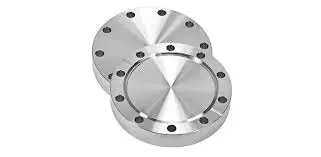
What motivates Canadian oil firms to look to Chinese blind-flange suppliers (cost, availability, specs)?
The decision to source blind flanges from China is driven by several compelling factors:
Cost-effectiveness
Chinese producers frequently offer competitive pricing due to lower generation costs and economies of scale. This fetched advantage is especially alluring for Canadian oil firms looking to optimise their operational costs without compromising on quality.
Manufacturing Capacity and Availability
China's endless mechanical framework permits for large-scale generation of blind flanges, guaranteeing steady accessibility indeed for bulk orders. This unwavering quality in supply is pivotal for Canadian oil companies overseeing broad pipeline ventures or support schedules.
Technical Specifications and Customisation
Many Chinese suppliers have invested in advanced manufacturing technologies, enabling them to produce flanges that meet diverse technical specifications. This flexibility allows Canadian firms to source customised flanges tailored to their specific project requirements.
Market Diversification
By locking in with Chinese providers, Canadian oil companies can broaden their supply chain, lessening reliance on a single source showcase. This procedure improves supply versatility and can give a buffer against advertise variances or disturbances in other regions.
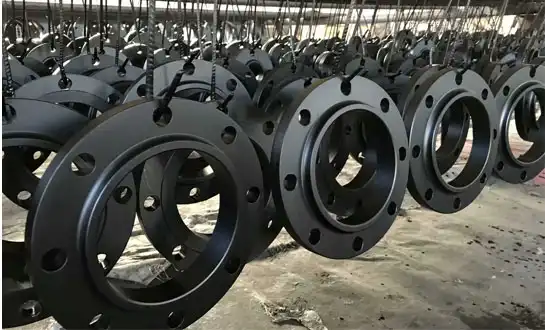
The combination of these variables makes Chinese daze rib providers an appealing choice for Canadian oil firms looking to optimise their acquisition methodologies while maintaining up tall standards of quality and reliability.
What certification and quality standards do Canadian firms demand from Chinese flange suppliers
Canadian oil companies prioritise security and unwavering quality in their operations, which extends to their sourcing of basic components like blind flanges. When locked in with Chinese providers, they ordinarily require adherence to rigid certification and quality standards:
International Standards Compliance
Canadian firms often require Chinese suppliers to demonstrate compliance with international standards such as:
- API (American Petroleum Institute) specifications, particularly API 6A for wellhead equipment
- ASME (American Society of Mechanical Engineers) standards, including ASME B16.5 for pipe flanges
- ISO 9001 certification for quality management systems
Material Certifications
Suppliers must provide detailed material certifications, including:
- Mill Test Reports (MTRs) confirming the chemical composition and mechanical properties of the flange materials
- Compliance with NACE MR0175/ISO 15156 for materials used in H2S-containing environments
Quality Assurance and Control
Canadian companies often require:
- Robust quality control forms are archived and actualised by the supplier
- Third-party assessments and testing of ribs sometime recently shipment
- Non-destructive testing (NDT) reports for basic applications
Traceability
Flange suppliers must maintain comprehensive traceability systems, allowing each flange to be traced back to its raw material source and manufacturing batch.
Environmental and Safety Standards
Compliance with natural administration benchmarks (ISO 14001) and work-related wellbeing and security guidelines (ISO 45001) is progressively vital for Canadian firms committed to sustainable and responsible sourcing.
By demanding these certifications and quality benchmarks, Canadian oil firms guarantee that the blind flanges sourced from China meet the thorough requirements of their operations, defending the judgment and security of their pipeline systems.
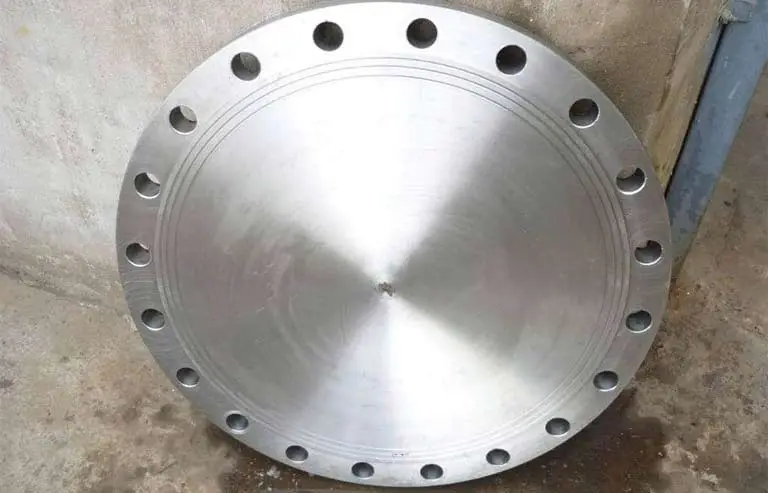
Practical considerations: flange pressure class, material, compatibility with existing pipeline systems
When sourcing blind flanges from China, Canadian oil firms must carefully consider several practical aspects to ensure seamless integration with their existing pipeline systems:
Pressure Class Selection
Choosing the correct pressure class is crucial for maintaining system integrity:
- Common pressure classes include 150#, 300#, 600#, 900#, 1500#, and 2500#
- Selection depends on the maximum allowable working pressure (MAWP) of the pipeline system
- Factors such as temperature, corrosive environments, and safety margins influence the choice
Material Compatibility
The flange material must be compatible with:
- The fluid being transported (e.g., crude oil, natural gas, or refined products)
- Environmental conditions, including temperature extremes and corrosive elements
- Existing pipeline materials to prevent galvanic corrosion
Dimensional Standards
Ensuring dimensional compatibility is essential:
- Flanges must conform to standards like ASME B16.5 or API 6A for proper fit
- Bolt hole patterns, flange thickness, and outside diameter must match existing system components
- Face type (e.g., raised face, ring-type joint) must be consistent with connecting flanges
Gasket Considerations
The choice of gasket affects sealing performance:
- Gasket type must be compatible with the flange face design
- Material selection based on operating conditions and fluid characteristics
- Proper compression and seating must be achievable with the chosen flange design
Coating and Corrosion Protection
Appropriate surface treatments enhance longevity:
- Selection of suitable coatings or platings for corrosion resistance
- Consideration of cathodic protection systems compatibility
- Ensuring coating integrity during transportation and installation
Quality Control and Testing
Rigorous quality assurance measures are essential:
- Hydrostatic testing to verify pressure-holding capability
- Non-destructive testing (NDT) such as ultrasonic or magnetic particle inspection
- Dimensional checks to ensure a precise fit with existing components
By carefully considering these down-to-earth angles, Canadian oil firms can guarantee that the blind flanges sourced from China not as it were meet their quality measures but are also coordinated consistently with their existing pipeline infrastructure, maximising operational effectiveness and safety.
Conclusion
Sourcing blind flanges from China offers Canadian oil firms a key advantage in terms of cost-effectiveness, accessibility, and customisation choices. In any case, victory in this endeavour pivots on thorough quality control, adherence to worldwide benchmarks, and cautious thought of viable variables such as weight course, fabric compatibility, and dimensional exactness. By joining forces with trustworthy Chinese providers who can meet these exacting necessities, Canadian companies can optimise their supply chains while keeping up the high standards of security and unwavering quality fundamental in the oil industry.
For oil firms and mechanical extend engineers looking for high-quality blind spines and other pipeline components, HEBEI RAYOUNG PIPELINE Technology CO., LTD offers a comprehensive range of arrangements. Our items are made to meet worldwide measures, including GOST-R and SGS certifications, guaranteeing compliance with the most demanding industry requirements. With our skill in carbon steel pipe fittings and commitment to development, we give dependable, tough, and cost-effective arrangements for your pipeline needs. Whether you're overseeing large-scale ventures or looking to optimise your supply chain, our group is prepared to help you in sourcing the right components for your particular applications.
FAQ
Q1: What are the main advantages of sourcing blind flanges from China for Canadian oil firms?
A: The main advantages include cost-effectiveness due to competitive pricing, consistent availability even for large orders, ability to meet diverse technical specifications and customisation needs, and the opportunity to diversify supply chains for enhanced resilience.
Q2: How do Canadian oil companies ensure the quality of blind flanges sourced from China?
A: Canadian companies ensure quality by requiring compliance with international standards (such as API and ASME), demanding comprehensive material certifications, implementing rigorous quality control processes, conducting third-party inspections, and insisting on full traceability of products.
Q3: What are the key practical considerations when selecting blind flanges for existing pipeline systems?
A: Key considerations include selecting the appropriate pressure class, ensuring material compatibility with the transported fluid and environmental conditions, verifying dimensional standards for proper fit, choosing suitable gaskets, considering corrosion protection measures, and conducting thorough quality control and testing.
Expert Blind Flange Solutions for Oil and Gas Industries | RAYOUNG
Looking for high-quality blind flanges that meet the exacting standards of the Canadian oil industry? RAYOUNG offers a comprehensive range of blind flanges and other pipeline components designed to excel in demanding oil and gas applications. Our products are manufactured to strict international standards, ensuring optimal performance, safety, and longevity. With our expertise in carbon steel pipe fittings and commitment to innovation, we can provide customised solutions to meet your specific project requirements. Don't compromise on quality or reliability – choose RAYOUNG for your blind flange needs. Contact us today at info@hb-steel.com to discuss how we can support your pipeline projects with our superior products and services.
References
1. Canadian Association of Petroleum Producers. (2022). "Best Practices for Sourcing Pipeline Components in the Canadian Oil and Gas Industry."
2. International Organization for Standardization. (2021). "ISO 9001:2015 Quality Management Systems - Requirements."
3. American Petroleum Institute. (2023). "API Specification 6A: Wellhead and Tree Equipment."
4. American Society of Mechanical Engineers. (2022). "ASME B16.5: Pipe Flanges and Flanged Fittings."
5. Natural Resources Canada. (2023). "Canadian Oil and Gas Supply Chain Optimization Report."
6. Journal of Petroleum Technology. (2023). "Global Sourcing Strategies in the Oil and Gas Industry: Challenges and Opportunities."